Witness the Great Migration on Tanzania safari with dramatic river crossings, calving season, predator action, and year-round wildlife across Serengeti
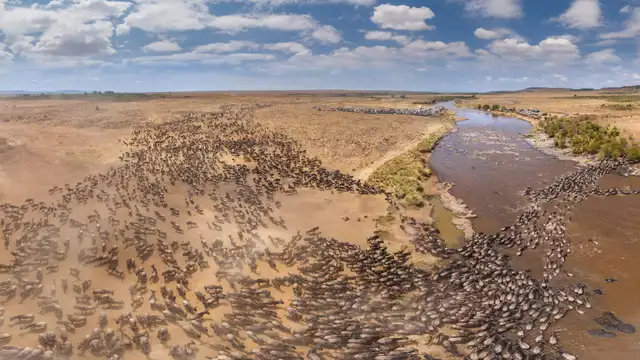
Witnessing the Great Migration on a Tanzania safari is arguably the most spectacular wildlife experience Africa has to offer. Over 1.5 million wildebeest, joined by 200,000 zebras and thousands of gazelles, undertake an 800-kilometer annual journey across the Serengeti ecosystem in search of fresh grass and water . This continuous movement, driven by rainfall patterns, creates a year-round spectacle where the herds are always on the move. What makes this experience truly extraordinary is the raw drama that unfolds daily predators like lions, leopards, cheetahs, and hyenas shadow the herds, creating intense hunting scenes, while the river crossings pit thousands of desperate animals against crocodile-infested waters . No fences, no control just nature playing out exactly as it has for thousands of years .
The crown jewel of the migration experience is witnessing a river crossing, a heart-stopping event where massive herds plunge into crocodile-filled waters risking their lives to reach fresh grazing lands . The Northern Serengeti, particularly the Kogatende area along the Mara River, is the prime viewing location for this drama, offering a less crowded alternative to Kenya's Masai Mara . Beyond the crossings, the migration delivers unforgettable moments year-round: the calving season from January to March in the Southern Serengeti and Ndutu region, where thousands of wildebeest calves are born daily, attracting intense predator action; the Grumeti River crossings from June to July in the Western Serengeti; and the iconic Mara River crossings from July to October in the north . Each stage of this epic journey offers unique photographic opportunities and wildlife encounters that make a Tanzania safari truly unforgettable
Popular Tanzania safari packages
10-days-northern-tanzania-safari-circuit-and-most-visited-tanzania-wildlife-parks
7-days-incredible-big-five-safaris-to-tanzania
7-days-incredible-big-five-safaris-to-tanzania
7-days-best-african-big-cats-safaris-on-a-tanzania-tour
7-days-best-serengeti-tour-and-zanzibar-beach-holiday-vacations
6-days-safari-to-tanzania-serengeti-migration-mara-river-crossing
5-days-circuit-wildlife-safari-in-tanzania
5-days-serengeti-safari-ngorongoro-and-lake-manyara-tanzania-tour-trip
4-days-tanzania-safari-tour-itinerary-and-magical-wildebeest-migrations
4-days-classic-tanzania-safari-to-tarangire-ngorongoro-and-manyara-with-hadzabe-tour
3-days-tanzania-safari-in-serengeti-national-park.
3-days-tarangire-ngorongoro-and-manyara-tanzania-safari-holiday
Best Time to Witness the Migration
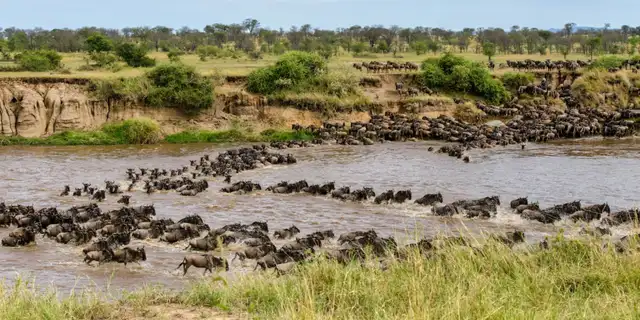
The best time to witness the Great Migration on a Tanzania safari depends on which dramatic chapter you want to see. For the famous Mara River crossings, plan your visit between late July and September, when the herds gather in Northern Serengeti near Kogatende, taking the perilous plunge across crocodile-infested waters . August typically offers peak crossing activity and the most dramatic predator action . Alternatively, for a completely different but equally moving experience, visit the Southern Serengeti and Ndutu region from late December to March, particularly February, when calving season peaks you can witness hundreds of wildebeest calves born daily, with lions, cheetahs, and hyenas lurking nearby . For the Grumeti River crossings, target June to early July in Western Serengeti, where the spectacle is more secluded with fewer tourists . The migration moves continuously throughout the year, so wherever you go on a Tanzania safari, you'll encounter some stage of this natural wonder . However, patience is essential crossings are unpredictable, and herds may gather for hours or days before deciding to cross
Top Locations to Witness the Migration on Tanzania Safari
Northern Serengeti (Kogatende/Lamai Area) - July to October
The prime location for witnessing Mara River crossings, featuring dramatic crocodile attacks, massive herds gathering at riverbanks, and fewer tourists than the Kenyan side . This area offers the highest concentration of wildlife during the dry season, with prides of lions up to 30 strong . Accommodation options range from luxury tents facing migration routes to mobile camps that relocate with the herds .
Western Serengeti (Grumeti River) - June to July
A secluded, private conservancy offering exclusive river crossing experiences without the crowds of the northern sector . The Grumeti River crossing provides equally dramatic scenes with fewer vehicles, diverse landscapes of riverine forests and floodplains, and excellent predator viewing including large Nile crocodiles .
Southern Serengeti and Ndutu Region - December to March
The calving season capital of the migration, where you can witness the miracle of new life with thousands of wildebeest calves born daily . This area offers lush, green landscapes, intense predator-prey interactions, and easier wildlife viewing as the herds concentrate on the nutrient-rich short-grass plains .
Central Serengeti (Seronera Valley) - April to June and November to December
A reliable year-round wildlife viewing area that serves as a migration corridor when herds pass through . This region features resident predators regardless of migration timing, making it excellent for guaranteed wildlife sightings even if the main herds are elsewhere
How to Make the Most of Your Migration Safari
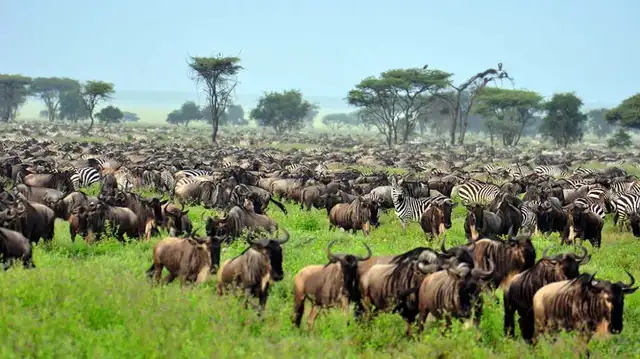
To maximize your chances of witnessing the migration's most dramatic moments, plan to spend at least three to four days in the specific region where the herds should be located during your visit . This allows flexibility since river crossings are unpredictable some days bring multiple crossings while others test your patience . Book well in advance, particularly for peak season from July to September, as accommodations near migration routes fill up months ahead . Combine a hot air balloon safari with your migration viewing for an unparalleled perspective floating silently over the herds at sunrise offers National Geographic-worthy photographs and a completely different understanding of the massive scale of this movement . Hire experienced guides who understand animal behavior and can position your vehicle optimally without disturbing the herds; their knowledge of crossing points and herd movement patterns dramatically increases your chances of witnessing key events . Consider a fly-in safari to northern Serengeti to avoid long driving days and maximize your time at the migration front . And remember, while the migration is spectacular, the Serengeti offers incredible resident wildlife year-round, so even if crossing timing proves elusive, you'll still experience an unforgettable Tanzania safari
How to get to Tanzania safari for great migration
Getting to a Tanzania safari to witness the Great Migration is efficient and straightforward, primarily via Kilimanjaro International Airport (JRO) near Arusha. This airport is the main gateway for the Northern Circuit, which includes the Serengeti, and is served by major international airlines like KLM, Qatar Airways, and Ethiopian Airlines. Upon arrival, you have two excellent options to reach the remote northern Serengeti where the dramatic Mara River crossings occur between July and October. The fastest and most popular method is taking a scenic domestic flight from Arusha Airport (just a short transfer from JRO) directly to a bush airstrip like Kogatende, with a flight time of roughly 1.5 hours. Alternatively, you can enjoy a scenic road transfer from Arusha to the Serengeti, which takes 6-10 hours depending on your specific destination.
Once in the Serengeti, you'll be perfectly positioned to follow the herds on daily game drives. The key to a seamless trip is choosing the right arrival point based on your itinerary. For a pure focus on the northern migration, Kilimanjaro International Airport (JRO) is your best choice for minimizing initial travel time. An increasingly popular alternative is flying directly into Zanzibar (ZNZ) and connecting to a "fly-in safari" from there, which is ideal for those wanting a combined beach and bush vacation. Furthermore, light aircraft charter flights operate daily from Arusha (ARK) and other hubs to numerous Serengeti airstrips, such as Kogatende and Seronera, operated by trusted local airlines. While these flights cost around $400-450 one-way, they save precious safari time and offer breathtaking aerial views
What top pack for Tanzania safari and migration experience
To pack for your Tanzania safari and Great Migration experience, focus on versatile, neutral-colored clothing in khaki, olive, or beige to blend with the environment while avoiding bright colors that attract insects. Layer your clothing to handle dramatic temperature shifts—pack lightweight long-sleeved shirts and trousers for sun and bug protection, a warm fleece or jacket for chilly early morning game drives, and a waterproof jacket for unexpected rain. Sturdy, closed-toe walking shoes or lightweight hiking boots are essential for uneven terrain, while sandals offer relaxation at camp. Bring binoculars (8x42 or 10x42) for spotting distant wildlife, along with a camera equipped with a telephoto zoom lens, extra batteries, memory cards, and a power bank since charging opportunities may be limited. Essential health and safety items include high-SPF sunscreen, DEET-based insect repellent, lip balm, hand sanitizer, a basic first-aid kit, and any prescription medications including anti-malarials. Pack everything in a soft-sided duffel bag (maximum 15-20 kg) as small safari flights restrict hard-shell suitcases, and keep a daypack for daily essentials like water, snacks, and your camera. Finally, don't forget your passport (valid for six months), visa, travel insurance, yellow fever certificate if required, and a flashlight or headlamp for navigating camps after dark
Best lodges and camps to stay in for migration on Tanzania safari
The best lodges and camps for the Great Migration in Tanzania are strategically positioned to follow the herds and provide front-row seats to the action depending on the season. For the famous river crossings in the Northern Serengeti (July to October), top choices include Sayari Camp, known for its proximity to the Mara River and an infinity pool overlooking the plains, and Lemala Kuria Hills, offering private plunge pools and 360-degree views. In the Western Corridor for the Grumeti River crossings (June to July), the ultra-luxury Singita Sabora Tented Camp provides access to a private concession, while &Beyond Grumeti Serengeti River Lodge offers front-row seats to crocodile-filled river crossings. For the calving season in the Southern Serengeti and Ndutu region (January to March), Lake Ndutu Luxury Tented Lodge places you directly in the middle of the birthing grounds, and Serian’s Serengeti South is renowned for its expert-led walking safaris among newborn calves. For the ultimate flexibility, mobile camps like Sanctuary Kichakani, Nyasi Migrational Camp, and Wilderness Usawa physically relocate with the herds across different seasons, ensuring you are always near the action
Ready to plan your safari?
Talk to a Lamz Tours specialist and get a tailor-made quote.
Make an enquiry