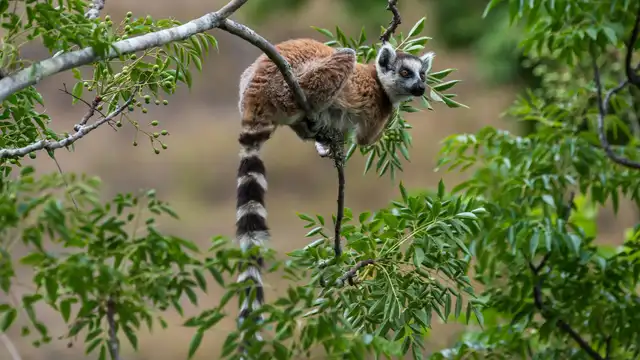
On Madagascar safari tours, the wildlife experiences are like nothing else on Earth. Madagascar is sometimes called the "eighth continent" — a true natural laboratory of evolution, hosting 120 endemic lemur species, bizarre baobabs, and the haunting tsingy limestone formations .
For travelers on Madagascar safari tours, Mozambique offers a different kind of magic with its remarkable wildlife recovery in Gorongosa National Park — now home to over 100,000 large animals, the largest waterbuck population on earth, and reintroduced apex predators . Many Madagascar safari packages now include this combination that offers rich wildlife, welcoming local culture, and plenty of ways to enjoy both land and sea .
Popular Madagascar Safari Packages
Wildlife Experience on Mozambique and Madagascar Safaris
Why Combine Wildlife Experiences on Madagascar and Mozambique Safaris
On Madagascar safari tours, combining these two destinations creates the ultimate wildlife experience. Madagascar offers completely endemic wildlife — lemurs, chameleons, and the bizarre fossa that exist in an ecosystem untouched by mainland Africa's megafauna . On a safari in Madagascar, you swap the 4x4 for explorations on foot, deeply immersing yourself in forests teeming with animals you will see nowhere else on Earth . Mozambique's Gorongosa National Park, once decimated by civil war, has staged one of Africa's greatest wildlife recoveries — now home to over 110,000 large animals, the world's largest waterbuck population at over 65,000, and reintroduced African wild dogs, leopards, and spotted hyenas . For tours and safaris Madagascar, this contrast between Madagascar's endemic wonders and Mozambique's classic safari drama offers a journey that is both deeply unique and profoundly rewarding.
Madagascar's Unique Wildlife: An Evolution Laboratory
On a Madagascar safari, the wildlife is the island's greatest treasure. Madagascar's isolation for 50-60 million years has created an unparalleled evolutionary laboratory where a single lemur colonization event evolved into 120 different species filling various ecological niches . For travelers on Madagascar safari tours, the Indri — the largest surviving lemur species — offers a guaranteed goosebumps moment with its haunting, whale-like call echoing through the forest canopy at dawn . The bizarre aye-aye, with its large ears and long thin middle finger used to extract grubs from tree bark, is another must-see for wildlife enthusiasts . Madagascar also hosts the fossa, the island's largest carnivore — around the size of a small dog or cat, it is a unique predator found only on the island . For tours and safaris Madagascar, the island's chameleon diversity is also unparalleled, with both the smallest and largest species in the world, alongside the bizarre leaf-tailed gecko and tenrecs .
Best Places for Wildlife in Madagascar
On Madagascar safari packages, Andasibe-Mantadia National Park is the essential lemur experience. Just a three-hour drive from Antananarivo, the park is home to the Indri and 14 lemur species, with Vakona Reserve offering even more encounters . Ranomafana National Park protects 12 species of lemur, including the critically endangered golden bamboo lemur, discovered here only in 1986 . For dramatic landscapes and wildlife, the Tsingy de Bemaraha National Park offers jagged limestone pinnacles home to the endangered Van der Decken's sifaka and numerous chameleon species . Kirindy Reserve offers the best chance to spot the fossa . For those seeking untouched wilderness, Namoroka Tsingy Camp provides access to one of Madagascar's most unspoilt national parks with 10 lemur species, 3 carnivore species, and over 100 bird species .
Mozambique's Wildlife Recovery: The Gorongosa Story
On Madagascar safari tours, Gorongosa National Park is the crown jewel of Mozambique's wildlife. Spread across more than a million acres, the park is a medley of fever tree forests, alluvial floodplains that stretch to the horizon, rare sand forests, and the cool, misty rainforests of Mount Gorongosa . On a safari in Madagascar, you can witness the incredible wildlife abundance of Gorongosa's Urema floodplain — herds of waterbuck numbering over 65,000, elephants estimated at 800-1,000, buffalos, reedbuck, and warthog . For tours and safaris Madagascar, the park's lion population has recovered from near-zero during the civil war to at least 146 known individuals . African wild dogs, reintroduced in 2018, are now becoming more reliable sightings, along with leopards, spotted hyenas, and side-striped jackals . The park also runs Mozambique's first pangolin rescue programme, intercepting animals from traffickers and nursing them back to health .
Best Places for Wildlife in Mozambique
On Madagascar safari tours, Gorongosa National Park offers exceptional wildlife sightings. The Urema floodplain is where Gorongosa's incredible abundance of wildlife is most visible, especially at dawn . Boat safaris on Lake Urema allow you to cruise past the 750-strong hippo population and observe Nile crocodiles basking on the sandbanks . For birdwatchers, Gorongosa is exceptional territory with over 500 species recorded, including the vulnerable ground hornbill and critically endangered white-headed vulture . The Expedition Camp, a mobile fly camp, opens up remote areas for walking safaris and access to the breathtaking Bunga Plains . For those with more time, adding a beach extension to the Bazaruto Archipelago provides marine wildlife encounters including humpback whales from July to November .
Best Time for Wildlife Experiences
On Madagascar safari tours, the best time for this combination is from June to October. These months bring ideal safari conditions in both Madagascar and Mozambique, when trails are accessible, animals are concentrated around water sources, and the weather is warm and sunny . For Madagascar, April to October is the dry season when lemurs are more active and trails are easier to navigate . For Mozambique, the dry season offers excellent wildlife viewing as animals concentrate around water sources. As an added bonus, humpback whales also make their way along the Mozambican coast from July to November — catching sight of them breaching close to shore is a spine-tingling moment .
How to Get There
For a Madagascar safari, the primary international gateway is Ivato International Airport (TNR) in Antananarivo. For Mozambique, the main gateway is Maputo International Airport (MPM) or Vilanculos for the Bazaruto Archipelago. Regional flights via Johannesburg or Nairobi connect the two countries, and domestic flights within each country connect to national parks . On a Madagascar safari from Antananarivo, building in a buffer night helps protect against domestic flight delays.
What to Carry
Packing for a Madagascar safari that includes both countries requires preparation for diverse climates. Bring lightweight, breathable clothing for warm days, a warm jacket for cooler highland mornings, and comfortable walking shoes for forest trails and game drives . A headlamp is essential for night walks. Sunscreen, a hat, and insect repellent are non-negotiable. Pack all essentials in a soft-sided duffel bag (15 kg/33 lbs maximum for domestic flights).
Health and Safety Tips
Before starting a Madagascar safari, travellers should check recommended vaccinations. Yellow fever vaccination is mandatory if arriving from an endemic country. Malaria is present in most areas of both countries, so bring insect repellent and consider malaria prophylaxis. Drink only bottled water. Travel insurance is essential and must cover medical evacuation.
Ready to plan your safari?
Talk to a Lamz Tours specialist and get a tailor-made quote.
Make an enquiry