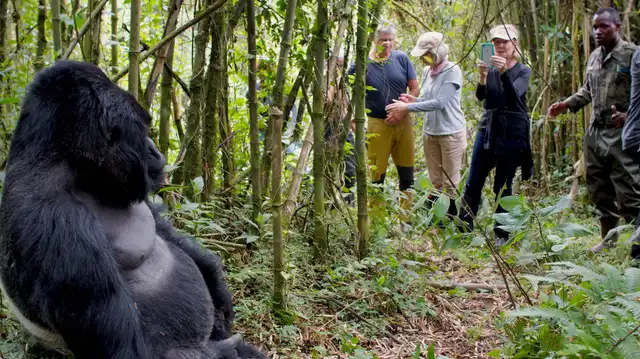
Find out why Uganda gorilla trekking is the best wildlife experience in Africa with close encounters, skilled trackers, and ancient rainforests.
Uganda Gorilla Trekking stands out as one of the most grounded wildlife journeys on the continent, not because it is popular, but because of how deeply it connects a traveller to the forest and its living rhythm. The experience begins long before seeing gorillas, with early morning briefings, slow walks into thick vegetation, and the growing silence that replaces noise from the outside world. Uganda Gorilla Trekking continues to shape itself as you move deeper into the forest, guided by trackers who read broken branches and fresh nests like a story written overnight.
Why Uganda Gorilla Trekking is the Best Wildlife Experience in Africa
1. Tracking Mountain Gorillas in Their Natural Territory
Uganda Gorilla Trekking begins with movement into untouched forest where paths are not always visible, and that is what makes it different from other wildlife experiences. Guides cut through vegetation where needed, and travellers follow quietly, learning to adjust their pace to the terrain rather than forcing the journey. During Uganda Gorilla Trekking, the forest slowly reveals signs of life including fresh dung, chewed stems, and distant calls. These details build anticipation naturally. When the gorillas are finally located, there is no dramatic announcement, just a quiet signal to slow down and prepare for a rare moment that feels earned rather than staged.
2. Close Observation of Gorilla Family Behaviour
Uganda Gorilla Trekking allows travellers to sit a short distance from a gorilla family and watch their daily life unfold without interruption. There is no performance, only natural behaviour including feeding, grooming, resting, and occasional movement through the undergrowth. While observing Uganda Gorilla Trekking moments, visitors notice how the silverback maintains calm control, how mothers protect their young, and how juveniles move with curiosity. These small details create understanding, not just excitement. It becomes less about seeing wildlife and more about recognising patterns of life that feel surprisingly familiar.
Popular Uganda Tour Packages
3. The Role of Skilled Local Trackers and Rangers
Uganda Gorilla Trekking depends heavily on the knowledge of local trackers who move ahead of visitors early in the morning. Their work begins long before tourists arrive, as they locate gorilla families and communicate positions back to guides leading the groups. In Uganda Gorilla Trekking, these trackers rely on years of field experience rather than technology alone. They understand feeding routes, nesting patterns, and seasonal movement. Their quiet coordination ensures that visitors reach the gorillas without disrupting their natural behaviour, maintaining a balance between tourism and conservation.
4. The Forest Journey as Part of the Experience
Uganda Gorilla Trekking is not only about the gorillas; the forest itself plays a central role. The terrain changes constantly, from steep ridges to damp valleys, requiring steady movement and patience from visitors. During Uganda Gorilla Trekking, travellers hear insects, distant bird calls, and the sound of leaves underfoot. These natural sounds replace conversation, drawing attention to the environment. By the time gorillas are found, visitors are already deeply connected to the setting, making the encounter feel like a continuation rather than a separate highlight.
5. High Chances of Locating Gorilla Families
Uganda Gorilla Trekking offers one of the most reliable wildlife tracking experiences in Africa due to daily monitoring of gorilla groups. Each habituated family is followed regularly, which increases the chances of successful encounters. Because of this structured system, Uganda Gorilla Trekking rarely ends without seeing gorillas. Visitors benefit from this consistency while still experiencing the unpredictability of the forest. It strikes a balance between assurance and adventure, making it suitable for travellers seeking both reliability and authenticity.
Best Time to Visit for Uganda Gorilla Trekking
Uganda Gorilla Trekking is best experienced during the dry seasons from June to September and December to February. Forest trails are more manageable during these periods, making movement easier. However, Uganda Gorilla Trekking continues throughout the year, and some travellers prefer the wetter months when the forest appears greener and less crowded. The choice depends on comfort and preference, but the experience remains consistent across seasons.
How to get trekking destinations for Uganda Gorilla Trekking
Uganda Gorilla Trekking begins with arrival at Entebbe International Airport, followed by travel to southwestern Uganda. The journey by road takes approximately 8–9 hours, covering scenic countryside and changing landscapes. For quicker access, Uganda Gorilla Trekking can also be reached by domestic flights to nearby airstrips such as Kihihi or Kisoro, reducing travel time and providing aerial views of the region.
Things to Do round Uganda Gorilla Trekking Area
Uganda Gorilla Trekking can be complemented by other activities that enrich the overall experience. Visitors can take guided forest walks, explore nearby lakes, or engage in cultural visits with local communities. These additional experiences around Uganda Gorilla Trekking allow travellers to understand the region beyond the gorillas, creating a more complete journey where wildlife, culture, and landscape come together naturally.
What to Carry for Uganda Gorilla Trekking
Uganda Gorilla Trekking requires practical preparation due to the nature of the forest environment. Travellers should carry sturdy hiking boots, long trousers, and rain jackets to handle varying conditions. Other essentials for Uganda Gorilla Trekking include gloves, insect repellent, drinking water, and a camera. Proper preparation ensures comfort during the trek and allows visitors to focus fully on the experience rather than physical challenges.
Where to Stay During Uganda Gorilla Trekking
Uganda Gorilla Trekking offers a range of accommodation options near the trekking starting points. Lodges vary from luxury settings to mid-range camps and simple guesthouses. Staying close to Uganda Gorilla Trekking locations reduces travel time on trekking days and allows visitors to rest properly. Many lodges are positioned to overlook forested hills, providing quiet surroundings after a day in the field.
Health and Safety Tips for Uganda Gorilla Trekking
During Uganda Gorilla Trekking, visitors must maintain a safe distance of at least seven metres from gorillas. Anyone feeling unwell should not participate in the trek, as gorillas are susceptible to human illnesses. Following ranger instructions, moving calmly, and avoiding sudden movements ensures safety for Uganda Gorilla Trekking.
Why Travel with Lamz Tours and Travel for Uganda Gorilla Trekking
Uganda Gorilla Trekking with Lamz Tours and Travel ensures organised planning, reliable transport, and experienced guides who understand the region well. Their team handles permits, accommodation, and logistics carefully, allowing travellers to focus on the journey itself. With local knowledge and attention to detail, Uganda Gorilla Trekking becomes smooth, well-paced, and more rewarding for visitors exploring Uganda's forest landscapes.
Beyond Uganda Gorilla Trekking
Beyond gorilla trekking, Lamz Tours and Travel organises trips across South Africa, Kenya, Tanzania, Morocco, Rwanda, Malawi and other African destinations.
Ready to plan your safari?
Talk to a Lamz Tours specialist and get a tailor-made quote.
Make an enquiry