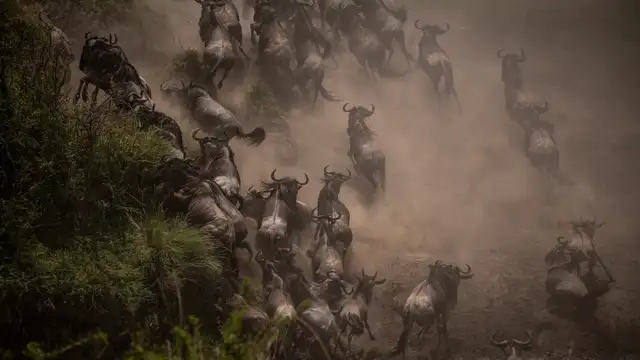
Discover why the wildebeest migration is a must for a Tanzania safari, from river crossings and predator action to year-round wildlife viewing.
The wildebeest migration is one of the main reasons travelers choose a Tanzania safari. Taking place across the Serengeti ecosystem, this annual movement of wildebeests, zebras, and gazelles provides exceptional wildlife viewing throughout the year. From the calving season in the southern plains to the famous river crossings in the north, the migration offers constant action and excellent opportunities to see predators such as lions, cheetahs, leopards, hyenas, and crocodiles. It also creates outstanding photography opportunities and helps visitors understand the natural balance of the Serengeti ecosystem. Whether visiting for the first time or returning for another wildlife holiday, many travelers consider the migration the highlight of a Tanzania safari because of its scale, diversity, and ever-changing wildlife experiences.
Best Tanzania safari packages
Why the Wildebeest Migration Spectacle Is a Must for Tanzania Safari
1. It Is One of the Greatest Wildlife Movements in Africa
The wildebeest migration is one of the biggest reasons travelers choose a Tanzania safari. Every year, over a million wildebeests move across the Serengeti ecosystem in search of fresh grazing and water. This movement creates an opportunity to see large numbers of animals spread across the plains. Visitors do not just see wildebeests; they also see zebras, gazelles, and predators that follow the herds. The migration changes throughout the year, meaning each season offers something different. For travelers investing time and money in a wildlife holiday, seeing such a large concentration of animals provides excellent value. A Tanzania safari becomes more rewarding because visitors can witness natural wildlife behavior on a scale that few destinations in the world can offer.
2. It Offers Excellent Predator Sightings
One reason the migration is a highlight of any Tanzania safari is the presence of predators. Lions, leopards, cheetahs, hyenas, and crocodiles follow the herds because the migration provides a steady food source. This increases the chances of seeing predator activity compared to many other wildlife destinations. Guides often know where the herds are located and can position visitors in good areas for game viewing. Watching predators hunt within their natural environment helps visitors better understand the balance of nature. Wildlife photographers also appreciate these opportunities because they can capture rare moments of animal behavior. A Tanzania safari focused on the migration often includes some of the most rewarding wildlife sightings available in Africa.
3. The River Crossings Create Dramatic Wildlife Viewing
River crossings are among the most anticipated parts of the migration during a Tanzania safari. As wildebeests move between grazing areas, they must cross rivers filled with strong currents and crocodiles. Thousands of animals gather along the riverbanks before making the crossing. This creates exciting wildlife viewing opportunities for visitors. The movement of large herds through the water highlights the challenges animals face during their annual migration. Timing is important because crossings can happen quickly and unpredictably. For many travelers, these moments become a major highlight of their trip. A Tanzania safari that includes migration river crossings provides visitors with unique wildlife experiences that are difficult to find elsewhere.
4. Every Month Offers Something Different
The migration moves across different areas of the Serengeti throughout the year, making every season valuable for a Tanzania safari. Early in the year, visitors can see calving season in the southern Serengeti. Later months bring movement toward the western and northern regions. This means travelers can choose travel dates based on the migration stage they want to experience. The changing locations also distribute wildlife activity across different parts of the ecosystem. Visitors benefit from a greater variety of experiences rather than seeing the same conditions throughout the year. Because the migration is constantly moving, a Tanzania safari remains interesting whether someone visits during the beginning, middle, or later stages of the annual cycle.
5. It Creates Outstanding Photography Opportunities
Photographers often consider the migration one of the main reasons to book a Tanzania safari. Large herds stretching across the plains create powerful wildlife images. The mixture of wildebeests, zebras, predators, and dramatic landscapes provides endless photography subjects throughout the day. Different seasons also create varying backgrounds and lighting conditions. Early mornings and evenings often provide excellent conditions for memorable wildlife photographs. Professional and amateur photographers alike appreciate the variety available during migration periods. Even travelers using smartphones can capture impressive images because of the number of animals present. A Tanzania safari during the migration gives visitors excellent opportunities to return home with photographs that reflect the scale of Africa’s wildlife.
6. The Calving Season Brings New Life to the Plains
Between January and March, the southern Serengeti becomes a nursery for thousands of newborn wildebeests. This period is another reason the migration remains important for a Tanzania safari. Young calves take their first steps shortly after birth and quickly join the moving herds. The abundance of newborn animals attracts predators, creating active wildlife viewing conditions. Visitors often enjoy seeing young animals because it adds another dimension to the safari experience. Families traveling with children especially appreciate witnessing this stage of the migration. The calving season shows the beginning of a new wildlife cycle and demonstrates how animals adapt to survive in the wild. A Tanzania safari during this period offers very different experiences compared to other times of year.
7. It Supports a Rich Ecosystem
The migration is more than just moving animals. It plays an important role in maintaining the health of the Serengeti ecosystem, which makes it a valuable feature of a Tanzania safari. As the herds travel, they graze vegetation, fertilize the land, and influence wildlife distribution across the region. Predators depend on the migration for food, while scavengers benefit from leftovers. Birds also take advantage of the activity created by the movement of animals. Understanding these connections helps visitors appreciate the wider ecological importance of the migration. Learning how the ecosystem functions adds educational value to a Tanzania safari, making the experience rewarding beyond simple wildlife sightings.
8. It Makes Every Game Drive More Productive
Large wildlife concentrations help improve game viewing during a Tanzania safari. Instead of searching extensively for animals, visitors often find wildlife spread across vast sections of the Serengeti during migration periods. The presence of wildebeests attracts predators and other wildlife species, increasing overall activity levels. This means game drives often produce a wide variety of sightings within a shorter period. For travelers spending limited time on safari, productive game drives are an important advantage. Visitors gain more opportunities to observe animal behavior and photography subjects throughout the day. The migration therefore helps maximize the wildlife viewing potential of a Tanzania safari, providing strong value for travelers.
9. It Creates a Different Experience on Every Visit
No two migration seasons are exactly the same, which keeps visitors returning for another Tanzania safari. Rainfall patterns, grazing conditions, and wildlife movements influence where the herds travel and when major events occur. This means travelers who have visited before can enjoy fresh experiences on future trips. Some visitors may focus on calving season, while others prefer river crossings or predator action. The changing nature of the migration helps keep the Serengeti dynamic throughout the year. Rather than following a fixed pattern that feels predictable, a Tanzania safari connected to the migration offers variety and new opportunities for wildlife viewing every season.
10. It Is a Highlight of the Serengeti Experience
For many visitors, the migration represents the heart of a Tanzania safari in the Serengeti. The movement of vast herds across open plains showcases the natural processes that have shaped the ecosystem for generations. It combines wildlife numbers, predator activity, photography opportunities, and educational value into one experience. Visitors often leave with a deeper appreciation of how wildlife survives and adapts in the wild. The migration also complements other safari activities, making the overall trip more complete. Whether traveling for the first time or returning for another visit, many people consider the migration the main reason to choose a Tanzania safari. Its scale, diversity, and constant movement continue to attract travelers from around the world.
Best time to witness the great Migration on Tanzania safari
The best time to witness the Great Migration on a Tanzania safari depends on the specific stage of the migration you want to see. From January to March, the southern Serengeti is the best place to observe the calving season, when thousands of wildebeest calves are born. Between June and July, large herds move through the western Serengeti, while July to October is famous for the Mara River crossings in northern Serengeti, where wildebeests cross crocodile-filled waters as they move between Tanzania and Kenya. Many travelers consider July to October the most popular period because of these dramatic crossings. However, the migration takes place throughout the year, making a Tanzania safari rewarding in every season. Choosing the right travel period depends on whether you prefer calving season, large moving herds, predator activity, or river crossing action during your Tanzania safari.
Booking Tanzania safari with Lamz Tours and Travel
Booking a Tanzania safari with Lamz Tours and Travel gives you the opportunity to experience some of East Africa’s finest wildlife destinations, including Serengeti National Park, Ngorongoro Crater, Tarangire National Park, Lake Manyara National Park, and Nyerere National Park. Whether you are interested in witnessing the Great Migration, enjoying game drives, birdwatching, cultural visits, or combining your safari with a Zanzibar beach holiday, Lamz Tours and Travel can create an itinerary that matches your interests, budget, and travel schedule. The team assists with accommodation bookings, airport transfers, domestic flights, park permits, and guided safari experiences, ensuring every detail is well planned. By booking a Tanzania safari with Lamz Tours and Travel, travelers benefit from expert local knowledge, personalized service, and carefully designed packages that maximize wildlife viewing opportunities while providing comfort, convenience, and excellent value throughout the trip.
Ready to plan your safari?
Talk to a Lamz Tours specialist and get a tailor-made quote.
Make an enquiry