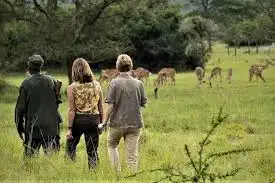
What to Expect onSafari Tours Uganda During Walking Safaris in Uganda explains wildlife encounters, safety, guided walks, and nature experiences on safari tours Uganda.
Walking safaris offer a different way to experience nature compared to traditional game drives. Safari tours Uganda allow travellers to explore national parks on foot while learning about wildlife, plants, birdlife, and local ecosystems from experienced ranger guides. These guided walks provide closer interaction with the environment and create opportunities to understand animal behaviour and conservation more deeply. From savannah grasslands to forest trails, walking safaris in Uganda combine outdoor exploration, education, and peaceful wildlife encounters in natural surroundings.
Our Best Safaris on a Safari Tours Uganda.
Professional Guided Walks on Safari Tours Uganda
Safari tours Uganda that include walking safaris are always led by experienced ranger guides who understand animal behaviour, tracking techniques, and park safety regulations. Before the walk begins, guides explain how visitors should behave in the bush, including walking quietly, staying together, and following instructions carefully. These guided walks are usually conducted in areas where wildlife movements are well monitored, allowing travellers to explore nature safely while learning about the environment. Unlike game drives, walking safaris move at a slower pace, giving visitors more time to observe tracks, insects, birds, plants, and smaller animals often missed from vehicles. Guides also share information about local ecosystems, conservation efforts, and traditional uses of plants found in the wilderness. Safari tours Uganda become more personal during walking safaris because travellers interact directly with the environment rather than viewing wildlife only from a vehicle window throughout the experience.
Close Observation of Wildlife on Safari Tours Uganda
Safari tours Uganda offer a very different wildlife experience during walking safaris because visitors observe nature from ground level rather than inside safari vehicles. Walking through savannah grasslands or forest trails allows travellers to notice animal footprints, feeding areas, dung, and other signs of wildlife activity. Although large animals such as elephants, buffaloes, and giraffes may still be seen, the experience focuses more on understanding behaviour and habitats than simply searching for big game. Guides carefully interpret movements and sounds within the bush, helping visitors understand how animals survive in the wild. Safari tours Uganda during walking safaris also create opportunities to appreciate smaller creatures such as butterflies, reptiles, and birds that are often overlooked during game drives. The slower pace encourages travellers to pay attention to details within the environment, creating a deeper understanding of Uganda’s wildlife ecosystems and natural surroundings.
Safety Measures During Safari Tours Uganda
Safari tours Uganda that involve walking safaris follow strict safety procedures to protect both visitors and wildlife. Armed ranger guides accompany travellers throughout the walk and carefully assess animal movements before entering certain areas. Visitors are instructed to remain calm, avoid sudden movements, and keep noise levels low during encounters with wildlife. Walking safaris are usually conducted in small groups to allow better communication between guides and guests while reducing disturbance within the environment. Before the activity begins, guides explain emergency procedures and proper behaviour around animals. Safari tours Uganda place strong emphasis on respecting wildlife space and following conservation guidelines during all walking activities. Travellers should also wear suitable clothing, including neutral colours, comfortable walking boots, hats, and lightweight long-sleeved clothing for protection against insects and vegetation. These safety measures help visitors enjoy walking safaris comfortably while minimising unnecessary risks during outdoor exploration.
Opportunities to Learn About Nature on Safari Tours Uganda
Safari tours Uganda become educational experiences during walking safaris because guides explain many details about the natural environment that are difficult to learn during vehicle safaris. Visitors gain knowledge about medicinal plants, animal tracks, bird calls, insects, and local ecosystems while walking through forests, wetlands, or savannah landscapes. Guides often demonstrate how different species interact within the environment and how conservation efforts protect these habitats. Walking safaris also help travellers understand how local communities have traditionally used natural resources around protected areas. Safari tours Uganda provide opportunities to ask questions directly while observing nature closely, creating a more interactive learning experience. Many visitors discover that walking safaris improve their understanding of wildlife behaviour and environmental balance more than ordinary game drives. This educational aspect makes walking safaris valuable for nature lovers, photographers, students, and travellers interested in conservation and ecological awareness.
Physical Activity and Pace on Safari Tours Uganda
Safari tours Uganda that include walking safaris require moderate physical activity, although most walks are designed to suit travellers with average fitness levels. Walks usually last between one and four hours depending on the location, terrain, and wildlife conditions. Visitors walk slowly and stop regularly while guides explain tracks, plants, and animal behaviour along the route. Unlike mountain hiking, walking safaris are generally less demanding physically, but travellers should still prepare for uneven ground, warm temperatures, and occasional long distances. Safari tours Uganda often recommend comfortable walking shoes, breathable clothing, sunscreen, and enough drinking water during these activities. The slower pace allows travellers to fully absorb the atmosphere of the wilderness without rushing from one sighting to another. Walking safaris are therefore suitable for visitors who enjoy relaxed outdoor exploration combined with learning about wildlife, landscapes, and conservation in a natural environment.
Different Landscapes Explored on Safari Tours Uganda
Safari tours Uganda offer walking safaris in several national parks and conservation areas, each with different landscapes and wildlife experiences. In savannah parks such as Lake Mburo National Park, visitors walk through open grasslands where zebras, antelopes, and giraffes may be observed nearby. In forested destinations like Bwindi Impenetrable National Park, walking safaris involve dense vegetation, birdlife, waterfalls, and primates. Wetland areas provide opportunities to observe birds, reptiles, and unique plant species along quieter trails. Safari tours Uganda therefore allow travellers to experience Uganda’s environmental diversity beyond ordinary game drives. Different terrains also influence the pace and focus of each walk, making every destination unique. Exploring these varied landscapes on foot helps visitors appreciate the country’s biodiversity more closely while enjoying peaceful moments within natural surroundings and protected wilderness areas.
Cultural and Community Encounters on Safari Tours Uganda
Safari tours Uganda sometimes combine walking safaris with cultural experiences in communities located near national parks and conservation areas. Local guides may introduce visitors to traditional farming practices, storytelling, food preparation, music, or craft-making activities that reflect the lifestyle of surrounding communities. These encounters help travellers understand how local people coexist with wildlife and participate in conservation efforts. Walking through villages or community trails also creates opportunities for respectful interaction with residents while supporting local tourism initiatives. Safari tours Uganda often include these cultural walks as part of broader safari itineraries to provide a more balanced travel experience beyond wildlife viewing alone. Visitors gain insight into local traditions, daily routines, and regional history while contributing to community-based tourism projects. These cultural experiences add depth to walking safaris by connecting Uganda’s natural heritage with the people who live alongside protected areas.
Best Time to Visit Uganda on Safari Tours Uganda
Safari tours Uganda can be enjoyed throughout the year because Uganda experiences a favourable tropical climate suitable for wildlife viewing, gorilla trekking, chimpanzee tracking, and cultural travel. However, the dry seasons from June to September and December to February are considered the best times for most safari activities. During these months, national park roads and trekking trails remain easier to access, while animals gather around water sources, improving wildlife sightings. Safari tours Uganda during the rainy seasons from March to May and October to November still offer rewarding experiences, especially for birdwatching, photography, and travellers seeking quieter destinations with fewer visitors. The landscapes become greener and forests appear more vibrant after rainfall. Gorilla trekking and chimpanzee tracking continue throughout the year despite occasional muddy conditions. Uganda’s varied ecosystems allow travellers to experience wildlife, primates, waterfalls, forests, and savannah landscapes in every season across the country.
How to Get to Uganda on Safari Tours Uganda
Safari tours Uganda usually begin through Entebbe International Airport, located near Kampala and serving as Uganda’s main international gateway. Several international airlines operate flights connecting Uganda with Europe, the Middle East, Asia, and other African countries. After arrival, travellers continue to different safari destinations by road or domestic flights depending on their itinerary and travel preferences. Safari tours Uganda by road allow visitors to experience local towns, landscapes, tea plantations, and rural communities while travelling between national parks. Domestic charter flights are also available to destinations such as Bwindi, Queen Elizabeth, Kidepo Valley, and Murchison Falls National Parks, reducing travel time for shorter safaris. Most tour operators provide airport pickups, safari vehicles, experienced driver-guides, and organised transfers throughout the journey. Uganda’s improving road network and growing domestic aviation services make safari travel more accessible and convenient for both local and international travellers exploring the country.
Things to Do in Uganda on Safari Tours Uganda
Safari tours Uganda offer a wide variety of activities across the country’s forests, savannah parks, wetlands, mountains, and lakes. Gorilla trekking in Bwindi Impenetrable National Park remains Uganda’s most famous activity, allowing travellers to observe mountain gorillas within their natural forest habitat. Chimpanzee tracking in Kibale Forest National Park is another major highlight for primate enthusiasts. Safari tours Uganda also include wildlife game drives in Queen Elizabeth, Murchison Falls, Kidepo Valley, and Lake Mburo National Parks where visitors see elephants, lions, giraffes, buffaloes, antelopes, and many other animals. Boat cruises along the Kazinga Channel and River Nile provide opportunities to view hippos, crocodiles, and water birds closely. Birdwatching, mountain hiking, cultural tours, walking safaris, photography, and community visits are also available. Uganda’s diversity allows travellers to combine wildlife, adventure, nature, and culture within one safari experience across different regions.
What to Pack for Uganda on Safari Tours Uganda
Safari tours Uganda require practical packing suitable for tropical weather conditions, wildlife activities, and forest trekking experiences. Lightweight clothing in neutral colours is recommended for game drives and walking safaris because it remains comfortable in warm temperatures and blends well with natural surroundings. Travellers should also pack waterproof jackets due to occasional rain showers, especially during wet seasons. Comfortable hiking boots are essential for gorilla trekking and chimpanzee tracking activities within forest environments. Safari tours Uganda visitors should carry sunscreen, insect repellent, sunglasses, hats, reusable water bottles, binoculars, cameras, memory cards, and spare batteries for photography. Long sleeved clothing helps protect against mosquitoes during evenings and forest walks. Personal medication and a small first aid kit are also useful for comfort during long journeys between parks. Packing correctly allows travellers to enjoy Uganda’s wildlife, forests, and outdoor activities comfortably throughout their safari experience in different destinations.
Where to Stay in Uganda on Safari Tours Uganda
Safari tours Uganda provide accommodation options suitable for luxury travellers, midrange visitors, backpackers, and organised groups across different national parks and towns. Luxury safari lodges often feature private cottages, fine dining, swimming pools, spa facilities, and panoramic views overlooking forests, savannah plains, rivers, or lakes. Midrange lodges offer comfortable rooms, quality meals, and convenient access to safari activities at moderate prices. Budget accommodation includes campsites, bandas, guesthouses, and simple safari camps suitable for travellers seeking affordable experiences. Safari tours Uganda accommodation is available near major attractions such as Bwindi Impenetrable National Park, Queen Elizabeth National Park, Murchison Falls National Park, and Kibale Forest National Park. Many lodges organise game drives, gorilla permits, birdwatching tours, and cultural visits directly for guests. This variety allows visitors to select accommodation based on comfort, travel style, location, and overall safari budget throughout Uganda.
Health and Safety in Uganda on Safari Tours Uganda
Safari tours Uganda are generally safe when travellers follow guidance from professional tour operators, park authorities, and experienced safari guides. Visitors should always follow instructions during wildlife encounters, especially during gorilla trekking, chimpanzee tracking, walking safaris, and game drives. Uganda’s national parks maintain trained ranger teams and conservation staff who monitor visitor activities and wildlife safety. Safari tours Uganda travellers should take malaria precautions because mosquitoes are present in many tropical regions across the country. Insect repellent, long-sleeved evening clothing, mosquito nets, and anti-malaria medication recommended by a doctor are highly advisable. Travellers should also drink bottled or purified water to avoid stomach illnesses during their safari. Uganda has hospitals and medical centres in major towns and cities, while many tour companies maintain emergency communication systems during safaris. Proper preparation and responsible behaviour help visitors enjoy safe and comfortable safari experiences across Uganda.
Why Choose Lamz Tours and Travel in Uganda on Safari Tours Uganda
Safari tours Uganda organised by Lamz Tours and Travel provide travellers with professionally managed wildlife and adventure experiences across Uganda’s leading national parks and cultural destinations. Our experienced safari guides understand wildlife behaviour, gorilla trekking regulations, birdwatching locations, and the best travel routes throughout the country. Lamz Tours and Travel arranges accommodation, transport, permits, meals, and safari activities in customised packages suitable for couples, families, solo travellers, and groups. Safari tours Uganda with Lamz Tours and Travel may include gorilla trekking in Bwindi, chimpanzee tracking in Kibale, wildlife game drives in Queen Elizabeth and Murchison Falls, as well as cultural experiences within local communities. The company focuses on reliable communication, flexible itineraries, comfortable safari vehicles, and personalised service for visitors exploring Uganda. Our local knowledge and professional planning help travellers experience Uganda’s wildlife, landscapes, and cultural heritage smoothly while enjoying organised safari adventures across different regions of the country.
Ready to plan your safari?
Talk to a Lamz Tours specialist and get a tailor-made quote.
Make an enquiry