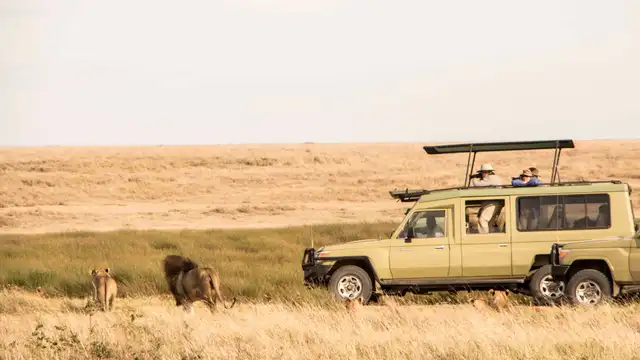
What is famous about a Tanzania safari?
A Tanzania safari is known for the Serengeti, the Great Wildebeest Migration, and Ngorongoro Crater. Visitors also come for the Big Five, varied landscapes, and cultural visits. Game drives, birdwatching, and photography offer different ways to explore.
Tanzania has large national parks with grasslands, forests, lakes, and other habitats. A Tanzania safari offers chances to see animals in their natural surroundings. Its wildlife includes lions, elephants, giraffes, and many other species. Trips can suit families, couples, photographers, and both first-time and returning visitors.
Popular Tanzania safari packages
What makes a Tanzania safari famous?
1. The Great Wildebeest Migration
The Great Wildebeest Migration is a main reason people choose a Tanzania safari. Each year, millions of wildebeest, zebras, and gazelles move through the Serengeti ecosystem. They follow fresh grass and water as conditions change.
Large herds spread across the plains during different stages of the migration. River crossings involve animals moving through waters where crocodiles live. The stage you may see depends on your travel dates and the herds' movements. This seasonal event draws photographers, wildlife lovers, and families.
2. Serengeti National Park
Serengeti National Park is a major stop on a Tanzania safari. Its wide grasslands support many animals throughout the year. Lions, elephants, cheetahs, giraffes, and zebras are among the species found here.
Game drives offer chances to watch wildlife in open landscapes. Different parts of the park have different scenery and wildlife experiences. These varied areas give visitors more to explore during their stay.
3. The Big Five
Many visitors choose Tanzania for the chance to see the Big Five. These animals are lions, leopards, elephants, rhinos, and buffaloes. Seeing all five during one trip is a goal for many safari travelers.
Wildlife destinations include the Serengeti, Ngorongoro Conservation Area, and Tarangire. A safari offers chances to watch animals in their natural habitats. Guides use their knowledge of animal behavior to help visitors look for wildlife. Sightings vary, so seeing every species is not guaranteed.
4. Ngorongoro Crater
Ngorongoro Crater is another well-known part of the Tanzania safari experience. It formed when a volcano collapsed. The crater supports wildlife throughout the year within a fairly small area.
Animals found here include lions, elephants, hyenas, buffaloes, and zebras. Visitors with limited time can explore the crater on a day visit. Crater walls, open grasslands, and seasonal lakes add variety to the landscape. These features make scenery an important part of the visit, alongside wildlife.
5. Large elephant herds in Tarangire
Tarangire National Park is known for its large elephant population. During the dry season, elephants gather around the Tarangire River. Visitors may watch elephant families feeding, bathing, and spending time together.
The park also supports lions, giraffes, zebras, wildebeest, and many bird species. Large baobab trees stand out in its landscape. These trees also provide shade for wildlife. Elephants, other animals, and varied scenery make Tarangire a popular safari stop.
6. Wildlife throughout the year
A Tanzania safari can include many animals and habitats in one trip. Different parks offer different experiences during both the dry and green seasons. Wildlife includes predators, plant-eating animals, reptiles, and hundreds of bird species.
This variety appeals to first-time visitors and experienced safari travelers. Protected areas and conservation work help support Tanzania's wildlife. Wildlife viewing is possible throughout the year, though conditions differ by place and season.
7. Birdwatching
Birdwatching is another reason to plan a Tanzania safari. The country has more than a thousand bird species across many habitats. These include lakes, forests, grasslands, and wetlands.
Flamingos gather along soda lakes, drawing visitors interested in birds and photography. Eagles, kingfishers, hornbills, storks, and weavers occur in several national parks. Tanzania offers options for casual birdwatchers and travelers focused on birding. Even visitors mainly interested in mammals can enjoy the variety of birdlife.
8. Cultural visits
A Tanzania safari can include learning about local communities as well as watching wildlife. Visits to Maasai villages can introduce travelers to customs, livestock keeping, homes, and daily life. Local guides help explain community values and traditions.
These visits offer insight into life near wildlife conservation areas. They also help visitors understand links between local communities and nature. Cultural tourism can support local livelihoods and community involvement in conservation.
9. Varied landscapes
The range of landscapes adds variety to a Tanzania safari. A trip can include grasslands, volcanic highlands, lakes, forests, river valleys, and rocky areas. Each habitat supports different wildlife and offers different subjects for photography.
Lake Manyara, the Ngorongoro Highlands, and the Serengeti show this variety. Changing scenery gives each place its own character. Visitors can enjoy landscapes alongside wildlife viewing throughout their trip.
10. Combining a safari with Zanzibar
A Tanzania safari can be combined with a beach holiday in Zanzibar. After wildlife viewing, visitors can spend time on white-sand beaches beside the Indian Ocean. This brings wildlife and time to relax by the coast into one holiday.
The combination appeals to couples, families, honeymooners, and groups seeking variety. Zanzibar also offers cultural attractions, local seafood, historical sites, and water activities. Adding beach time lets travelers explore another side of Tanzania.
Best time for a Tanzania safari
The dry season runs from June to October and is often a good time for a Tanzania safari. Animals gather near rivers, waterholes, and other remaining water sources. This can make wildlife easier to find. Rain is generally lower, though road conditions depend on the area and recent weather.
The migration has different stages throughout the year. Northern Serengeti river crossings often occur between July and September, but their timing varies. The green season, from November to May, brings fresh landscapes and varied birdlife. Some parks also receive fewer visitors during this period.
How to reach Tanzania for a safari
International entry points include Julius Nyerere International Airport in Dar es Salaam. Kilimanjaro International Airport near Arusha and Zanzibar's Abeid Amani Karume International Airport are other arrival options. Your route depends on the safari areas you plan to visit.
Kilimanjaro International Airport serves visitors heading to the northern safari circuit. This circuit includes the Serengeti, Ngorongoro Crater, Tarangire, and Lake Manyara. Onward travel can involve road transfers, scheduled domestic flights, or charter flights. The choice depends on your route and transport arrangements.
Travelers from neighboring East African countries can also arrive through land border crossings. A tour operator can help arrange airport transfers, accommodation, park access, and transport. Planning these details together helps connect the different parts of your trip.
Things to do on a Tanzania safari
Game drives are a main activity in the Serengeti, Tarangire, Lake Manyara, and Ngorongoro Crater. They offer chances to look for lions, elephants, giraffes, zebras, buffaloes, leopards, and other animals. In the Serengeti, travelers can also follow different stages of the Great Wildebeest Migration.
Birdwatching takes visitors through lakes, wetlands, forests, and grasslands. Photography and watching sunrises or sunsets offer other ways to enjoy these landscapes. Guided nature walks in selected areas help visitors learn about wildlife and habitats.
Beyond wildlife, a Tanzania safari can include cultural visits. Maasai village visits can cover livestock keeping, local customs, and community life. Some cultural tours include traditional dances, craft demonstrations, and conversations with local residents.
A hot air balloon ride offers a different view of the Serengeti's plains. Travelers can also add time in Zanzibar after their safari. Beach visits, historical sites, spice tours, and water activities provide a change from game drives.
What to pack for a Tanzania safari
Pack light, comfortable clothes in neutral colors such as khaki, brown, olive, or grey. Bring a wide-brimmed hat, sunglasses, sunscreen, and insect repellent. A light waterproof jacket helps with changing weather. Comfortable walking shoes are useful for camp activities and nature walks.
A camera, spare batteries, memory cards, and binoculars are useful for wildlife viewing and photography. For your Tanzania safari, also pack personal medicines, basic toiletries, and travel documents. Bring a reusable water bottle and a small backpack for daily outings. A light fleece or sweater helps during cool morning and evening game drives.
Booking a Tanzania safari with Lamz Tours and Travel
Lamz Tours and Travel plans Tanzania trips around your interests, budget, and travel dates. Your route can include the Serengeti, Ngorongoro Crater, Tarangire, Lake Manyara, or a Zanzibar beach stay. Trip planning covers transport, accommodation, park entry arrangements, and guides.
Trips can be tailored for solo travelers, couples, families, photographers, and private groups. You can combine wildlife viewing, cultural visits, and time exploring different landscapes. Discuss your priorities with Lamz Tours and Travel to shape a route that suits your plans.
How many days do you need for a Tanzania safari?
Allow around five to seven days for a northern Tanzania safari that includes the Serengeti without changing location every day. Three or four days can work if you focus on fewer parks. Eight to ten safari days give you more time in each area and room for longer transfers.
The sample routes below start and finish in Arusha. Allow additional time for international arrival and departure. Driving between parks takes up part of the day, so a transfer day should not be counted as a full day of wildlife viewing.
What can you include in a three- or four-day safari?
Keep a short road safari focused on Tarangire and Ngorongoro, rather than trying to add the Serengeti. A four-day route could look like this:
Day 1: Travel from Arusha to Tarangire for a game drive.
Day 2: Spend more time exploring Tarangire, then transfer towards the Ngorongoro Highlands.
Day 3: Visit Ngorongoro Crater and stay in the highlands area.
Day 4: Return to Arusha, with time for a planned stop if your onward arrangements allow.
For three days, leave out the second Tarangire day. This means more moving between places and less time to explore each park.
How does a seven-day safari compare?
Seven days allows you to include the Serengeti and spend consecutive nights there. This gives you full game-drive days between the longer road journeys.
Day 1: Travel from Arusha to Tarangire for wildlife viewing.
Day 2: Explore Tarangire before transferring towards the Ngorongoro Highlands.
Day 3: Travel to the Serengeti, with wildlife viewing as time allows.
Day 4: Spend the day exploring the Serengeti.
Day 5: Enjoy another Serengeti game-drive day.
Day 6: Leave the Serengeti and travel back towards Ngorongoro.
Day 7: Visit the crater before returning to Arusha.
With eight to ten days, add nights in the Serengeti or break up the return journey rather than automatically adding more parks. Your chosen Serengeti area affects travel time; reaching more distant areas may need extra nights or a flight, subject to suitable schedules.
How much time should you allow for Zanzibar or another extension?
Count extension days separately from safari days. For example, follow the seven-day route with a transfer to Zanzibar on day 8, beach time on days 9 to 11, and departure on day 12. Confirm flight connections before fixing the itinerary, and do not count the transfer day as a full beach day.
If you have only a week in total, a focused three-day safari and a short Zanzibar stay is more realistic than a multi-park safari followed by several beach days. For a mountain trek or a safari in another country, allow a separate block of days for that activity and its transfers rather than shortening every park visit.
Choosing your Tanzania safari style and accommodation
Your accommodation, travel arrangements and game-drive format shape the daily experience of a Tanzania safari. Choose these together: staying in a lodge or tented camp does not automatically mean you will have a private vehicle.
How do camping, lodge-based and tented-camp trips differ?
Camping trips use camping tents. Ask who sets them up, what bedding is supplied and whether guests help with camp tasks. Lodge-based trips use rooms in permanent buildings, while tented camps use tented guest accommodation. Neither label alone tells you the comfort level or facilities.
Compare the actual accommodation proposed for each night, rather than choosing by category alone. A tented camp should not be assumed to have shared bathrooms, and a lodge should not be assumed to offer every facility you need.
Should you choose a private or shared-group safari?
A private safari keeps the safari vehicle and guide for your party, with more scope to agree on daily priorities within the itinerary and park rules. Confirm which activities and transfers are private, as some parts of the trip may still be shared.
A shared-group safari brings travelers together around a set route and timetable. There is less scope to change plans independently. Ask about group size, vehicle seating, departure requirements and how game-drive decisions are made.
How do road-based and fly-in safaris compare?
A road-based safari connects stops by vehicle, so time spent driving between places is part of the experience. Ask for realistic transfer estimates and whether the same vehicle and guide stay with you throughout.
A fly-in safari uses flights for some connections, followed by ground transfers and game drives. It can reduce long road journeys on suitable routes, but airport procedures and airstrip transfers still take time. Confirm flight schedules, baggage limits and whether vehicles at your destination are private or shared. A trip can also combine road travel and flights.
What accommodation details should you confirm before booking?
Bathrooms: Are toilets and showers private or shared, and attached to the room or tent? Ask how hot water is provided.
Room configuration: Confirm double or twin beds, any extra beds, and whether family members will share one unit or use separate rooms.
Practical needs: Check electricity and charging arrangements, dietary requirements, accessibility needs and any steps or walking distances that matter to your party.
Location: Ask where each property is in relation to the planned game-drive areas and what this means for daily travel.
What transfer arrangements should be clear in your booking?
Request a written itinerary showing pickup and drop-off points, who handles each transfer and which journeys are included. For flights, confirm the airport or airstrip, baggage allowance and onward vehicle arrangements. Check how arrival and departure times connect with your first and last nights, including whether an additional overnight stay is needed.
Planning a Tanzania safari with children
How should you plan driving time and rest breaks?
Build each day around how long your children are comfortable in a vehicle. Ask for estimated driving times that include transfers and wildlife viewing, rather than distances alone. Agree on toilet and meal stops with your guide, and plan breaks at designated places where leaving the vehicle is permitted.
Keep game drives shorter if children tire easily, and leave time for meals, naps and quiet afternoons. Avoid combining a long transfer with a full game-drive schedule. Staying longer in fewer places also reduces packing and helps children settle into a routine.
What should families check before booking?
Confirm that the proposed room arrangements suit your children's ages, including bed provision and whether an adult must stay in each room. If booking separate rooms, ask whether connecting or adjacent rooms can be confirmed rather than assumed.
Check the accommodation's child policies and the age restrictions for every planned activity, particularly walks and balloon rides. Requirements can vary by property and activity provider. Ask for suitable alternatives before committing to the itinerary.
What should you share when requesting a tailored itinerary?
Give Lamz Tours and Travel each child's age at the time of travel, their interests and their experience of longer road journeys. Mention preferred daily driving limits, nap times and whether early starts work for your family.
Include your travel dates, trip length, budget, room preferences and any dietary, allergy, health or mobility needs relevant to planning. Explain what would keep your children interested, such as birds, animal behaviour or photography, and which activities matter most to the family.
Frequently asked questions
What is a Tanzania safari famous for?
A Tanzania safari is known for the Serengeti, the Great Wildebeest Migration, and Ngorongoro Crater. Travelers also visit for the chance to see the Big Five and explore varied landscapes. Cultural visits offer ways to learn about local communities.
When is the best time for a Tanzania safari?
The dry season, from June to October, is often a good time for wildlife viewing. Animals gather near rivers, waterholes, and other remaining water sources. Wildlife viewing is possible throughout the year, though conditions vary by place and season. From November to May, the green season brings fresh landscapes, varied birdlife, and fewer visitors in some parks.
When can I see the Great Wildebeest Migration in Tanzania?
The migration has different stages throughout the year. Wildebeest, zebras, and gazelles follow fresh grass and water through the Serengeti ecosystem. Northern Serengeti river crossings often occur between July and September, but their timing varies. What you may see depends on your travel dates and the herds' movements.
Can I see the Big Five on a Tanzania safari?
A Tanzania safari offers chances to see lions, leopards, elephants, rhinos, and buffaloes, known as the Big Five. Wildlife destinations include the Serengeti, Ngorongoro Conservation Area, and Tarangire. Sightings vary, so seeing all five on one trip is not guaranteed.
What should I pack for a Tanzania safari?
Pack light, comfortable clothing in neutral colors and comfortable walking shoes. Bring a fleece or sweater for cool morning and evening game drives. Add a hat, sunglasses, sunscreen, insect repellent, and a light waterproof jacket.
Binoculars and a camera are useful for wildlife viewing and photography. Pack spare camera batteries and memory cards. Bring personal medicines, travel documents, and a reusable water bottle too.
Can I combine a Tanzania safari with Zanzibar?
Yes, a Tanzania safari can be combined with a beach holiday in Zanzibar. After wildlife viewing, you can spend time on white-sand beaches beside the Indian Ocean. Zanzibar also offers historical sites, spice tours, cultural attractions, and water activities.
Ready to plan your safari?
Talk to a Lamz Tours specialist and get a tailor-made quote.
Make an enquiry