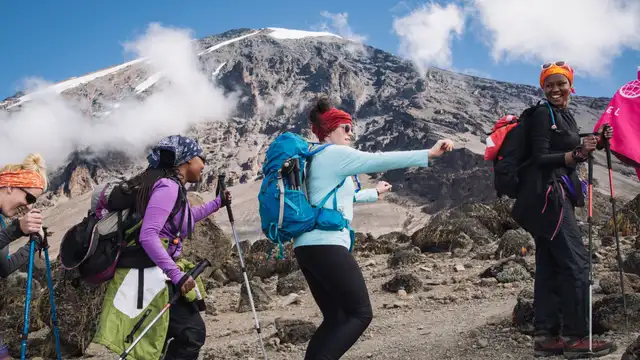
A Tanzania Safari that ends with a Kilimanjaro climb is not just a holiday—it is a physical and emotional arc that moves from the highest point in Africa to the greatest wildlife spectacle on the continent. Hidden within this combination is the chance to earn your views, trading the exhaustion of summit night for the exhilaration of game drives across the Serengeti, creating a journey that feels earned rather than simply observed.
On a Tanzania Safari, the appeal of combining these two experiences rests on their contrasts. Kilimanjaro demands preparation, grit, and a tolerance for cold and altitude, while the Serengeti offers a slower, more reflective pace where the drama unfolds around you rather than beneath your feet. Whether you climb first and celebrate on safari, or safari first and finish on the summit, these combinations add depth to your journey. Many Tanzania Safari operators now design these paired itineraries, proving that Africa's highest peak and its greatest wildlife park belong in the same trip.
Popular Lamz Tours and Travel Tanzania Safari Packages
What Are Some of the Best Experiences of Combining Serengeti Safaris with Kilimanjaro Hiking Tour?
The Sunrise at Uhuru Peak on a Tanzania Safari
The summit morning is the moment that justifies every step, and it is the experience most climbers carry with them long after the safari ends. You wake around midnight at Barafu Camp, climb through the dark and cold for six to eight hours, and reach Stella Point as the first light breaks over the crater rim. The final hour to Uhuru Peak at 5,895 metres is a slow, deliberate walk along a snow-covered trail, with temperatures that can drop to minus 20°C or lower. Standing above the clouds as the sun rises over Tanzania is described by climbers as unforgettable, a moment where the physical cost of the climb dissolves into something closer to awe. It is the kind of experience that makes the subsequent safari feel like a reward rather than a separate trip.
The Serengeti as a Celebration on a Tanzania Safari
After the intensity of summit night, the Serengeti offers a completely different kind of immersion, one where you are seated, watching, and letting the landscape come to you. Game drives reveal lions resting in the shade, elephants crossing near the vehicle, and giraffes moving elegantly across the plains. If your timing aligns with the migration, you may witness massive wildebeest herds stretching to the horizon, or a leopard draped across a tree branch above the road. The lodges and camps provide a comfortable contrast to the mountain's austerity, with good food and a rhythm that allows your body to recover while your mind absorbs the scale of what you have just accomplished. This is the part of the trip where the achievement of the climb settles into something quieter and more reflective.
Choosing the Right Route for the Climb on a Tanzania Safari
The route you choose for Kilimanjaro has a direct impact on whether you reach the summit and how much you enjoy the safari that follows, and the differences are significant. The Lemosho Route on an 8-day itinerary is widely recommended for first-time trekkers, with success rates of 90% or above due to its gradual ascent and excellent acclimatisation profile. The Machame Route on 7 days offers a strong 85% success rate and dramatic scenery, though it is busier than Lemosho. The Northern Circuit at 9 to 10 days has the highest success rates but requires more time and budget. Shorter routes like Marangu on 5 days see success rates drop to around 50-60%, making them a poor choice if the summit is your priority. Choosing a longer, slower route is the single most effective decision you can make for your chances of standing on Uhuru Peak, and it also leaves you less depleted for the safari days that follow.
The Practical Transition Between Mountain and Savannah
The logistics of moving from Kilimanjaro to the Serengeti are simpler than they might appear, but they require a deliberate pause. After descending to Moshi, most well-designed itineraries include a rest day before the safari begins, allowing your body to recover from the climb and your gear to be reorganised. The drive from Moshi or Arusha to the Serengeti takes several hours, or you can take a short domestic flight to a Serengeti airstrip. The transition is also physical: you move from sleeping in tents at altitude to lodges or permanent camps at lower elevations, from freeze-dried meals to full menus, and from the singular focus of the summit to the open-ended possibility of the plains. Building in this pause is not a luxury but a necessity if you want to enjoy the safari rather than simply endure it.
Best Time to Combine Kilimanjaro and the Serengeti on a Tanzania Safari
Timing a combined Kilimanjaro and Serengeti trip requires finding the window that works for both, and the dry seasons offer the most reliable conditions. For the climb, January to March and June to October provide the most stable weather, clearer skies, and better trail conditions. For the Serengeti, June to October is the classic dry season, with wildlife gathering around water sources and the Great Migration moving through the northern plains. The overlap between June and October is therefore the strongest window for a combined trip, though it is also the busiest and most expensive period. January to March offers a quieter alternative for the climb, with the bonus of calving season in the southern Serengeti, though the migration is not at its most dramatic. The long rains from March to May are best avoided for both, as trails become slippery and some safari camps close.
Why Book with Lamz Tours and Travel for a Combined Kilimanjaro and Serengeti Safari
Booking your Tanzania Safari with Lamz Tours and Travel ensures your combined climb and safari experience is planned with realistic pacing and honest advice about route choice. Lamz Tours and Travel operates across multiple African countries, including Tanzania, Kenya, Uganda, Rwanda, South Africa, Botswana, Zambia, and Namibia. Our local guides know which Kilimanjaro routes give you the best chance of summit success, how to structure the rest day between mountain and savannah, and which Serengeti camps position you best for the season's wildlife movements.
We handle everything, including mountain permits, route selection, lodge and camp bookings, internal flights, airport transfers, and private transport. You focus on the climb and the wildlife. We handle everything else.
Ready to plan your safari?
Talk to a Lamz Tours specialist and get a tailor-made quote.
Make an enquiry