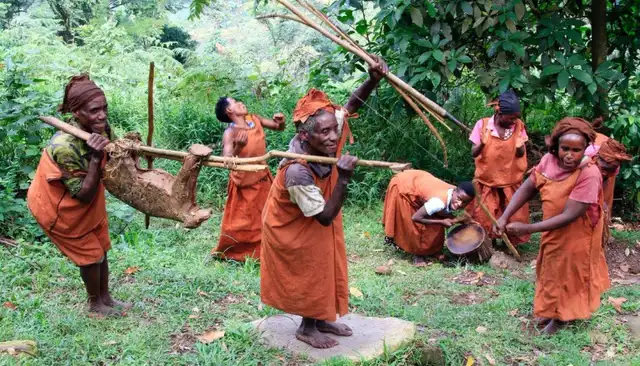
During a gorilla trekking safari in Bwindi Impenetrable National Park in southwestern Uganda you are more than likely to engage on a captivating cultural tour to discover the unique culture of the Batwa Pygmies. Besides the mountain gorillas, the dense Bwindi Impenetrable forest also shelters other remarkable primates such as chimpanzees, colobus monkeys, and various monkey species. The avian diversity is astounding, with vibrant bird species like the African green broadbill and numerous others adding a symphony of sounds to the forest. Additionally, Bwindi houses various mammalian inhabitants, including forest elephants, buffalos, and a myriad of smaller mammals and reptiles.
Also known as the "Guardians of the Forest," these indigenous people possess a cultural richness that extends deep into the heart of Africa. Originally inhabitants of the forests surrounding Bwindi Impenetrable National Park, the Batwa people thrived in harmony with nature for over 500,000 years, relying on the forest for sustenance and living with a minimal ecological footprint. However, their lives took a drastic turn in the early 1990s when Mgahinga Gorilla National Park and Bwindi Impenetrable Forest were established for wildlife protection, particularly for the conservation of the Mountain Gorillas. Forced to leave their traditional grounds, the Batwa became conservation refugees, adapting to a modern environment that rendered their traditional skills and means of subsistence obsolete. Today, many live as squatters in communities around the forests, engaging in small-scale farming and providing labor for sustenance, embodying their resilience in the face of change.
Scattered throughout districts such as Kisoro, Kabale, Kanungu, Bundibigyo, Mbarara, Ntungamo, Lwengo, Mubende, and beyond, the Batwa's existence reflects a profound connection to their roots. A cultural tour offers a glimpse into the serene Batwa village life, allowing visitors to explore a traditional Batwa homestead, witness the intricate preparation of a traditional meal by the women, and savor the flavors of their culinary heritage.
This cultural tour among the Batwa will ensure that you engage with a medicine man to unravel the forest flora's medicinal properties, listen to ancient legends and traditional songs, and learn about their skilled hunting techniques and resourceful use of rudimentary tools and materials. The tour provides an immersive experience into the resilient spirit and cultural treasures of the Batwa, highlighting the ongoing efforts to preserve their unique way of life amidst contemporary challenges.
Language and Communication
The Batwa Pygmies have a unique linguistic identity, with a distinct language characterized by its complexity and tonal variations. Their language serves as a crucial tool for communication within their tight-knit community, allowing them to preserve their rich oral traditions and cultural stories.
Unique General Appearance
With an average height of around 4 feet, the Batwa are known for their diminutive stature. Despite their small size, their physical strength and agility are remarkable, reflecting their adaptation to the dense forests that have been their ancestral home for centuries.
Housing and Nomadic Lifestyle
Traditionally, the Batwa lived in temporary dwellings constructed from materials found in the forest. Their nomadic lifestyle involved moving from one location to another, constructing shelters suited to their immediate needs and the resources available in the surrounding environment.
Cultural Practices and Traditions
The Batwa culture is rich in rituals, dances, and ceremonies that play a crucial role in expressing their deep connection with the forest and the spirits they believe inhabit it. These practices contribute to the preservation of their cultural identity.
Entertainment and Artistic Expression
Entertainment among the Batwa often revolves around music and dance. Through rhythmic drumming, chanting, and expressive dances, they celebrate various milestones, tell stories, and express their emotions, creating a vibrant tapestry of cultural expression. If you visit their community, they happily employ all their skills to entertain their visitors. This is seen in the way they charmingly dance and sing as they skillfully squeeze great melodious tunes out of their cultural instruments onto which the dancing bodies respond.
Surroundings and Forest Connection
The Batwa Pygmies have a profound connection to their forest surroundings, viewing it not merely as a habitat but as a sacred space. The forest provides them with food, medicine, and materials for daily living, forming an integral part of their identity.
Dietary Preferences and Foraging Skills
The Batwa have traditionally relied on hunting and gathering for sustenance. Their intimate knowledge of the forest allows them to forage for a variety of foods, including fruits, roots, and wild game, reflecting a sustainable lifestyle deeply intertwined with nature.
Social Structure and Community Dynamics
The Batwa community operates on a communal social structure, emphasizing cooperation and mutual support. Elders play a vital role in decision-making, passing down traditions, and resolving disputes, fostering a sense of unity within the community.
Marriage Customs and Family Bond
Marriage among the Batwa involves a series of rituals and ceremonies, symbolizing the union not only of individuals but also of families. Family bonds are highly valued, and the extended family often plays a significant role in childcare and support.
Challenges and Cultural Preservation
The Batwa face numerous challenges, including displacement from their ancestral lands and limited access to resources. Efforts are underway to address these issues and preserve their cultural heritage, ensuring that future generations can continue the traditions of their forebears.
Adaptations to Modern Influences
As external influences encroach upon their traditional way of life, the Batwa are navigating the delicate balance between preserving their cultural practices and adapting to the modern world. This adaptation poses both opportunities and challenges for their continued existence.
The Significance of your visit to the Batwa Pygmies
In exploring the lives of the Batwa Pygmies, during a cultural tour, you will uncover a resilient community with a profound connection to nature and a cultural legacy worth preserving. As we reflect on their unique language, appearance, housing, culture, entertainment, surroundings, preferences, social structure, and marriage customs, among others you will gain a deeper appreciation for the diversity that enriches the tapestry of humanity. It is a call to action to ensure the protection of their heritage, recognizing the invaluable contribution of the Batwa to our shared story as human species. By visiting the Batwa people, you are helping to keep these people, traditions and their culture alive. You are as well providing income, infrastructure, and giving support to the neglected and maligned first people of the forest.
Ready to plan your safari?
Talk to a Lamz Tours specialist and get a tailor-made quote.
Make an enquiry