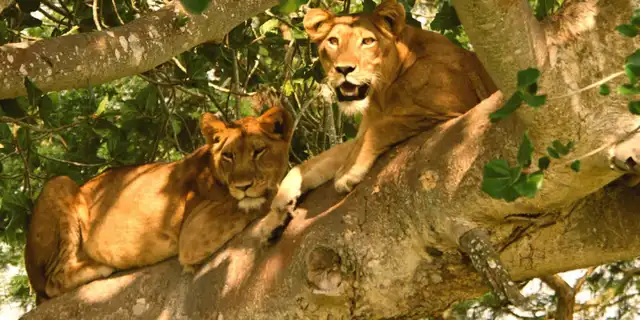
Uganda’s tree climbing lions safari FAQs. Besides gorilla trekking safaris in Bwindi, the Ishasha sector of Queen Elizabeth National Park in western Uganda is renowned for its population of tree-climbing lions. This is a unique phenomenon that attracts travelers throughout the world to this park. Here, amidst the vast savannah and pleasing landscapes, lions exhibit a behavior rarely seen elsewhere: ascending fig and acacia trees to rest, observe their surroundings, and seek respite from the African sun. This distinctive trait has made Ishasha a hotspot for safari enthusiasts seeking the thrill of witnessing these majestic predators in an unconventional setting.
As visitors traverse the open plains and dense woodlands of Ishasha, the sight of lions draped lazily across tree branches creates an indelible image of the wild, showcasing nature's remarkable adaptability and the rich biodiversity of Queen Elizabeth National Park.
These are some of the frequently asked questions by travelers on safaris in Uganda to see the tree climbing lions at Queen Elizabeth National Park;
- Are there really tree-climbing lions in Queen Elizabeth National Park?
Yes, tree-climbing lions are a unique feature of Queen Elizabeth National Park.
- Why do lions climb trees in Queen Elizabeth National Park?
Lions climb trees in Queen Elizabeth National Park to escape the heat, avoid insects, and gain vantage points for hunting.
- How common is it to see tree-climbing lions in Queen Elizabeth National Park?
Spotting tree-climbing lions in Queen Elizabeth National Park depends on various factors, including the time of day and luck, but it's not guaranteed.
- Which areas of Queen Elizabeth National Park are known for tree-climbing lions?
The Ishasha sector of Queen Elizabeth National Park is renowned for its population of tree-climbing lions.
- What time of day are tree-climbing lions most active in Queen Elizabeth National Park?
Tree-climbing lions in Queen Elizabeth National Park are typically more active during the cooler early morning and late afternoon hours.
- How high do tree-climbing lions climb in Queen Elizabeth National Park?
Tree-climbing lions in Queen Elizabeth National Park may ascend trees to heights ranging from a few meters to over 10 meters.
- Are tree-climbing lions dangerous to humans in Queen Elizabeth National Park?
Like all lions, tree-climbing lions in Queen Elizabeth National Park should be observed from a safe distance to avoid any potential danger.
- What do tree-climbing lions eat in Queen Elizabeth National Park?
Tree-climbing lions in Queen Elizabeth National Park primarily prey on antelopes, Uganda kob, and other small to medium-sized mammals.
- How long do tree-climbing lions spend in trees in Queen Elizabeth National Park?
Tree-climbing lions in Queen Elizabeth National Park may spend several hours resting or scouting for prey in trees, especially during the hotter parts of the day.
- Do all lions in Queen Elizabeth National Park climb trees?
Not all lions in Queen Elizabeth National Park climb trees; it's a behavior specific to certain prides, particularly in the Ishasha sector.
- Can tourists take guided tours to see tree-climbing lions in Queen Elizabeth National Park?
Yes, guided safari s in Uganda’s Queen Elizabeth National Park often include opportunities to search for and observe tree-climbing lions.
- How many prides of tree-climbing lions are there in Queen Elizabeth National Park?
Queen Elizabeth National Park is home to a few prides known for their tree-climbing behavior, though exact numbers may vary.
- Do tree-climbing lions have any predators in Queen Elizabeth National Park?
Adult tree-climbing lions in Queen Elizabeth National Park have few natural predators, though hyenas and other lions may pose threats to cubs.
- Are there any conservation efforts focused on protecting tree-climbing lions in Queen Elizabeth National Park?
Conservation efforts in Queen Elizabeth National Park encompass the protection of all wildlife, including tree-climbing lions, through habitat preservation and anti-poaching measures.
- What is the best time of year to visit Queen Elizabeth National Park to see tree-climbing lions?
The dry season, typically from June to September, offers better visibility and increased chances of spotting tree-climbing lions in Queen Elizabeth National Park.
- How far are tree-climbing lions usually from the main tourist areas in Queen Elizabeth National Park?
Tree-climbing lions may be found at varying distances from the main tourist areas in Queen Elizabeth National Park, requiring safari drives to locate them.
- Are there any restrictions on approaching tree-climbing lions in Queen Elizabeth National Park?
Yes, visitors must adhere to park regulations and maintain a safe distance from tree-climbing lions to ensure both their safety and the animals'.
- Can tree-climbing lions be found in other national parks in Uganda besides Queen Elizabeth National Park?
Tree-climbing lions are unique to certain areas, with Queen Elizabeth National Park being one of the primary locations to observe this behavior.
- How long do tree-climbing lions typically stay in one location in Queen Elizabeth National Park?
The duration tree-climbing lions spend in a particular tree or area of Queen Elizabeth National Park can vary based on factors like weather, prey availability, and disturbances.
- Are there any specific trees that tree-climbing lions prefer in Queen Elizabeth National Park?
Tree-climbing lions in Queen Elizabeth National Park may favor certain species of trees, such as fig trees, that offer sturdy branches and shade.
- Do tree-climbing lions hunt from trees in Queen Elizabeth National Park?
While tree-climbing lions may occasionally scout for prey from trees in Queen Elizabeth National Park, they typically hunt on the ground.
- Are there any notable sightings or stories about tree-climbing lions in Queen Elizabeth National Park?
Queen Elizabeth National Park boasts numerous memorable sightings and anecdotes about tree-climbing lions, adding to its allure for visitors.
- How many tourists visit Queen Elizabeth National Park each year to see tree-climbing lions?
Queen Elizabeth National Park attracts thousands of tourists annually, with many eager to catch a glimpse of its famed tree-climbing lions. Other tourists engage in various safaris in Uganda, including gorilla trekking safaris, chimpanzee trekking safaris and birding safaris among others.
- Can visitors track tree-climbing lions on foot like gorilla trekking safaris?
Guided walking safaris in Uganda’s Queen Elizabeth National Park typically focus on observing other wildlife and ecosystems, rather than tracking tree-climbing lions on foot.
- Are there any local myths or legends surrounding tree-climbing lions in Queen Elizabeth National Park?
Local communities may have traditional beliefs or stories about tree-climbing lions in Queen Elizabeth National Park, reflecting their cultural significance.
- What impact does tourism have on the behavior of tree-climbing lions in Queen Elizabeth National Park?
Responsible tourism practices help minimize disruptions to the behavior of tree-climbing lions in Queen Elizabeth National Park, ensuring their natural behaviors remain intact.
- Are there any ongoing research projects focused on tree-climbing lions in Queen Elizabeth National Park?
Researchers may conduct studies on various aspects of tree-climbing lion behavior, population dynamics, and conservation in Queen Elizabeth National Park.
- Do tree-climbing lions interact differently with visitors compared to lions that don't climb trees in Queen Elizabeth National Park?
Tree-climbing lions in Queen Elizabeth National Park generally exhibit similar behaviors to other lions, though their tree-climbing tendencies may intrigue and fascinate visitors.
- What measures are in place to protect the habitats of tree-climbing lions in Queen Elizabeth National Park?
Conservation organizations and park authorities implement habitat protection measures, including anti-poaching efforts and community engagement, to safeguard the habitats of tree-climbing lions in Queen Elizabeth National Park.
- How have tree-climbing lions in Queen Elizabeth National Park contributed to the park's reputation as a premier wildlife destination?
The presence of tree-climbing lions adds to the allure and mystique of Queen Elizabeth National Park, enhancing its reputation as a must-visit destination for wildlife enthusiasts and nature lovers alike.
List of the top itineraries
Booking wildlife safaris in Uganda with Lamz Tours and Travel
As a local tour operator based in East Africa, Lamz Tours and Travel is proud to offer custom-made safaris in Uganda. For any inquiries or reservations contact us via email at info@Lamz Tours and Travel.com and Lamz Tours and Travel@gmail.com for detailed itineraries and booking information. For personalized assistance, kindly reach out via phone call or WhatsApp to +000 000 000 000 and +000 000 000 000 and enjoy your wildlife safaris in Uganda’s Queen Elizabeth National Park.
Ready to plan your safari?
Talk to a Lamz Tours specialist and get a tailor-made quote.
Make an enquiry