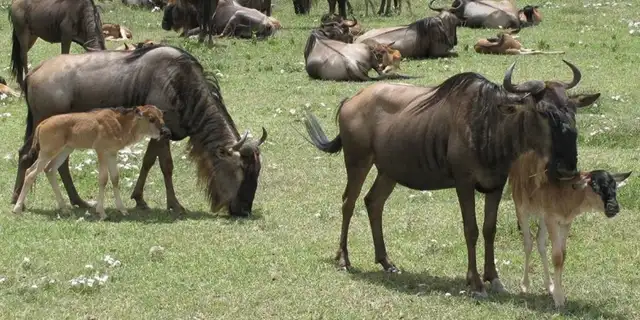
Traveling for Serengeti calving season. Traveling from the US or Europe to Tanzania for the Serengeti calving season is an exciting adventure that requires careful planning and preparation. For this journey, travelers can first book a flight from major cities in the US or Europe to Kilimanjaro International Airport or Julius Nyerere International Airport in Tanzania. From there, they can arrange for a connecting flight or ground transportation to reach the Serengeti National Park, where the Serengeti calving season unfolds in all its splendor. The Serengeti calving season, occurring from January to March, is a prime time to witness the Great Migration and the birth of wildebeest calves, making it a must-see event for wildlife enthusiasts and nature lovers alike.
Once in Tanzania, travelers can choose from a variety of accommodation options near the Serengeti National Park to experience the Serengeti calving season up close. Lodges, tented camps, and luxury safari resorts offer comfortable and immersive stays amidst the stunning landscapes and abundant wildlife of the region. Many accommodations provide guided safari tours and activities tailored to the Serengeti calving season, allowing guests to witness the natural wonders of the Great Migration and the interactions between predators and prey in this critical period. Staying at a lodge or camp near the Serengeti also provides opportunities for night drives and bush walks to further explore the wilderness and observe the nocturnal activities of the animals during the calving season.
During their stay in Tanzania for the Serengeti calving season, travelers can participate in guided safari excursions led by experienced local guides who are knowledgeable about the region's wildlife and ecosystems. These safaris offer a chance to witness the wildebeest herds in action, as well as other iconic African wildlife such as lions, elephants, and giraffes against the backdrop of the Serengeti plains. The Serengeti calving season presents a unique opportunity to witness the circle of life in its rawest form, with the newborn wildebeest calves taking their first steps and facing the challenges of survival in the African wilderness. By joining guided safaris during this period, travelers can gain a deeper understanding of the natural processes and behaviors that define the Serengeti calving season.
To make the most of their journey to Tanzania for the Serengeti calving season, travelers can also engage in cultural experiences and interactions with local communities to learn more about the traditions and way of life in the region. Visiting nearby Maasai villages or participating in cultural exchanges can provide insights into the rich heritage and customs of the Maasai people, who have coexisted with the wildlife of the Serengeti for generations. By immersing themselves in the local culture and connecting with the communities around the national park, travelers can deepen their appreciation for the natural beauty and biodiversity of the Serengeti calving season, creating lasting memories of a truly unforgettable safari experience in Tanzania.
What to bring for Serengeti calving season safaris
When preparing for Serengeti calving season safaris, travelers should pack essential items to make the most of this unique wildlife spectacle. The Serengeti calving season, occurring from January to March, offers a remarkable opportunity to witness the Great Migration and the birthing of wildebeest calves in the vast plains of the national park. During the best time to visit Serengeti for calving season safaris, which is from January to March, travelers should pack clothing suitable for both warm days and cool nights, as well as sturdy hiking boots for exploring the rugged terrain while observing the wildlife.
Binoculars are indispensable for Serengeti calving season safaris, particularly during the best time to visit Serengeti for calving season when the plains are teeming with wildebeest and other wildlife. High-quality binoculars will enable travelers to witness the intricate details of the Great Migration and the interactions between predators and prey from a distance. Along with binoculars, a wildlife guide specific to the region can enhance the safari experience by providing insights into the behaviors and movements of the animals during this critical period.
Travelers on Serengeti calving season safaris should also consider bringing a camera or smartphone with a good zoom lens to capture the breathtaking moments of the Great Migration and the wildebeest calves' first steps. The Serengeti's calving season offers unparalleled photographic opportunities, with dramatic scenes unfolding against the backdrop of the African wilderness. Additionally, a backpack with essentials such as water, snacks, sunscreen, and insect repellent is essential for a comfortable and memorable safari experience during this remarkable time in the Serengeti National Park.
In addition to the gear mentioned above, travelers visiting the Serengeti during the calving season may also want to consider packing a lightweight rain jacket or poncho, as there is a possibility of occasional showers during this period. The rainy season brings a refreshing change to the landscape, with lush greenery and vibrant flowers adding to the beauty of the surroundings. Being prepared for varying weather conditions will ensure that travelers can fully enjoy the sights and sounds of the Serengeti during this dynamic time of year.
For those interested in birdwatching during the calving season, it is recommended to bring a bird field guide specific to the region to identify the various bird species that can be spotted amidst the Great Migration. The Serengeti is home to a diverse avian population, and having a guidebook handy can enhance the birdwatching experience by providing information on the unique behaviors and habitats of the birds in the area. Additionally, a notebook and pen can be useful for jotting down observations and keeping track of bird sightings throughout the safari.
As the Serengeti calving season coincides with the beginning of the year, travelers may also consider packing a journal or diary to document their experiences and reflections during this special journey. Keeping a travel journal can capture the emotions and memories of witnessing the circle of life unfold in the African wilderness, making it a cherished keepsake to look back on in the years to come. Whether it's jotting down daily sightings, sketching wildlife encounters, or simply recording thoughts and feelings, a journal can add a personal touch to the safari adventure in the Serengeti.
List of the best itineraries for Tanzania safaris
Book activities in Serengeti National Park with Lamz Tours and Travel
As a local tour operator based in East Africa, Lamz Tours and Travel is proud to offer the most desirable tourist packages for activities in Serengeti National Park. For any inquiries, detailed itineraries or reservations contact us via email at info@Lamz Tours and Travel.com and Lamz Tours and Travel@gmail.com. For personalized assistance, kindly reach out via phone call or WhatsApp to +000 000 000 000 and +000 000 000 000.
Ready to plan your safari?
Talk to a Lamz Tours specialist and get a tailor-made quote.
Make an enquiry