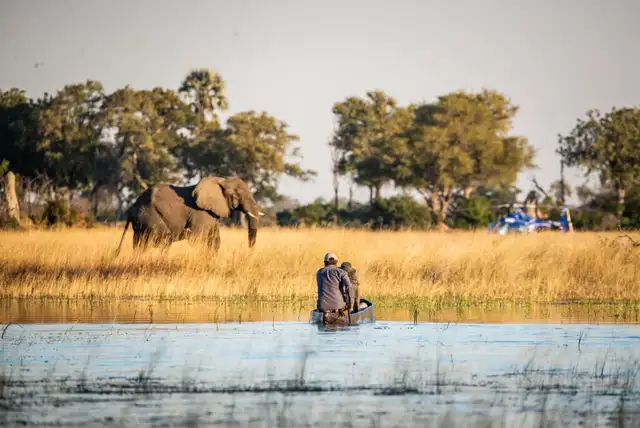
Botswana safaris and tours feature Okavango Delta, Chobe elephants, Moremi predators, Makgadikgadi salt pans, and Kalahari silence with diverse wildlife year-round
Wondering where to start with Botswana safaris and tours? This country offers some of Africa’s most diverse and rewarding safari destinations, each with its own unique character. The Okavango Delta stands out for its mokoro canoe rides and year-round wildlife around permanent water channels, while Chobe National Park is famous for hosting the world’s largest elephant herds along the riverbanks. Moremi Game Reserve adds predator-rich drives with reliable wild dog sightings, and Makgadikgadi Pans provide surreal salt flats and seasonal zebra migrations. For travelers seeking silence and remoteness, the Central Kalahari delivers vast desert landscapes and black-maned lions, while Khwai and Linyanti concessions allow night drives and private experiences. Savuti offers dramatic predator action, Tuli Block showcases rugged terrain with tusker elephants, and Nxai Pan highlights zebra migrations near ancient baobabs. Together, these destinations make Botswana safaris and tours truly exceptional
Best Botswana safari packages
3 Days Best of Botswana Safari in Moremi Game Reserve
3 Days Botswana Safari in Chobe National Park from Victoria Falls
3 Days classic Chobe family safari packages
4 Day Botswana Safari with Makgadikgadi Zebra Migration Experience
4 Days Botswana Tour Combo with Chobe Safari and Victoria Falls
5 Days Botswana Tour in Okavango Delta and Moremi Game Reserve
5 Days Botswana Wildlife Safari
6 Days Botswana Family Safari in the Okavango Delta & Makgadikgadi NP
7 Days Makgadikgadi Pans, Okavango Delta, and Chobe Botswana Safari
The Top Must Visit Destinations for Botswana Safaris and Tours
1. Okavango Delta
The Okavango Delta is a huge inland floodplain in the desert, making it a top stop for Botswana safaris and tours. Water fills the land during dry months, so you see hippos, elephants, and lions near the channels. You move by mokoro (dugout canoe) to watch animals without engine noise. Walking on small islands with a guide is safe because they track fresh prints. This place works well for visitors who want both boat trips and land drives. Many Botswana safaris and tours start here because wildlife stays close to permanent water year-round. The delta does not connect to the sea, so all water comes from Angola's rain. Bring good binoculars and ask about camp locations before booking.
2. Chobe National Park
Chobe holds the world's biggest elephant herds, often over 100,000 animals, which matters for Botswana safaris and tours focused on big game. You take river boats in the afternoon to watch elephants swim between islands and spray water. The boat gives you eye-level views without blocking the animals' path. Land drives in the early morning show lions, buffalo, and zebra along the riverbanks. This park solves a common problem: seeing animals far away. Here, herds come close to drink, so you get clear photos. For Botswana safaris and tours, the Chobe River cruise is a practical way to see many species in two hours. Pack a jacket because boat rides get windy.
3. Moremi Game Reserve
Moremi protects the eastern side of the Okavango Delta and is known for wild dog sightings, a key reason to book Botswana safaris and tours here. The reserve mixes dry land with swamp, so you see predators and prey in one drive. Leopards rest in trees while red lechwe antelopes stand in shallow water. Unlike national parks, Moremi allows walking with armed rangers, which helps you learn tracks and scat. The main concern for travelers is getting stuck in mud, so local operators use proper 4x4 vehicles. For reliable Botswana safaris and tours, Moremi offers permanent water sources, meaning animals do not leave during dry months. Check if your trip includes both morning and afternoon drives for best coverage.
4. Makgadikgadi Pans
These giant salt flats cover an area the size of Switzerland and offer a strange, white landscape for Botswana safaris and tours that feel different from bush drives. In dry months, you ride quad bikes across hard salt crust with nothing on the horizon. The surface is safe and flat, so no special driving skill is needed. From November to March, zebras and wildebeest arrive when rain fills shallow pools. You also see meerkats that let people sit near them because they are used to guides. For Botswana safaris and tours, this place solves the problem of overcrowding—you might see no other vehicles all day. Bring sunglasses and lip balm because the salt reflects sunlight strongly.
5. Central Kalahari Game Reserve
This is one of the largest protected areas on earth, covering 52,800 square kilometers, and works for Botswana safaris and tours that want total silence and few other tourists. Black-maned lions hunt gemsbok (oryx) near Deception Valley, a dry fossil riverbed. The reserve has no permanent water, so animals spread out after rains. You drive long distances between sightings, which suits people who enjoy driving more than sitting at camps. Local San Bushmen guides show you how to find water from tubers and track animals by footprints. For Botswana safaris and tours, this region provides real desert conditions hot days and cold nights. Bring extra fuel and water because no services exist inside the park.
6. Khwai Concession
Khwai sits between Moremi and Chobe and allows night drives and off-road tracking, two activities banned in national parks. This freedom makes Botswana safaris and tours here better for seeing leopards, hyenas, and wild dogs at night. The concession is run by local communities, so your money goes directly to village schools and clinics. You stay in small camps with bush views and drive straight to animal tracks without staying on roads. A common worry is missing nocturnal animals—Khwai solves this by using spotlights after dark. For Botswana safaris and tours, this area gives you more control over where the vehicle goes. Ask your guide to show you porcupines and aardvarks, which come out after sunset.
7. Savuti (Chobe National Park)
Savuti is a remote part of southern Chobe famous for lion prides that hunt adult elephants during dry months. This rare behavior attracts Botswana safaris and tours looking for real predator action. The Savuti Channel flows and stops without warning scientists still do not know why. When water runs, zebras and impalas gather, and lions follow. The landscape has rocky outcrops where you park and watch for an hour without moving. For travelers worried about boring drives, Savuti offers constant movement because predators are always hunting. The roads are rough, so only experienced drivers or local guides should enter. For Botswana safaris and tours, Savuti works best from July to October when animals crowd around remaining waterholes. Bring dust masks for dry roads.
8. Linyanti Wildlife Reserve
Linyanti sits northwest of Chobe and has private concessions with fewer vehicles, which helps Botswana safaris and tours focused on quiet game viewing. The reserve runs along the Linyanti River, which stays full even in dry months, so elephants come here in thousands from June to October. You watch lions and leopards hunt near the water's edge from hides built low to the ground. The main benefit for visitors is privacy only a few camps exist, and they limit vehicle numbers. Night drives are allowed here, so you see porcupines, genets, and bushbabies that national parks hide. For Botswana safaris and tours, this area fixes the problem of crowded riverbanks found in Chobe's main section. Bring a good telephoto lens because animals are close but you want to keep distance for safety.
9. Tuli Block
The Tuli Block is a narrow strip of land in eastern Botswana along the Limpopo River, known for rocky hills and ancient baobab trees. This area works for Botswana safaris and tours that want elephant views without large crowds. The elephants here are known as "tuskers" because their tusks grow very long and heavy. You drive on rocky paths between massive boulders, which gives you high ground to scan for leopards hiding in shade. A common worry for travelers is getting stuck on stones, so local operators use modified vehicles with reinforced tires. For Botswana safaris and tours, Tuli offers a dry, rugged landscape different from the Delta's water channels. Visit between May and August when temperatures are cooler and snakes are less active on the roads.
10. Nxai Pan National Park
Nxai Pan is a large salt pan just north of Makgadikgadi and famous for zebra migration from December to February. This timing matters for Botswana safaris and tours planned in the green season, when other parks have muddy roads. Thousands of zebras and wildebeest come to drink at Baines' Baobabs, a group of ancient trees painted by a explorer in 1862. You drive on flat pan surfaces, which is easy for vehicles and gives you open views of running herds. The main concern for visitors is heat there is no shade except at camps. For Botswana safaris and tours, Nxai provides reliable zebra sightings at predictable times, so you plan your day without guessing animal locations. Bring a wide hat and drink two liters of water per person for morning drives.
11. Kgalagadi Transfrontier Park
This park crosses the border between Botswana and South Africa, forming one massive protected area of red sand dunes and dry riverbeds. For Botswana safaris and tours, Kgalagadi is the best place to see black-maned lions because they hunt gemsbok on open terrain with no hiding spots. The park has rest camps with fences, which helps families who worry about animals walking into sleeping areas. You drive between waterholes and wait lions come to drink every two to three hours. A practical issue is distance; the park entrance is far from Maun, so you need extra travel days. For Botswana safaris and tours, this destination suits people who prefer sitting and watching over constant driving. Pack warm clothes because desert nights drop to near freezing from May to August.
Best time to visit for Botswana safaris and tours
The best time for Botswana safaris and tours is the dry winter months from May to October. During this period, rain stops, and vegetation thins out, so animals gather around permanent water sources like the Okavango Delta and Chobe River. You see elephants, lions, and buffalo easily because they have fewer places to hide. The days are sunny and mild, but nights get cold from June to August, so pack warm jackets. This timing works well for first-time visitors who want reliable wildlife sightings without guessing where animals moved. Most Botswana safaris and tours charge higher prices from July to October because demand is high. Book camps six months ahead.
The wet summer months from November to March have benefits for specific travelers. Birdwatchers find this period best because migratory birds arrive and many species breed with bright feathers. The zebra migration at Nxai Pan and Makgadikgadi happens from December to February, with thousands of animals on open grass. Botswana safaris and tours cost less during these months, sometimes half the dry season price. The downsides are afternoon storms, muddy roads, and mosquitoes near standing water. This time suits repeat visitors who already saw big game and want landscape photos or bird lists.
How to get there for Botswana safaris and tours
Most visitors arrive by air. The main entry point for Botswana safaris and tours is Sir Seretse Khama International Airport (GBE) in Gaborone, the capital. However, most safari travelers fly directly to Maun Airport (MUB) because it sits next to the Okavango Delta. Airlines like Air Botswana, South African Airways, and Ethiopian Airlines connect from Johannesburg or Cape Town. You can also fly to Kasane Airport (BBK) near Chobe National Park. From these airports, small charter planes take you to remote camps. This step is necessary because roads do not reach many Delta lodges. Book charter flights together with your safari package to save money.
Overland travel works for some routes. You drive from Johannesburg, South Africa to Gaborone in about six hours on a paved highway. Rent a 4x4 vehicle with high ground clearance because sand roads are common. From Gaborone, drive north to Maun (roughly 900 kilometers) on tar roads, then switch to gravel tracks. For Botswana safaris and tours that include the Central Kalahari or Makgadikgadi, a 4x4 is required. Bring extra fuel cans and a spare tire because service stations are far apart. Border crossings are easy with a valid passport, but check visa rules for your country before leaving. Self-driving saves money if you have experience with remote travel.
Best safari activities to do during Botswana safaris and tours
Botswana safaris and tours offer a mix of water and land activities that change how you see wildlife. The mokoro (dugout canoe) trip through the Okavango Delta is a slow, silent way to approach animals. You sit low in the water while a poler pushes you through narrow channels, passing frogs, kingfishers, and elephants standing on the banks. This activity works best in the morning when birds feed and hippos return to deeper water. Many visitors worry about tipping, but the boats are stable and polers are trained. Walking safaris on dry islands follow the canoe trip. An armed guide shows you tracks, scat, and how to tell which direction a lion walked. You stay downwind and keep distance, which feels different from watching from a vehicle.
Game drives happen twice daily during Botswana safaris and tours—early morning and late afternoon. Morning drives catch predators returning from night hunts. Afternoon drives go until sunset, when leopards leave their trees. Private concessions allow night drives, which national parks ban. A spotlight reveals porcupines, genets, and aardvarks that hide during the day. You also see lions hunting because they move more after dark. The vehicle stops whenever you want, so you can watch a cheetah rest for an hour without rushing. For photographers, this control matters. The driver stays in contact with other guides by radio, so news of a leopard sighting spreads fast. You are not stuck searching blindly.
Botswana safaris and tours also include boat cruises on the Chobe River. The boat holds about twenty people and moves close to the shore. You see hippos yawning, crocodiles sliding off mud banks, and elephants swimming between islands. The advantage of a boat is the angle you look at animals at eye level, not from above. This works well for photography because water reflects light evenly. The cruise lasts two to three hours, which is enough time without getting tired. Some visitors worry about hippos attacking boats, but drivers know safe distances and never block the animals' path to deep water. Bring a jacket because wind on the river gets cold even on hot days.
For travelers who want a different view, helicopter flights over the Okavango Delta are available. You fly low enough to see elephant paths cut through the papyrus and how floodwaters spread across the land. The flight lasts twenty to forty-five minutes, depending on your budget. This activity solves one problem: understanding the Delta's size. From the ground, you only see channels. From above, you see the whole system. During Botswana safaris and tours, some camps include a helicopter ride in their package. Quad biking on Makgadikgadi salt pans is another option. You drive across hard white crust with nothing on the horizon. This is safe and easy because the surface is flat. Guides stop at meerkat colonies where the animals let you sit near them
What to carry for Botswana safaris and tours
Pack light clothes in neutral colors like brown, green, or khaki because bright colors scare animals. Bring long pants and long-sleeved shirts for morning and evening drives when mosquitoes are active. A warm jacket is necessary from May to August because temperatures drop near freezing at night. Sunscreen, a wide hat, and sunglasses protect you from strong sun. Good binoculars are essential—without them, you miss animals far away. For Botswana safaris and tours, also pack insect repellent with DEET, a headlamp for walking to tents at night, and wet wipes because some camps have limited water. Camera with extra batteries and memory cards is useful because power for charging may not always be available. Bring any personal medicines in your carry-on bag, and add antimalarial pills starting before you arrive. Lip balm and eye drops help with dust on dry roads. Leave expensive jewelry at home
Best accommodation options for Botswana safaris and tours
Accommodation for Botswana safaris and tours ranges from mobile tents to high-end lodges. In the Okavango Delta and Linyanti, you find permanent tented camps with canvas walls, wooden floors, and private bathrooms with flush toilets and hot showers. These camps include all meals, drinks, and two game drives daily. For budget travelers, self-catering rest camps in Chobe and Nxai Pan offer basic huts or sites where you pitch your own tent, but you need to bring food and fuel. Mobile safaris are another option: a crew sets up dome tents and a kitchen at different spots, letting you move with the wildlife. In Makgadikgadi and Central Kalahari, lodges are spread far apart, so book early. Luxury lodges cost 800to800to2,000 per night, while camping grounds charge 15to15to30 per person. Most camps close from November to February for rainy season repairs.
Booking Botswana safaris and tours with Lamz Tours and Travel
Booking Botswana safaris and tours with Lamz Tours and Travel is straightforward through our website (Lamz Tours and Travel.com) or by phone at +26776059088 for their Botswana office . The company specializes in crafting personalized trips to the Okavango Delta, Chobe National Park, and Moremi Game Reserve, with tour packages ranging from 3 to 5 days and priced well depending on length and accommodation . our Botswana office is located in Maun and holds memberships with HATAB and BOGA, the local tourism and guide associations . When you book Botswana safaris and tours with them, their team handles all logistics including flights, lodging permits, and transfers . Customer reviews on SafariBookings.com and Tripadvisor rate them highly, with travelers specifically mentioning quick communication, helpful staff like agent Chloe, and knowledgeable guides . One recent guest described their December 2025 Botswana and Zimbabwe trip as well-organized with excellent accommodation . Book well ahead for peak dry season (May to October) because demand is high
Ready to plan your safari?
Talk to a Lamz Tours specialist and get a tailor-made quote.
Make an enquiry