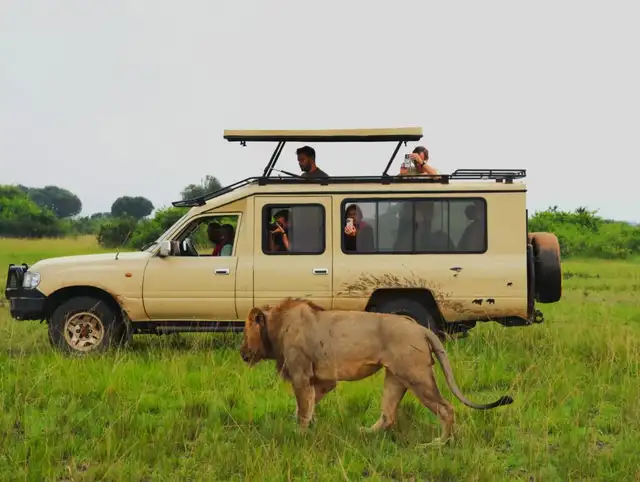
Discover Uganda's top five national parks from Bwindi gorillas to Kidepo wilderness for memorable Uganda safari experience.
Planning a Uganda Safari often begins with one important question, which national parks truly offer the most rewarding experience? Uganda is not a country of one landscape or one type of wildlife. It is a country where dense rainforest sits beside open savannah, where snowcapped mountains rise above crater lakes and where rivers cut through valleys filled with wildlife. Because of this variety, choosing the right parks shapes the entire journey on a Uganda Safari.
Popular Uganda Tour Packages
Top Five National Parks to Visit on a Uganda Safari
1. Bwindi Impenetrable National Park
Bwindi Impenetrable National Park sits in southwestern Uganda along the DR Congo border, covering about 331 square kilometres of dense rainforest with steep ridges and deep valleys. The main attraction is mountain gorillas, with nearly half of the world's population living here on a Uganda Safari. Gorilla trekking begins early and can last 2 to 6 hours. Once found, visitors spend one hour observing young gorillas playing and the silverback watching over the group. Bwindi is divided into four trekking sectors: Buhoma, Ruhija, Rushaga, and Nkuringo for a Uganda Safari.
2. Murchison Falls National Park
Murchison Falls is Uganda's largest national park, covering about 3,840 square kilometres in the northwest on a Uganda Safari. The River Nile divides the park, forcing through a narrow gorge and plunging 43 metres to form the falls. Game drives in the northern sector reveal elephants, Rothschild's giraffes, buffalo, lions, and leopards. Boat cruises to the falls bring visitors close to hippos, crocodiles, and elephants along the banks. Budongo Forest offers chimpanzee tracking with over 450 bird species recorded on a Uganda Safari.
3. Queen Elizabeth National Park
Queen Elizabeth National Park lies in western Uganda between Lake Edward and Lake George, covering about 1,978 square kilometres on a Uganda Safari. The park includes savannah plains, wetlands, crater lakes, and forested areas supporting over 95 mammal species and 600 bird species. Game drives in Kasenyi Plains reveal lions, elephants, and buffalo. The Ishasha sector is famous for tree-climbing lions resting on fig tree branches. The Kazinga Channel offers boat safaris with hippos, crocodiles, and elephants. Kyambura Gorge provides chimpanzee tracking in a forested valley on a Uganda Safari.
4. Kibale National Park
Kibale National Park lies near Fort Portal in western Uganda, covering about 795 square kilometres of tropical rainforest on a Uganda Safari. Known as the primate capital of East Africa, it hosts 13 primate species. Chimpanzee tracking is the main activity with a high success rate. Treks take 2 to 4 hours, and visitors spend one hour observing chimpanzees. Other primates include red colobus, black and white colobus, grey-cheeked mangabeys, and L'Hoest monkeys. Birdlife includes over 370 species. The nearby Bigodi Wetland Sanctuary offers guided walks on a Uganda Safari.
5. Kidepo Valley National Park
Kidepo Valley National Park lies in northeastern Uganda near the borders with South Sudan and Kenya, covering about 1,442 square kilometres on a Uganda Safari. It is the most remote national park in Uganda. The landscape includes savannah plains, rocky outcrops, and distant mountains. Wildlife includes elephants, buffalo, lions, cheetahs, leopards, giraffes, and zebras. Kidepo is one of the few places in Uganda where cheetahs can be seen. Cultural visits to the Karamojong people add a different dimension showing traditional pastoral lifestyles on a Uganda Safari.
Best Time to Visit Uganda for the Best Uganda Safaris
The dry seasons from June to September and December to February provide the most reliable conditions for a Uganda Safari. Rainfall is lower, making road travel smoother, especially to remote parks like Kidepo. Wildlife becomes easier to observe as animals gather around water sources. The wet seasons from March to May and October to November bring greener landscapes and more active birdlife on a Uganda Safari.
How to Get to the National Parks on a Uganda Safari
Uganda is accessed mainly through Entebbe International Airport for a Uganda Safari. Road travel is most common, allowing visitors to see the countryside. Travelling to Bwindi takes 8-10 hours, while Queen Elizabeth is 6-7 hours. Domestic flights operate from Entebbe to airstrips such as Kihihi, Kisoro, Kasese, or Pakuba, taking 1 to 2 hours for a Uganda Safari.
Things to Do on a Uganda Safari
A Uganda Safari offers gorilla trekking in Bwindi, chimpanzee tracking in Kibale, game drives in Queen Elizabeth, Murchison Falls, and Kidepo, boat safaris along the Nile and Kazinga Channel, bird watching with over 1,000 species, cultural visits to Batwa and Karamojong communities, nature walks, and Crater Lake exploration on a Uganda Safari.
What to Carry for the Uganda Safari
Packing well makes a Uganda Safari more comfortable. Lightweight neutral-coloured clothing such as khaki or green is recommended. Long-sleeved shirts and trousers protect against insects. A light rain jacket is important for forested areas. Strong hiking boots are needed for trekking. Other essentials include sunscreen, a wide-brim hat, sunglasses, insect repellent, binoculars, and a camera for a Uganda Safari.
Where to Stay for the Best Accommodation on a Uganda Safari
Uganda offers a wide range of accommodation for a Uganda Safari. Luxury lodges provide spacious rooms and views. Mid-range lodges balance comfort and affordability. Budget options include guesthouses and camps. Most lodges are near park entrances, making it easier to access activities early. In Bwindi, lodges are spread across four sectors, while Queen Elizabeth offers options near Kasenyi, Mweya, and Ishasha on a Uganda Safari.
Health and Safety on a Uganda Safari
Health and safety are important on a Uganda Safari. Yellow fever vaccination is required. Carrying personal medication is helpful. Drinking bottled or purified water avoids health issues. During safari activities, follow the guide's instructions. Wildlife should always be viewed from a safe distance. For gorilla trekking, strict rules protect both visitors and animals on a Uganda Safari.
Why Book with Lamz Tours and Travel for a Uganda Safari
Lamz Tours and Travel provides well-planned Uganda Safari experiences tailored to each traveller's interests. The company handles all logistics including transport, accommodation, permits, and guided activities. Their guides understand wildlife behaviour, park routes, and local conditions. Working with a local company means travellers receive updated information and flexible planning for a Uganda Safari.
Beyond Uganda's Top Five National Parks
Beyond Uganda, Lamz Tours and Travel organises trips across South Africa, Kenya, Tanzania, Morocco, Rwanda, Malawi and other African destinations.
Ready to plan your safari?
Talk to a Lamz Tours specialist and get a tailor-made quote.
Make an enquiry