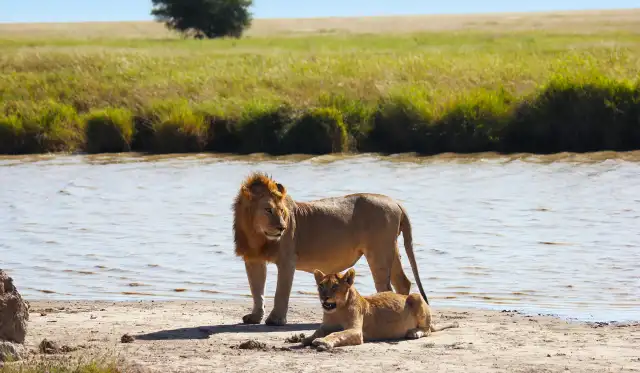
Reliable Big Five sightings on a Tanzania safari across Ngorongoro, Serengeti, Tarangire, Lake Manyara, Ruaha, and Nyerere with expert guidance
Wondering how to maximize your chances of seeing the Big Five on a Tanzania safari? This experience is carefully designed to give travelers strong opportunities to spot lions, leopards, elephants, buffalo, and the rare black rhino across the country’s most productive parks. Ngorongoro Crater offers unmatched reliability for rhino sightings, Serengeti delivers the largest lion population and excellent leopard viewing, while Tarangire guarantees massive elephant herds. Lake Manyara adds variety with tree-climbing lions and flamingos, and Ruaha or Nyerere provide remote wilderness for those seeking fewer crowds. A Tanzania safari planned with these destinations ensures efficiency, value, and a complete checklist in just a few days. With expert guides and smart timing, travelers can achieve the Big Five goal while enjoying diverse landscapes and authentic wildlife experiences
Best Tanzania safari packages
7-days-incredible-big-five-safaris-to-tanzania
7-days-incredible-big-five-safaris-to-tanzania
7-days-best-african-big-cats-safaris-on-a-tanzania-tour
7-days-best-serengeti-tour-and-zanzibar-beach-holiday-vacations
6-days-safari-to-tanzania-serengeti-migration-mara-river-crossing
5-days-circuit-wildlife-safari-in-tanzania
5-days-serengeti-safari-ngorongoro-and-lake-manyara-tanzania-tour-trip
4-days-tanzania-safari-tour-itinerary-and-magical-wildebeest-migrations
4-days-classic-tanzania-safari-to-tarangire-ngorongoro-and-manyara-with-hadzabe-tour
3-days-tanzania-safari-in-serengeti-national-park.
3-days-tarangire-ngorongoro-and-manyara-tanzania-safari-holiday
The Top destinations with big five guarantee during Tanzania safari
Ngorongoro Crater
Ngorongoro Crater is one of the most reliable places for completing the Big Five during a Tanzania safari. The natural enclosure supports around 25,000 animals, making sightings frequent and predictable. Visitors have about a 95% chance of spotting the rare black rhino, which is difficult to see elsewhere in Tanzania. Lions and buffalo are very common, while leopards are possible though less certain. The compact geography reduces long drives, allowing travelers to maximize wildlife viewing in a single day. For anyone planning a Tanzania safari with limited time, Ngorongoro offers unmatched opportunities to tick off all five animals, making it a must-visit destination for those who want strong chances of seeing rhinos alongside other large mammals.
Serengeti National Park
Serengeti National Park is central to any Tanzania safari, offering the largest lion population in Africa and excellent leopard sightings in the Seronera Valley. With lions almost guaranteed at 99% and leopards at around 80%, it is one of the best places for big cat viewing. While rhinos are very rare here, the park’s endless plains host the Great Migration, where millions of wildebeest and zebras move across the ecosystem, attracting predators in large numbers. This makes Serengeti a prime location for observing predator-prey interactions in real time. A Tanzania safari in Serengeti ensures travelers witness both the Big Five and one of the world’s greatest wildlife spectacles, making it a must for those who value consistent lion and leopard sightings.
Tarangire National Park
Tarangire National Park is known as the “Home of Giants” during a Tanzania safari, with massive elephant herds reaching up to 3,000 in the dry season. The baobab-studded landscape adds character while lions are seen regularly, though not as densely as in Serengeti. Buffalo are also common, but rhinos are absent here. For travelers who want guaranteed elephant viewing, Tarangire is unmatched, offering a 98% chance of seeing these giants. A Tanzania safari in Tarangire provides a quieter experience compared to Serengeti, appealing to those who prefer fewer vehicles and a more relaxed pace. It balances large mammal sightings with unique scenery, making it a strong choice for reliable elephant encounters and quality wildlife density.
Lake Manyara National Park
Lake Manyara National Park is a compact but rewarding stop during a Tanzania safari, especially for travelers with limited time. The park is famous for its tree-climbing lions, a rare behavior that draws attention, and large flocks of flamingos along the lake shore. While lions are moderately common, rhinos are absent, meaning the Big Five cannot be fully completed here. However, buffalo and elephants are present, and bird-watchers benefit from diverse species around the lake. A Tanzania safari in Lake Manyara is ideal for those seeking variety in a short timeframe, offering predator sightings, bird diversity, and lake views. It provides practical value for travelers who want strong wildlife experiences without committing to longer drives.
Ruaha and Nyerere National Parks
Ruaha and Nyerere National Parks in southern Tanzania provide a remote and less crowded safari style, perfect for travelers seeking exclusivity. Both parks deliver excellent lion, elephant, and buffalo populations, with Nyerere offering unique boat safaris along the Rufiji River to view hippos, crocodiles, and birdlife from the water. While rhino sightings are unreliable, these parks emphasize quality over quantity, appealing to veterans who want to avoid busy circuits. A Tanzania safari here highlights raw wilderness, strong predator viewing, and diverse activities beyond game drives. For those who value solitude and variety, Ruaha and Nyerere deliver a rewarding safari experience, even if completing the Big Five is less certain compared to northern destinations
Best time to witness the big five on a Tanzania safari
The dry season from June to October is the most reliable period to see the Big Five during a Tanzania safari. At this time, animals gather around rivers and waterholes, making them easier to spot. Grass levels are lower, improving visibility, and predators are more active as prey concentrates in fewer areas. This season also aligns with the Great Migration in Serengeti, adding another highlight to the safari experience. While wildlife is present year-round, the dry months reduce the effort needed to locate elusive species like leopards and rhinos. For travelers who want efficiency and consistency, planning a Tanzania safari during the dry season ensures the best balance of animal density, accessibility, and overall viewing success.
Also Another excellent period for a Tanzania safari focused on the Big Five is between late January and March. This is calving season in the southern Serengeti, when thousands of wildebeest give birth, attracting predators such as lions and leopards in large numbers. The abundance of prey makes predator sightings more frequent and dramatic. Although rhino sightings remain strongest in Ngorongoro Crater, this season still offers high chances of completing the Big Five list. The weather is warm, and the landscape is green, providing a different atmosphere compared to the dry season. For travelers who want to combine Big Five viewing with unique wildlife events, a Tanzania safari during calving season delivers both diversity and strong predator action
The 4-5 Day Big Five Circuit during Tanzania safari
This short circuit is designed for travelers who want maximum chances of seeing the Big Five in just a few days. Day one begins with a drive from Arusha to Tarangire, where giant elephant herds dominate the landscape, offering nearly guaranteed sightings. On day two, the focus shifts to Serengeti’s central plains, especially the Seronera Valley, known for its high density of lions and leopards. Day three combines a morning game drive in Serengeti with a transfer to the Ngorongoro Crater rim, setting the stage for the highlight of the trip. A Tanzania safari planned this way ensures that each day builds toward completing the checklist, balancing efficiency with strong wildlife density.
Day four is the climax of the circuit, with an early descent into Ngorongoro Crater to maximize chances of spotting the rare black rhino. The crater’s enclosed ecosystem makes it one of the most reliable places in Tanzania for completing the Big Five, with lions and buffalo seen frequently and leopards occasionally. By structuring the trip across Tarangire, Serengeti, and Ngorongoro, travelers cover the strongest regions for elephants, big cats, and rhinos in a compact timeframe. This Tanzania safari circuit is ideal for those with limited days who still want a complete and rewarding wildlife experience, ensuring efficiency without compromising on quality sightings
Pro Tips for Maximizing Your big five Sightings on Tanzania safari
Timing is Key
The dry season from June to October is the most reliable period for spotting the Big Five during a Tanzania safari. With less vegetation, animals gather at predictable water sources, making sightings easier and more consistent. This season also improves visibility, allowing travelers to spot predators and rare species without long searching hours. For those determined to see rhinos, lions, elephants, buffalo, and leopards in one trip, this timing offers the strongest chances. Planning a Tanzania safari during these months ensures efficiency, reduces missed opportunities, and provides a structured approach to wildlife viewing that balances density with accessibility.
Start Early
Arriving at park gates at dawn gives travelers a significant advantage during a Tanzania safari. Animals are most active in the cooler morning hours, and predators such as lions and leopards are often on the move before resting later in the day. In Ngorongoro Crater, most rhino sightings happen before 10 AM, making early starts essential for completing the Big Five checklist. By prioritizing morning drives, visitors maximize their chances of seeing rare species while also enjoying softer light for photography. A Tanzania safari planned with early departures ensures higher success rates and avoids the less productive midday hours when animals retreat into shade.
Leverage Your Guide
A skilled guide is the single most important factor in maximizing Big Five sightings on a Tanzania safari. Guides use radio networks to share real-time updates with other vehicles, ensuring travelers reach sightings quickly. They also read subtle animal signs invisible to untrained eyes, such as tracks, calls, or movement patterns. This expertise transforms a safari from random searching into focused wildlife viewing. For rhinos and leopards especially, guide knowledge makes the difference between success and disappointment. Choosing a reputable operator with experienced guides should be a priority for anyone serious about completing the Big Five. A Tanzania safari with expert guidance guarantees stronger results and a more rewarding overall experience
Can You See All Five in One Day on a Tanzania safari?
Yes, it is possible to see all five of the Big Five lion, leopard, elephant, buffalo, and black rhino in a single day on a Tanzania safari, but only in one specific location: the Ngorongoro Crater. Thanks to the crater’s enclosed, volcanic walls and year-round water, over 25,000 animals live in close proximity on the open crater floor, making it the only place in Tanzania where a single game drive can realistically deliver all five species. Early morning starts (just after dawn) offer the best chance, especially for spotting the critically endangered black rhino. While sightings are never 100% guaranteed, experienced guides in Ngorongoro successfully complete the Big Five in one day far more often than anywhere else in the country. For comparison, seeing all five in a single day in the vast Serengeti is virtually impossible, primarily because rhinos there are extremely rare and widely scattered.
How to get there on A Tanzania safari for big five tour
Most travelers begin their Tanzania safari for the Big Five by flying into Kilimanjaro International Airport or Arusha Airport, which serve as the main gateways to northern parks. From Arusha, road transfers are the most common option, with well-maintained routes leading to Tarangire, Serengeti, and Ngorongoro. Driving allows flexibility to stop at viewpoints and smaller reserves along the way, making it practical for those who want to maximize their wildlife experience. Domestic flights are also available, connecting Arusha to airstrips inside Serengeti and Ngorongoro, saving time for travelers with tighter schedules. Whether by road or air, the logistics are straightforward, ensuring a Tanzania safari begins smoothly with reliable access to the key Big Five destinations.
For travelers heading to southern parks like Ruaha or Nyerere, domestic flights from Dar es Salaam or Arusha are the most efficient option, as road journeys can take over a day. Charter flights land directly inside the parks, reducing travel time and offering more hours for game drives. Organized tours usually include transfers, making it easier for visitors to focus on wildlife rather than logistics. A Tanzania safari designed around the Big Five often combines northern and southern circuits, with flights bridging the distance between regions. This approach ensures travelers spend less time on the road and more time spotting elephants, lions, leopards, buffalo, and rhinos, creating a balanced and rewarding safari experience
What to bring and where to stay on Tanzania safari for big five
Packing smart is essential for a successful Tanzania safari focused on the Big Five. Neutral-colored clothing such as khaki or olive helps blend into the environment and avoids attracting insects. A wide-brim hat, sunglasses, and sunscreen protect against the strong sun, while a light jacket or fleece is useful for cool mornings and evenings. Sturdy walking shoes are necessary for game drives and possible short walks. Binoculars and a good camera with extra batteries ensure clear views of lions, elephants, buffalo, leopards, and rhinos. Insect repellent, reusable water bottles, and personal medications should also be included. A Tanzania safari becomes more rewarding when travelers pack practical gear that balances comfort, protection, and readiness for varied conditions.
Accommodation options during a Tanzania safari for the Big Five range from luxury lodges to tented camps, catering to different budgets and preferences. In Serengeti, lodges near the Seronera Valley provide excellent access to lions and leopards, while Ngorongoro Crater rim lodges offer quick morning descents for rhino sightings. Tarangire features camps with views of elephant herds, and Lake Manyara has lodges close to tree-climbing lions. For travelers seeking exclusivity, Ruaha and Nyerere provide remote camps with fewer crowds. Choosing where to stay depends on balancing comfort with proximity to wildlife hotspots. A Tanzania safari planned with well-located accommodations ensures travelers maximize their chances of completing the Big Five checklist while enjoying quality service and memorable settings
Booking Tanzania safari for the Big Five with Lamz Tours and Travel
Booking a Tanzania safari for the Big Five with Lamz Tours and Travel ensures a well-structured and professional experience tailored to maximize your wildlife sightings. Our itineraries combine Tarangire for giant elephant herds, Serengeti for lions and leopards, and Ngorongoro Crater for the rare black rhino, giving travelers the strongest chances of completing the checklist in a short timeframe. Lamz Tours and Travel provides expert guides who understand animal behavior, use real-time networks to track sightings, and design practical schedules that balance game drives with comfort. Accommodation options range from luxury lodges to mid-range camps, all chosen for proximity to wildlife hotspots. Choosing Lamz Tours and Travel for your Tanzania safari guarantees efficiency, reliability, and a value-driven approach that helps you achieve the Big Five goal with confidence
Ready to plan your safari?
Talk to a Lamz Tours specialist and get a tailor-made quote.
Make an enquiry