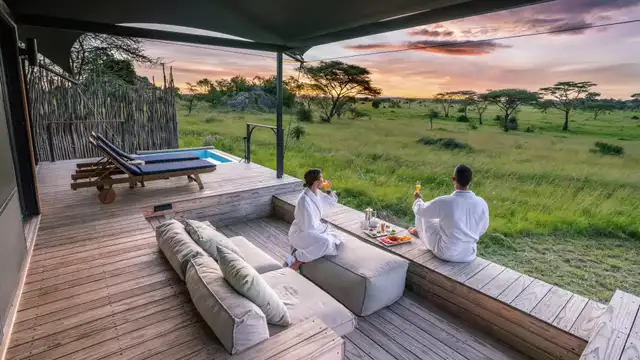
Experience the best things to do in Tanzania on a Tanzania safari, from the Great Migration in the Serengeti to the flamingos of Lake Natron, the summit of Kilimanjaro, and the hidden caves of Tanga.
A Tanzania safari is famous for wildlife, but the country offers so much more. On a Tanzania safari, you can witness the greatest wildlife spectacle on earth, stand on the roof of Africa, relax on the white sands of Zanzibar, and explore ancient caves and rock art sites. Tanzania attracts millions of visitors each year, with searches for Tanzanian flamingos alone reaching 39,000 monthly searches on Google. This article covers the best things to do in Tanzania that you should not miss on a Tanzania safari.
Popular Tanzania Safari Packages
Top Best Things to Do on Tanzania Safaris
1. Witness the Great Migration in Serengeti National Park
The most famous thing to do on a Tanzania safari is witness the Great Migration in Serengeti National Park. On a Tanzania safari here, you can watch over 1.5 million wildebeest and hundreds of thousands of zebras and gazelles thunder across the plains in search of fresh grass. The Serengeti is one of the world's most important wildlife destinations, with luxury safari lodges seeing interest grow by 110 percent as more travelers seek deep wildlife encounters. The river crossings, where herds brave crocodile-infested waters, are the most dramatic. On a Tanzania safari, you can take guided game drives, hot air balloon safaris at sunrise, and walking safaris with expert trackers. The best time for the Migration on a Tanzania safari varies, but river crossings peak from July to October.
2. See the Flamingos of Lake Natron
On a Tanzania safari, the shimmering flocks of flamingos at Lake Natron have captured global imagination, ranking among the top 10 most searched-for wildlife experiences in the world with 39,000 monthly searches on Google. On a Tanzania safari here, you can witness over one million Lesser Flamingos that migrate to the lake each year, making it the world's largest breeding ground for the species. The lake's extreme alkalinity, so toxic it can burn human skin, makes it inhospitable to predators, providing a safe haven for flamingos to nest and hatch their young. Featured in Sir David Attenborough's Planet Earth II, this otherworldly spectacle is a bucket-list attraction for eco-tourists and photographers alike. On a Tanzania safari, visit between August and November for peak breeding season.
3. Climb Mount Kilimanjaro, the Roof of Africa
On a Tanzania safari, climbers from around the world come to summit Mount Kilimanjaro, the highest peak in Africa at 5,895 meters. On a Tanzania safari here, you can choose from seven different routes to the summit, including the popular Machame Route, the scenic Lemosho Route, and the challenging Umbwe Route. Each year, thousands of trekkers attempt the climb, with searches for "top Kilimanjaro tour companies" and "Kilimanjaro guide companies" driving significant organic traffic. The mountain is a trekking peak, not a technical climb, meaning you do not need ropes or ice axes. You need good fitness, proper preparation, and a sense of adventure. The views from the summit of the surrounding plains and the crater rim are unforgettable. On a Tanzania safari, the best time to climb is from June to October and December to February.
4. Explore the Amboni Caves in Tanga
On a Tanzania safari, the Amboni Caves on the outskirts of Tanga are emerging as a captivating natural wonder and an important cultural tourism asset. Dating back to the Jurassic period, these limestone caves feature intricate rock formations sculpted over millions of years. On a Tanzania safari here, you can explore chambers filled with ancient myths and stories of communities that once sought refuge within them. The caves are not only a geological marvel but also a symbol of Tanzania's diverse tourism offering beyond wildlife safaris and coastal beaches. On a Tanzania safari, guides explain the legends woven into the caves, from ancient folklore to tales of the colonial era. The site attracts researchers, cultural tourists, and school groups, and with greater investment, it could stand alongside Tanzania's world-class attractions.
5. Visit the Hidden Highlands of Iringa
On a Tanzania safari, Iringa remains one of Tanzania's best-kept secrets. While 95 percent of Tanzania's tourists head straight to safari circuits or Zanzibar, Iringa offers colonial history, a cooler highland climate, and authentic Hehe culture that most travelers completely miss. On a Tanzania safari here, you can visit the German Boma fortress built in 1896, explore the Mkwawa Museum celebrating Chief Mkwawa's legendary resistance against German colonization, and walk through the vibrant three-story Iringa Central Market. The Isimila Stone Age Site is an archaeological wonder with 60,000-year-old stone tools and spectacular erosion pillars. On a Tanzania safari, this is where Tanzania's soul reveals itself beyond the tourist trail. Visit between June and September for the best weather.
6. Relax on the Beaches of Zanzibar
On a Tanzania safari, no visit is complete without the white sands and turquoise waters of Zanzibar. This spice island off the coast of Tanzania offers some of the most beautiful beaches in the Indian Ocean. On a Tanzania safari here, you can relax on the beaches of Nungwi and Kendwa in the north or the more secluded Paje and Jambiani in the east. Snorkel and dive in the coral reefs of Mnemba Atoll, swim with dolphins, and explore the historic Stone Town, a UNESCO World Heritage site. On a Tanzania safari, Stone Town's narrow alleys, sultan's palaces, and slave market museums tell the story of centuries of trade between Africa, Arabia, India, and Europe. The best time for Zanzibar on a Tanzania safari is from June to October and December to February.
7. Go on a Walking Safari in Ruaha National Park
On a Tanzania safari, Ruaha National Park is a hidden gem for walking safaris. This remote park in southern Tanzania has one of the highest concentrations of elephants in East Africa and offers a wilderness experience far from the crowds of the northern circuit. On a Tanzania safari here, you can hike through baobab-dotted landscapes with an armed guide, tracking lions, leopards, and the park's famous large herds of buffalo. The best time for walking safaris in Ruaha is the dry season from June to October, when animals gather around the Ruaha River. On a Tanzania safari, combine a visit to Ruaha with the nearby highlands of Iringa for a complete off-the-beaten-path adventure.
8. Experience Lake Manyara's Tree-Climbing Lions
On a Tanzania safari, Lake Manyara National Park is famous for its tree-climbing lions, a behavior rarely seen elsewhere in Africa. On a Tanzania safari here, you can drive through the groundwater forest, where lions lounge on the branches of acacia trees, and flamingos gather in the shallow soda lake. The park is small but incredibly diverse, with troops of baboons, large herds of elephants, and over 400 bird species. On a Tanzania safari, the park is easily combined with Ngorongoro Crater and the Serengeti, making it a perfect addition to any northern circuit itinerary. The best time for Lake Manyara on a Tanzania safari is year-round, though the dry season from June to October offers the best game viewing.
Weather and Climate in Tanzania on Tanzania Safaris
On a Tanzania safari, the weather varies by region. The northern circuit parks are best from June to October, the dry season. The wet season from November to April has fewer tourists but lush green landscapes. Kilimanjaro climbing is best from June to October and December to February. Zanzibar is warm year-round, with the best weather from June to October. Lake Natron is best from August to November for flamingo breeding. Iringa's highland climate is pleasant year-round, with the best conditions from June to September.
Best Time to Visit Tanzania for Tanzania Safaris
The best time for things to do on a Tanzania safari depends on your interests. For the Great Migration, June to October offers the best chance to see river crossings. For Kilimanjaro climbing, choose June to October or December to February. For Zanzibar beaches, June to October or December to February are ideal. For Lake Natron flamingos, visit from August to November. For Iringa and Ruaha, June to September is best. For combining wildlife, beaches, and culture, plan your Tanzania safari for June through October.
How to Get to Tanzania on Tanzania Safaris
On a Tanzania safari, fly into Kilimanjaro International Airport (JRO) for the northern circuit parks and Mount Kilimanjaro. Fly into Julius Nyerere International Airport (DAR) in Dar es Salaam for Zanzibar, the southern circuit, and Iringa. For Lake Natron, drive from Arusha or fly to Lake Manyara airstrip. For Amboni Caves, drive from Tanga or Dar es Salaam. Your tour operator will arrange all transport for your Tanzania safari. A 4x4 is essential for remote parks like Ruaha and Lake Natron.
Things to Do on a Tanzania Safari
On a Tanzania safari, you can witness the Great Migration in the Serengeti. See a million flamingos at Lake Natron. Climb Mount Kilimanjaro, the roof of Africa. Explore the Amboni Caves in Tanga. Discover the hidden highlands of Iringa. Relax on the white sands of Zanzibar. Go on a walking safari in Ruaha National Park. See tree-climbing lions in Lake Manyara. Combine wildlife, beaches, history, and culture for the ultimate Tanzania safari.
What to Carry for Tanzania Safaris
Pack light, breathable clothing for the lowlands and warm layers for Kilimanjaro and the Ngorongoro Crater rim. Comfortable hiking boots are essential for Kilimanjaro and walking safaris. Sunscreen, a hat, sunglasses, and insect repellent are necessary. Bring a good camera with a zoom lens for wildlife and a macro lens for insects. For Lake Natron, pack a hat and water as there is little shade. For Kilimanjaro, pack a four-season sleeping bag and thermal layers. Do not forget your passport, visa, and travel insurance for your Tanzania safari.
Where to Stay on Tanzania Safaris
On a Tanzania safari, for the Serengeti, stay at luxury lodges like Four Seasons Safari Lodge or mobile tented camps that follow the Migration. For Lake Natron, stay at Lake Natron Tented Camp or basic campsites near the lake. For Kilimanjaro, stay in Moshi or Arusha at Kilimanjaro Coffee Lodge or Keys Hotel before and after your climb. For Amboni Caves, stay in Tanga at Tanga Beach Resort or budget guesthouses. For Iringa, stay at Tumaini Hotel or Neema's Café. For Zanzibar, stay in Stone Town at Park Hyatt or on the northern beaches at Zanzibar Serena. Book well in advance for the dry season on your Tanzania safari.
Why Book with Lamz Tours and Travel for Your Tanzania Safari
Booking your Tanzania safari with Lamz Tours and Travel ensures you see the best attractions with expert guides. Their local guides know the Serengeti, the flamingos of Lake Natron, and the best routes up Kilimanjaro. They handle everything including transport, park fees, guides, and accommodation. You just show up with your camera and sense of adventure on your Tanzania safari. Want to focus on the Great Migration? We can do that. Want to combine Kilimanjaro with a Zanzibar beach holiday? They can arrange it. Lamz Tours and Travel supports local communities by hiring Tanzanian guides and using eco-friendly camps. You focus on the wildlife, the mountains, and the beaches. We handle everything else on your Tanzania safari.
Ready to plan your safari?
Talk to a Lamz Tours specialist and get a tailor-made quote.
Make an enquiry