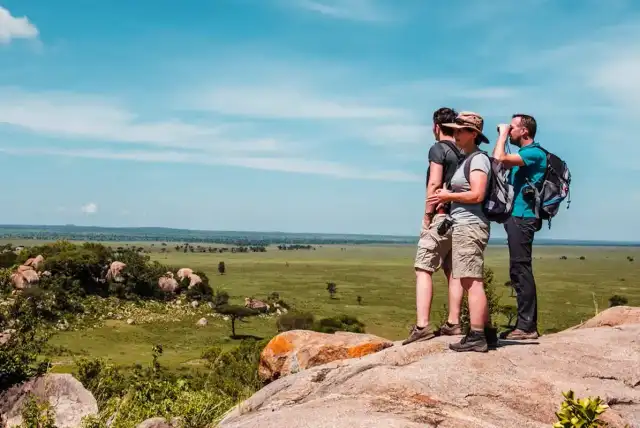
Top 5 wonders on Tanzania safari, Serengeti migration, Ngorongoro Crater, Kilimanjaro climb, endless plains, and unmatched wildlife viewing year-round.
Did you know Tanzania is home to some of the most extraordinary safari experiences in the world, offering travelers a chance to witness nature on a grand scale? From the endless plains of the Serengeti to the dramatic Ngorongoro Crater, Tanzania’s landscapes host unmatched wildlife spectacles. The Great Wildebeest Migration, involving millions of wildebeest, zebras, and gazelles, is the largest overland mammal movement on Earth, while the Ngorongoro Crater provides one of the highest predator densities in Africa. Add to this the towering Mount Kilimanjaro, Africa’s highest peak, and the chimpanzee-rich forests of Mahale and Gombe, and you have a destination that combines diversity, adventure, and natural wonder. A Tanzania safari is not just about seeing animals it’s about experiencing ecosystems that thrive in harmony.
Did you know that Tanzania also offers flexibility for every type of traveler, whether you want luxury lodges, tented camps, or cultural immersion with local communities? The Serengeti delivers year-round predator action, while Zanzibar’s beaches provide the perfect post-safari retreat. Planning a Tanzania safari means choosing the right season, routes, and accommodations to match your interests, whether it’s witnessing the Mara River crossings, spotting black rhinos in Ngorongoro, or trekking Kilimanjaro’s slopes. With its variety of landscapes and wildlife spectacles, Tanzania stands as one of the world’s top safari destinations, promising experiences that are both meaningful and memorable
Best Tanzania Safari packages
2-days-fly-in-serengeti-safari-in-tanzania
2-days-tarangire-national-park-and-ngorongoro-crater-safari
3-days-tanzania-safari-in-serengeti-national-park
3-days-tanzania-wildlife-safari
4-days-epic-tanzania-wildlife-and-culture-safari
5-day-kenya-and-tanzania-safari
5-days-circuit-wildlife-safari-in-tanzania
6-days-ndutu-migration-safari-calving-season
8-day-serengeti-ngorongoro-crater-and-zanzibar
8-days-wildlife-and-beach-holiday-tanzania
The Top 5 Big Ticket of Wonders on Tanzania Safari
The Great Wildebeest Migration
The Great Wildebeest Migration is the highlight of any Tanzania safari, drawing travelers from across the world to witness nature’s largest overland mammal movement. Over two million wildebeest, zebras, and gazelles move in a continuous cycle across the Serengeti, driven by rainfall and grazing needs. While many focus only on the Mara River crossings, the true wonder lies in the sheer scale of the migration. From December to July, herds spread across the Serengeti, with February’s calving season offering dramatic predator action as thousands of newborn calves face lions, hyenas, and cheetahs. A Tanzania safari during this time provides unmatched wildlife viewing, but visitors should plan carefully, as the herds shift constantly depending on weather patterns.
The Mara River crossings between July and October are the most dramatic phase of the migration and a major highlight of a Tanzania safari. Thousands of animals gather at the riverbanks, hesitating before plunging into crocodile-filled waters in chaotic, noisy displays of survival. While this is the most talked-about spectacle, it cannot be guaranteed, as timing depends on rainfall and herd movement. To increase chances of witnessing a crossing, travelers should spend at least two to three days in the northern Serengeti near the river. A Tanzania safari during this season requires patience and flexibility, but the reward is witnessing one of nature’s greatest survival struggles, making it a true big-ticket wonder.
A Tanzania safari during the Great Wildebeest Migration is not only about witnessing wildlife but also about planning smartly to maximize the experience. Since the herds move continuously, timing and location are critical southern Serengeti for calving in February, central and western areas from March to June, and northern Serengeti or Masai Mara for river crossings between July and October. Travelers should work with experienced guides who track herd movements daily, ensuring they are positioned in the right zones. Spending multiple days in each area increases the chances of seeing key events, while combining the migration with other Tanzania safari highlights such as Ngorongoro Crater or Tarangire National Park adds depth to the trip. This approach guarantees a richer and more rewarding safari.
The Ngorongoro Crater
The Ngorongoro Crater is one of the most remarkable highlights of a Tanzania safari, offering a contained ecosystem unlike anywhere else in Africa. Covering 260 square kilometers, this volcanic caldera supports dense populations of wildlife, including lions, hyenas, elephants, and large herds of zebra and wildebeest. It is also one of the few places in Tanzania where visitors have a strong chance of seeing the critically endangered black rhinoceros. The crater’s unique geography creates a natural enclosure, making game drives highly rewarding with minimal travel time between sightings. For travelers seeking concentrated wildlife viewing, a Tanzania safari here delivers unmatched value.
Descending into the crater at dawn is a defining experience of a Tanzania safari. As the morning light spreads across the crater floor, animals become active, and the soda lake glimmers with flamingos. The early start not only enhances the atmosphere but also helps avoid the heavier crowds that arrive later in the day. Staying at a lodge on the crater rim provides sweeping views and quick access to the park entrance, ensuring you maximize your time inside. With its predator density, diverse habitats, and dramatic scenery, the Ngorongoro Crater stands as a true big-ticket wonder on any Tanzania safari itinerary.
A Tanzania safari to the Ngorongoro Crater is also about the unique setting that combines wildlife with dramatic landscapes. The crater rim rises high above the floor, offering panoramic views that few safari destinations can match. Inside, the mix of grasslands, forests, and lakes creates habitats that sustain a wide range of species year-round. This makes game drives highly productive, with opportunities to see predators hunting and herbivores grazing within close proximity. For travelers who want concentrated wildlife viewing without long drives between sightings, the Ngorongoro Crater is a practical and rewarding stop, cementing its place as one of the top big-ticket wonders on a Tanzania safari.
Scaling Mount Kilimanjaro
Scaling Mount Kilimanjaro is one of the most sought-after experiences on a Tanzania safari, even though it is not a traditional wildlife activity. Standing at 5,895 meters, Kilimanjaro is Africa’s highest peak and the tallest free-standing mountain in the world. The climb is a multi-day trek that takes hikers through five distinct ecological zones, starting with lush rainforest, moving into moorland, alpine desert, and finally reaching the icy arctic summit. For many, reaching the “Roof of Africa” is a lifetime milestone, combining physical endurance with breathtaking natural transitions. A Tanzania safari that includes Kilimanjaro offers travelers a chance to test their fitness while enjoying diverse landscapes that change dramatically with altitude.
The experience of climbing Kilimanjaro is accessible to determined hikers with good preparation, as it requires no technical mountaineering skills. The final push to Uhuru Peak at sunrise is both physically demanding and deeply rewarding, marking the culmination of days of effort. Success depends heavily on acclimatization, so routes like the 7–8 day Lemosho or Machame are recommended for higher chances of summiting. Choosing a reputable, KPAP-certified operator ensures safety, ethical treatment of porters, and proper guidance throughout the trek. For those seeking a big-ticket wonder beyond wildlife, scaling Mount Kilimanjaro adds unmatched depth to a Tanzania safari.
The Endless Plains of the Serengeti
The Serengeti is a cornerstone of any Tanzania safari, offering vast golden savannas that stretch endlessly, dotted with acacia trees and alive with wildlife. Even when the migration herds move on, the park remains a wonder thanks to its year-round predator action and diverse ecosystems. It holds the largest population of big predators in Africa, making sightings of lions, leopards, and cheetahs highly rewarding. The name “Serengeti,” derived from the Maa word Siringet, meaning “the place where the land runs on forever,” perfectly captures its scale and timeless appeal. For travelers seeking the classic safari image, a Tanzania safari in the Serengeti delivers unmatched wildlife drama and landscapes that feel limitless.
The experience here goes beyond the migration spectacle, as the Serengeti offers rich game viewing throughout the year. Visitors can track prides of lions hunting across the plains, spot leopards lounging in the Seronera Valley’s trees, or watch cheetahs scanning the horizon for prey. Each region of the park has its own character: the Seronera Valley is a reliable hotspot for wildlife, while the Western Corridor and Northern Serengeti provide more remote, exclusive settings. A Tanzania safari in the Serengeti is about variety, scale, and predator density, making it a true big-ticket wonder that continues to impress long after the migration has passed.
A Tanzania safari in the Serengeti is also about appreciating the park’s year-round diversity beyond predators and plains game. Birdlife is abundant, with over 500 species ranging from secretary birds striding across the grasslands to colorful lilac-breasted rollers perched on acacia branches. Seasonal changes bring different highlights green landscapes and newborn animals during the rains, and concentrated wildlife around water sources in the dry months. This variety ensures that no matter when you visit, the Serengeti delivers consistent wildlife action and rich photographic opportunities. For travelers seeking depth and variety, the Serengeti remains a cornerstone of the top big-ticket wonders on a Tanzania safari.
The Primates of Mahale and Gombe
The primate safaris of Mahale Mountains and Gombe Stream National Parks are standout highlights of a Tanzania safari, offering a rare chance to trek wild chimpanzees along the shores of Lake Tanganyika. These parks are home to habituated chimpanzee communities, allowing visitors to observe their daily lives up close. After a boat ride and hike through dense jungle, travelers sit quietly among these primates, watching their complex social interactions, tool use, and distinct personalities. Unlike traditional game drives, this experience is about patience and observation, making it one of the most intimate wildlife activities available. For those seeking variety beyond the savanna, a Tanzania safari that includes Mahale or Gombe adds depth and diversity.
Choosing between Mahale and Gombe depends on traveler preferences and logistics. Mahale is larger, more remote, and generally offers a luxurious experience with fewer crowds, while Gombe is smaller, more historic, and famously linked to Jane Goodall’s groundbreaking research. Gombe is also easier to combine with other northern Tanzania parks, making it practical for shorter itineraries. Both destinations require advanced planning and represent a significant investment, but the reward is extraordinary: sitting with our closest genetic relatives in their natural habitat. For travelers who value unique wildlife experiences, the primates of Mahale and Gombe stand firmly among the top big-ticket wonders of a Tanzania safari.
Best time to experience the wonders of Tanzania safari
The best time to experience the wonders of a Tanzania safari is during the dry season from June to October, when wildlife viewing is at its peak. This period offers clear skies, minimal rainfall, and easier access to parks, making it ideal for spotting large herds and predators. It is also the prime time to witness the Great Wildebeest Migration in the Serengeti, particularly the dramatic Mara River crossings between July and October.
From January to February, Tanzania safaris offer a different highlight the calving season in the Southern Serengeti. During this time, thousands of wildebeest give birth, attracting predators such as lions, hyenas, and cheetahs, creating intense wildlife action. This season is excellent for travelers interested in predator-prey dynamics and photography, as the short grass plains provide clear visibility. While March to May is wetter, it brings lush green landscapes and fewer crowds, appealing to those who prefer quieter safaris.
Ultimately, the best time depends on traveler priorities. June to October suits those seeking classic game drives and migration spectacles, while January to February is perfect for calving and predator action. The rainy months of March to May and October to November offer solitude, vibrant scenery, and lower costs, though trails can be muddy. With wildlife present year-round, Tanzania safaris remain rewarding in every season, but planning around personal interests ensures the most meaningful experience
How to get there to Tanzania safari for great wonders
Getting to Tanzania safari for great wonders begins with flying into Kilimanjaro International Airport (JRO) or Julius Nyerere International Airport (DAR) in Dar es Salaam, the country’s main entry points. Kilimanjaro is the most convenient for northern circuit safaris, covering Serengeti, Ngorongoro Crater, and Mount Kilimanjaro itself. From the airport, travelers can connect by road or short domestic flights to safari hubs such as Arusha or Mwanza. Many tour operators arrange transfers directly from the airport, ensuring smooth logistics. For those heading to southern parks like Ruaha or Selous (Nyerere National Park), Dar es Salaam is the better option, with scheduled flights to remote airstrips. Planning flights in advance is key, as safari destinations are spread across vast distances.
Once in Tanzania, moving between safari highlights requires a mix of road travel and domestic flights. Road transfers offer scenic views of villages, landscapes, and wildlife corridors, but can be time-consuming, especially when connecting Serengeti or Ngorongoro. For efficiency, small charter planes operated by local airlines link major parks, landing on bush airstrips close to lodges and camps. This saves time and maximizes wildlife viewing opportunities. A Tanzania safari for great wonders is best organized through reputable operators who handle permits, transfers, and accommodations, ensuring travelers spend more time in the parks rather than navigating logistics. Combining flights with occasional road trips provides both convenience and cultural immersion, making the safari experience richer and more rewarding
Best things to do during Tanzania safari experience
One of the best things to do during a Tanzania safari experience is visiting the Serengeti National Park. Known for its endless plains and predator-rich ecosystem, the Serengeti offers year-round wildlife viewing. Beyond the Great Wildebeest Migration, travelers can track prides of lions, spot leopards resting in trees, and watch cheetahs scanning the horizon for prey. Birdwatchers will also enjoy over 500 species, including raptors and colorful rollers. Different regions of the park provide varied experiences: the Seronera Valley is a reliable hotspot, while the Western Corridor and Northern Serengeti offer more remote, exclusive settings. Spending several days here ensures travelers witness the diversity of wildlife and landscapes that make the Serengeti a cornerstone of any Tanzania safari.
Another highlight of a Tanzania safari experience is descending into the Ngorongoro Crater, the world’s largest intact volcanic caldera. Its 260 square kilometer floor creates a contained ecosystem with one of Africa’s highest predator densities. Visitors can expect to see lions, hyenas, elephants, zebras, wildebeest, and flamingos on the soda lake. The crater is also one of the best places to spot the endangered black rhinoceros. Early morning game drives are recommended to avoid crowds and maximize sightings. Staying at lodges on the crater rim provides sweeping views and quick access to the park entrance. For travelers seeking concentrated wildlife viewing without long drives, Ngorongoro Crater is a practical and rewarding stop on a Tanzania safari itinerary.
Scaling Mount Kilimanjaro adds a unique dimension to a Tanzania safari experience. As Africa’s highest peak at 5,895 meters, Kilimanjaro offers a multi-day trek through five ecological zones, from rainforest to arctic summit. The climb requires determination and fitness but no technical mountaineering skills, making it accessible to many travelers. Routes like Lemosho and Machame, lasting 7–8 days, provide better acclimatization and higher chances of reaching Uhuru Peak. The final ascent at sunrise is a powerful moment, rewarding hikers with sweeping views from the “Roof of Africa.” Choosing a KPAP-certified operator ensures safety and ethical porter treatment. For those seeking adventure beyond wildlife, Kilimanjaro stands as a big-ticket wonder that complements the safari experience.
For a different perspective, visiting Mahale Mountains or Gombe Stream National Parks is one of the best things to do during a Tanzania safari experience. These parks, located along Lake Tanganyika, are home to habituated chimpanzee communities. After a boat ride and jungle hike, travelers spend time observing chimpanzees’ social interactions, tool use, and personalities. Mahale offers a more remote and luxurious setting, while Gombe is smaller, historic, and famously linked to Jane Goodall’s research. Both destinations require advanced planning and investment but reward visitors with intimate wildlife viewing. Adding primate trekking to a Tanzania safari provides diversity, combining savanna predators with forest primates for a richer overall experience.
After days of wildlife viewing, unwinding on Zanzibar’s beaches is a perfect way to complete a Tanzania safari experience. The island offers white sandy shores, turquoise waters, and a mix of cultural and historical attractions. Visitors can explore Stone Town, a UNESCO World Heritage Site, known for its winding alleys, spice markets, and Swahili architecture. Water activities such as snorkeling, diving, and dhow cruises add variety, while luxury resorts and boutique lodges provide comfort. Zanzibar also complements safari itineraries logistically, with short flights from Arusha or Dar es Salaam. Combining wildlife adventures with coastal relaxation ensures travelers leave Tanzania with both excitement and tranquility, making Zanzibar an essential extension to any safari.
How long to spend on Tanzania safari
The ideal length of time to spend on a Tanzania safari is 7 to 10 days, allowing travelers to fully experience the country’s big-ticket wonders without feeling rushed. This duration provides enough time to explore the Serengeti for the Great Migration, descend into the Ngorongoro Crater, and visit other highlights such as Tarangire or Lake Manyara. For those adding Mount Kilimanjaro or Zanzibar, extending to 12–14 days ensures a balanced itinerary that combines wildlife, adventure, and relaxation. Shorter safaris of 4–5 days are possible but often limit the variety of parks visited. Planning at least a week gives travelers the best chance to see diverse landscapes, predators, and unique wildlife behaviors, making the Tanzania safari experience more rewarding
What to carry for Tanzania safari experience
Packing smartly is essential to make the most of a Tanzania safari experience. Lightweight, neutral-colored clothing such as khaki, beige, or olive helps blend into the environment and keeps you comfortable during game drives. A wide-brimmed hat, sunglasses, and sunscreen protect against the strong sun, while a light jacket or fleece is useful for cool mornings and evenings. Sturdy walking shoes are important for bush walks, and insect repellent helps guard against bites. A good camera with extra batteries and memory cards ensures you capture wildlife moments, while binoculars enhance viewing of animals at a distance. Reusable water bottles, personal medications, and travel documents should always be kept handy, making your safari practical, safe, and enjoyable
Best places to stay in during Tanzania safari experience
The best places to stay during a Tanzania safari experience range from luxury lodges to authentic tented camps, each offering unique access to wildlife and landscapes. In the Serengeti, top choices include Four Seasons Safari Lodge Serengeti, known for its elevated views over the savanna, and Singita Sasakwa Lodge, which combines luxury with conservation. For travelers seeking intimacy with nature, tented camps such as Serengeti Migration Camp or Sayari Camp provide close proximity to the Great Migration routes. These options ensure travelers are positioned in prime wildlife areas, with comfort and service tailored to safari needs.
Around the Ngorongoro Crater, Ngorongoro Serena Safari Lodge and Gibb’s Farm stand out, offering breathtaking views from the crater rim and cultural immersion in nearby communities. In southern Tanzania, lodges like Ruaha River Lodge and camps in Nyerere (Selous) National Park provide remote, wild settings with fewer crowds. For those combining safari with relaxation, Zanzibar’s beachfront resorts such as Baraza Resort & Spa or Mnemba Island Lodge offer a perfect post-safari retreat. Whether choosing luxury or rustic charm, the best places to stay during a Tanzania safari experience balance location, comfort, and access to wildlife, ensuring travelers maximize both adventure and relaxation
Why book Tanzania safari with Lamz Tours and Travel
Booking a Tanzania safari with Lamz Tours and Travel ensures a well-structured, authentic, and value-driven experience tailored to traveler needs. With expertise in designing high-quality itineraries across Serengeti, Ngorongoro Crater, Kilimanjaro, and Zanzibar, Lamz Tours and Travel combines deep local knowledge with professional logistics, making every safari smooth and rewarding. Travelers benefit from carefully selected lodges and camps, reliable transport, and expert guides who prioritize safety and wildlife conservation. The company’s commitment to responsible tourism supports local communities while delivering meaningful safari experiences. By choosing Lamz Tours and Travel, visitors gain not only access to Tanzania’s big-ticket wonders but also personalized service that maximizes comfort, wildlife viewing, and cultural immersion
Ready to plan your safari?
Talk to a Lamz Tours specialist and get a tailor-made quote.
Make an enquiry