Explore Queen Elizabeth National Park with activities from game drives to chimpanzee tracking for an unforgettable Uganda Safaris experience.
Queen Elizabeth National Park sits in western Uganda, stretching between the Rwenzori Mountains and the shores of Lake Edward. For travellers planning Uganda Safaris, this park brings together a wide mix of landscapes within one destination. Open savannah plains, crater lakes, wetlands, and forested gorges all exist within the same area, creating a setting where different wildlife species live side by side. The variety found here is what makes the park stand out compared to many other destinations in East Africa on Uganda Safaris.
Top 20 Things to Do in Queen Elizabeth National Park on Uganda Safaris
1. Game Drives in Kasenyi Plains
Game drives across Kasenyi Plains form the backbone of many Uganda Safaris. The open grassland allows clear visibility for wildlife viewing. Early morning drives begin around sunrise when animals are active. Herds of Uganda kob graze across the plains, attracting predators like lions. Elephants move through the area feeding on grass. Guides explain how different species interact and respond to environmental changes on Uganda Safaris.
2. Boat Cruise on the Kazinga Channel
A boat cruise along the Kazinga Channel offers relaxed wildlife viewing on Uganda Safaris. The channel connects Lake George and Lake Edward, attracting animals throughout the day. Hippos gather in large groups while crocodiles lie along the banks. Elephants and buffalo come down to drink. Birdlife is abundant with fish eagles, kingfishers, and pelicans. The slow pace allows close observation of wildlife on Uganda Safaris.
Popular Uganda Tour Packages
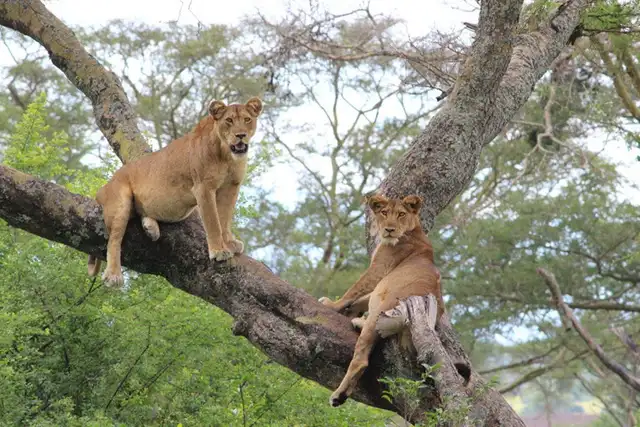
3. Experiencing the Tree Climbing Lions in Ishasha Sector
The Ishasha sector is known for tree-climbing lions on Uganda Safaris. Guides scan fig trees where lions rest during the day. Seeing a lion stretched on a branch is a rare moment. The area is quieter with fewer vehicles, allowing longer observation. Sometimes entire prides are seen in a single tree on Uganda Safaris.
4. Chimpanzee Tracking in Kyambura Gorge
Chimpanzee tracking in Kyambura Gorge offers a forest experience on Uganda Safaris. The gorge is a deep valley with thick forest. The walk takes 1 to 3 hours depending on chimpanzee location. Guides listen for calls and observe signs like broken branches. Chimpanzees are active, moving quickly through trees and communicating with loud sounds on Uganda Safaris.
5. Bird Watching across the Park
Bird watching offers one of the richest experiences on Uganda Safaris. With over 600 species, the park attracts bird enthusiasts. Wetlands and lake shores provide ideal habitats. Early morning walks allow observation of pelicans, fish eagles, kingfishers, and storks. Guides identify birds by their calls, helping visitors learn how to recognise different species on Uganda Safaris.
6. Exploring the Crater Lakes Region
The crater lakes region offers scenic landscapes on Uganda Safaris. These lakes formed by volcanic activity vary in size and depth. Short drives and stops at viewpoints reveal multiple lakes surrounded by green vegetation. Some lakes attract birds while others are used for fishing. This activity adds visual diversity and appreciation of geological history on Uganda Safaris.
7. Cultural Visits at Katwe Salt Lake
Visiting Katwe Salt Lake introduces cultural understanding on Uganda Safaris. Salt mining has been practiced here for generations using traditional methods. Guided tours explain how salt is extracted with simple tools. Visitors walk through mining areas observing workers collecting salt. Conversations with local people provide insight into livelihoods on Uganda Safaris.
8. Kikorongo Equator Experience
The Kikorongo Equator experience is a meaningful stop on Uganda Safaris. Located along the main road, this point marks where the Earth is divided into northern and southern hemispheres. Local guides demonstrate how water behaves differently on each side. Standing on the equator creates a sense of connection to the wider world on Uganda Safaris.
9. Night Game Drives
Night game drives reveal a different side of the park on Uganda Safaris. The drive begins after dark with guides using spotlights. Nocturnal animals such as hyenas, civets, and bush babies become active. Lions may be seen moving or hunting. The experience requires patience as sightings are less predictable on Uganda Safaris.
10. Guided Nature Walks
Guided nature walks provide a closer way to explore the park on Uganda Safaris. Led by armed rangers, walks focus on smaller details often missed during drives. Visitors notice animal tracks, broken branches, and droppings indicating recent activity. The pace is slow, allowing deeper connection with the surroundings on Uganda Safaris.
11. Maramagambo Forest Exploration
Exploring Maramagambo Forest introduces a different side of the park on Uganda Safaris. The forest is dense and quiet with tall trees creating a shaded environment. The bat cave houses thousands of bats, while pythons are sometimes seen nearby. Primates such as vervet monkeys and baboons are also present. This activity balances game drives with quieter forest exploration on Uganda Safaris.
12. Lion Tracking Experience
Lion tracking is an engaging activity on Uganda Safaris. Radio collars fitted on lions allow researchers to locate them accurately. Visitors join early morning drives with tracking equipment. Once located, guides explain hunting patterns and social structure. This activity contributes to conservation research on Uganda Safaris.
13. Hippo Viewing along the Kazinga Channel
Hippo viewing along the Kazinga Channel is a consistent experience on Uganda Safaris. Large groups gather in water to protect their skin from sun. They communicate through grunts and movements. In the evening, hippos leave the water to graze on land, revealing behaviour not visible during daytime on Uganda Safaris.
14. Leopard Tracking Opportunities
Leopards are difficult to spot, making tracking them exciting on Uganda Safaris. Early morning and late evening drives provide the best opportunities. Guides rely on experience and knowledge of leopard behaviour. When spotted, watching a leopard rest on a tree branch or move through grass is rewarding. These rare sightings become memorable moments on Uganda Safaris.
15. Elephant Herd Observation
Observing elephant herds is a powerful experience on Uganda Safaris. Elephants move in groups led by a matriarch. Calves remain close to adults, learning how to move and feed. Elephants are commonly seen near water sources, especially during dry seasons. Their size and calm movement create natural moments on Uganda Safaris.
16. Buffalo Herd Sightings
Buffalo herds are among the most noticeable animals on Uganda Safaris. They move together across the plains, relying on numbers for protection. Their behaviour changes depending on the time of day. Buffalo are often found near water where they rest and drink. Their size and group behaviour create active scenes on Uganda Safaris.
17. Antelope Species Viewing
Several antelope species are commonly seen on Uganda Safaris. Uganda kob prefer open plains, while bushbucks stay closer to vegetation. Watching these differences helps visitors understand how animals adapt. Antelopes play a key role as prey for predators, adding depth to wildlife viewing on Uganda Safaris.
18. Fishing Experience on Lake Edward
Fishing on Lake Edward offers a relaxed activity on Uganda Safaris. The lake supports various fish species. Guided trips allow visitors to experience local fishing methods. The activity usually takes place early morning or late afternoon. Fishing connects visitors to local communities that depend on the lake for their livelihood on Uganda Safaris.
19. Scenic Views of the Rwenzori Mountains
Distant views of the Rwenzori Mountains add a scenic backdrop to Uganda Safaris. These mountains rise in the distance, often covered in mist. Viewing points provide opportunities to see them clearly, especially during early mornings. The presence of these mountains adds depth to the landscape on Uganda Safaris.
20. Sunset and Sunrise Viewing Experiences
Sunrise and sunset moments are memorable on Uganda Safaris. Early mornings bring soft light and fresh activity. Evenings create warm colours across the plains. Watching these transitions adds a calm and reflective element to the safari. These moments are not rushed, allowing time to appreciate the environment on Uganda Safaris.
Best Time to Visit Queen Elizabeth National Park for Uganda Safaris
The dry seasons from June to September and December to February are preferred for Uganda Safaris. Grass becomes shorter, making wildlife easier to spot. Animals gather near water sources like the Kazinga Channel. Road conditions are manageable. Wet seasons from March to May and October to November bring greener landscapes and migratory birds on Uganda Safaris.
How to Get to Queen Elizabeth National Park for Uganda Safaris
Most visitors begin Uganda Safaris from Kampala or Entebbe. The road journey takes 6 to 7 hours via Mbarara or Fort Portal. Domestic flights from Entebbe to Kasese airstrip take about 1 to 1.5 hours. Both options connect smoothly with other destinations for Uganda Safaris.
Things to Do in Queen Elizabeth National Park on Uganda Safaris
Activities on Uganda Safaris include game drives, boat cruises, chimpanzee tracking, bird watching, and cultural visits. Each activity offers a different perspective of the park. Game drives reveal large mammals. Boat cruises focus on water animals. Chimpanzee tracking adds forest experience. Cultural visits connect with local communities on Uganda Safaris.
What to Carry for Uganda Safaris in Queen Elizabeth National Park
Pack lightweight neutral-coloured clothing for Uganda Safaris. Long-sleeved shirts and trousers protect against sun and insects. Comfortable walking shoes are essential. A hat, sunglasses, sunscreen, and insect repellent are necessary. Binoculars and a camera capture wildlife moments on Uganda Safaris.
Where to Stay in Queen Elizabeth National Park for Uganda Safaris
Accommodation ranges from luxury lodges to mid-range camps and budget facilities on Uganda Safaris. Luxury lodges offer views of the Kazinga Channel. Mid-range lodges balance comfort and cost near game drive areas. Budget options provide basic facilities. Choosing the right location depends on activities planned for Uganda Safaris.
Health and Safety Tips for Uganda Safaris at Queen Elizabeth National Park
Yellow fever vaccination is required for Uganda Safaris. Malaria prevention is recommended. Follow guide instructions during game drives. Remain inside vehicles unless advised otherwise. Wear appropriate clothing and use insect repellent. Stay hydrated and use sun protection on Uganda Safaris.
Why Book with Lamz Tours and Travel for Uganda Safaris
Lamz Tours and Travel provides well-organised Uganda Safaris with experienced guides who know wildlife areas. They handle transport, accommodation, and activity planning. Personalised itineraries match traveller interests. Local knowledge adds value by introducing places not easily found without guidance for Uganda Safaris.
Beyond Queen Elizabeth National Park on Uganda Safaris
Beyond Queen Elizabeth Park, Lamz Tours and Travel organises trips across South Africa, Kenya, Tanzania, Morocco, Rwanda, Malawi and other African destinations.
Ready to plan your safari?
Talk to a Lamz Tours specialist and get a tailor-made quote.
Make an enquiry