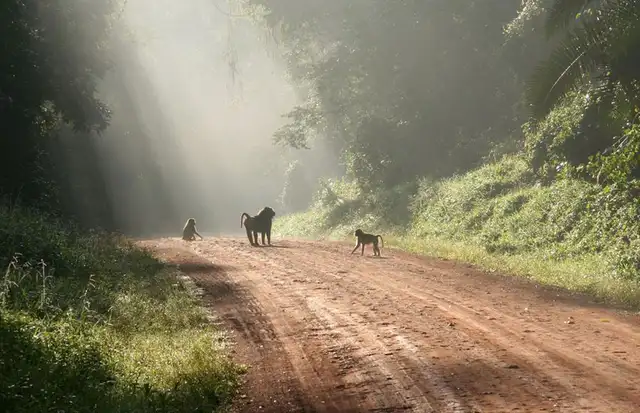
When planning a Uganda primate safari, there are three distinct, outspoken and remarkable green routestaken by travelers for an unforgettable primate experience (gorillas, chimpanzees). The first and common Uganda primate safari route leads to the iconic Bwindi Impenetrable National Park in western countryside of Uganda, a UNESCO World Heritage Site, which is home to almost half of the world’s remaining mountain gorilla population and the Batwa forest dwelling indigenous people. Gorilla trekking through the thick foliage of the park offers a rare opportunity on Uganda primate safari to encounter these gentle giants up close. The second road to drive on Uganda primate safari, takes you to remarkable chimpanzee sanctuaries, such as Kibale National Park and Budongo Forest, where visitors can observe these intelligent primates, the chimpanzees with 98.8 % DNA close to humans in their natural habitat. Exploring the unique ecosystems of these areas on a Uganda primate safari also offers encounters with a variety of other primate species, including red-tailed monkeys and blue monkeys. With over 13 species of primates, Uganda's dense rain forests, rolling hills, and stunning national parks provide a rare glimpse into the lives of these fascinating creatures, making it an unforgettable Uganda primate safari experience.
Popular packages for Uganda primate safaris
2-days-chimpanzee-trekking-safari
3-days-chimpanzees-trekking-safari-in-kibale-national-park
3-days-flying-safari-to-gorilla-trekking
3-days-gorillas-trekking-and-lake-mburo-national-park-safari
3-days-uganda-gorilla-trekking-safari-and-batwa-pygmies-visit-in-bwindi-national-park
4-days-golden-monkeys-and-gorilla-trekking-safari
3-days-gorilla-trekking-in-mgahinga-gorilla-national-park
4-days-safari-with-gorilla-and-queen-elizabeth-national-park
Green Roads in Uganda primate safari
The Three Green Roads of a Uganda primate safari offer a captivating tapestry of lush landscapes, vibrant wildlife, and rich cultural experiences, making them a must-visit for any primate safari enthusiast. Each road on a Uganda primate safari presents a unique journey through some of the country’s most stunning natural habitats, teeming with life and adventure.
The Road to Bwindi Impenetrable National Park( Green and Most Meandering)
Bwindi Impenetrable National Park is a mystical road to tale on a Uganda primate safari, a UNESCO World Heritage site and one of the last remaining habitats for the critically endangered mountain gorillas. Bwindi Impenetrable National Park is renowned for its population of mountain gorillas, offering a profound connection to one of nature’s most awe-inspiring animals. The dense, misty forest creates a dramatic atmosphere, with towering trees and thick undergrowth. Trekking through the rugged terrain to find these magnificent creatures is a challenging but rewarding adventure.
On a Uganda primate safari visitors can trek through the dense, mist-covered forests, surrounded by the sounds of chirping birds and rustling leaves, creating an exhilarating experience. The ultimate reward on a Uganda primate safari comes when travelers set eyes on a family of gorillas just a few meters away, providing an intimate glimpse into their world. This transformative moment leaves a lasting impression and deepens the connection between humans and these incredible primates.
Bwindi is also home to an array of other primates, including the playful L’Hoest’s monkey and the elegant colobus monkey. This diversity makes Bwindi a truly rich ecosystem, offering opportunities to observe and appreciate various primate species in their natural habitat. Bwindi on a Uganda primate safari serves as a pathway to this extraordinary experience, allowing travelers to immerse themselves in the beauty and wonder of Bwindi Impenetrable National Park. It is a journey that not only provides an opportunity to witness these majestic creatures up close but also fosters a deeper understanding of the importance of conservation and preservation efforts.
Uganda primate safari to Bwindi Impenetrable National Park stands as a testament to the incredible biodiversity and natural wonders that Uganda has to offer. It is a journey that leaves a lasting impact on all those who have the privilege to embark on it, creating memories and connections that will endure long after the adventure has come to an end.
Which terrain can I expect while driving in the green and thick forest roads of Bwindi?
While driving in the green and thick forest roads of Bwindi on a Uganda primate safari, you can expect to encounter various types of terrain. The roads in Bwindi are often unpaved and can be rough, narrow, and winding. The terrain can be hilly and uneven, with steep inclines and declines. Due to the dense vegetation, the roads may also be slippery and muddy, especially during the rainy season. It is important to drive carefully and be prepared for challenging driving conditions.
The presence of wildlife such as mountain gorillas in the area means that you may need to drive cautiously and be aware of potential animal crossings. The lush forest surroundings also mean that visibility on the roads may be limited, so it is advisable to proceed with caution.
What are the driving restrictions and speed limit while driving on park roads in Uganda
According to the Uganda Wildlife Authority (UWA), the driving restrictions on park roads in Uganda include a maximum speed limit of 40 km/h. This speed limit is enforced to ensure the safety of both visitors and wildlife within the national parks. Additionally, drivers are required to stay on designated roads and are not allowed to drive off-road in order to protect the natural habitat and wildlife.
It is important for visitors to adhere to these driving restrictions in order to minimize disturbance to the wildlife and maintain the ecological balance within the parks. By following these regulations, visitors can contribute to the conservation efforts of Uganda's diverse and unique ecosystems. Visitors should also be aware of specific park rules and regulations that may vary depending on the national park they are visiting. It is advisable to check with UWAor park authorities for specific guidelines before embarking on a safari or wildlife adventure in Uganda.
How to get to Bwindi impenetrable forest on ultimate Uganda primate safari
For those wanting to explore Bwindi Impenetrable Forest on the ultimate Uganda primate safari, the most common way to get there is by road. You can drive from Entebbe to Bwindi, which takes approximately 8-9 hours. The drive will take you through diverse landscapes and give you a chance to see the beautiful Ugandan countryside. Alternatively, you can also fly from Entebbe to Kihihi Airstrip, which is the closest airstrip to Bwindi Impenetrable Forest. From there, you can arrange for a transfer to the forest or rent a car and drive yourself.
The road to Kibale National Park( Green & most Forested )
Embark on the ultimate Uganda primate safari and experience the wonders of the Green Road in Kibale National Park. This road is a gateway to a world of lush rainforests teeming with diverse primate species, making it a must-visit destination for nature enthusiasts and wildlife lovers.
Kibale National Park is renowned for being the "primate capital of the world," boasting over 13 primate species within its borders. One of the main highlights of the park on Uganda primate safari is the opportunity to encounter the charismatic chimpanzees in their natural habitat. Guided treks through the park offer a chance to witness these incredible creatures up close, providing unforgettable encounters that will leave a lasting impression. Kibale National Park can also spot other primate species such as the red-tailed monkeys, black-and-white colobus monkeys, and L'Hoest's monkeys. The park's dense rainforests are alive with the sounds of rustling leaves and playful primate calls, creating an atmosphere filled with anticipation and excitement.
Exploring the winding paths on Uganda primate safari allows visitors to immerse themselves in the rich flora and fauna of Kibale National Park. Apart from the primate species, the park is also home to a variety of wildlife including elephants, birds, and butterflies. Guided walks through the lush rainforest not only showcase the antics of the fascinating primates but also provide insights into the park's diverse ecosystem. For a more immersive experience, visitors can venture into the nearby Bigodi Wetland Sanctuary, which offers a serene environment for bird watching and cultural experiences with local communities. The sanctuary is a haven for bird enthusiasts, with numerous bird species thriving in its wetland habitat. Interacting with the local communities on Uganda primate safari provides a glimpse into the traditional way of life in this region, adding a cultural dimension to the primate safari experience.
How long do I need to drive through a the green and forested road of Kibale forest park
The drive through the green and forested road of Kibale Forest Park on Uganda primate safari typically takes around 1-2 hours to complete. The park is located in western Uganda and is known for its lush vegetation, diverse wildlife, and beautiful scenery. The road winds through the dense forest, offering glimpses of chimpanzees, monkeys, and various bird species along the way. It is important to drive slowly and cautiously to fully appreciate the natural beauty of the park and to watch out for wildlife that may be crossing the road. Visitors are encouraged to take their time and soak in the tranquil atmosphere of the forest, making stops along the way to take photos and enjoy the surroundings. Driving through Kibale Forest Park on a Uganda primate safari is not just a means of reaching a destination, but an experience in itself, allowing visitors to connect with nature and immerse themselves in the stunning landscape.
What are the common inhabitants of the green road of Kibale forest park
The green road of Kibale Forest Park is home to a variety of common inhabitants that can be seen on a Uganda primate safari. One of the most well-known inhabitants is the chimpanzee, which is one of the park's main attractions. Other common inhabitants include red colobus monkeys, black and white colobus monkeys, and L'Hoest's monkeys. The park is also home to over 300 species of birds, making it a paradise for birdwatchers. In addition, the lush vegetation of the green road provides habitat for numerous species of butterflies, insects, and small mammals. The park's diverse ecosystem supports a rich variety of plant and animal life, making it a must-visit destination for nature lovers and wildlife enthusiasts.
How to get to Kibale forest park on a Uganda primate safari
To get to Kibale Forest Park on a Uganda primate safari, you can fly into Entebbe International Airport, which is the main gateway into Uganda. From there, you can take a domestic flight to Kasese Airstrip, which is the closest airport to Kibale Forest Park. Alternatively, you can drive from Entebbe to Kibale Forest Park, which takes approximately 5-6 hours. The drive will take you through beautiful Ugandan countryside and give you a chance to see rural life in Uganda.
The road to Budongo forest ( longest, leisurely & green covering)
Budongo forest from Kichumbanyoba gate to the escapement is a vital part of an ultimate Uganda primate safari, offering a unique and immersive experience in the heart of nature. This road is renowned for its lush greenery and the abundance of wildlife that thrives within its surroundings. As visitors traverse through Budongo forest, they are greeted by the vibrant and diverse ecosystem of Budongo, which is home to a rich variety of plant and animal species. The dense vegetation and towering trees create a picturesque setting, providing a habitat for numerous primate species, including chimpanzees, olive baboons, and rare patas monkeys.
One of the highlights of the Uganda primate safari is the opportunity to witness the breathtaking Murchison Falls, where the mighty Nile River surges through a narrow gap in the rocks, creating a powerful and awe-inspiring spectacle. The surrounding savanna landscapes offer a stunning backdrop for observing wildlife in their natural habitat.
A key feature of the Budongo forest drive on Uganda primate safari experience is the chance to encounter olive baboons and rare patas monkeys as they roam freely in their natural environment. These primate species are integral to the delicate balance of the ecosystem and observing them in the wild provides a deeper understanding of their behavior and social dynamics. Visitors can embark on a captivating boat cruise along the Nile, allowing them to soak in the panoramic views of Murchison Falls and the diverse array of wildlife that congregates along the riverbanks. The tranquil waters offer glimpses of hippos basking in the sun, crocodiles lurking along the shores, and a myriad of bird species gracefully soaring above.
The abundance of greenery along the Budongo forest on a Uganda primate safari not only contributes to the scenic beauty of the landscape but also serves as a vital lifeline for the diverse flora and fauna that call this region home. The lush vegetation provides essential resources for the primate populations, ensuring their continued survival in this pristine environment. Budongo forest is an integral component of an ultimate Uganda primate safari, offering a harmonious blend of natural beauty, diverse wildlife, and immersive experiences. It provides a rare opportunity to connect with nature and witness firsthand the wonders of Budongo and Murchison Falls, leaving visitors with lasting memories of this captivating wilderness.
How long can I take to drive on the forested road of Budongo forest on Uganda primate safari?
The drive on the forested road of Budongo forest can take approximately 1-2 hours to cover the 20 kilometers distance, depending on road conditions and traffic. The road winds through the lush greenery of the forest, offering a scenic and tranquil drive for nature enthusiasts. It is advisable to drive at a moderate speed to fully enjoy the beauty of the surroundings and to watch out for any wildlife that may cross the road. Additionally, it is recommended to check the weather and road conditions before embarking on the journey, as heavy rain or other adverse conditions can affect driving times. Overall, taking the time to leisurely drive through Budongo forest allows for a peaceful and rejuvenating experience amidst nature's splendor.
How to get to Budongo forest on ultimate Uganda primate safari
If you are looking to visit Budongo Forest on the ultimate Uganda primate safari, you can also fly into Entebbe International Airport and then take a domestic flight to either Pakuba Airstrip or Bugungu Airstrip, both of which are close to Budongo Forest. From there, you can arrange for a transfer to the forest or rent a car and drive yourself. The drive from Entebbe to Budongo Forest takes around 4-5 hours and offers stunning views of Lake Albert and the Rift Valley.
When is the best time of the year for Uganda primate safari?
The best time of the year for a Uganda primate safari is during the dry seasons, which are from June to August and December to February. During these times, the weather is more predictable, and the trails are less muddy, making it easier to spot primates such as gorillas and chimpanzees. The dry seasons offer better photography opportunities and a higher chance of encountering a variety of wildlife in their natural habitat. It is advisable to plan your safari during these months for an optimal experience.
Why to choose Lamz Tours and Travel for Uganda primate safari to Bwindi, Kibale, Budongo forest
Explore the pristine green destinations on Uganda primate safari to Bwindi, Kibale, and Budongo forest with Lamz Tours and Travel. Our carefully crafted itineraries ensure personalized encounters with Uganda's precious primate populations. Immerse yourself in adventure, relaxation, and wildlife viewing for an unforgettable experience.
Ready to plan your safari?
Talk to a Lamz Tours specialist and get a tailor-made quote.
Make an enquiry