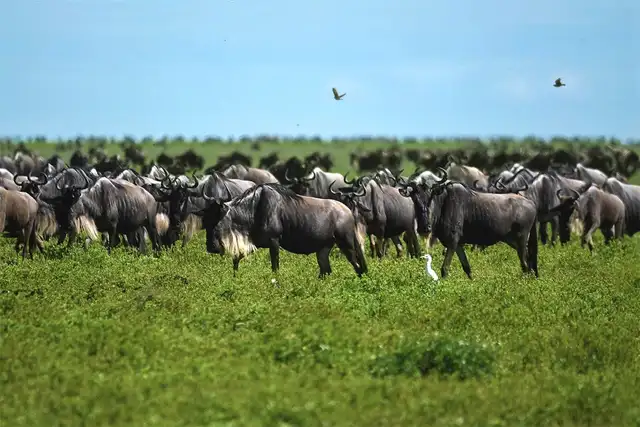
The Ndutu Serengeti wildebeest calving season typically occurs from late January to mid-March. Ndutu, located in the southern Serengeti, is the chosen location for this annual event due to the abundance of grass and water, creating an ideal environment for the wildebeest to give birth. This significant event attracts predators such as lions, hyenas, and cheetahs, who take advantage of the vulnerable young calves.
During calving, the wildebeest follow a migration pattern, moving from the southern Serengeti to Ndutu before eventually heading towards the central and western regions of the Serengeti. However, during this time, they are at their most vulnerable, leading to high predation rates. This annual event is crucial for the survival of the wildebeest population and plays a vital role in the overall ecosystem of the Serengeti.
Ndutu Serengeti calving Area
The Ndutu Serengeti calving Area is a breathtaking landscape of grasslands and woodlands, home to a rich diversity of wildlife species. However, the highlight of this area is the famous wildebeest migration during the calving season. This natural spectacle sees millions of wildebeest, zebra, and gazelle migrating through the area, attracting predators like lions, cheetahs, and hyenas.
In addition to the incredible wildlife, the Ndutu Serengeti area is also home to the archaeological site at Ol duvai gorge, where significant discoveries have been made about human evolution. Visitors can also immerse themselves in the Maasai cultural experience, learning about their traditions and way of life.
For a truly unforgettable experience, guests can take to the skies in a hot air balloon safari over the vast plains of the Ndutu Serengeti, offering a unique perspective on the stunning landscape and its inhabitants.
The Ndutu Serengeti calving Area offers a one-of-a-kind safari experience, combining the thrill of witnessing the wildebeest migration with the opportunity to explore rich cultural history and stunning landscapes.
What is Ndutu Serengeti wildebeest calving season?
The Ndutu Serengeti wildebeest calving season is an extraordinary natural phenomenon that occurs in the southern Serengeti of Tanzania. Each year, over 500,000 wildebeest migrate to the Ndutu area to give birth to their calves during the months of January to March. This mass migration is significant as it marks the calving season for the wildebeest, with an estimated 8,000 calves born each day during this period.
The wildebeest migration patterns play a crucial role in this phenomenon, as they follow the rains and lush grasslands in order to give birth in a safe and fertile environment. The Ndutu area, with its open plains and short grass, provides the ideal setting for the wildebeest to calve and for the newborn calves to thrive.
For wildlife enthusiasts and safari-goers, the Ndutu Serengeti calving season is a must-see event. The southern Serengeti and the Ndutu region offer prime locations to witness this incredible spectacle, with an abundance of wildlife and stunning landscapes to marvel at. The calving season is a time of intense predator-prey interactions, making it a thrilling and unique experience for wildlife enthusiasts.
When is the Best Time to ndutu Serengeti wildebeest calving season?
The best time for observing the wildebeest calving season in the Ndutu Serengeti area is from late January to early March. The specific locations within the park where the calving can be witnessed include the Ndutu Plains, the southern portion of the Serengeti National Park, and the Ngorongoro Conservation Area.
The calving season is significant as it marks the time when thousands of wildebeest give birth to their young, attracting predators such as lions and hyenas. This natural phenomenon is unique compared to other wildlife events across the continent due to the sheer number of births that occur within a short period. It is also a critical time for the survival of the wildebeest population, as it ensures the replenishment of their numbers.
For those wanting to witness the wildebeest calving season, safari arrangements from Maasai Mara to Ndutu are available. This typically involves travelling through the Serengeti, with the option of camping or staying in lodges along the way. Professional guides can provide insight into the behavior of the wildebeest during this period, enhancing the safari experience.
Where can you see ndutu Serengeti wildebeest calving season?
The best places to witness the Ndutu Serengeti wildebeest calving season are the mobile migration camps and permanent lodges in the area. Properties such as Olakira Tented Camp, Ubuntu Tented Camp, and Kimondo Tented Camp offer an authentic luxury safari experience close to the birthing action. These accommodations provide comfortable and stylish tented rooms, gourmet dining, and expert guides who can take guests to the heart of the calving action.
The key features of these accommodations that make them ideal for witnessing this extraordinary phenomenon include their prime locations in the Ndutu area, where the majority of the wildebeest calving takes place. Additionally, the camps and lodges offer exclusive game drives, walking safaris, and cultural interactions with the local Maasai tribes. With their luxurious amenities and proximity to the wildebeest calving grounds, these accommodations provide an unforgettable safari experience during the Ndutu Serengeti wildebeest calving season.
What can you expect from ndutu Serengeti wildebeest calving season?
During the Ndutu Serengeti wildebeest calving season, one can expect to witness the incredible annual migration of over 1.5 million wildebeest and hundreds of thousands of zebra as they make their way from the Maasai Mara in Kenya to the southern plains of Ndutu in Tanzania. This migration coincides with the birthing of over 500,000 wildebeest calves in a 3-week period, a unique phenomenon that attracts predators such as lions, cheetahs, leopards, and hyenas to the area.
The calving season has a significant impact on the Serengeti ecosystem, as the influx of new calves provides vital food for predators and scavengers, contributing to the balance of the ecosystem. During this time, the behavior of the wildebeest is marked by heightened alertness and protective instincts as they seek to protect their vulnerable offspring from predators.
To witness this incredible event, the best safari arrangements typically involve starting in the Maasai Mara and following the migration to Ndutu in the southern plains. This allows for the opportunity to witness the wildebeest calving and the dramatic interactions between predators and prey in the African savanna.
Why you should go for ndutu Serengeti wildebeest calving season?
The ndutu Serengeti wildebeest calving season is a remarkable natural phenomenon that draws tourists from around the world. The wildebeest migration patterns bring hundreds of thousands of wildebeest, zebras, and other animals to the southern Serengeti plains in Tanzania, where they give birth to their young in the span of just a few weeks. This mass calving event is not only a spectacle to behold but also a crucial part of the Serengeti ecosystem, providing an abundant food source for predators and ensuring the survival of the wildebeest population.
Tourists have the opportunity to witness this extraordinary event on safari, with the chance to see newborn calves taking their first steps alongside their mothers, and predators lurking in the shadows, ready to seize the opportunity for an easy meal. The vast herds dotted across the plains make for incredible viewing and photography opportunities, while knowledgeable guides provide insights into the behavior and biology of these fascinating animals.
The ndutu Serengeti wildebeest calving season offers a once-in-a-lifetime safari experience, allowing visitors to witness nature in its most raw and awe-inspiring form. It's a chance to witness one of the most incredible natural events on the planet and to gain a deeper understanding of the delicate balance of life within the Serengeti ecosystem.
Accommodation in Ndutu Serengeti
In Ndutu Serengeti, there are various lodging options available for visitors to choose from. One of the most popular and well-established options is Ndutu Lodge, known for its comfortable accommodations and convenient location for wildlife viewing. The best time to visit Ndutu Serengeti for prime wildlife sightings is during the wildebeest calving season from January to March, when the area is teeming with newborn calves and their mothers.
Ndutu is in close proximity to both the Ngorongoro Conservation Area and the Serengeti National Park, providing visitors with the unique opportunity to witness the annual wildebeest calving. This natural phenomenon, taking place in the southern region of the Serengeti ecosystem, attracts large numbers of predators and is a sight not to be missed.
Overall, Ndutu Serengeti offers a range of lodging options for visitors, with Ndutu Lodge being a standout choice. The best time to visit is during the wildebeest calving season, and the proximity to the Ngorongoro Conservation Area and Serengeti National Park provides a unique opportunity for wildlife enthusiasts.
Ready to plan your safari?
Talk to a Lamz Tours specialist and get a tailor-made quote.
Make an enquiry