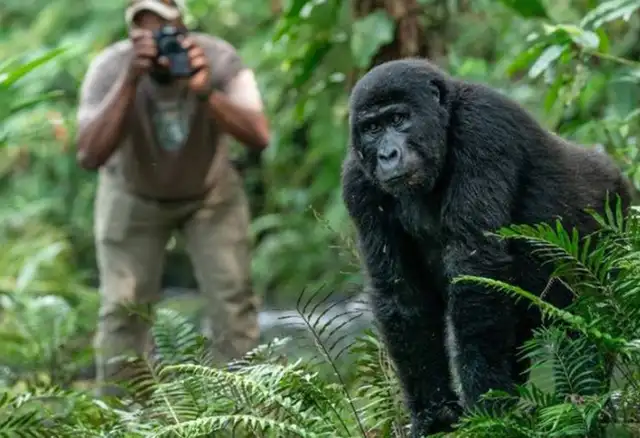
A Tanzania safari and a gorilla trekking safari are two of Africa's most iconic wildlife experiences, but they are not really competing for the same trip. Tanzania is built around vehicle-based game drives across the Serengeti and Ngorongoro Crater, chasing the Great Migration and the Big Five across vast open plains. Gorilla trekking is a forest hike ending in one intimate hour with a single mountain gorilla family in Uganda or Rwanda. Neither is objectively "better," the right choice depends on what kind of wildlife encounter you actually want.
If you have the time, you do not have to choose, itineraries such as the 10 Days Uganda and Tanzania Safari with Gorillas and Chimpanzees combine both into one trip. Here is how the two compare.
Popular Packages
3 Days Uganda Gorilla Trekking Safari and Batwa Pygmies Visit in Bwindi National Park
6-Day Gorilla Safari Uganda with the Big Five Adventure
3-Days Serengeti Safari and Ngorongoro Tour Package Itinerary
4-Days Serengeti Safari and Ngorongoro Tanzania Tour Package
5-Days Serengeti Safari, Ngorongoro and Lake Manyara Tanzania Tour Trip
Tanzania Safaris vs Gorilla Trekking Safaris: Which Is Best?
1. Two Completely Different Kinds of Wildlife Encounter
A Tanzania safari is vehicle-based, covering vast savanna across the Serengeti, Ngorongoro Crater, Tarangire, and Lake Manyara, with the chance to see dozens of species, lions, elephants, giraffes, cheetahs, and the wildebeest migration, across multiple game drives a day. Gorilla trekking is on-foot, capped to a single species, and ends in a strictly timed, unforgettable hour with one gorilla family. One is broad and comfortable; the other is narrow, physical, and intensely personal.
2. Cost
A Tanzania safari typically costs 2,000 to 5,800 US dollars per person for a 4 to 8-day trip, depending on lodge standard, with no single permit fee dominating the budget. A gorilla trek adds an 800 US dollar Uganda permit or 1,500 US dollar Rwanda permit on top of transport and lodging, which often pushes a short 3 to 4-day gorilla trip to 1,200 to 2,500 US dollars, a smaller total spend but a much larger share of it tied to one single-species encounter.
3. Wildlife Variety vs a Near-Guaranteed Single Encounter
Tanzania delivers volume, the Serengeti alone hosts over 3,000 plant species and the Big Five, plus the Great Migration's 1.5 million wildebeest and zebra. Gorilla trekking delivers near-certainty on one specific goal, trekking has a success rate above 95 percent because trackers locate the family before you set off. Choose Tanzania for breadth of sightings, gorilla trekking for a focused, almost guaranteed single highlight.
4. Physical Demand
Tanzania safaris are largely seated in a 4x4 vehicle, making them accessible to almost any fitness level, including young children and older travellers. Gorilla trekking is a genuinely strenuous hike, 1 to 8 hours on steep, muddy, high-altitude terrain, and is only open to trekkers aged 15 and up. If mobility is a concern, Tanzania is the far more comfortable choice.
5. Trip Length
A worthwhile Tanzania safari generally wants 4 to 8 days to properly cover the Serengeti and Ngorongoro Crater without feeling rushed, since sightings build over multiple drives. A focused gorilla trek can be done in as few as 3 days, with one trekking day as the clear centrepiece, making it the quicker option if your time is limited.
6. Can You Do Both?
Yes, and it is one of the most popular ways to see both destinations. A 10-day combined itinerary pairing Uganda's gorilla trekking and chimpanzee tracking with Tanzania's Serengeti and Ngorongoro Crater lets you experience both the intimate primate encounter and the classic open-plains safari on one trip, without having to choose.
Weather and Climate
Bwindi and Volcanoes National Park sit at high altitude and stay cool and misty, with temperatures between 11°C and 23°C. Tanzania's Serengeti and Ngorongoro are warmer and drier overall, with daytime temperatures often between 20°C and 27°C, and share a similar June to October dry season with East Africa's gorilla parks.
Best Time to Go
For gorilla trekking, June to September and December to February are driest and most popular. For Tanzania, the Great Migration typically runs June to October, overlapping closely with gorilla trekking's dry season, which makes planning a combined trip straightforward.
How to Get There
Uganda's gateway is Entebbe International Airport, with Bwindi a 7 to 9-hour road transfer away. Tanzania's northern circuit is reached via Kilimanjaro International Airport near Arusha, the gateway to the Serengeti, Ngorongoro, and Tarangire.
Health and Safety Tips
A yellow fever vaccination is mandatory for Uganda if arriving from an endemic country, and is commonly required or recommended for Tanzania too. Malaria risk exists in both destinations, so discuss prophylaxis with your doctor, and carry comprehensive travel insurance covering trip cancellation and medical evacuation for either trip.
Why Book With Lamz Tours and Travel
Lamz Tours and Travel is a fully licensed, Uganda-based tour operator running both gorilla trekking safaris and Tanzania safari tours, so we can build an honest itinerary around whichever experience fits you, or combine both into one seamless East Africa trip. Contact us at info@Lamz Tours and Travel.com or +000 000 000 000 to start planning.
Ready to plan your safari?
Talk to a Lamz Tours specialist and get a tailor-made quote.
Make an enquiry