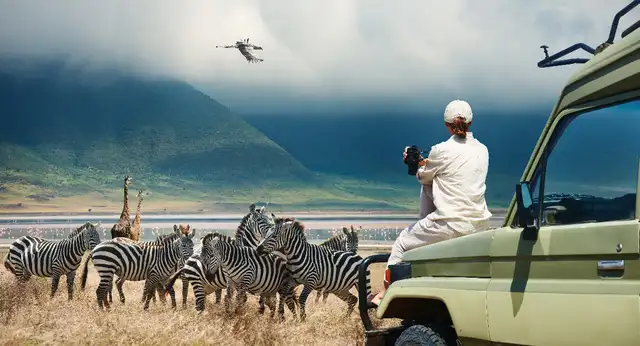
Tanzania wildlife tours offer a single location opportunity to explore diverse wildlife destinations and stunning landscapes of the country (Some destination are in similar proximity like Serengeti is neighbored by Ngorongoro in the East). The country is not far much different from her neighbor Kenya with also plenty of wildlife, Uganda with diverse primate species like the gorillas, chimps and Rwanda also with gorillas. The Serengeti, known for its vast savannahs, is home to a wide variety of wildlife, including the famous Big Five that you can see on Tanzania wildlife tours. Visitors on Tanzania wildlife tours can witness the annual Great Migration, where millions of wildebeest and zebras move across the plains, showcasing the raw power of nature. Ngorongoro Crater, with its lush greenery and unique ecosystem, provides a different yet equally captivating wildlife experience. The crater is home to a diverse range of species, including the endangered black rhino, allowing visitors to observe these majestic creatures in their natural habitat. Both destinations offer unforgettable experiences for those on Tanzania wildlife tours, attracting visitors from around the world.
Popular packages
2-days-fly-in-serengeti-safari-in-tanzania
2-days-tarangire-national-park-and-ngorongoro-crater-safari
3-days-tanzania-safari-in-serengeti-national-park
4-days-epic-tanzania-wildlife-and-culture-safari
5-days-circuit-wildlife-safari-in-tanzania
8-days-wildlife-and-beach-holiday-tanzania
9-days-zanzibar-and-wildlife-safari
12-days-kenya-and-tanzania-wildlife-safari
What are the reasons for intertwining Serengeti and Ngorongoro Tanzania wildlife tours?
The intertwining of Serengeti and Ngorongoro on Tanzania wildlife tours, can be attributed to several reasons.
Both the Serengeti National Park and the Ngorongoro Conservation Area are located in close proximity to each other in Tanzania, making it convenient for tourists to visit both destinations during a single trip. Additionally, both areas are renowned for their rich biodiversity and stunning landscapes, offering visitors the opportunity to witness diverse wildlife and natural beauty in one trip.
Serengeti and Ngorongoro ecosystems are interconnected, with the annual wildebeest migration passing through both areas, showcasing the close relationship between the two. The Ngorongoro Crater also serves as a vital part of the Serengeti ecosystem, providing a unique habitat for a variety of wildlife, the cultural significance of the Masai people, who reside in both the Serengeti and. Ngorongoro regions, further intertwines these two areas, as visitors have the opportunity to learn about and engage with Masai culture and traditions during their visit.
How large is Serengeti compared to Ngorongoro
Serengeti National Park is significantly larger than Ngorongoro Conservation Area. The Serengeti covers an area of approximately 14,750 square kilometers, making it one of the largest national parks in Tanzania and Africa as a whole. In contrast, Ngorongoro Conservation Area spans about 8,292 square kilometers. This means that the Serengeti is almost twice the size of Ngorongoro. Both areas are renowned for their stunning landscapes and diverse wildlife, but the larger size of the Serengeti allows for a wider range of ecosystems and habitats, supporting a greater variety of flora and fauna.
Does Ngorongoro have a different entrance fee from that of Serengeti?
The entrance fee for Ngorongoro Conservation Area on Tanzania wildlife tours is different from that of Serengeti National Park. As of 2021, the entrance fee for Ngorongoro Conservation Area is $60 for foreign adult visitors, while the entrance fee for Serengeti National Park is $70 for foreign adult visitors. It's important to check the current fees and regulations before planning your visit, as they may change over time.
How close is Ngorongoro Conservation area to Serengeti national park?
Ngorongoro Conservation Area is located in close proximity to Serengeti National Park, with a distance of approximately 90 kilometers (56 miles) between the two. The driving time between the two locations is approximately 1.5 to 2 hours, depending on the specific starting point and route taken. Visitors often combine visits to Ngorongoro and Serengeti due to their proximity and the unique wildlife experiences each location offers.
How much time to I need for both Serengeti and for Ngorongoro
To fully experience both the Serengeti and Ngorongoro, I would recommend allocating at least 3 to 4 days for each location. This will allow ample time for game drives, exploring the unique landscapes, and observing the diverse wildlife in both areas.
What mistakes to people make when they are arranging a combined Tanzania wildlife tours to Serengeti and Ngorongoro
When arranging a combined Tanzania wildlife tours to the Serengeti and Ngorongoro, one common mistake is underestimating the travel time between the two locations. It's important to factor in transportation time and consider the distance between the two areas when planning your itinerary. Additionally, some travelers make the mistake of not allowing enough time for rest and relaxation between activities, which can lead to fatigue and detract from the overall experience.
Not booking accommodations in advance to ensure availability, like during peak seasons. The Serengeti and Ngorongoro are popular destinations, so securing lodging early is essential to ensure availability and the best options for your stay.
What are the common accommodation options on Tanzania wildlife tours?
Common accommodation options on Tanzania wildlife tours include luxury lodges, tented camps, and budget-friendly guesthouses. Luxury lodges offer high-end amenities and services, while tented camps provide a more immersive experience in the wilderness. Budget-friendly guesthouses are a cost-effective option for travelers looking to save on accommodation expenses.
When is the best time of the year for Tanzania wildlife tours?
The best time of the year for Tanzania wildlife tours is during the dry season, which typically runs from late June to October. During this time, the vegetation is less dense, making it easier to spot wildlife around water sources. Additionally, the weather is cooler and there is a lower risk of malaria.
Why most travelers book with Lamz Tours and Travel for Tanzania wildlife tours
Many travelers book with Lamz Tours and Travel for Tanzania wildlife tours due to their expertise in creating customized safari experiences, knowledgeable guides, and commitment to sustainable tourism practices. Lamz Tours and Travel also offers a range of accommodation options to suit different preferences and budgets, ensuring a memorable and comfortable wildlife tour experience.
Ready to plan your safari?
Talk to a Lamz Tours specialist and get a tailor-made quote.
Make an enquiry