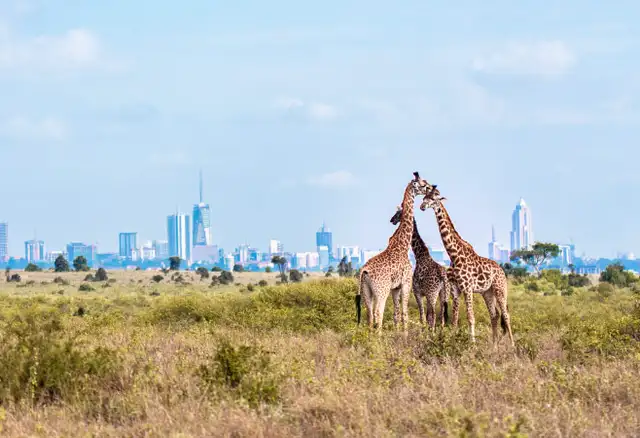
Almost every Kenya safari begins and ends in Nairobi, so a little preparation for the city itself pays off before you ever reach the Masai Mara. Nairobi is both Kenya's political capital and its main safari hub, home to the international airport, the domestic bush-flight terminal, and a surprising national park of its own within sight of the skyline. Here is what to know before you land.
Most travellers spend at least one night in Nairobi at the start or end of their trip, and many extend that into a half or full day exploring the city before heading out on safari.
Popular Kenya Safari Packages
Nairobi Travel Guide: What You Need to Know on Kenya Safaris
1. Nairobi Is Your Gateway In and Out
Almost all international travellers arrive at Jomo Kenyatta International Airport (NBO), well connected to Europe, the Middle East, and parts of Asia and North America on airlines such as Kenya Airways, Qatar Airways, Emirates, and Turkish Airlines. Safari operators then arrange onward transfers from Nairobi to the parks, either by road or by a short domestic flight, so your Nairobi arrival is really the true start of the trip logistically.
2. Wilson Airport Handles Bush Flights to the Parks
If your itinerary uses domestic flights rather than road transfers, you will likely depart from Wilson Airport, which handles most bush flights to destinations like the Masai Mara, Amboseli, and Samburu, separate from the international terminal at NBO. Local airlines such as Safarilink and AirKenya operate these routes, and it is worth checking baggage weight limits in advance, since small aircraft enforce stricter limits than international flights.
3. Sort Your Visa Before You Travel
Most nationalities need a visa for Kenya, applied for online through the Kenya eCitizen portal, costing around 50 to 51 US dollars. Apply early rather than leaving it to arrival, ensure your passport is valid for at least six months beyond your travel dates, and carry a printed copy of your visa confirmation. Travellers combining Kenya with Tanzania can also look into the East African Tourist Visa, which covers both countries for about 100 US dollars.
4. Currency, Cash, and Cards
The Kenyan Shilling (KES) is the local currency, and while credit cards are widely accepted at hotels and lodges in Nairobi, carrying cash is advisable for tips, markets, and smaller purchases once you are out in the parks. ATMs are available across the city, but withdraw what you need before heading into more rural safari areas where access is limited.
5. What to Do in Nairobi Before or After Your Safari
Nairobi's top attractions are easily covered in a half or full day: the David Sheldrick Wildlife Trust elephant orphanage, the Giraffe Centre for feeding endangered Rothschild giraffes, and the Karen Blixen Museum, all within a short drive of the city centre. Nairobi National Park itself sits just 7 kilometres south of the CBD, making it the only capital city in the world where you can do a genuine game drive, spotting lion, rhino, giraffe, and buffalo, minutes from the skyline.
6. Health, Tipping, and Local Etiquette
A yellow fever certificate is required if arriving from or transiting through an affected country, and Hepatitis A and B, Typhoid, and Tetanus vaccinations are commonly recommended alongside malaria prophylaxis. Tipping is customary throughout Kenya, guides, drivers, and lodge staff rely on it, so carry small denominations of US dollars or shillings, and always ask permission before photographing people in local communities.
Weather and Climate in Nairobi
Nairobi sits at a cooler elevation than much of Kenya's lowland savanna, with daytime temperatures typically between 20°C and 26°C year-round. April and May are the wettest months in Nairobi and across most of the country, worth avoiding if possible since safari roads elsewhere can become muddy.
Best Time to Pass Through Nairobi
June to October and January to February are peak season across Kenya, so flights and Nairobi hotels are in higher demand and cost more during these months; booking early secures better prices and connections. The quieter shoulder months, April, May, and November, offer easier availability and lower rates in the city as well as in the parks.
How to Get Around Once You Arrive
From Nairobi, road transfers to parks like Lake Nakuru, Amboseli, or the Masai Mara typically take 3 to 6 hours by 4x4 vehicle, offering scenic stops along the way, while domestic flights from Wilson Airport cut that down to under an hour. Travellers heading to the coast can also consider the Nairobi–Mombasa train as a scenic alternative to flying.
Health and Safety Tips
Keep valuables secure and use registered taxis or your operator's transfer service when moving around Nairobi, particularly after dark. Comprehensive travel insurance covering trip cancellation and medical evacuation is recommended before you travel, and keep both your yellow fever certificate and visa confirmation accessible during transit.
Why Book Your Nairobi Stopover and Kenya Safari with Lamz Tours and Travel
Lamz Tours and Travel is a locally based operator that arranges airport pickups, Nairobi city tours, and seamless transfers into Kenya's national parks, so your trip runs smoothly from the moment you land. Contact us at info@Lamz Tours and Travel.com or +000 000 000 000 to plan your Nairobi stopover and Kenya safari.
Ready to plan your safari?
Talk to a Lamz Tours specialist and get a tailor-made quote.
Make an enquiry