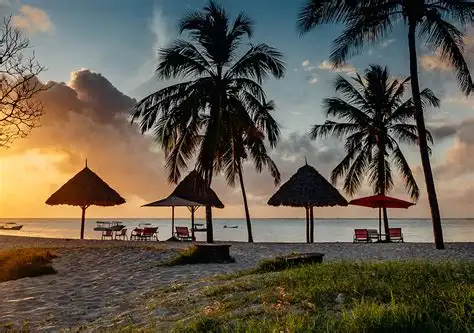
A Kenya Safari that ends on the savannah leaves you exhausted in the best way—but flying straight home misses the natural rhythm of an East African trip. Hidden within a combined Kenya-Tanzania itinerary is the chance to pair the intensity of game drives with a slow, sun-soaked finale on the Indian Ocean, letting everything you have seen settle before real life resumes.
On a Kenya Safari, adding a beach extension is not an afterthought; it is the part of the trip that makes the safari feel complete. Whether you choose Diani for its convenience and consistency, or Zanzibar for its culture and variety, the decision depends on where your safari ends, how much time you have, and what kind of traveller you are. Many Kenya Safari operators now structure trips with a beach finale as standard, proving that bush-and-beach is the most popular way to experience East Africa.
Popular Safari Packages with Beach Extensions
Is It Worth Combining Kenya and Tanzania Safaris with a Beach Extension at Diani or Zanzibar?
Kenya Safari: Why a Beach Extension Is Worth It After a Safari
On a Kenya Safari, the case for a beach extension is simple: a safari is exhilarating but relentless. Pre-dawn wake-ups, long game drives, and dusty roads leave you stimulated but tired, and the journey home from East Africa can be brutal. Four or five extra days on the coast give your body and mind time to decompress. The logistics are easier than most people assume—you can go from a morning game drive in the Maasai Mara to sitting on a beach by the same afternoon. The dry season that makes for good safari conditions from June to October also coincides with calm seas and sunshine on both coastlines, so the weather aligns naturally.
Kenya Safari: Diani Beach — The Convenient, Consistent Choice
On a Kenya Safari, if your itinerary is centred on Kenya—the Maasai Mara, Amboseli, or Tsavo—Diani Beach is the most logical beach extension. It is in the same country, so no second visa, no extra vaccination requirements, and no border formalities. A short light aircraft hop from the Mara, usually routed through Mombasa, puts you on the coast the same day. Diani itself is a roughly 17-kilometre ribbon of powdery white sand south of Mombasa, backed by palms and coastal forest, with an offshore reef that creates a lagoon-like calm even at high tide. For travellers who want to swim rather than watch the water from a lounger, Diani’s consistency is a major advantage. It is also considerably less expensive than Zanzibar once you factor in flights, visas, and the mandatory Zanzibar insurance.
Kenya Safari: Zanzibar — The Cultural, Varied Island Experience
On a Kenya Safari, if your itinerary includes Tanzania—the Serengeti and Ngorongoro Crater—Zanzibar is the natural beach finale. Direct flights connect from Serengeti airstrips such as Seronera and Kogatende, so there is no backtracking through Arusha, and you can be on the sand within a couple of hours of your last game drive. Zanzibar offers something Diani cannot match: Stone Town, a UNESCO World Heritage Site with winding alleys, carved wooden doors, spice markets, and centuries of Swahili-Arab-Indian history. The island also has multiple beach personalities—Nungwi and Kendwa in the north for swimming and sunsets, Paje and Jambiani on the east for kitesurfing, and Matemwe for access to Mnemba Atoll’s snorkelling. The trade-off is cost and complexity: Zanzibar requires a Tanzania visa and mandatory travel insurance from the Zanzibar Insurance Corporation, which adds roughly USD 45 per person.
Kenya Safari: How the Two Destinations Compare for Different Travellers
On a Kenya Safari, the choice between Diani and Zanzibar often comes down to who you are travelling with. Honeymooners and couples seeking quiet, reef-fringed beaches and a sense of island seclusion tend to prefer Zanzibar’s east coast or the privacy of a boutique resort. Families often find Diani easier—the reef-protected lagoon makes swimming predictable, and the resort strip has a relaxed, uncomplicated feel. Budget-conscious travellers will find Diani cheaper overall, with average daily costs slightly lower and no additional visa or insurance fees. Culture-focused travellers will get far more from Zanzibar, where Stone Town and the spice farms offer a full day of exploration without touching the beach.
Kenya Safari: Best Time for a Combined Safari and Beach Trip
On a Kenya Safari, the best window for a combined safari and beach trip is June to October, when East Africa’s long dry season delivers peak game viewing and warm, sunny, dry conditions on both coastlines. This is also the busiest and most expensive period, so camps and resorts should be booked well in advance. January and February offer an excellent alternative: the Serengeti’s calving season provides dramatic predator action, and Zanzibar’s short dry season brings clear, hot weather and excellent diving conditions. The long rains from March to May are best avoided for the beach portion, as the coast sees its heaviest rainfall and many resorts scale back services.
Why Book with Lamz Tours and Travel for a Combined Kenya Safari and Beach Extension
Booking your Kenya Safari with Lamz Tours and Travel ensures your safari-and-beach combination is seamless and well-paced. Lamz Tours and Travel operates across multiple African countries, including Kenya, Tanzania, Uganda, Rwanda, Zambia, South Africa, Botswana, and Namibia. For travellers who want to explore Rwanda alongside Kenya and Tanzania
Our local guides know the Mara’s crossing points, the Serengeti’s predator territories, and the flight connections that link the bush to the coast without wasting a day in transit. We handle everything, including cross-border logistics, beach resort selection, internal flights, airport transfers, and private transport. You focus on the wildlife and the waves. We handle everything else.
Ready to plan your safari?
Talk to a Lamz Tours specialist and get a tailor-made quote.
Make an enquiry