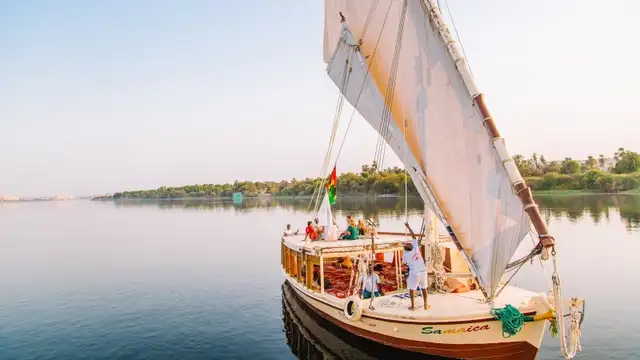
Learn how to sail a traditional felucca on tours to Egypt, from boarding and reading the wind to working with the captain and understanding Nile sailing conditions.
A felucca is one of the oldest boat designs still in active use anywhere in the world, and learning how it actually works transforms the experience from a passive boat ride into something considerably more engaging. Most travellers on tours to Egypt simply sit back and watch the captain work the sail. Those who ask questions and get involved come away with a genuinely different memory of the tours to Egypt Nile experience.
How to Sail a Traditional Felucca on Tours to Egypt
1. Understand How the Felucca is built
Before learning to sail a felucca on tours to Egypt, understanding the vessel itself helps considerably. A felucca has a single triangular lateen sail attached to a long yard arm that pivots around the mast. There is no engine, no wheel, and no mechanical steering. The captain controls direction using a long wooden tiller connected to a rudder at the stern. The hull is wide and shallow, designed specifically for the Nile's conditions. Tours to Egypt that include felucca sailing give travellers access to a boat design that has remained largely unchanged for centuries.
2. Learn How to Read the Wind on the Nile
Wind reading is the foundation of felucca sailing on any tours to Egypt itinerary. The Nile between Luxor and Aswan benefits from a prevailing northerly wind that blows upstream, which historically allowed boats to sail south against the current and drift north with it. Watching the surface of the water for small ripples indicates where the wind is active. The captain adjusts the sail angle constantly in response to wind shifts. Tours to Egypt on a felucca in winter between November and February offer the most consistent wind conditions for learning this skill properly.
Popular Egypt Tour Packages
3. How to Handle the Sail
The lateen sail on a felucca during tours to Egypt is controlled by two ropes called sheets, one on each side of the boom. Pulling the sheet on the downwind side tightens the sail and drives the boat forward. Releasing it spills the wind and slows the vessel. When the captain tacks, changing direction by moving the sail to the opposite side of the mast, the yard arm swings across and the sheet positions reverse. Most captains on tours to Egypt are happy to let passengers handle the sheets under supervision once the basics are explained.
4. Working the Tiller and Steering
Steering a felucca on tours to Egypt using the tiller feels counterintuitive at first because pushing the tiller right turns the boat left, and vice versa. The key is making small and gradual adjustments rather than large sudden movements, which cause the sail to lose its shape and the boat to slow. Keeping the bow pointed at a fixed landmark on the bank helps maintain a straight course. Captains on tours to Egypt along the Aswan stretch are particularly patient with curious passengers wanting to try the tiller themselves during quieter sections of the river.
5. Tacking and Gybing on the Nile
Tacking and gybing are the two manoeuvres that change a felucca's direction on tours to Egypt, and watching the captain perform them teaches more than any explanation. Tacking turns the bow through the wind, bringing the sail across to the opposite side in a controlled sequence. Gybing turns the stern through the wind instead, which is faster but requires more coordination between the tiller and the sheet. On a busy stretch of the Nile near Luxor or Aswan, these manoeuvres happen frequently. Tours to Egypt that include an experienced captain who explains each manoeuvre as it happens give passengers the clearest understanding of how felucca sailing actually works.
Best Time to Sail a Felucca on Tours to Egypt
November to February provides the most consistent wind along the Nile for tours to Egypt focused on felucca sailing. The northerly wind is stronger and more reliable during these months, giving the felucca a proper sail rather than the intermittent conditions of summer. October to April overall remains comfortable for open deck sailing. Summer between June and August brings lighter and less predictable winds that make active sailing less rewarding. Tours to Egypt planned around the winter window give felucca sailing the best possible natural conditions along the river.
How to get to sailing destinations on Tours to Egypt
Cairo serves as the main international entry point for tours to Egypt, with felucca sailing most commonly arranged in Aswan and Luxor. Domestic flights connect Cairo to both cities regularly and take approximately one hour. Felucca departure points sit directly on the Nile Corniche in both cities within easy reach of central accommodation. Most Egypt guided tours handle transfers between airports and the Corniche boarding points, removing the logistical effort from travellers arriving in Upper Egypt for the first time on tours to Egypt.
Things to Do on Tours to Egypt around Felucca Sailing
Felucca sailing pairs naturally with shore visits to Karnak Temple, Luxor Temple, Philae, and Kom Ombo along the same stretch of river. Nubian village visits near Aswan and Kitchener's Island botanical garden add cultural and natural stops alongside the sailing. Hot air balloon flights over the Luxor west bank give a complementary aerial perspective of the same landscape. Tours to Egypt that combine felucca sailing with these surrounding activities give the river section a full and satisfying shape on any tours to Egypt itinerary.
What to Carry on Tours to Egypt for Felucca Sailing
A hat, sunglasses, and reef-safe sunscreen protect against strong river glare on the open felucca deck throughout the day. A warm layer is essential for evening and early morning sailing between November and February when temperatures drop noticeably on the water. Comfortable flat shoes with grip handle the low wooden deck surfaces safely. A waterproof bag protects phones and cameras from spray during active sailing. Tours to Egypt felucca passengers benefit from packing light since storage space on board is minimal on any tours to Egypt felucca journey.
Health and Safety on Tours to Egypt Felucca Sailing
Felucca sailing on tours to Egypt is low risk when basic precautions are followed. Life jackets should be available on board and worn by anyone uncertain about swimming ability, particularly with children present. The open deck has no railings, so movement during tacking manoeuvres requires care. Choosing a reputable captain with a well-maintained vessel matters more than the price difference between operators along the Corniche. Sun exposure across long sailing days requires consistent protection. Tours to Egypt arranged through established operators ensure properly maintained boats and experienced captains throughout.
Where to Stay on Tours to Egypt for Felucca Sailing
Staying along the Nile Corniche in Aswan or Luxor places travellers within walking distance of the main felucca departure points on tours to Egypt. In Aswan, the Sofitel Legend Old Cataract leads the luxury options, the Basma Hotel suits mid-range budgets, and smaller Corniche guesthouses serve budget travellers well. In Luxor, the Sofitel Winter Palace anchors the luxury end, with comfortable mid-range hotels and budget guesthouses spread along the same riverside stretch. Riverside accommodation simplifies the timing of early morning and sunset sailing departures on tours to Egypt.
Why Book with Lamz Tours and Travel for Tours to Egypt
We arrange tours to Egypt that give felucca sailing the right captain, the right timing, and the right context within a broader Nile itinerary. We combine the sailing experience with licensed guide visits to Karnak, Philae, and Abu Simbel, handling all logistics from Cairo arrival onward.
From Egypt to Uganda, Kenya, Tanzania, Morocco and beyond, we craft journeys across Africa's most loved destinations. Every tours to Egypt felucca experience we arrange is built around what the river and the traveller both deserve.
Ready to plan your safari?
Talk to a Lamz Tours specialist and get a tailor-made quote.
Make an enquiry