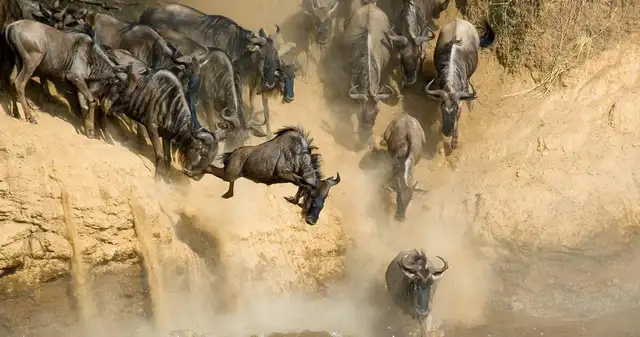
A Tanzania Safari that starts with a rushed booking from India often misses the details that make a Serengeti trip seamless. Hidden within the planning process are visa timelines, flight connections, park fee structures, and seasonal choices that determine whether you see the Great Migration or simply the plains it crossed last week.
On a Tanzania Safari, planning from India means accounting for a Tanzania eVisa (USD 50, applied for at least two to three weeks in advance), return flights from Mumbai starting around ₹56,000–₹92,000 depending on connections, and a realistic daily budget that ranges from ₹17,000 for budget camping to ₹83,000+ for luxury fly-in safaris. Whether you travel in peak season for the Mara River crossings or the green season for calving and lower rates, these planning steps add clarity to your journey. Many Tanzania Safari operators now cater specifically to Indian travellers, proving that a Serengeti trip is more accessible than it once seemed.
Popular Lamz Tours and Travel Tanzania Safari Packages
How to Plan Serengeti National Park Tour Packages from India
Tanzania Safari: Visa and Entry Requirements for Indian Travellers
On a Tanzania Safari, Indian passport holders require a Tanzania eVisa before travel, costing USD 50 for a single-entry, 90-day permit. The official processing time is often quoted as 7 working days, but real-world experience suggests allowing two to three weeks to avoid last-minute issues. The application requires a passport valid for at least six months, a passport-style photo, return flight details, accommodation proof, and a bank statement. A yellow fever certificate is not legally required for Indian citizens returning directly from Tanzania, but it becomes mandatory if your itinerary transits through a yellow-fever-risk country like Kenya or Ethiopia for more than 12 hours. Get vaccinated at a government-approved centre and carry the original yellow card.
Tanzania Safari: Flights and Getting There
On a Tanzania Safari, most Indian travellers fly into Kilimanjaro International Airport (JRO) for direct access to the northern circuit, or Dar es Salaam (DAR) and connect by domestic flight to Arusha or Kilimanjaro. Return economy fares from Mumbai start at approximately ₹56,000–₹92,000 for connecting itineraries, with Kenya Airways offering direct connections through Nairobi. Budget airlines like Coastal Aviation and Precision Air run daily flights from Arusha to Serengeti airstrips for USD 150–250 one-way, saving days of road travel. Book flights at least three to four months in advance for peak season (July–October), when fares and availability tighten.
Tanzania Safari: Understanding the Cost Structure
On a Tanzania Safari, park fees are the largest fixed cost and cannot be discounted by operators. The Serengeti entry fee is USD 71 per adult per day in low season and USD 83 in peak season, while the Ngorongoro Conservation Area charges USD 70.80 per adult per day plus a USD 295 crater descent vehicle fee per visit. Across a 7-night northern circuit spanning three parks, embedded park and conservation fees alone can reach USD 800–1,200 per adult. Accommodation is the biggest variable: mid-range lodges run USD 350–500 per person per night (full board), while premium tented camps reach USD 700–1,200. A realistic 10-day safari plus Zanzibar trip from India costs roughly ₹1.68 lakh for budget, ₹3.33 lakh for mid-range, and ₹9.46 lakh for luxury per person.
Tanzania Safari: Best Time to Visit for the Migration
On a Tanzania Safari, the best time to see the Great Migration in the Serengeti depends on what you want to witness. The famous Mara River crossings occur from July to October, when herds mass in the northern Serengeti and cross into Kenya's Maasai Mara. For calving season, when over 100,000 wildebeest calves are born and predator activity peaks, plan for January to March in the southern Serengeti and Ndutu area. The green season from November to March offers lower rates and fewer crowds, though afternoon showers are common. Book peak season camps eight to twelve months ahead, as the best migration camps sell out early.
Tanzania Safari: Choosing the Right Route and Operator
On a Tanzania Safari, a standard 7-night northern circuit covering Tarangire, Ngorongoro, and the Serengeti is the most common first itinerary and balances wildlife variety with reasonable costs. For Indian travellers concerned about food, note that Indian cuisine is not available in many remote tented camps, so confirm meal arrangements in advance if this matters. Choose operators who provide transparent park fee breakdowns, include flying doctor evacuation insurance, and clearly state what is excluded (tips, drinks, balloon safaris). Avoid street-corner touts in Arusha offering suspiciously cheap safaris; legitimate operators work through proper channels.
Why Book with Lamz Tours and Travel for a Serengeti Safari from India
Booking your Tanzania Safari with Lamz Tours and Travel ensures your Serengeti trip is planned with transparency and local expertise. Lamz Tours and Travel operates across multiple African countries, including Tanzania, Kenya, Uganda, Rwanda, Zambia, South Africa, Botswana, and Namibia. For travellers who want to explore Rwanda alongside Tanzania, our partner Eton Safaris maintains a dedicated Rwanda destination page.
Ready to plan your safari?
Talk to a Lamz Tours specialist and get a tailor-made quote.
Make an enquiry