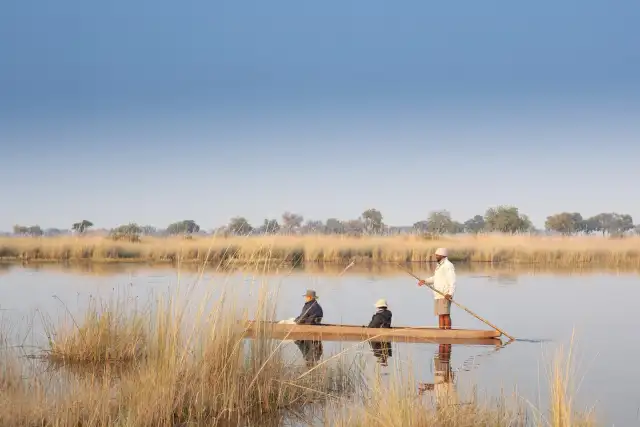
Learn how to get the best out of a mokoro safari in the Okavango Delta with tips on timing, wildlife viewing, packing, and safari planning.
A mokoro safari is one of the most unique experiences during a Botswana safari in the Okavango Delta, offering a quiet and close view of nature from traditional dugout canoes. Unlike game drives, mokoro excursions allow travelers to move through narrow water channels where larger vehicles cannot access. To get the best experience, visitors should choose the right season, follow guide instructions, stay patient, and pay attention to both large and small wildlife. Proper clothing, binoculars, and a camera can significantly improve comfort and wildlife viewing opportunities. Combining mokoro trips with other safari activities such as walking safaris and game drives provides a fuller understanding of the Delta ecosystem. By appreciating both the wildlife and cultural significance of mokoro travel, visitors can maximize their Okavango Delta safari experience.
Popular Safari packages
How to Get the Best Out of a Mokoro Safari During Botswana Safari in Okavango
1. Choose the Right Season for Your Mokoro Safari
Getting the best out of a mokoro safari starts with choosing the right time to visit the Okavango Delta. The flood season, usually from May to October, provides excellent water levels for mokoro activities. During this period, channels are easier to navigate, and wildlife gathers around permanent water sources. Planning your trip during favorable conditions increases your chances of seeing animals and enjoying smooth canoe rides. Morning and afternoon excursions are often more comfortable because temperatures are lower. Before traveling, discuss seasonal conditions with your tour operator so your itinerary matches your expectations. Understanding the time of year helps you prepare properly and ensures you experience the Delta when water-based activities are operating at their best.
2. Wear Comfortable and Practical Clothing
Your clothing can make a significant difference during a mokoro safari. Lightweight, breathable clothes help you stay comfortable while spending several hours on the water. Neutral colors such as khaki, brown, green, and grey are ideal because they blend into the natural environment and attract less attention from wildlife. Long-sleeved shirts and trousers provide protection against the sun and insects. Comfortable clothing also makes it easier to relax and focus on wildlife viewing. A light jacket may be useful during early morning trips when temperatures can be cooler. Avoid bright colors that can stand out in the environment. Proper clothing allows you to enjoy the experience without unnecessary discomfort throughout the excursion.
3. Carry Essential Safari Accessories
Packing the right accessories helps improve your overall mokoro safari experience. Bring sunscreen, sunglasses, a hat, binoculars, and a camera to maximize your enjoyment while on the water. The Okavango Delta offers many opportunities to observe wildlife and birds that may be difficult to appreciate without proper equipment. Binoculars help you view distant animals, while a camera allows you to preserve memories of special sightings. A waterproof bag can protect your electronics from splashes or unexpected rain. Carrying a reusable water bottle is also important for staying hydrated. Simple preparations can greatly enhance your comfort and allow you to focus on the wildlife and scenery around you.
4. Listen Carefully to Your Guide
Professional guides play a major role in making a mokoro safari successful. They understand animal behavior, local ecosystems, and safe navigation through the waterways. Paying attention to your guide's explanations helps you gain a deeper understanding of the Okavango Delta. Guides often point out animal tracks, bird species, and interesting ecological details that visitors might miss on their own. They can also explain the cultural history of traditional mokoro travel. Listening carefully allows you to learn more about the environment while increasing your chances of spotting wildlife. Guides have years of experience and their knowledge adds significant value to every safari excursion.
5. Stay Quiet While on the Water
One of the biggest advantages of a mokoro safari is the quiet approach to wildlife viewing. Unlike motorized boats, mokoros move silently through the channels. To make the most of this opportunity, avoid loud conversations or sudden movements. Remaining calm and quiet helps reduce disturbance to nearby animals and birds. Wildlife often behaves more naturally when it feels undisturbed. This creates better viewing and photography opportunities. The peaceful atmosphere is also one of the most enjoyable aspects of a mokoro safari. Taking time to appreciate the sounds of birds, water, and nature can make the experience more rewarding than constantly talking throughout the trip.
6. Pay Attention to Small Wildlife
Many visitors focus only on large animals, but a mokoro safari provides excellent opportunities to appreciate smaller wildlife as well. Guides often point out frogs, insects, fish, reptiles, and aquatic plants that are important parts of the Delta ecosystem. Looking beyond elephants and antelopes helps you gain a fuller understanding of the environment. Small creatures often reveal how healthy the ecosystem is and how different species depend on one another for survival. Birdlife is also particularly impressive in the Delta. Taking time to notice these details can make your safari more educational and interesting while helping you appreciate the area's biodiversity.
7. Combine Mokoro Trips with Other Activities
To get the most value from your Okavango visit, combine a mokoro safari with other activities available in the Delta. Game drives, walking safaris, and boat excursions each provide different wildlife viewing opportunities. While a mokoro allows close access to shallow channels, a game drive covers larger areas where predators and larger herds may be found. Walking safaris offer opportunities to learn about tracks and local plants. Combining activities gives you a broader understanding of the ecosystem and increases the variety of wildlife you are likely to see. A balanced itinerary often results in a more satisfying safari experience.
8. Be Patient During Wildlife Searches
Wildlife viewing requires patience, especially in a natural environment like the Okavango Delta. Animals move freely and cannot be predicted with complete accuracy. Instead of focusing only on finding specific species, enjoy the overall experience of moving through the waterways. Some of the best wildlife sightings occur unexpectedly when travelers remain observant and patient. Guides know where animals are often found, but nature works on its own schedule. Taking a relaxed approach allows you to appreciate every part of the safari rather than becoming frustrated if certain animals are not immediately visible. Patience often leads to more rewarding observations.
9. Take Advantage of Photography Opportunities
The Okavango Delta offers excellent conditions for photography, especially during the early morning and late afternoon when lighting is softer. Reflections on the water, birdlife, and wildlife moving along the channels create beautiful photographic subjects. Before your safari begins, ensure your camera batteries are charged and memory cards have sufficient space. Consider bringing a zoom lens if you use professional equipment. However, avoid spending the entire trip looking through a camera screen. Taking a balance between photography and simply enjoying the environment allows you to create both lasting memories and quality images of your experience.
10. Appreciate the Cultural Side of Mokoro Travel
A mokoro safari is more than a wildlife activity. It is also connected to local traditions and the history of communities living around the Okavango Delta. Originally, mokoros were an important means of transportation used by local people for fishing and moving through the waterways. Learning about this history adds another layer of value to your safari. Ask your guide about local customs, conservation efforts, and how communities interact with the Delta today. Understanding the cultural significance of mokoro travel helps create a richer and more meaningful experience while supporting greater appreciation for Botswana's heritage and way of life.
Booking your Botswana safari with Lamz Tours and Travel
Booking your Botswana safari with Lamz Tours and Travel gives you access to carefully designed safari packages that showcase the country's top wildlife destinations, including the Okavango Delta, Chobe National Park, Moremi Game Reserve, and Makgadikgadi Pans. Whether you are looking for a luxury safari, a family holiday, a photography trip, or a budget-friendly adventure, Lamz Tours and Travel can customize an itinerary that fits your travel style and budget. The team assists with accommodation bookings, airport transfers, domestic flights, game drives, mokoro excursions, boat safaris, and professional guiding to ensure a well-organized experience. With local knowledge, personalized service, and attention to every detail, Lamz Tours and Travel helps travelers enjoy the best of Botswana's wildlife, landscapes, and cultural experiences while maximizing value and comfort throughout their safari.
Ready to plan your safari?
Talk to a Lamz Tours specialist and get a tailor-made quote.
Make an enquiry