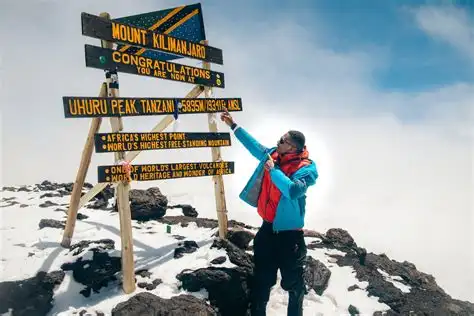
A Tanzania Safari that only focuses on the northern circuit misses the mountain that defines the country's skyline. Hidden within Kilimanjaro National Park are six distinct routes to the summit, each offering a different balance of time, scenery, and success rates.
On a Tanzania Safari, understanding these routes—from the short, hut-based Marangu to the long, remote Northern Circuit—shows you that the time you invest on the mountain directly determines whether you reach Uhuru Peak. Whether you choose the popular Machame or the highly successful Lemosho, your route choice adds strategy to your adventure. Many Tanzania Safari itineraries now include a Kilimanjaro extension, proving that the country's appeal goes far beyond the savannah.
Popular Lamz Tours and Travel Tanzania Safari Packages
7 Day Climbing Kilimanjaro via the Machame Route
8 days kilimanjaro Climbing Safari Lemosho Route Mount
5 Days Kilimanjaro climb via Marangu route
8 Days Ultimate Kilimanjaro safari summit Machame route
10-Days Best Tanzania Wildlife Safari & Hiking Kilimanjaro Marangu Route
7 Days Climbing Kilimanjaro Safari and Nakuru Kenya Safari
5 Days Tanzania Nyerere Park and Zanzibar beach holidays combined safari
How Long Does It Take to Climb Mount Kilimanjaro?
Tanzania Safari: Marangu Route — The Shortest, Hut-Based Option
On a Tanzania Safari, the Marangu Route is the oldest and most established path on the mountain, often called the "Coca-Cola Route" because it is the only trail offering hut accommodation instead of camping . It approaches from the southeast, passing through five distinct ecological zones.
The route is typically completed in 5 or 6 days. The 5-day itinerary is faster but offers less acclimatization, while the 6-day version includes an extra day at Horombo Hut that significantly improves summit chances . However, the quick ascent gives your body less time to adjust, leading to a lower summit success rate of 60–75%. The path is a simple up-and-back trail, which makes navigation easy but limits scenery variety .
Best for: Trekkers who strongly prefer hut accommodation over camping and accept a lower success rate.
Tanzania Safari: Machame Route — The Most Popular, Scenic Choice
On a Tanzania Safari, the Machame Route is the most popular path on Kilimanjaro, known as the "Whiskey Route" for its tougher, more scenic character . It approaches from the southwest, passing through five ecological zones with dramatic views across the Shira Plateau and the Barranco Wall.
The route is typically completed in 6 or 7 days. The 7-day version has a strong success rate of around 85%, while the 6-day option sees notably higher turnaround rates . The route's design follows the "climb high, sleep low" principle, taking you to Lava Tower (4,630m) before descending to Barranco Camp . The extra day makes a meaningful difference to acclimatization .
Best for: Fit, experienced trekkers who want a challenging but achievable climb with excellent scenery.
Tanzania Safari: Lemosho Route — The Best Balance of Scenery and Success
On a Tanzania Safari, the Lemosho Route is widely regarded as the best route on Kilimanjaro for summit success, recommended by experienced operators for first-time trekkers . It approaches from the west, beginning with a long drive through rainforest and a trek across the remote Shira Plateau.
The route is typically completed in 7 or 8 days. The 8-day itinerary offers excellent acclimatization and a success rate of 90% or above. The route is relatively uncrowded compared to Machame and Marangu, and the extended duration provides excellent acclimatization before the summit night . You spend more time on the mountain and see more of its ecosystems—from rainforest to moorland to alpine desert to glacier .
Best for: First-time Kilimanjaro trekkers whose priority is reaching the summit.
Tanzania Safari: Rongai Route — The Quieter Northern Approach
On a Tanzania Safari, the Rongai Route is the only route approaching Kilimanjaro from the north, near the Kenyan border . It is drier than the southern routes and generally quieter, offering a gentler gradient on the ascent.
The route is typically completed in 6 or 7 days. The 7-day version provides reasonable acclimatization and a success rate of 70–82%. Rongai is a good option for trekkers who prefer a less crowded experience and want to avoid the busy southern approach routes . The descent follows the Marangu Route, giving climbers different views on the way down .
Best for: Trekkers who want a quieter, less crowded experience with a moderate success rate.
Tanzania Safari: Northern Circuit Route — The Longest, Highest Success Rate
On a Tanzania Safari, the Northern Circuit Route is the newest, longest, and most visually stunning trek available, circling almost the entire mountain before the final summit push. It has the highest climb success rates of all routes due to its exceptional acclimatization profile and extended duration.
The route is typically completed in 9 or 10 days. With 9 days on the mountain, the success rate reaches 96%. It is the most remote and least-trafficked of all main routes, making it the top choice for trekkers who want solitude alongside a high summit probability. The scenery on the northern slopes—which most routes never reach—is remarkable and rarely seen.
Best for: Climbers with flexible schedules who want the highest chance of reaching the summit and maximum solitude.
Tanzania Safari: The Summit Day Reality
On a Tanzania Safari, regardless of the route, the final push to the summit is the most demanding part. You will typically start around midnight and hike through the night in sub-zero temperatures for 6 to 8 hours to reach the crater rim . After reaching Stella Point or Gilman's Point, it can take another 1–2 hours to reach Uhuru Peak itself, the highest point in Africa at 5,895 meters .
The descent after summiting is equally demanding, with a long walk back to the highest camp before continuing down. Total summit day hiking time is often 11 to 15 hours .
Tanzania Safari: Why Extra Days Matter
On a Tanzania Safari, the main reason climbs fail is altitude sickness, not lack of fitness. Your body needs time to adjust to the thinning air. A 5-day Marangu route might have a 50–60% success rate, while an 8-day Lemosho route can have a 90–95% success rate—a difference of over 30 percentage points just by adding three days. Choosing a longer itinerary is the single most valuable investment you can make in your summit chances.
Tanzania Safari: Best Time to Climb
On a Tanzania Safari, the best time to climb Kilimanjaro is the dry seasons from June to October and December to February, when skies are clearer, trails are drier, and summit conditions are more favorable. The wet seasons (March to May and November) bring snow, ice, and muddy trails, making the climb more challenging, though crowds are smaller and some operators offer lower rates.
Ready to plan your safari?
Talk to a Lamz Tours specialist and get a tailor-made quote.
Make an enquiry