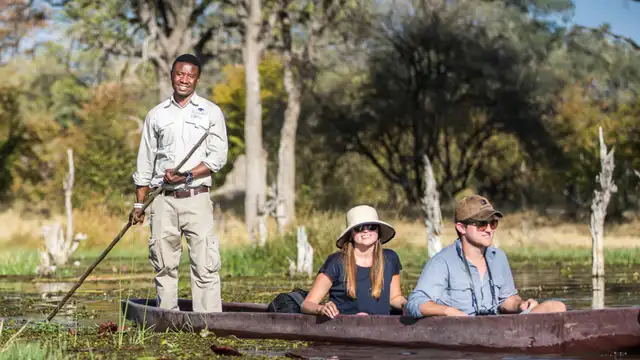
How a Mokoro safari Okavango works, including canoe travel, wildlife viewing, guided walks, safety tips, and what to expect in Botswana.
A Mokoro safari Okavango is one of the most traditional ways to explore the Okavango Delta in Botswana. Using a dugout-style canoe guided by an experienced local poler, visitors travel through shallow channels, lagoons, and floodplains while observing wildlife and birdlife from close range. A Mokoro safari Okavango moves quietly through the water, allowing guests to enjoy nature without the noise of engines. Along the way, travelers may see elephants, antelopes, hippos, frogs, fish, and a wide variety of birds. Many safaris also include guided nature walks on delta islands, giving visitors a deeper understanding of the area's ecosystem. Suitable for photographers, bird watchers, and nature lovers, this activity offers a peaceful and informative way to experience one of Africa's most important wetland environments
Popular Africa safari adventure Packages
How Does a Mokoro Safari Okavango Botswana Work?
1. What Is a Mokoro Safari?
A Mokoro safari Okavango is a traditional water-based wildlife activity that takes place in Botswana's Okavango Delta. A mokoro is a canoe that was originally carved from large trees, although most modern versions are now made from fiberglass to help protect the environment. During a Mokoro safari Okavango, visitors sit comfortably inside the canoe while an experienced local guide stands at the back and pushes it forward using a long pole. The activity allows travelers to move through shallow channels and floodplains that larger boats cannot access. Because the canoe moves quietly, guests can enjoy a peaceful wildlife experience while observing birds, plants, and animals along the waterways. The slow pace makes it ideal for travelers looking for a relaxed outdoor activity.
2. Starting the Safari Experience
A typical Mokoro safari Okavango begins with a transfer from your lodge or camp to the launch point within the delta. Before starting, guides explain safety procedures and what visitors should expect during the activity. The Mokoro safari Okavango usually starts in calm waters where the guide can easily navigate through the network of channels. Guests only need to sit comfortably and follow the guide's instructions. Most safaris take place during daylight hours when visibility is best for wildlife viewing. The guides also explain the area's ecosystem and answer questions about the animals and plants found in the delta. This introduction helps travelers feel comfortable before beginning their time on the water.
3. The Role of the Mokoro Guide
The guide plays an important role during a Mokoro safari Okavango because they are responsible for controlling the canoe and ensuring guest safety. During a Mokoro safari Okavango, the guide uses a long pole to push against the riverbed, moving the canoe smoothly through the water. These guides are often local people with extensive knowledge of the delta and its wildlife. They can identify bird species, explain animal tracks, and point out interesting plants along the route. Their experience allows visitors to learn much more than they would by exploring alone. Guides also monitor the surroundings for larger animals and adjust routes when necessary to maintain a safe distance from wildlife.
4. Wildlife You Can See
Wildlife viewing is one of the biggest reasons people choose a Mokoro safari Okavango. During a Mokoro safari Okavango, visitors often see antelopes feeding near the water, elephants crossing channels, and hippos resting in deeper sections of the delta. Birdlife is especially impressive, with kingfishers, herons, fish eagles, bee-eaters, and many other species often visible from the canoe. Because the canoe moves quietly, animals are generally less disturbed than they might be by larger motorized boats. The guide helps guests spot wildlife hidden in reeds and vegetation. While large predators are less commonly seen from the canoe itself, signs of their presence can often be found along the water's edge.
5. Understanding the Delta Ecosystem
One of the educational benefits of a Mokoro safari Okavango is learning about the unique ecosystem of the Okavango Delta. A Mokoro safari Okavango takes visitors through channels, lagoons, floodplains, and islands that support many different forms of life. Guides explain how seasonal floods shape the environment and influence animal movements throughout the year. Guests can learn about aquatic plants, fish species, insects, and birds that depend on the delta's waters. The safari also highlights the relationship between wildlife and the wetland habitat. This deeper understanding helps travelers appreciate why the Okavango Delta is considered one of Africa's most important conservation areas.
6. Combining Walking Safaris with Mokoro Trips
Many safari operators combine a Mokoro safari Okavango with a guided bush walk on one of the delta's islands. During a Mokoro safari Okavango, the canoe stops at suitable locations where visitors can leave the water and continue exploring on foot with an armed guide. Walking safaris offer opportunities to examine animal tracks, learn about plants, and observe smaller wildlife that may not be seen from a vehicle. These guided walks add variety to the experience and provide a better understanding of the local environment. Safety is always a priority, and visitors must remain with their guide at all times. The combination of canoeing and walking creates a balanced wildlife activity.
7. Safety During a Mokoro Safari
Safety is carefully managed throughout a Mokoro safari Okavango. Before each Mokoro safari Okavango, guides provide instructions on how to sit properly, maintain balance, and behave around wildlife. Visitors are advised to remain seated and avoid sudden movements while the canoe is moving. Guides constantly monitor water conditions and look for animals that may require changes in direction. Hippos are present in some areas of the delta, so guides use their experience to avoid any unnecessary risks. Most operators also provide life jackets where required. Following guide instructions contributes greatly to a safe and enjoyable safari experience on the water.
8. How Long Does a Mokoro Safari Last?
The duration of a Mokoro safari Okavango varies depending on the itinerary and safari operator. Some Mokoro safari Okavango activities last only a few hours, while others may take most of the day and include breaks for walking safaris or refreshments. Overnight mokoro trips are also available in some parts of the delta. These longer safaris allow visitors to spend more time exploring remote sections of the waterways. Travelers should ask their safari operator about the schedule before booking. The length of the activity often depends on water levels, wildlife opportunities, and the travel style chosen by the guest. Short and long options are available to suit different interests.
9. What to Bring on a Mokoro Safari
Packing correctly improves comfort during a Mokoro safari Okavango. For a Mokoro safari Okavango, visitors should carry sunscreen, sunglasses, a hat, drinking water, insect repellent, and a camera. Neutral-colored clothing is usually recommended because it blends well with the environment. Lightweight clothing works well in warm weather, while a light jacket may be useful during cooler mornings. Waterproof protection for cameras and electronic devices is also worth considering. Because space inside the canoe is limited, travelers should avoid carrying large bags. Bringing only essential items makes the activity more comfortable and allows guests to focus on wildlife and the surroundings.
10. Why Choose a Mokoro Safari?
A Mokoro safari Okavango offers a different experience from traditional game drives because it focuses on silent travel through one of Africa's most important wetland systems. During a Mokoro safari Okavango, visitors can appreciate nature at a slower pace while observing wildlife from water level. The activity allows access to places that vehicles cannot reach and provides opportunities to learn about the delta from knowledgeable local guides. It is suitable for photographers, bird watchers, families, and travelers who enjoy nature-based activities. The combination of wildlife viewing, cultural knowledge, and the peaceful atmosphere of the delta makes this safari style one of the most popular activities in Botswana's Okavango Delta.
Best time to for Mokoro safari Okavango Botswana
The best time for a Mokoro safari Okavango in Botswana is from June to October, when seasonal floodwaters from Angola reach the Okavango Delta and fill its channels, lagoons, and floodplains. During this period, a Mokoro safari Okavango becomes easier because water levels are higher, allowing canoes to access more areas of the delta. The dry season also attracts wildlife to water sources, improving opportunities to see animals and birds along the channels. Temperatures are generally comfortable, especially from June to August, making outdoor activities more enjoyable. Bird watching remains excellent throughout this period, while the clear skies and stable conditions create good opportunities for photography. Although mokoro trips can be available at other times of the year, the months from June to October are widely regarded as the best for water-based exploration of the Okavango Delta.
Booking Mokoro safari Okavango Botswana with Lamz Tours and Travel
Booking a Mokoro safari Okavango Botswana with Lamz Tours and Travel is an excellent way to experience the peaceful waterways of the Okavango Delta while benefiting from professional planning and local expertise. Lamz Tours and Travel can arrange a customized Mokoro safari Okavango package that includes accommodation, airport transfers, guided mokoro excursions, nature walks, game drives, and domestic flights where required. Whether you prefer a budget camping experience, a comfortable mid-range lodge, or a luxury safari camp, the itinerary can be tailored to your interests, travel dates, and budget. Many travelers combine mokoro activities with visits to Moremi Game Reserve, Chobe National Park, and Savuti for a complete Botswana wildlife holiday. Booking in advance is recommended, particularly between June and October when water levels are ideal and demand for Okavango Delta accommodation is highest
Ready to plan your safari?
Talk to a Lamz Tours specialist and get a tailor-made quote.
Make an enquiry