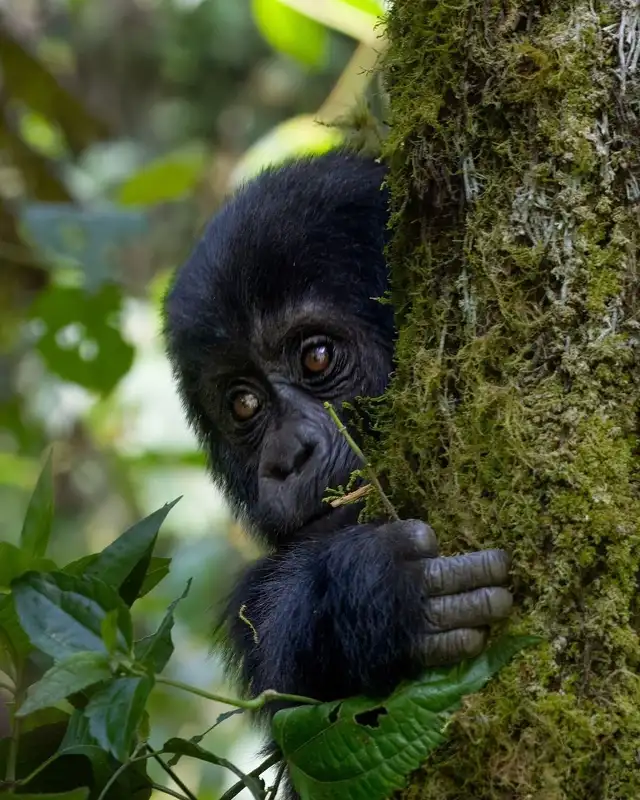
Planning gorilla trekking in Uganda starts with three connected decisions: when to travel, where to trek and how to reach your trekking point. Arrange your permit, accommodation and transport as one itinerary rather than choosing each separately.
The minimum age for gorilla trekking in Uganda is 15 years. Share every participant’s age before requesting permits.
Permit fees depend on visitor category and trekking date. Uganda’s standard foreign non-resident rate is USD 800 per person, while UWA’s notice dated February 26, 2026 introduced a USD 600 rate for this category for April, May and November, effective immediately. Different rates apply to other visitor categories, as explained below. Low-season permits cannot be rescheduled.
Since March 1, 2026, UWA has required full payment at booking to secure a permit. Confirm your applicable category and dated rate before paying, and compare the complete safari cost separately from the permit fee.
Lamz Tours and Travel can coordinate permit arrangements, accommodation and transport. This guide explains how to choose your dates, prepare for the trek and assess the complete journey.
When is the best time for gorilla trekking in Uganda?
June to September and December to February are generally recommended as relatively drier travel windows. Trail conditions may be more manageable than during wetter months, but rain is possible throughout the year.
March, April, May, October and November are generally wetter. Trips can still be planned during these months, subject to confirmed arrangements. Prepare for rain, mud and potentially more demanding footing.
Seasonal patterns are a planning guide, not a weather forecast. Your best travel window also depends on your schedule, trekking needs and confirmed permit. A drier month does not guarantee a shorter or easier trek.
Gorilla trekking in Uganda by month
- January: Generally falls within a relatively drier period. Rain protection remains essential.
- February: Usually part of the early-year drier window, although weather and trail conditions can change.
- March: Commonly marks a transition into wetter conditions. Prepare for rain and muddy sections.
- April: Generally wetter. UWA’s February 26, 2026 notice sets reduced permit rates for foreign non-residents and foreign residents for this month. Consider trail conditions alongside the permit saving.
- May: Usually remains within the wetter period and is covered by the same reduced rates for foreign non-residents and foreign residents. Plan suitable footwear, rain protection and transfers.
- June: Generally marks the start of the longer, relatively drier travel window.
- July: Usually falls within the drier season. Permits and accommodation still require confirmation.
- August: Generally part of the drier window, but waterproof protection is still needed for you and your equipment.
- September: Often included in the drier travel window, although rainfall can increase as the seasons change.
- October: Generally associated with the shorter rainy season. Prepare for wet ground and review the complete route with your operator.
- November: Usually wetter and covered by the reduced rates for foreign non-residents and foreign residents. A permit reduction does not establish total trip cost or availability.
- December: Often marks the transition towards relatively drier conditions. Obtain confirmation of permits, accommodation and transfers for Christmas or New Year travel.
Planning around holidays and flexible dates
Review your trekking date alongside flight connections, accommodation location and the pace of your journey.
- School holidays: Every gorilla trekking participant must be aged 15 or above. Check eligibility before purchasing flights.
- Short breaks: Count international travel days separately from your days in Uganda. Flight connections can reduce your time on the ground.
- Christmas and New Year: Share your exact dates and request written confirmation of permits, accommodation and transfers.
If your dates are flexible, ask for two complete itinerary options. Reduced permit rates in April, May and November do not mean every part of the safari will cost less or that permits will be easier to secure. Remember that these low-season permits cannot be rescheduled.
For further planning advice, read Lamz Tours and Travel’ guide to timing a Uganda gorilla and wildlife safari.
Where can you go gorilla trekking in Uganda?
Uganda’s mountain gorilla trekking destinations are Bwindi Impenetrable National Park and Mgahinga Gorilla National Park. Compare them through the complete itinerary: permit, trekking point, accommodation and transfers.
Bwindi Impenetrable National Park
Confirm your trekking sector and trekking point before approving accommodation. Buhoma, Ruhija, Rushaga and Nkuringo are the areas to discuss when planning a Bwindi stay.
A property described only as “near Bwindi” does not give you enough information. Ask for its name, the sector covered by your proposed permit and the transfer arrangements for trekking morning.
A lower room price may offer little benefit if the location complicates the journey to your trekking point. Use the Rushaga accommodation planning page to explore questions to ask before booking. Confirm current property details and suitability separately.
Mgahinga Gorilla National Park
For Mgahinga, confirm the trekking point, proposed trekking arrangements and transfer from your accommodation to park headquarters.
Ask Lamz Tours and Travel how either park would fit your dates and wider route. Choose according to the complete journey rather than the park name alone.
How do gorilla permits and booking work?
Start with the permit. Ask Lamz Tours and Travel to confirm the proposed trekking date, park, sector where applicable, participant details and applicable visitor category before payment.
Foreign non-residents must purchase permits through a Uganda Tourism Board-licensed tour operator. Since March 1, 2026, UWA has required full payment at booking to secure permits, replacing its previous seven-day unpaid reservation window. A quotation or proposed itinerary is not a confirmed permit.
Request written booking confirmation and confirm the identification each traveller must present for validation at the trekking point. Participants must be aged 15 or above; review any health-related participation conditions before booking.
Before paying, obtain the applicable cancellation, refund and amendment terms. Do not assume that a permit can be changed or refunded. UWA’s low-season permits cannot be rescheduled.
How much is a Uganda gorilla trekking permit?
Uganda gorilla trekking permit fees depend on visitor category and trekking date. The standard rates are:
- Foreign non-residents: USD 800 per person.
- Foreign residents: USD 700 per person.
- Rest-of-Africa category: USD 500 per person.
- East African Community citizens: UGX 300,000 per person.
UWA’s notice dated February 26, 2026 introduced the following rates for April, May and November, effective immediately:
- Foreign non-residents: USD 600 per person.
- Foreign residents: USD 500 per person.
These low-season permits cannot be rescheduled. Confirm the applicable category and dated rate before paying rather than assuming that a standard or reduced rate applies to every visitor.
The permit includes the guide fee, park entrance for the trekking day and a community development contribution. Accommodation, transport and other safari costs should be itemised separately.
Uganda’s gorilla trekking permits are administered by the Uganda Wildlife Authority. Your quote should identify each traveller’s visitor category, the activity, fee currency and trekking date.
Standard trekking or gorilla habituation?
Standard gorilla trekking and a gorilla habituation experience are different activities. Do not assume they share the same price, duration or participation rules.
Confirm which experience is being quoted, where it operates, the permitted time with the gorillas and the booking conditions. Request the applicable fee for your activity and visitor category.
How much does a gorilla trip cost?
The permit is only one part of the cost of gorilla trekking in Uganda. Request an itemised safari quote with the currency clearly stated for each charge, including:
- Gorilla permits and other activity fees.
- Accommodation, including the number of nights, room arrangements and meal plans.
- Road transfers or proposed domestic flights.
- Safari guiding and vehicle arrangements, distinguished from the guide fee included in the trekking permit.
- Optional porter assistance and other extras.
- International flights, insurance, gratuities and personal spending, with exclusions clearly marked.
For flights and transfers, check baggage conditions and additional charges. For accommodation, compare location and included services, not just the room price.
Compare complete safari quotes using the same travel dates, trip length, accommodation standard, meals, transfers and activities. Ask for itemised inclusions and exclusions in every proposal.
Labels such as “budget” or “luxury” do not tell you whether permits, suitably located accommodation and all necessary transfers are covered. A lower permit fee alone does not establish a lower total safari price.
What does gorilla trekking involve?
Gorilla trekking is a guided trek to observe gorillas under the rules applying to the visit. In Uganda, standard trekking focuses on mountain gorillas and a permitted encounter with a habituated gorilla group.
A habituated gorilla is not a tame animal. Follow the briefing and your guides’ instructions throughout the visit. Do not assume you can choose a particular gorilla family or that every encounter follows the same schedule.
Before travelling, confirm your arrival time at the trekking point, the briefing procedure and the current permitted viewing time. Trekking duration varies, so treat advertised timings as estimates rather than promises.
For more on planning the day, read Lamz Tours and Travel’ general guide to gorilla trekking in Uganda.
How should you prepare for the trek?
Discuss your fitness and trekking needs honestly before booking. Ask about slopes, uneven footing, wet ground, possible trekking duration and opportunities to rest. Meeting the minimum age requirement does not mean every trek will suit every participant.
Tell Lamz Tours and Travel about knee, balance, breathing or mobility concerns. The team can help you explore arrangements, but assistance, costs and limitations need confirmation. A promise of an “easy gorilla group” is not a substitute for discussing your needs.
Review this packing list with your operator:
- Broken-in trekking footwear and suitable socks.
- Rain protection and clothing appropriate to the expected conditions.
- A daypack, drinking water and any required food.
- Protection for your camera or phone.
- Personal medication and a plan for carrying it.
Check the current rules on viewing distance, photography, illness, face coverings and behaviour around gorillas. If you become unwell before the trek, contact your operator for instructions rather than assuming you should participate.
How do you get there from Entebbe or Kigali?
Entebbe and Kigali can serve as starting points for Uganda gorilla itineraries. Compare road and fly-in arrangements against your chosen park, trekking point and travel dates.
Review complete international flight schedules rather than fares alone. Check connections, arrival times and onward transfers before buying tickets.
Travelling via Entebbe
Request the full journey plan to your chosen park or sector, including overnight stops and the final transfer to your accommodation. Check how your arrival schedule fits the trekking date.
Travelling via Kigali
Ask for a complete cross-border itinerary. Entry requirements, documents and border arrangements must be checked for your passport and travel dates. Do not assume this route is always cheaper or faster.
Taking a domestic flight
Confirm the operating airstrip, flight schedule, baggage allowance and onward road transfer. A fly-in itinerary still needs coordination between the flight, accommodation and trekking location.
Lamz Tours and Travel can bring these arrangements together. Allow an arrival buffer rather than relying on a tight connection immediately before your trek.
What trip lengths and safari options should you compare?
Choose your preferred pace before selecting a package. Ask whether the advertised duration starts at airport arrival, hotel pickup or another meeting point.
For a short, focused trip, review the three-day Bwindi itinerary. Confirm current activities, transfers and whether additional arrival or departure nights are needed.
For a broader trip, compare the five-day wildlife, gorilla and chimpanzee safari. Ask how much driving each day involves, which permits are included and what alternatives could be considered if your preferred dates cannot be confirmed.
The useful comparison is not simply three days versus five. Count the international travel days, transfer days and activity days required for your complete holiday.
If you are travelling as a family, share everyone’s ages when requesting an itinerary. Gorilla trekking is limited to participants aged 15 and above. Check participation requirements for other activities separately.
How does Uganda compare with Rwanda?
Uganda offers mountain gorilla trekking in Bwindi Impenetrable National Park and Mgahinga Gorilla National Park. Rwanda’s gorilla trekking destination is Volcanoes National Park.
Visitor category and travel dates are essential to a fair permit comparison. Uganda’s standard foreign non-resident permit rate is USD 800 per person, with a USD 600 rate for April, May and November under UWA’s February 26, 2026 notice. The low-season permit cannot be rescheduled.
Rwanda’s published foreigner permit rate for gorilla trekking in Volcanoes National Park is USD 1,500 per person. Different rates apply to eligible residents and citizens. Confirm the applicable category, travel dates and any discount conditions before comparing permit costs.
Compare full safari quotes separately, using the same dates, trip length, accommodation standard, meals, transfers and activities, with itemised inclusions and exclusions. Consider international flight routing within your overall travel budget. Do not assume Uganda will always cost less once the whole journey is included.
Lamz Tours and Travel runs trips in both countries and can help you compare arrangements. Choose according to your dates, trekking needs and wider safari plans rather than a claim that either country guarantees a better encounter.
How can your visit support conservation and local communities?
The Uganda gorilla trekking permit includes a community development contribution. Ask for further details about how the quoted fees relate to conservation and whether community activities are included in your itinerary.
For a cultural visit, ask who hosts it, how participation is agreed and what payment reaches the hosts. Follow guidance on photography and respectful interaction. Do not assume every itinerary supports local communities in the same way.
Population figures and conservation statistics are not promises about your own sighting. Follow the visit rules regardless of the group you encounter.
What about klipspringer, African rock python and other wildlife?
If your wider wildlife interests include klipspringer or African rock python, mention them when requesting an itinerary. If you are unsure whether terms such as “African pythons” or “African rock snake” describe the animal you have in mind, clarify the species during planning.
These interests do not mean the animals will be encountered on a gorilla trek. Ask whether an appropriate additional activity can be proposed. No sighting should be promised.
Which African country has the most gorillas?
Which country has the most gorillas overall?
It is important to distinguish all gorillas from mountain gorillas. The historical research discussed here supports the Republic of the Congo as the answer for gorillas overall, rather than establishing a current country-by-country census. The Republic of the Congo is a different country from the Democratic Republic of the Congo.
A 2018 study published in Science Advances, drawing on surveys conducted between 2005 and 2013, estimated approximately 362,000 western lowland gorillas across their range in western equatorial Africa. The Republic of the Congo held the largest estimated share.
Western lowland gorillas greatly outnumber the other gorilla subspecies, which is why this research informs the overall comparison. However, it is not a current census of every gorilla in every country. Survey dates, methods and uncertainty differ, so it should not be presented as a precise present-day ranking.
Which country has the most mountain gorillas?
The mountain gorilla censuses discussed here do not establish a directly comparable national ranking. They count populations in connected habitats that cross borders.
The International Gorilla Conservation Programme reported 604 mountain gorillas in the Virunga Massif from the 2015–2016 census, and a minimum of 459 in Bwindi–Sarambwe from the 2018 census. Together, these produced the widely cited minimum total of 1,063.
Virunga spans Uganda, Rwanda and the Democratic Republic of the Congo. Bwindi–Sarambwe spans Uganda and the Democratic Republic of the Congo. These dated population totals should not be assigned to individual countries or described as current counts.
What is Uganda’s role in mountain gorilla conservation?
Uganda protects mountain gorilla habitat within both population areas. Bwindi forms part of Bwindi–Sarambwe, while Mgahinga forms part of the Virunga Massif. Its conservation role connects with protection and monitoring across neighbouring borders.
This explains Uganda’s importance to mountain gorilla conservation without claiming that it holds a particular percentage or the largest national population.
Planning your trip with Lamz Tours and Travel
Send Lamz Tours and Travel your preferred dates, departure airport, party size, participants’ ages, trekking concerns and approximate budget. Request a primary itinerary and one alternative, each with a dated permit quote and clear inclusions and exclusions.
If your dates are flexible, compare a trip in the relatively drier months with another travel window. Review the complete arrangements rather than choosing on season or permit price alone. Account for the restriction on rescheduling low-season permits.
Lamz Tours and Travel can coordinate permits, accommodation and transport so the trip works as a whole. Before paying, review the applicable cancellation, refund and amendment terms. Full payment at booking is required to secure a UWA permit; request written confirmation and make sure you understand which other arrangements are confirmed and which remain subject to confirmation.
Frequently asked questions
What is gorilla trekking?
It is a guided trek to observe gorillas under the rules applying to the visit. Confirm the arrival procedure at your trekking point, permitted viewing time and participation requirements before booking.
What is the minimum age for gorilla trekking in Uganda?
The minimum age is 15 years. Share each participant’s age with Lamz Tours and Travel and confirm the identification required for validation at the trekking point.
How strenuous is gorilla trekking in Uganda?
There is no fixed difficulty level for every trek. Discuss terrain, possible trekking duration and your needs with Lamz Tours and Travel, and ask what assistance can be arranged. Do not rely on a guaranteed short or easy trek.
What is the best month to go gorilla trekking?
June to September and December to February are generally recommended as relatively drier travel windows. No single month is best for everyone. Consider seasonal conditions, permit arrangements and your complete travel schedule. Rain remains possible throughout the year.
Can I plan gorilla trekking during the wetter months?
Yes, subject to confirmed arrangements. March, April, May, October and November are generally wetter, so prepare for rain and muddy trails.
UWA’s February 26, 2026 notice sets April, May and November permit rates at USD 600 for foreign non-residents and USD 500 for foreign residents. These low-season permits cannot be rescheduled. A reduced permit fee does not guarantee a lower total trip cost or easier permit access.
How much are gorilla trekking permits in Uganda and Rwanda?
Uganda’s standard rates are USD 800 for foreign non-residents, USD 700 for foreign residents, USD 500 for the rest-of-Africa category and UGX 300,000 for East African Community citizens.
For April, May and November, UWA’s February 26, 2026 notice introduced rates of USD 600 for foreign non-residents and USD 500 for foreign residents, effective immediately. These low-season permits cannot be rescheduled. Confirm your category and dated rate before paying.
Rwanda’s published foreigner permit rate for gorilla trekking in Volcanoes National Park is USD 1,500 per person. Other visitor categories have different rates; confirm the applicable rate and conditions for your dates.
The Uganda trekking permit includes the guide fee, park entrance for the trekking day and a community development contribution. Accommodation, transport and other safari costs should be itemised separately. Standard trekking and habituation experiences should also be quoted separately.
Can Lamz Tours and Travel handle the arrangements?
Yes. Lamz Tours and Travel can coordinate permit arrangements, accommodation and transport as part of your itinerary. Foreign non-residents must purchase Uganda gorilla trekking permits through a Uganda Tourism Board-licensed tour operator. Request written booking confirmation, clear inclusions and the applicable terms.
Can I change or cancel a gorilla trekking permit?
Do not assume a permit can be changed or refunded. Obtain the cancellation, refund and amendment terms applicable to your booking before paying. UWA’s low-season permits for April, May and November cannot be rescheduled.
What country in Africa has the most gorillas?
The historical western lowland gorilla estimates discussed above support the Republic of the Congo for gorillas overall, not a current national ranking. This differs from asking which country has the most mountain gorillas. Population size also does not establish where a particular trekking experience is offered.
What safari packages can I discuss with Lamz Tours and Travel?
Options include short gorilla-focused itineraries and longer trips combining gorilla trekking with wildlife and chimpanzee activities. These are itinerary options, not confirmed departures. Request current permit arrangements, inclusions and a personalised quote, and check participation requirements for each activity.
How far ahead should I book?
Request a permit check as soon as your travel window is clear, especially before buying inflexible flights. Since March 1, 2026, UWA has required full payment at booking to secure a permit, replacing the seven-day unpaid reservation window.
Obtain written booking confirmation and confirm the identification needed at the trekking point. Review cancellation, refund and amendment terms before payment, and remember that low-season permits cannot be rescheduled.
Ready to plan your safari?
Talk to a Lamz Tours specialist and get a tailor-made quote.
Make an enquiry