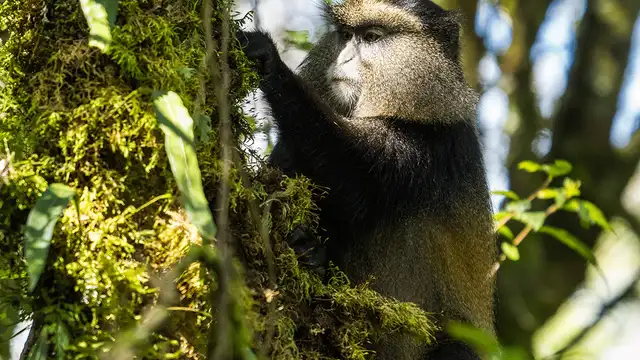
Golden monkey golden tracking and golden monkey habituation,deep in the heart of the misty mountains, where the African savannah meets the lush rainforest, lies a mystical realm that has captivated the hearts of many an adventurer. Mgahinga National Park, a protected haven in southwestern Uganda, is home to a majestic and elusive creature that has been shrouded in mystery for centuries, the golden Monkey. The golden Monkey, also known as the Rwenzori golden Monkey, is a rare and majestic creature found only in the Virunga Mountains of central Africa. With its golden-brown coat, striking white face, and long, fluffy beard, this primate is a sight to behold. The golden Monkey is known for its unique habitat and behavior, inhabiting the lush, misty cloud forests where it spends most of its time high up in the trees, feeding on fruits, leaves, and insects. Living in large troops with a complex social hierarchy, the Golden Monkey is an endangered species facing threats from habitat loss and poaching.
Venturing into Mgahinga National Park on monkey golden tracking in southwestern Uganda offers once-in-a-lifetime opportunity to track and observe these elusive creatures in their natural habitat. Visitors embark on this thrilling adventure, it's essential to be well-prepared with the right gear and mindset. The rugged terrain and dense vegetation of the park require sturdy hiking boots, comfortable clothing, layers for unpredictable weather, plenty of water, snacks, sunscreen, a good camera, binoculars, and a field guide for identifying flora and fauna.
Popular packages
The golden monkey tracking
The journey to track the golden Monkey in Mgahinga National Park is not just about encountering this rare primate; it's also an opportunity to immerse oneself in the park's rich history and biodiversity. The park is home to a diverse range of flora and fauna, including over 315 species of birds, 76 species of mammals, and 136 species of butterflies. The ancient forests and misty valleys hold echoes of the past, with remnants of traditional settlements and cultural heritage left behind by the Batwa people, the region's earliest inhabitants.
Tracking the golden monkey requires patience, persistence, and a keen eye for spotting the subtle signs of their presence. The thrill of the chase as visitors push through the dense underbrush, with every step bringing them closer to the magical moment of encountering the Golden Monkey, creates an unforgettable experience. The park's unique experiences and sights, such as strolling through bamboo forests, listening to the calls of exotic birds, and witnessing breathtaking sunsets, add to the allure of this enchanting land.
What is the cost of golden monkey tracking permit
For the golden monkey tracking permit, the prices also differ based on residency. Foreign non-residents are required to pay $60, foreign residents can obtain the permit for $40, and East African citizens can acquire it for UGX 40,000.
The golden monkey habituation experience
The Golden Monkey habituation experience in Mgahinga National Park is an enthralling adventure that offers a unique opportunity to observe and learn about these elusive primates in their natural habitat. This experience provides invaluable insights into the lives of these captivating creatures and contributes to their long-term conservation.
The habituation process typically begins with identifying a troop of golden monkeys and spending extended periods in their vicinity, gradually habituating them to the presence of observers. This can involve maintaining a respectful distance, minimizing direct interaction, and allowing the monkeys to become accustomed to human presence without feeling threatened or disturbed. Over time, the monkeys may exhibit more natural behaviors, providing researchers and visitors with the opportunity to observe their social interactions, feeding habits, and movement patterns.
During the habituation experience, visitors have the chance to witness the golden Monkeys in their natural environment, gaining a deeper understanding of their intricate social structures and daily routines. Observing their interactions within the troop, including grooming, play, and communication, offers a fascinating insight into the complex dynamics of these primate societies. studying their feeding behavior and foraging techniques provides valuable information about their diet and ecological role within the forest ecosystem.
The habituation experience also presents an ideal opportunity for photography and videography, allowing visitors to capture stunning images and footage of the Golden Monkeys in their natural habitat. Documenting their behavior and interactions not only creates lasting memories but also contributes to raising awareness about the importance of primate conservation and habitat protection.
Participating in a golden monkey habituation experience requires a commitment to responsible ecotourism practices, including following ethical guidelines for wildlife observation and minimizing disturbance to the monkeys and their habitat. By respecting the natural behaviors of the golden monkeys and adhering to the guidance of experienced guides and researchers, visitors can contribute to the success of the habituation process while enjoying a truly immersive wildlife encounter.
What is the cost of golden Monkey habituation permit?
The cost of a golden monkey habituation permit varies depending on the visitor's residency status. For foreign non-residents, the cost is $100. Foreign residents can obtain the permit for $80, while East African citizens can acquire it for UGX 100,000.
What to carry for golden monkey tracking and habituation experience
Hiking Boots: Sturdy hiking boots are essential for navigating the rugged terrain and dense vegetation of Mgahinga National Park.
Comfortable Clothing: Dress in comfortable, moisture-wicking clothing suitable for trekking, and consider layering to accommodate the varied mountain weather.
Backpack: A sturdy backpack is necessary for carrying essentials such as water, snacks, sunscreen, a camera, and binoculars.
Water and Snacks: Stay energized and hydrated throughout the day by packing plenty of water and energy-rich snacks.
Field Guide: Bring a field guide to help identify the diverse flora and fauna you'll encounter during your trek.
Safety Precautions: Pack a first-aid kit, insect repellent, and any necessary medications for a safe and comfortable trek.
What are the accommodation options in Mgahinga national park for golden monkey tracking and habituation?
Mgahinga National Park offers various accommodation options to suit different preferences and budgets. From luxury lodges to budget-friendly campsites, visitors can choose from a range of facilities that provide comfort and convenience amidst the park's stunning natural surroundings. These establishments offer a blend of comfort, warm hospitality, and proximity to the park's attractions, making them ideal choices for travelers seeking a memorable stay during their golden monkey tracking and habituation experience.
How to get to Mgahinga National Park for Golden Monkey Tracking
Mgahinga National Park is located in southwestern Uganda, near the border with Rwanda and the Democratic Republic of Congo. The park is accessible by road from major cities such as Kampala and Kigali. Visitors can also fly into Kigali International Airport in Rwanda and then travel by road to Mgahinga, enjoying scenic views along the way.
For those coming from Kampala, the journey to Mgahinga National Park takes approximately 8-10 hours by road. Travelers can opt for private transportation or public buses that operate between major towns and the park's vicinity.
When is the best time for golden Monkey tracking in Mgahinga?
The best time for golden monkey tracking in Mgahinga National Park is during the dry seasons, which typically occur from June to August and December to February. These periods offer favorable weather conditions with minimal rainfall, making trekking more manageable and increasing the likelihood of wildlife sightings.
During the dry seasons, the trails are generally less muddy and slippery, allowing for a more comfortable and enjoyable trek through the park's diverse landscapes. Additionally, wildlife activity, including golden monkey behavior, is often more pronounced during these times, enhancing the overall tracking experience.
Why you need to book with Lamz Tours and Travel for your golden Monkey tracking and habituation experience
Booking your golden monkey tracking and habituation experience with Lamz Tours and Travel ensures a well-organized and memorable adventure. Lamz Tours and Travel offers expertly guided tours led by experienced trackers and naturalists who are knowledgeable about the park's wildlife and ecosystems. Their commitment to responsible tourism and conservation efforts aligns with the ethical principles of sustainable wildlife experiences. Lamz Tours and Travel also provides comprehensive support, including transportation, accommodation arrangements, and personalized assistance to ensure a seamless and enriching journey. By choosing Lamz Tours and Travel, you contribute to the preservation of Mgahinga National Park's natural heritage while enjoying an immersive and educational encounter with the captivating golden monkeys.
Ready to plan your safari?
Talk to a Lamz Tours specialist and get a tailor-made quote.
Make an enquiry