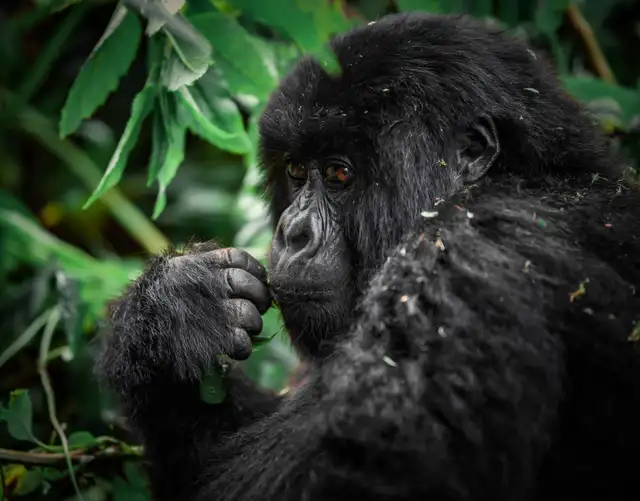
Combining gorilla habituation in Uganda with a Uganda birding safari in Mabamba Swamp offers a unique and enriching experience that blends the thrill of observing majestic mountain gorillas in their natural habitat with the serene beauty of Shoebill stork bird watching in Mabamba wetland. This combination provides an unparalleled opportunity to immerse oneself in Uganda’s diverse wildlife and natural landscapes, making it a must-consider for nature enthusiasts and adventure seekers alike.
Combining these two activities into one Uganda safari offers an extraordinary adventure that promises both excitement and tranquillity. Let’s learn the unique aspects of gorilla habituation in Uganda and bird watching in Mabamba Swamp, and why this combination should be at the top of your Uganda Safari Tours list.
Our Popular Packages
3 Day Uganda Gorilla Habituation Safari
3 Days Flying Safari to Gorilla Trekking.
3 Days Gorilla Trekking in Mgahinga Gorilla National Park.
3 Days Uganda Gorilla Trekking Safari and Batwa Pygmies Visit in Bwindi National Park
4 Days Golden monkeys And Gorilla Trekking Safari
4 days safari with Gorilla and Queen Elizabeth national park
5 Days wildlife, Gorillas and Chimpanzee Trekking safari In Uganda
7 Days Primates Adventure Safari in Uganda.
10 Days Uganda Ultimate Primate Safari
12 Days Best of Uganda Wildlife Encounter and Cultural Safari
How to plan for gorilla habituation in Uganda and Uganda birding safari in Mabamba Swamp
Day 1: Arrival in Entebbe and Transfer to Bwindi Impenetrable National Park
Arrive at Entebbe International Airport. Meet your safari guide and transfer to Bwindi Impenetrable National Park. You can choose between a domestic flight to Kisoro or Kihihi airstrips (approximately 1.5 hours) or a scenic drive (approximately 8-10 hours).
Arrive at your lodge in Bwindi Impenetrable National Park. Check in and relax, enjoying the stunning views of the forest.
Accommodation: A comfortable lodge near Bwindi Impenetrable National Park.
Meal Plan: Lunch and Dinner.
Day 2: Gorilla Habituation Experience in Bwindi Impenetrable National Park
Wake up early and have breakfast. Head to the park headquarters for a briefing on gorilla habituation. Join experienced trackers and researchers as you venture into the forest to find a gorilla family undergoing habituation. Spend up to four hours observing and interacting with the gorillas, learning about their behaviour and conservation efforts.
Return to your lodge and relax.
Enjoy a delicious dinner and share your experiences with fellow travellers.
Accommodation: Same lodge as Day 1
Meal Plan: Breakfast, Packed Lunch, and Dinner.
Day 3: Batwa Community Visit and Transfer to Entebbe
After breakfast, embark on a community walk to visit the Batwa pygmies. Learn about their traditional way of life and cultural practices. Have lunch at the lodge. Transfer back to Entebbe, either by domestic flight or by road.
Check-in at your hotel in Entebbe. Relax and prepare for the birding safari the next day.
Accommodation:A comfortable hotel in Entebbe.
Meal Plan: Breakfast, Lunch, and Dinner.
Day 4: Bird Watching Safari in Mabamba Swamp
Have an early breakfast at your hotel. Transfer to Mabamba Swamp, located on the northern shore of Lake Victoria (approximately 1 hour by road or 45-50 minutes by speed boat).
Embark on a boat ride through the papyrus-filled channels of Mabamba Swamp.
Spot a variety of bird species, including the iconic Shoebill stork, Papyrus Gonolek, Blue Swallow, and African Pygmy Goose. Enjoy a packed lunch in the serene surroundings of the swamp. Continue bird watching and exploring the wetland. Return to your hotel in Entebbe.
Relax and enjoy a farewell dinner.
Accommodation: Same hotel as Day 3.
Meal Plan: Breakfast, Packed Lunch, and Dinner.
Day 5: Departure
Have breakfast at your hotel. Depending on your flight schedule, you can visit the Uganda Wildlife Education Centre or the Entebbe Botanical Gardens. Transfer to Entebbe International Airport for your departure flight.
Accommodation:No accommodation
Meal Plan: Breakfast.
What is Gorilla Habituation in Uganda?
Gorilla habituation in Uganda is a rare and immersive experience that allows visitors to spend extended time with mountain gorillas as they undergo the process of becoming accustomed to human presence. This activity is carried out in two destinations: Bwindi Impenetrable National Park and Mgahinga National Park, both located in southwestern Uganda.
Our first option is Bwindi Impenetrable National Park
Bwindi Impenetrable National Park is home to 24 habituated gorilla families, making it one of the best places in the world for gorilla habituation. The park’s dense forest and rugged terrain provide a perfect habitat for these magnificent creatures. Gorilla habituation in Uganda is done in only two sectors of the park, Visitors can join researchers and trackers in the Rushaga and Nkuringo sectors of the park, where they can observe gorillas in their natural environment for up to four hours.
Alternatively inside Mgahinga National Park
Mgahinga National Park, though smaller, offers a similarly enchanting experience with its one habituated gorilla family. The Park is part of the larger Virunga Conservation Area, spanning Uganda, Rwanda, and the Democratic Republic of Congo. Mgahinga’s unique landscape, characterised by volcanic mountains and bamboo forests, adds to the allure of gorilla habituation here.
How much does the Gorilla Habituation Permit cost?
To participate in gorilla habituation, visitors must purchase a permit. As of July 1, 2024, a gorilla habituation permit costs $1500 for foreign non-residents, $1000 for foreign residents and residents of the Rest of Africa, and UGX 750,000 for East African citizens. This cost excludes accommodation, transportation, and other activities.
A gorilla habituation permit includes:
- Early morning briefing and preparation for the trek
- Guidance from experienced trackers and researchers
- Four hours with the gorillas after locating them
- Park entrance fees
- Security provided by well-trained armed rangers and guides
Best Time for Gorilla Habituation
The best time for gorilla habituation in Uganda is during the dry seasons, from June to September and December to February. During these months, the trails are less muddy, and the weather is more favourable for gorilla habituation in Uganda.
Getting to the Gorilla Habituation Sites
Most travellers arrive in Uganda via Entebbe International Airport. From there, we can either organize and take a domestic flight to Kisoro or Kihihi airstrips, which are close to Bwindi Impenetrable National Park or opt for a scenic drive from Kampala or Entebbe, which takes approximately 8-10 hours.
How safe is Gorilla Habituation in Uganda?
Gorilla habituation in Uganda is a safe and exhilarating adventure, thanks to the stringent safety measures and guidelines set by the Uganda Wildlife Authority. These rules are meticulously designed to protect both trekkers and mountain gorillas, ensuring a secure and enriching experience. However, the safety and success of your gorilla habituation adventure are contingent upon strict adherence to these guidelines.
Best Packing List for Gorilla Habituation in Uganda
Packing for gorilla habituation in Uganda requires some careful planning. Here are some essentials to bring:
- Pack some warm clothes like sweaters for when the weather drastically changes.
- A raincoat is necessary whether you are travelling in the dry or wet season.
- Long-sleeved shirts and trousers protect your skin from insect bites, keep you warm, and protect your skin from tree scratches. The clothes packed should be neutral or in brown, khaki, and green colours. Avoid blue, any other brightly coloured clothes, and black. Also, make sure to avoid jeans.
- First aid kit fully packed with all the medicines prescribed by your doctor, bandages, spirit, iodine, cotton, tummy ache medicines, pain killers, and other things needed to treat scratches during the trek.
- Gaiters, socks, and garden gloves are needed. The socks are used to keep you warm, and during the trek, trousers are tucked into the socks to prevent insects from crawling up your pants. The garden gloves and non-surgical gloves protect your hands from tree scratches during the trek, and the adjustable gaiters are mainly used during the wet season.
- Strong ankle-length boots are necessary to keep your feet steady on the trek, especially during the wet season. They should be well-fitting to avoid blisters and waterproof if you can get them.
Other items that you need to pack include a refillable water bottle, flashlight, extra batteries, camera and extra lenses, binoculars, wet wipes, biodegradable toilet paper, scarf, sandals, sunscreen, insect repellent, a sun hat, and toiletries, among others.
Where to sleep on gorilla habituation in Uganda and Birding safari in Mabamba Swamp
Uganda offers a range of accommodation options, from budget lodges to luxurious five-star hotels. These establishments provide comfort, proximity to habituation sites and Mabamba Swamp, and a touch of luxury to enhance your safari experience.
Uganda Birding Safari in Mabamba Swamp
Mabamba Swamp, located on the northern shore of Lake Victoria, is a bird watcher’s paradise. This Ramsar-listed wetland is renowned for its rich biodiversity and is home to over 300 bird species, including the iconic Shoebill stork.
Going on a Mabamba Swamp Tour
A Mabamba Swamp tour typically involves a boat ride through the papyrus-filled channels, offering an excellent opportunity to spot a variety of bird species. The Shoebill stork, with its prehistoric appearance, is the star attraction, but visitors can also see other rare birds such as the Papyrus Gonolek, Blue Swallow, and African Pygmy Goose.
How to Get to Mabamba Swamp for Shoebill Stork Viewing
Getting to Mabamba Swamp is relatively straightforward, especially if you are starting from Kampala or Entebbe. Here are the steps to reach this birding haven:
From Entebbe by Boat: The easiest route is via the Nakiwogo landing site in Entebbe. From here, you can take a 10-minute ferry crossing to Kasanje landing and then drive for about 20 minutes to Mabamba Swamp. This route offers scenic views of Lake Victoria and the surrounding landscapes.
From Kampala by Road: If you are coming from Kampala, you can drive to Mabamba Swamp via the Nakawuka-Kasanje road. The drive takes approximately 1.5 to 2 hours, depending on traffic and road conditions.
Best Time to See the Shoebill Stork
The best time to see the shoebill stork in Mabamba Swamp is during the dry season, which typically runs from December to February and June to August. During these months, the water levels in the swamp are lower, forcing the shoebills to come out of the deeper parts of the swamp in search of food. Early mornings are particularly ideal for spotting these birds, as there is less fishing activity, and the shoebills are more active and visible.
What Else to See in Mabamba Swamp Other Than the Shoebill Stork
While the shoebill stork is the star attraction, Mabamba Swamp is home to a diverse array of bird species and other wildlife. Some of the notable birds you can spot include:
- Blue Swallow
- Pallid Harrier
- Papyrus Gonolek
- Swamp Flycatcher
- Pygmy Goose
- Lesser Jacana
- White-winged Warbler
- Viellot’s Weaver
- Grosbeak Weaver
- Palm-nut Vulture
- Carruther’s Cisticola
In addition to birds, Mabamba Swamp is also home to the endangered Sitatunga antelope, which can be spotted grazing in the swampy areas.
Is Birding in Mabamba Swamp Safe?
Yes, birding in Mabamba Swamp is safe. The local community has embraced conservation efforts, and many former fishermen have been trained as bird guides. These guides are knowledgeable about the swamp and its inhabitants, ensuring a safe and informative birding experience. Additionally, the swamp is a Ramsar-listed wetland of international importance, highlighting its significance and the efforts to protect it.
How Long Does It Take to Locate the Shoebill in Mabamba Swamp?
The time it takes to locate the shoebill in Mabamba Swamp can vary. On average, it takes about 1 to 2 hours to spot the shoebill, depending on the bird’s location and the time of day. Early mornings are generally the best time to increase your chances of a sighting.
Is Birding in Mabamba Swamp Difficult?
Birding in Mabamba Swamp is relatively easy and accessible to birders of all levels. The swamp is navigated by boat, and the local guides are skilled at manoeuvring through the channels to find the best birding spots. The terrain is flat, and the boat rides are generally smooth, making it a comfortable experience for most visitors.
What to Pack for a Birding Safari to Uganda (Mabamba Swamp)
When planning a birding safari to Uganda, especially to Mabamba Swamp, it’s essential to pack appropriately to ensure a comfortable and successful trip. Here are some items to consider:
- Binoculars: Essential for spotting birds from a distance.
- Camera: To capture the stunning birdlife and landscapes.
- Field Guide: A birding field guide specific to East Africa or Uganda.
- Comfortable Clothing: Lightweight, breathable clothing in neutral colours to blend in with the environment.
- Hat and Sunglasses: To protect against the sun.
- Insect Repellent: To ward off mosquitoes and other insects.
- Waterproof Gear: Including a rain jacket and waterproof bag for your equipment.
- Snacks and Water: To stay hydrated and energized during your birding excursions.
- Notebook and Pen: To jot down notes and bird sightings.
- Mabamba Swamp is a must-visit destination for any birdwatcher on a Uganda safari tour. The best time to see the shoebill stork is during the dry season.
Combining gorilla habituation in Uganda with Uganda birding safari in Mabamba Swamp offers a unique and enriching experience that showcases the best of Uganda’s wildlife and natural beauty. Contact Our Team today to get a free quote for your next Uganda Safari Tours.
Ready to plan your safari?
Talk to a Lamz Tours specialist and get a tailor-made quote.
Make an enquiry