Chimpanzees in Bwindi National Park FAQs. Travelers to Uganda have frequently asked quite a number of questions regarding the Chimpanzees found in Bwindi Impenetrable National Park. Bwindi Impenetrable National Park, located in southwestern Uganda near the border with the Democratic Republic of the Congo, is renowned for its rich biodiversity and iconic mountain gorillas. Situated at geographical coordinates of 1.0806° S latitude and 29.6617° E longitude, the park encompasses a diverse range of habitats, including dense montane and lowland rainforests, making it a hotspot for primate conservation. The park's rugged terrain and dense vegetation earned it the name "impenetrable," providing a sanctuary for a variety of wildlife, including over 120 mammal species, 350 bird species, and numerous plant species, some of which are endemic to the region.
Bwindi Impenetrable National Park experiences a tropical rainforest climate, characterized by consistent rainfall throughout the year. The park receives an average annual rainfall of around 1,400-1,900 millimeters, with two rainy seasons from March to May and September to November. The wet conditions contribute to the park's lush vegetation, supporting a diverse array of plant life, including towering trees, ferns, vines, and orchids. The park's average annual temperature ranges from 7°C to 20°C, with cooler temperatures experienced at higher altitudes, creating a comfortable environment for both wildlife and visitors exploring this unique and biodiverse ecosystem.Is there chimpanzee trekking at Bwindi impenetrable National Park?
These are some of the frequently asked questions on chimpanzees in Bwindi Impenetrable National Park;
1. Like gorilla trekking tours, are chimpanzee trekking tours available at Bwindi Impenetrable National Park?
Chimpanzee trekking tours are not typically offered at Bwindi Impenetrable National Park, as the park is primarily known for mountain gorilla trekking tours. Consider visiting Kibale National Park in Uganda for chimpanzee trekking tours.
2. Why do chimpanzees eat meat and monkeys?
Chimpanzees eat meat sporadically to obtain important nutrients like Vitamin A, B12, Zinc, Copper, and Iron that are not easily obtained from plants. They have been observed hunting small mammals and monkeys, such as the Red colobus monkeys and Colobus badius, despite their diet primarily consisting of fruits and insects. Meat, particularly mammal brains, is rich in fat and provides essential nutrients for their diet.
3. What species are the chimpanzees at Bwindi?
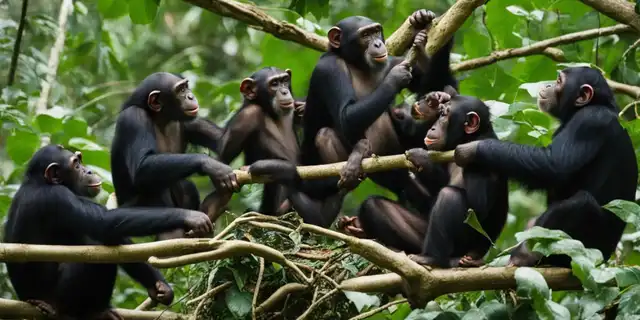
The chimpanzees of Bwindi Impenetrable National Park are Eastern chimpanzees (Pan troglodytes schweinfurthii), which are a subspecies of the common chimpanzee found in East and Central Africa. Eastern chimpanzees are known for their unique genetic and behavioral characteristics, including their tool-use skills, complex social structures, and vocal communication. They are classified as endangered by the IUCN due to threats such as habitat loss, poaching, and disease, making conservation efforts crucial for their survival in the wild. The chimpanzees of Bwindi play a vital role in the ecosystem of the park and are a significant attraction for tourists interested in gorilla and chimpanzee trekking Uganda safaris.
4. When were chimpanzees discovered?
Chimpanzees were first discovered in the 17th century during European scouting missions in Angola. The first chimpanzee was dissected by Edward Tyson, a British scientist and physician, in 1698, sparking scientific and philosophical discussions about the relationship between chimpanzees and humans. Since then, chimpanzees have been objects of curiosity and study, leading to a better understanding of these fascinating primates.
5. Are chimps about to go extinct?
Wild chimpanzees are facing a high risk of extinction due to various threats such as hunting for bushmeat, habitat degradation from activities like industrial logging and agriculture, and diseases. Conservation efforts are crucial to protect these endangered primates and ensure their survival in the wild. Like gorilla trekking tours, chimpanzee trekking tours help in raising funds for chimpanzee conservation efforts.
6. How much food do chimps eat?
Chimpanzees consume between 1-4 kilograms of food per day, depending on their age and gender. Their diet primarily consists of fruits, seeds, nuts, leaves, flowers, and insects, with occasional supplementation from small mammals and monkeys. Chimpanzees are known for their creative tool use and ability to source a variety of food items for both sustenance and medicinal purposes.
7. Do chimps eat humans?
Yes, there have been instances of serious and fatal chimp attacks on humans, particularly directed towards children living near their forest habitats. While wild chimpanzees are generally wary of adult humans, there have been reported cases of chimps kidnapping and consuming human babies. Chimps in captivity or as pets can also exhibit aggressive behavior towards humans, highlighting the importance of understanding and respecting these powerful primates' natural behaviors.
8. Do chimpanzees look like monkeys?
Chimpanzees in Bwindi, like all chimpanzees, do not look like monkeys. Chimpanzees belong to the ape family, which is a different group of primates from monkeys. Chimpanzees lack tails, which is a key physical feature that distinguishes them from monkeys. Additionally, chimpanzees have larger bodies, more complex social structures, and exhibit behaviors that are more similar to humans than to monkeys.
9. Are chimpanzees of Bwindi peaceful?
Chimpanzees are complex and intelligent creatures, but they are not always peaceful. While they can exhibit social behaviors such as grooming, playing, and forming strong bonds within their groups, chimpanzees also engage in aggressive behaviors, including territorial disputes, dominance struggles, and even lethal attacks on other chimpanzees. Infanticide, cannibalism, and violent confrontations between rival groups have been observed in chimpanzee communities, indicating that they are capable of both cooperation and aggression. The dynamics within chimpanzee societies can be influenced by various factors, such as competition for resources, social hierarchy, and individual personalities, leading to a mix of peaceful and aggressive interactions among these fascinating primates.
10. Can chimpanzees of Bwindi operate a gun?
Chimpanzees do not have the cognitive ability or physical dexterity to use a gun or any other human-made tool intentionally. While chimpanzees are known for their impressive tool-use skills in the wild, such as using sticks to extract insects from crevices or using stones to crack open nuts, these behaviors are instinctual and not akin to the deliberate and complex actions required to operate a gun. Chimpanzees lack the understanding of firearms, their function, and the consequences of using them, making it impossible for them to use a gun in any intentional or purposeful manner. Guns and other weapons are strictly human inventions that require a level of cognitive reasoning and intentionality that chimpanzees do not possess.
List of the best itineraries for gorilla and chimpanzee trekking Uganda safaris
Book your gorilla and chimpanzee trekking Uganda safaris with Lamz Tours and Travel
As a local tour operator based in Uganda, Lamz Tours and Travel is proud to offer custom-made gorilla and chimpanzee trekking Uganda safaris for your amusement. For any inquiries, detailed itineraries or reservations contact us via email at info@Lamz Tours and Travel.com and Lamz Tours and Travel@gmail.com. For personalized assistance, kindly reach out via phone call or WhatsApp to +000 000 000 000 and +000 000 000 000.
Ready to plan your safari?
Talk to a Lamz Tours specialist and get a tailor-made quote.
Make an enquiry