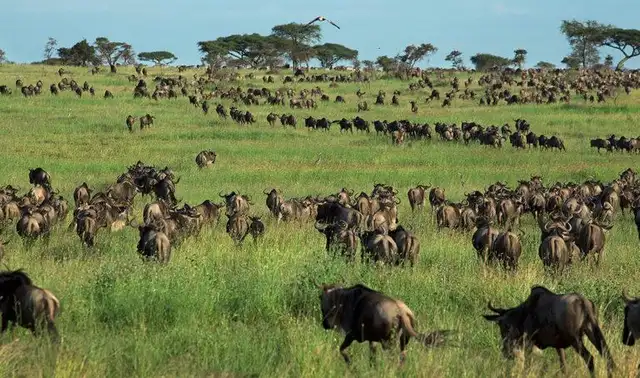
Know the best time to visit Serengeti for safari, including migration seasons, river crossings, calving season, wildlife viewing, and travel tips.
The best time to visit Serengeti for safari depends on the wildlife experiences you wish to enjoy. Serengeti National Park offers outstanding game viewing throughout the year, making it one of Africa’s premier safari destinations. The dry season from June to October is popular for excellent wildlife visibility, comfortable weather, and dramatic Great Migration river crossings in the northern Serengeti. From January to March, the southern plains host the calving season, when thousands of wildebeest give birth, attracting numerous predators. The green season brings lush landscapes, fewer crowds, and exceptional birdwatching opportunities. Each season offers unique attractions, from predator action and migration spectacles to colorful scenery and migratory birds. Understanding seasonal wildlife movements helps travelers choose the ideal time for an unforgettable Serengeti safari adventure.
Popular Tanzania safari packages
The Best Time to Visit Serengeti for Safari
1. Understanding the Serengeti Safari Seasons
The best time to visit Serengeti for safari depends on the wildlife experiences you want to enjoy. Serengeti National Park offers excellent game viewing throughout the year because of its large populations of resident wildlife, including lions, leopards, elephants, buffaloes, and cheetahs. However, seasonal changes influence animal movements, landscape conditions, and visitor numbers. The park experiences distinct dry and wet seasons, each offering unique safari opportunities. The dry season is often preferred for wildlife viewing because vegetation is shorter and animals gather around water sources. The wet season transforms the plains into lush grasslands that attract migratory herds and bird species. Understanding these seasonal differences helps travelers choose the ideal time for a Serengeti safari based on wildlife interests, budget considerations, weather conditions, and overall travel preferences.
2. Visiting Serengeti During the Dry Season
The dry season, which generally runs from June to October, is considered one of the best times to visit Serengeti for safari. During this period, rainfall is minimal and grass becomes shorter, making wildlife easier to spot across the open plains. Many animals gather near rivers, waterholes, and permanent water sources, creating excellent opportunities for game viewing. Predators are particularly active during the dry season because prey animals become more concentrated in specific areas. Visitors also enjoy comfortable weather conditions with sunny days and lower humidity levels. Photographers appreciate the clear visibility and golden lighting that enhances wildlife images. Because this period offers outstanding safari conditions, it also attracts more visitors. Early booking is recommended to secure accommodation and preferred safari arrangements during these popular months.
3. Wildlife Viewing Between June and August
June to August represents a prime wildlife viewing period in Serengeti National Park. These months coincide with some of the most dramatic stages of the Great Migration as vast herds move through different regions of the ecosystem. The movement attracts predators such as lions, hyenas, leopards, and cheetahs, creating frequent opportunities to observe predator-prey interactions. Wildlife is often easier to spot due to reduced vegetation, allowing visitors to enjoy impressive game drives across the plains. The weather remains pleasant, with cool mornings and warm afternoons that are suitable for spending long hours on safari. Many travelers choose this period because it combines abundant wildlife sightings with comfortable travel conditions. The landscapes remain beautiful while offering exceptional opportunities for both wildlife photography and memorable safari experiences.
4. The Famous River Crossing Season
One of the most popular reasons travelers choose a Serengeti safari is to witness the dramatic river crossings of the Great Migration. These crossings commonly occur between July and October in the northern Serengeti as migrating wildebeest and zebras attempt to cross crocodile-filled rivers. The crossings are unpredictable and depend on animal movements, weather patterns, and grazing conditions. Visitors may spend several days searching for active crossing points, but the reward can be remarkable. Massive herds gather along riverbanks before making their move across dangerous waters. The tension, excitement, and sheer scale of the migration create one of Africa’s most famous wildlife spectacles. For travelers hoping to witness this extraordinary event, the period between July and October is often considered among the best times to visit Serengeti for safari.
5. Benefits of Visiting During the Green Season
The green season, usually extending from November through May, offers a different yet equally rewarding safari experience. During this time, seasonal rains transform the Serengeti into a vibrant landscape covered in lush vegetation and fresh grazing grounds. Wildlife remains abundant throughout the park, while visitor numbers are generally lower compared to the peak dry season. Travelers benefit from quieter safari experiences and more availability at lodges and camps. The scenery becomes particularly attractive for photography thanks to dramatic skies and colorful landscapes. Birdwatchers often consider this one of the best periods because migratory birds arrive in large numbers. For visitors who prefer fewer crowds, beautiful scenery, and attractive accommodation rates, the green season provides an excellent alternative to the busy peak safari months.
6. Calving Season in the Southern Serengeti
The calving season is one of the most remarkable wildlife events in the Serengeti ecosystem and usually occurs from January to March. During this period, hundreds of thousands of wildebeest gather on the southern plains where nutrient-rich grasses support newborn calves. Thousands of calves are born every day, creating extraordinary wildlife viewing opportunities. Predators such as lions, cheetahs, jackals, and hyenas closely follow the herds, leading to frequent predator activity. The abundance of young animals attracts predators and increases the likelihood of witnessing dramatic wildlife interactions. Visitors interested in animal behavior and photography often consider this season exceptional. The southern Serengeti becomes a focal point of activity, providing visitors with opportunities to observe both new life and natural survival challenges within the African wilderness.
7. Birdwatching Opportunities Throughout the Year
Bird enthusiasts can enjoy exceptional experiences regardless of when they visit Serengeti National Park. The park supports hundreds of bird species, making it one of East Africa’s premier birdwatching destinations. The green season is especially rewarding because migratory birds arrive from Europe, Asia, and other regions, increasing species diversity. Wetland areas, rivers, woodlands, and open plains provide habitats for a wide range of birds. Visitors may observe ostriches, hornbills, kingfishers, eagles, vultures, and many colorful migratory species. The abundance of water during the rainy months attracts large concentrations of birds to certain habitats. Photographers and nature enthusiasts often find the green season ideal for birdwatching because of the vibrant landscapes and active birdlife. Birding adds another dimension to any Serengeti safari beyond traditional wildlife viewing.
8. Weather Conditions and Travel Comfort
Weather plays an important role when deciding the best time to visit Serengeti for safari. The dry season offers warm, sunny days with little rainfall, making travel conditions predictable and comfortable. Roads are generally easier to navigate and game drives can continue uninterrupted by weather concerns. During the rainy seasons, occasional showers may occur, but they rarely prevent safari activities from taking place. Some travelers appreciate the cooler temperatures and greener landscapes that accompany rainfall. The mornings and evenings can be chilly, particularly in elevated areas, so layered clothing is recommended throughout the year. Understanding seasonal weather patterns helps travelers pack appropriately and prepare for changing conditions. Regardless of the season, Serengeti remains a rewarding safari destination with excellent wildlife viewing opportunities year-round.
9. Choosing the Best Time Based on Your Budget
Budget considerations can also influence the best time to visit Serengeti for safari. Peak months during the dry season typically attract higher accommodation rates due to increased demand. Luxury camps and lodges often book up well in advance, particularly during migration and river crossing periods. Travelers seeking more affordable options may find better value during the green season when visitor numbers are lower. Many lodges offer seasonal discounts and special packages that make safaris more accessible. Despite lower prices, wildlife viewing remains excellent throughout much of the year. Visitors can enjoy rewarding game drives while benefiting from quieter parks and more personalized service. Matching travel dates with budget expectations helps create a safari experience that balances cost, comfort, and wildlife opportunities effectively.
10. The Overall Best Time for a Serengeti Safari
Ultimately, the best time to visit Serengeti for safari depends on your personal interests and travel goals. Travelers seeking excellent wildlife visibility and comfortable weather often prefer the dry season between June and October. Those hoping to witness river crossings typically focus on July through October, while visitors interested in calving season should consider January through March. Birdwatchers and budget-conscious travelers may prefer the green season because of fewer crowds and vibrant landscapes. One of the greatest advantages of Serengeti National Park is that wildlife can be seen throughout the year, regardless of season. Every month offers unique attractions and memorable experiences. By selecting travel dates that align with your interests, you can enjoy an unforgettable Serengeti safari filled with remarkable wildlife sightings and spectacular African landscapes.
Ready to plan your safari?
Talk to a Lamz Tours specialist and get a tailor-made quote.
Make an enquiry