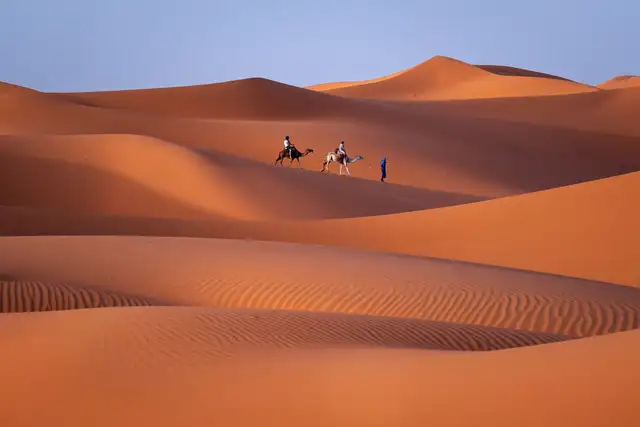
On Morocco tours, timing your desert visit correctly makes the difference between an unforgettable adventure and a struggle against the elements. The Sahara Desert operates under a continental desert climate with scorching days, freezing nights, and almost no rainfall . Daily temperature swings often exceed 20°C (36°F), catching unprepared travelers off guard . For travelers on Morocco travel, choosing the right season for your desert tour is essential for comfort and safety.
Popular Morocco Tour Packages
Best Time to Visit Moroccan Desert Tours
1. Autumn (October to November) – The Absolute Sweet Spot
On Morocco tours, autumn is widely considered the best time to visit the Sahara. October and November offer warm days with temperatures between 22°C and 30°C, and cool nights between 8°C and 15°C . The light is exceptional for photography, with golden hours casting dramatic shadows across the dunes. On a safari in Morocco, you can enjoy camel treks at any hour, without the exhaustion of summer heat or the bitter cold of winter nights. For tours and safaris Morocco, November stands out as a photographer's secret window—sunrise and sunset create long golden hours with dramatic shadows across the dunes . Crowds are present but manageable compared to the peak spring season.
2. Spring (March to April) – Excellent but Busy
On Morocco tours, spring rivals autumn as the ideal desert season. March and April bring warm days between 24°C and 32°C, and pleasant nights between 10°C and 16°C . On a safari in Morocco, wildflowers briefly colour the oasis fringes, and the road from Marrakech via the Dades Gorge is at its most dramatic with meltwater streams still running . For tours and safaris Morocco, this is the most popular time to visit—camps fill fast, prices are at their highest, and late March to April is the busiest period of the year . Occasional spring sandstorms can occur, so a desert scarf is useful to have in your bag.
3. Winter (December to February) – Cold but Clear and Quiet
On Morocco tours, winter offers a completely different desert experience. December, January, and February bring mild days between 15°C and 22°C, but nights can drop below freezing to 0°C or even lower . On a safari in Morocco, the upside is very few other guests, lower prices, and some of the clearest skies of the year for stargazing. For tours and safaris Morocco, frost on the sand is not common, but it happens—you will need proper thermal layers, a down jacket, and thick wool blankets at the camp . December and January see a surge of European visitors escaping winter; book camps at least six weeks ahead .
4. Summer (June to August) – Extremely Hot – Approach with Caution
On Morocco tours, summer in the Sahara is genuinely extreme. June, July, and August bring daytime temperatures that regularly exceed 40°C and can reach 46°C . Sand temperatures on the dune face can top 70°C . On a safari in Morocco, camel treks are limited to very early morning (before 9am) and late afternoon (after 5pm) . For tours and safaris Morocco, most experienced travellers avoid these months entirely unless they have specific reasons and heat tolerance to match . Some luxury camps add air conditioning and swimming pools to justify the discomfort.
Month-by-Month Guide to Moroccan Desert Tours
|
Month |
Daytime High |
Nighttime Low |
Verdict |
|
January |
15–20°C |
2–6°C |
Cold nights, clear days, quiet, exceptional stars |
|
February |
18–22°C |
4–8°C |
Warming slightly, still quiet, good value |
|
March |
22–28°C |
8–12°C |
Excellent conditions begin, crowds also begin |
|
April |
25–32°C |
10–15°C |
Peak season, warm and beautiful, camps fill fast |
|
May |
30–36°C |
14–18°C |
Early May still good, late May starts to feel hot |
|
June |
36–42°C |
18–22°C |
Hot, camel treks shift to early morning |
|
July |
40–46°C |
22–26°C |
Very hot, limit midday time outside |
|
August |
40–45°C |
20–24°C |
Very hot, Moroccan families often travel in August |
|
September |
35–40°C |
20–24°C |
Hot early, easing late in the month |
|
October |
29°C |
13°C |
Perfect — warm days, cool nights, golden light |
|
November |
22°C |
7°C |
Ideal — mild days, cold nights, excellent photography |
|
December |
17°C |
3°C |
Cold nights, clear crisp days, great stars |
Weather and Climate on Moroccan Desert Tours
On Morocco tours, the Sahara operates under a continental desert climate with scorching days and freezing nights . The average annual rainfall across the Sahara region sits below 100mm . The temperature gap between afternoon and pre-dawn can exceed 20°C (36°F) . On a safari in Morocco, you can sunburn at noon and shiver by midnight on the same day . Wind patterns shift seasonally—April and May bring the strongest gusts (sirocco winds from the Sahara interior), while November and December offer the calmest conditions.
Sandstorm Season and Preparedness
On Morocco tours, the sandstorm season runs primarily from late March through May, with a secondary period in October . Sandstorms are driven by the Chergui wind, a hot dry easterly that picks up fine particles and carries them across the dunes. On a safari in Morocco, your actual chance of encountering one during peak season is 10% to 20%, not a daily certainty . For tours and safaris Morocco, a Sahara sandstorm typically lasts two to four hours, not days, and brings a thick orange-brown haze that reduces visibility to 50 to 100 metres . Experienced guides monitor Chergui forecasts daily and adjust schedules to avoid the worst hours.
What to Pack for Each Season
On Morocco tours, packing for the desert requires preparation for extreme conditions. For spring and autumn, bring light layers for warm days and a warm jacket for cool nights. For winter, thermal base layers, a fleece mid-layer, a down jacket, and a windproof outer shell are essential . For summer, loose light clothing, high-SPF sunscreen, and plenty of water are non-negotiable. On Morocco travel, a lightweight shemagh (desert scarf) is essential for sandstorm protection—these cost 50-100 MAD ($5–$10) in any Marrakech souk . Place closed-toe shoes inside your tent every night to avoid scorpions sheltering in warm footwear.
How to Get to the Moroccan Desert
For Morocco tours, desert tours typically start from Marrakech (3–5 days), Fez (4 days), or Agadir (day trips). Marrakech is the most popular departure point for multi-day tours to the Merzouga or Zagora deserts. On Morocco travel, private transfers and small-group minibuses are the most common modes of transport, with drivers providing commentary and photo stops along the way. Book well in advance for spring and fall, as these are the busiest seasons—camps can fill months ahead.
Where to Stay on a Moroccan Desert Tour
Accommodation on Morocco tours ranges from standard desert camps to luxury glamping tents. Standard camps offer basic tents with shared or external bathroom facilities, while luxury camps provide private tents with en-suite showers, heating, and sometimes even swimming pools . On Morocco travel, winter months require extra blankets—ask your camp specifically about nighttime bedding . Luxury camps provide heavy Berber wool blankets and sometimes heated tents . The first night is often spent in a hotel or kasbah in the Dades Valley or Ouarzazate, with the second night in a desert camp in Erg Chebbi.
Health and Safety Tips for Moroccan Desert Tours
On Morocco tours, staying healthy and safe in the desert requires basic precautions. Drink plenty of bottled water to stay hydrated in the dry heat—3L+ per person per day is recommended. The biggest health risks are the sun and heat, so wear high-SPF sunscreen even on cool or cloudy days. On Morocco travel, plan activities around sunrise and sunset, not midday—the 45 minutes before and after sunrise and the 60 minutes before sunset are the Sahara's two magic hours . Travel insurance with medical coverage is essential for any unexpected issues.
Why Book with Lamz Tours and Travel for Morocco Tours
Booking your Morocco tours with Lamz Tours and Travel ensures a well-organized, safe, and unforgettable desert experience. Lamz Tours and Travel is a trusted tour operator operating across multiple African countries, including Morocco, Kenya, Tanzania, Uganda, Rwanda, South Africa, Botswana, and Namibia. Our local guides know the best times to visit each desert destination, the most reliable camps for every season, and how to handle sandstorms and extreme weather. On Morocco travel with Lamz Tours and Travel, we handle everything including airport transfers, hotel and camp bookings, guided tours, and transport. You just show up with your camera and sense of adventure. Our itineraries are flexible—want to focus on the Sahara in the perfect autumn season? We can do that. Want to combine the desert with the imperial cities? We can arrange it. Lamz Tours and Travel supports local communities by hiring Moroccan guides and using locally owned camps. You focus on the golden dunes, the starry skies, and the timeless magic of the desert. We handle everything else on your Morocco tours.
Ready to plan your safari?
Talk to a Lamz Tours specialist and get a tailor-made quote.
Make an enquiry