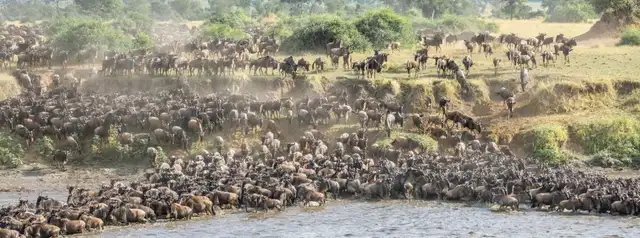
The best time to witness the Great Wildebeest Migration in Kenya is from July to October. This period marks the peak of the migration when wildebeests and zebras cross the Mara River, creating dramatic moments as they navigate the treacherous waters. The crossings typically occur most frequently in July and August, offering safari-goers a chance to see herds leaping into the river while facing the dangers of crocodiles and strong currents.
In addition to the river crossings, this time frame provides excellent opportunities for viewing other wildlife, as predators are drawn to the large concentrations of animals. While the migration starts in January with calving in the southern Serengeti, July to October is the prime time for the most thrilling and dynamic experiences, making it a must-see for anyone on a Kenya wildlife safari.
Kenya wildlife safaris and tours related to wildebeest migrations
Mara River crossing (between July and October each year)
The Mara River crossing typically occurs between July and October each year, coinciding with the Great Migration of wildebeest and zebras from the Serengeti in Tanzania to the Masai Mara in Kenya. As these animals navigate the treacherous waters of the Mara River, they face numerous challenges, including fierce crocodiles and strong currents. The crossing is a spectacular event, marked by dramatic moments as herds attempt to leap into the river and reach the other side safely. This natural phenomenon attracts numerous tourists and wildlife enthusiasts eager to witness one of nature's most breathtaking displays.
Grumeti River Crossing (between late May and early July)
The Grumeti River crossing generally takes place between late May and early July. During this period, wildebeest and zebras migrate through the Serengeti, seeking greener pastures. The Grumeti River presents its own set of dangers, including lurking crocodiles that pose a significant threat to the migrating herds. As the animals approach the river, they exhibit cautious behavior, often waiting for the right moment to cross. This crossing is less renowned than the Mara River crossing but remains an essential part of the Great Migration, showcasing the resilience and instinctual survival strategies of these majestic creatures.
Monthly Great wildebeest migration cycle
The Great Wildebeest Migration cycle unfolds from January to December. In January and February, calving occurs in the southern Serengeti, with thousands of calves born. By March, the herds begin their northward movement. April and May see crossings in the western corridor. In June, they approach the Mara River, peaking in dramatic crossings during July and August. By September, the herds start to disperse in the Masai Mara, and in October and November, they return to the southern Serengeti for calving, restarting the cycle in December.
January (Great wildebeest crossing)
In January, wildebeests are primarily in the southern Serengeti, where calving season occurs. This month sees approximately 500,000 calves born, making it a vital period for the species. The herds are concentrated in this area, allowing for close observation of newborns and their interactions. Predators such as lions and hyenas are also drawn to these calving grounds, creating exciting wildlife viewing opportunities. Visitors on Kenya wildlife safaris can expect to see not only the wildebeests but also other species, including cheetahs and jackals, which prey on vulnerable calves. The southern Serengeti's open grasslands provide excellent visibility for tracking animal movements. Although the migration has not yet begun, the activity around calving creates a dynamic wildlife scene. Game drives during this time can yield memorable experiences as young animals learn to navigate their environment. January is less crowded than peak migration months, allowing for a more intimate experience with the wildlife.
February (Great wildebeest crossing)
February is the peak of the calving season, with herds remaining in the southern Serengeti to care for their young. This month is critical for the survival of the calves, as they are vulnerable to predators. Approximately 8,000 calves are born each day, attracting various predators like lions, hyenas, and leopards. Visitors can witness the interactions between mothers and their young, as well as the challenges posed by predators.
The presence of these young animals increases the chances of seeing exciting predator-prey interactions, making wildlife viewing particularly engaging. In addition to wildebeests, other species such as Thomson's gazelles and elands can be seen grazing in the southern Serengeti. February is an excellent time for photographers, as the landscape is often lush and green from the short rains. The relatively fewer tourists during this month allow for a more relaxed safari experience, making it easier to observe and appreciate the behaviors of these animals in their natural habitat.
March (Great wildebeest crossing)
By March, the wildebeests begin to move northward from the southern Serengeti as the grasslands start to dry up. The herds gather in the central Serengeti, where they continue to graze before heading towards the western corridor. This month marks a transition, and the wildlife viewing remains excellent. Visitors can still see calves and their mothers, but the dynamics change as the herds prepare for the next phase of migration.
March is also a time when predators are active, following the herds in search of food. Sightings of lions and cheetahs are common, as they take advantage of the weaker members of the herd. The central Serengeti's varied landscape provides ample opportunities for game drives, allowing visitors to see not only wildebeests but also giraffes, elephants, and a variety of bird species. This month is characterized by fewer tourists, making for a more peaceful experience in the heart of the Serengeti. As the migration progresses, the anticipation builds for the upcoming river crossings.
April (Great wildebeest crossing)
In April, the wildebeests continue their movement towards the western corridor of the Serengeti. This month often sees increased rainfall, leading to lush vegetation that supports the herds. The grasslands provide abundant food, and wildlife viewing remains strong. However, accessibility can be challenging due to wet conditions, and some areas may become difficult to navigate.
As the herds traverse the western corridor, they face challenges such as river crossings. While not as dramatic as the Mara River crossings, these crossings still provide opportunities to see predator-prey interactions, particularly with crocodiles. Visitors can also expect to see large populations of elephants, hippos, and various bird species, including the African fish eagle. April is a quieter month for tourism, allowing for a more intimate safari experience. The vibrant landscape, combined with the active wildlife, creates an engaging atmosphere for those on Kenya wildlife safaris.
May (Great wildebeest crossing)
By May, the wildebeests are in the northern Serengeti, preparing for the river crossings at the Mara River. The herds begin to gather in larger numbers as they approach this critical point in their migration. The scenery is often lush and green, providing excellent conditions for wildlife viewing. This month marks a period of anticipation, as visitors hope to witness the dramatic crossings that characterize the migration.
The presence of predators remains high, with lions and leopards often following the herds. Visitors may also encounter large groups of elephants and the iconic Masai giraffe. The increased wildlife activity makes May a good time for game drives, as the landscape is teeming with life. However, the river crossings may not yet be at their peak, making it essential for travelers to remain flexible in their safari plans. May is a transitional month, setting the stage for the thrilling events of the upcoming migration peak.
June (Great wildebeest crossing)
In June, the wildebeests are on the move towards the Mara River, where the dramatic crossings begin. This month is crucial as the herds gather at the river’s edge, preparing to cross. Wildlife viewing during this time is exceptional, as visitors can witness the intensity of the migration. The anticipation builds as thousands of wildebeests face the treacherous waters, often encountering crocodiles waiting to ambush.
Predators such as lions and hyenas are also highly active, taking advantage of the chaos during the crossings. June provides a unique opportunity to observe both the wildebeests and the predators that follow them. Visitors on Kenya wildlife safaris can expect to see not only the wildebeests but also a variety of other species, including zebras and elephants. The weather is generally mild, making for comfortable game drives. As June progresses, the excitement for the river crossings intensifies, drawing wildlife enthusiasts eager to witness this natural spectacle.
July (Great wildebeest crossing)
July marks the peak of the Great Wildebeest Migration, as the wildebeests begin their crossings at the Mara River. This month is characterized by the dramatic and often perilous journeys of thousands of wildebeests as they attempt to cross the river in search of greener pastures. Visitors can witness the tension as animals face strong currents and lurking crocodiles, making it a prime time for wildlife viewing.
The herds are highly active during this period, and the chances of witnessing crossings are at their highest. In addition to wildebeests, zebras and Thompson's gazelles often join the crossings, adding to the spectacle. Predators are also drawn to the river, with lions and hyenas waiting for opportunities to hunt weakened animals. July is a peak month for safari tourism, so booking accommodations in advance is essential. The combination of dramatic wildlife interactions and the vibrant savannah landscape makes this month a highlight for many who participate in Kenya wildlife safaris.
August (Great wildebeest crossing)
In August, the wildebeest migration continues, with the herds remaining in the Masai Mara to graze and recover from the river crossings. This month features ongoing opportunities to see the dramatic events of the migration, as the herds often attempt multiple crossings. The presence of predators remains strong, with lions, leopards, and cheetahs actively hunting near the riverbanks.
Visitors can expect to see a variety of wildlife, including elephants, giraffes, and numerous bird species, such as the African fish eagle and secretary bird. As the grass begins to dry out, the wildebeests may start to disperse in search of food, but the action around the river is still compelling. August is a popular month for wildlife photographers, as the lighting and scenery create excellent conditions for capturing the migration. The combination of active wildlife and relatively dry weather enhances the safari experience, making it a prime time for those on Kenya wildlife safaris.
September (Great wildebeest crossing)
September sees the wildebeest herds remaining in the Masai Mara, although some may begin to disperse as they search for fresh grazing areas. The crossings at the Mara River continue, providing excellent opportunities for wildlife viewing. Visitors can expect to see large groups of wildebeests, zebras, and other herbivores as they navigate the landscape.
Predators remain active, with lions often seen following the herds. The chances of witnessing predator-prey interactions are still high, making September a rewarding time for wildlife photographers and enthusiasts. Additionally, the weather is generally pleasant, with cooler temperatures and less rain, making for comfortable safari experiences. While the migration may slow down, the wildlife activity remains vibrant. September is a favorable time for those looking to experience the tail end of the migration while enjoying the diverse wildlife in the Masai Mara.
October (Great wildebeest crossing)
In October, the wildebeest migration begins to wind down as the herds start their journey back to the Serengeti. This month marks the transition from the peak migration period to the return phase. The grazing in the Masai Mara begins to diminish, prompting the herds to move southward again.
While the dramatic river crossings are less frequent, wildlife viewing remains strong. Visitors can still see wildebeests, along with elephants, giraffes, and various bird species. October also marks the start of the short rains, which can rejuvenate the landscape, attracting other wildlife. Predators continue to follow the herds, providing opportunities for observing hunting behaviors. This month can be quieter in terms of tourist crowds, allowing for a more relaxed safari experience. October is ideal for those who want to witness the end of the migration while enjoying the diverse wildlife of Kenya.
November (Great wildebeest crossing)
In November, the wildebeest herds typically return to the southern Serengeti in search of fresh grass after the rains begin. This month marks the beginning of a new cycle, as the animals prepare for calving season again. Although the migration is less active, wildlife viewing remains excellent, with the chance to see newborn calves and their mothers.
The Serengeti becomes a lively scene as thousands of calves are born, attracting predators such as lions and hyenas. Visitors can also enjoy sightings of other wildlife, including elephants, hippos, and various bird species. The landscape is lush and green from the rains, creating a vibrant backdrop for game drives. November is a transitional month, making it a quieter time for safaris, allowing visitors to observe wildlife behaviors without large crowds. This month is ideal for those looking to experience the natural rhythms of wildlife in Kenya.
December (Great wildebeest crossing)
In December, the wildebeest herds settle into the southern Serengeti, where they graze on the lush grasslands. This month sees the beginning of the calving season once again, with many calves born during this time. Visitors can witness the dynamics of the herds as mothers care for their young and protect them from predators.
The presence of predators remains high, particularly in areas with newborn calves, creating opportunities to see lions, cheetahs, and hyenas. December is characterized by fewer tourists, allowing for a more intimate experience with the wildlife. The vibrant landscape and active wildlife make it an appealing time for game drives. While the migration may not be at its peak, the activity surrounding the calving season provides compelling wildlife viewing. This month is perfect for those interested in observing the life cycles of the animals in their natural habitat.
Accommodation Options on Your Wildebeest Migration Kenya Wildlife Safari
During your wildebeest migration safari, you can choose from a variety of accommodation options, including luxury tented camps, lodges, and budget-friendly campsites. Luxury tented camps offer an authentic experience with modern amenities and stunning views of the savannah. Lodges provide comfort and convenience, often featuring pools and dining experiences. Budget campsites allow for a more adventurous experience, immersing you in nature while still providing basic facilities for a memorable stay.
Booking Wildebeest Migration and River Crossing with Lamz Tours and Travel
Booking your wildebeest migration experience with Lamz Tours and Travel ensures a seamless and unforgettable adventure. They offer expertly guided tours tailored to your preferences, focusing on prime wildlife viewing opportunities during the migration. With experienced guides, you’ll gain insights into animal behaviors and the migration’s dynamics. Lamz Tours and Travel provides various accommodation options, ensuring comfort while staying close to the action. Their commitment to customer service makes planning your safari straightforward and enjoyable.
Ready to plan your safari?
Talk to a Lamz Tours specialist and get a tailor-made quote.
Make an enquiry