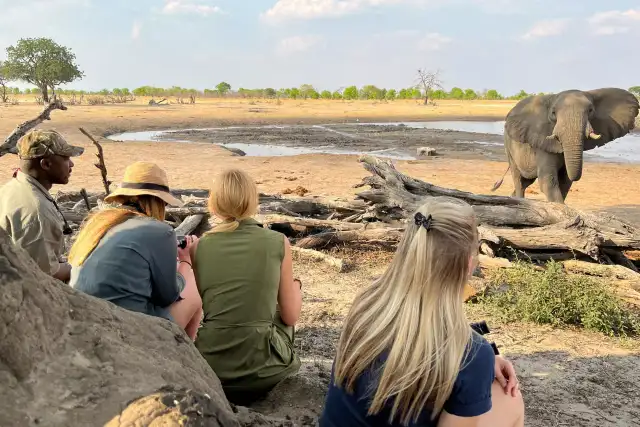
Top safari activities in Hwange National Park include sunset hides, full-day drives, night safaris, birding, walking tours, and cultural visits on a Zimbabwe safari
The top safari activities to do in Hwange National Park on a Zimbabwe safari include unique wildlife and cultural experiences that bring the park to life. From sitting quietly in a Sunset Hide as elephants and buffalo gather at waterholes, to spending a full day at Ngweshla Pan watching lions and antelope under the shade of ebony trees, each activity offers deep immersion. Night drives with red spotlights reveal nocturnal species, while walking safaris teach tracking and bush skills. Early morning Big 5 drives highlight predator-prey dynamics, and late dry season birding showcases flocks of storks and bee-eaters. You can also witness elephants along ancient migration routes, sleep out in bush camps under the stars, support conservation at vulture restaurants, and connect with local communities through cultural visits. Every Zimbabwe safari in Hwange blends wildlife, conservation, and human stories into a rich, memorable experience.
Our safari packages
The Best Safari Activities to Do in Hwange National Park on Zimbabwe Safari
1. The Sunset Hide at a Pumped Waterhole
On a Zimbabwe safari, the Sunset Hide at Hwange’s pumped pans is a rare chance to sit at eye-level with wildlife. As elephants, buffalo, giraffe, and zebra arrive to drink, the atmosphere becomes alive with sounds of splashing water and rumbling bellies. The underground or camouflaged hides, such as Dete Vlei or Kennedy 1 Pan, place you right in the middle of the action. Watching herds gather against the backdrop of a glowing sunset creates a powerful sense of connection to nature. This Zimbabwe safari activity is perfect for travelers who want to slow down, observe quietly, and appreciate the rhythm of animals at one of Africa’s most important dry-season lifelines.
2. A Full-Day Picnic Game Drive to Ngweshla Pan
A Zimbabwe safari to Ngweshla Pan is all about patience and immersion in wildlife behavior. Leaving at sunrise with a packed breakfast and lunch, you spend the day under a towering ebony tree, watching lions rest, elephants play, and antelope move in and out. The constant flow of animals makes Ngweshla the crown jewel of Hwange’s waterholes. This Zimbabwe safari experience is less about rushing from sighting to sighting and more about staying put, allowing nature to unfold naturally. It’s ideal for travelers who value deep observation, photography opportunities, and the chance to witness predator-prey dynamics in one of Hwange’s most productive areas.
3. Night Game Drive with a Red Spotlight
A Zimbabwe safari in Hwange’s private concessions offers the rare chance to explore after dark. Using a red-filtered spotlight that doesn’t disturb animals, you enter a world of nocturnal activity. Genets, springhares, and bushbabies leap through the trees, while civets’ glowing eyes shine back at you. On a lucky night, you may see a leopard stalking or lions beginning their hunt. This Zimbabwe safari activity reveals a side of the bush most travelers never see, where silence and anticipation heighten every moment. It’s a unique way to understand how wildlife adapts to the night, adding depth to your overall safari experience.
4. Walking Safari with a Professional Guide
A Zimbabwe safari in Hwange is not only about vehicles walking safaris bring you closer to the details of the bush. Guided by an armed professional, you learn to read spoor, dung, and alarm calls that reveal animal movements. The focus is on safety and education, not chasing danger. You’ll discover termite mounds, medicinal plants, and the “bush telegraph” of birds and baboons. This Zimbabwe safari activity sharpens your senses, teaching you how the ecosystem communicates. It’s a slower, more mindful way to experience Hwange, perfect for travelers who want to understand the land beyond big game sightings.
5. The Big 5 Morning Drive
On a Zimbabwe safari, mornings are prime time for predators. Rising at 4:30 AM, you head into Hwange’s Main Camp or Sinamatella areas, where lion densities are high. This Zimbabwe safari drive often reveals prides feeding on kills made overnight, or hyenas scavenging in the early light. While rhinos are rare here, the focus is on predator-prey interactions that define the bush. Watching lions drag a carcass into the shade before the heat builds is a raw and educational moment. For travelers, this activity highlights the natural cycles of survival and offers some of the most dramatic wildlife viewing opportunities.
6. Birding at the Drying Pans Late Dry Season
A Zimbabwe safari in October or November brings birding to life at Hwange’s shrinking pans. At places like Shumba or Masuma, muddy puddles attract massive flocks of open-billed storks, yellow-billed kites, and carmine bee-eaters. This Zimbabwe safari activity is a feast for bird lovers, with constant movement and color. The sight of a secretary bird stalking snakes through short grass adds drama to the scene. Late dry season birding shows how Hwange supports diverse species even as water disappears. It’s a reminder that safaris aren’t only about big mammals—avian spectacles can be just as rewarding and visually striking.
7. The Elephant Highway Drive along the Railway Line
A Zimbabwe safari along Hwange’s disused railway line reveals ancient elephant pathways carved deep into the earth. Generations of elephants have used these corridors to move between Botswana and Hwange, creating a living highway. Parking your vehicle and watching family herds march single-file across the tracks is a powerful sight. This Zimbabwe safari activity emphasizes the continuity of wildlife traditions and the importance of migration routes. It’s a chance to witness elephants in their natural rhythm, highlighting how landscapes and animals remain connected through time. For travelers, it’s one of Hwange’s most memorable spectacles.
8. Visit the Bush Camp for a Sleep-Out
A Zimbabwe safari sleep-out in Hwange’s bush camps offers raw immersion in the wilderness. Spending a night on a raised platform or in a simple tent under mosquito netting, you fall asleep to lions roaring and hippos grunting near pans. This Zimbabwe safari activity strips away walls and comforts, leaving only stars, firelight, and the sounds of the wild. It’s not about luxury but about experiencing nature as it is. For travelers, the sleep-out provides perspective on how fragile yet powerful the bush can feel, making it a deeply personal highlight of any Hwange safari itinerary.
9. The "Vulture Restaurant" Experience (Conservation Activity)
A Zimbabwe safari in Hwange can include conservation-focused activities like the vulture restaurant. Here, carcasses are placed at designated sites to monitor endangered vulture populations. Watching hundreds of vultures spiral down in a tornado-like descent is both dramatic and educational. This Zimbabwe safari experience highlights the importance of protecting scavengers, which play a vital role in the ecosystem. It’s not a spectacle of gore but a chance to understand conservation challenges and successes. For travelers, it adds meaning to their safari, showing how tourism can support research and species survival in Hwange National Park.
10. The Local Village Visit (Cultural Safari)
A Zimbabwe safari around Hwange isn’t only about wildlife community visits add a human dimension. Villages near Dete welcome travelers to see daily life, from grinding maize to cooking traditional sadza. This Zimbabwe safari activity connects conservation with culture, showing how communities live alongside the park. Visiting schools and meeting locals provides perspective on the challenges and benefits of conservation. For travelers, it’s a chance to learn respectfully and add depth to their safari photographs. It ensures that a Zimbabwe safari is not just about animals but also about people, traditions, and coexistence with nature.
Best time to visit Hwange National park for Zimbabwe safari
The best time to visit Hwange National Park for a Zimbabwe safari is during the dry season from July to October, when animals gather in large numbers at the man-made waterholes, making wildlife viewing highly rewarding. This period offers excellent chances to see elephants, lions, buffalo, and other species in concentrated areas, with clear skies and minimal vegetation improving visibility. A Zimbabwe safari in these months also provides dramatic predator-prey interactions as food and water become scarce. For bird lovers, the green season from November to March brings migratory species and newborn animals, though game viewing is harder due to thicker bush. Overall, the dry season is ideal for wildlife density, while the green season suits travelers seeking birding and landscapes.
How to get there to Hwange National park for Zimbabwe safari
The easiest way to reach Hwange National Park for a Zimbabwe safari is via Victoria Falls International Airport, followed by a 2–3 hour road transfer or a short charter flight directly into Hwange’s airstrips. Hwange National Park is located about 200 km south of Victoria Falls and is accessible by road, rail, or air. Most international travelers fly into Victoria Falls International Airport (VFA), which connects well with Johannesburg and Harare. From Victoria Falls, you can take a road transfer (about 2–3 hours) to Hwange’s Main Camp, though the road can be rough in places. For faster access, light aircraft charters operated by Safari Logistics or Wilderness Air fly directly into Hwange’s private airstrips near lodges such as Linkwasha, Bomani, or Somalisa, cutting travel time to about an hour. Another unique option is the Elephant Express rail transfer, which combines a short road trip with a scenic train ride into the park. A Zimbabwe safari to Hwange is therefore best planned by combining an international flight into Victoria Falls with either a road transfer or charter hop, depending on your budget and lodge location
Places to stay in Hwange National park for Zimbabwe safari
Hwange National Park offers a wide range of accommodation options for a Zimbabwe safari, catering to different budgets and preferences. Luxury travelers can stay at camps such as Somalisa, Linkwasha, or The Hide, which provide tented suites, private decks, and close access to waterholes where elephants gather. Mid-range options like Camelthorn Lodge or Bomani Tented Camp combine comfort with authentic bush experiences, often including guided walks and community visits. For budget-conscious visitors, Hwange’s Main Camp and Sinamatella Camp offer simple chalets and camping facilities inside the park. Choosing where to stay on a Zimbabwe safari depends on whether you want exclusivity, convenience, or affordability, but all options ensure direct access to Hwange’s incredible wildlife.
Booking Zimbabwe safari with Lamz Tours and Travel
Booking a Zimbabwe safari with Lamz Tours and Travel is simple and designed to give travelers maximum value and peace of mind. As specialists in East and Southern Africa, Lamz Tours and Travel handles everything from personalized itineraries in Hwange National Park to lodge reservations, park permits, and transfers from Victoria Falls or Harare. A Zimbabwe safari booked through Lamz Tours and Travel ensures you enjoy expertly guided game drives, walking safaris, and cultural visits, all tailored to your interests and budget. Their team focuses on authentic experiences, responsible tourism, and supporting local communities, making your Zimbabwe safari not just a wildlife adventure but also a meaningful contribution to conservation. With professional planning and on-the-ground expertise, your Hwange safari becomes smooth and rewarding.
Ready to plan your safari?
Talk to a Lamz Tours specialist and get a tailor-made quote.
Make an enquiry