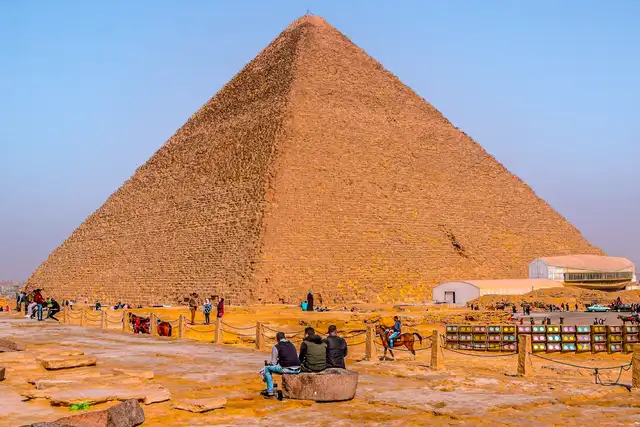
Explore the best Pharaonic wonders to experience on Best Egypt Tours, from the Giza pyramids and Luxor temples to Abu Simbel and the Valley of the Kings.
Ancient Egypt built on a scale that still stops people in their tracks thousands of years later. The monuments left behind by the pharaohs are not simply old buildings worth a quick photograph. They are statements of power, belief, and engineering ambition that the modern world has never quite managed to fully explain. Travellers who build Best Egypt Tours around these sites come away with a sense of having stood inside one of the great chapters of human history. The pharaonic world is spread across the length of the country, and Best Egypt Tours that follow it from north to south reveal a civilisation that grew, changed, and left its mark everywhere it went.
Popular Egypt Tour Packages
Best Pharaonic Wonders to Experience on Best Egypt Tours
1. The Pyramids of Giza
The Pyramids of Giza are the only surviving wonder of the ancient world and they earn that status completely. Standing at the base of the Great Pyramid of Khufu, the largest of the three, gives a physical sense of scale that no photograph prepares you for. The pyramid was built using over two million stone blocks, many weighing several tonnes, and it stood as the tallest structure on earth for nearly four thousand years. The Sphinx sits nearby, carved from a single limestone outcrop, watching over the plateau with an expression that has prompted more questions than answers across centuries of study. Best Egypt Tours that begin at Giza start with the strongest possible opening, and the plateau at dawn before the crowds arrive gives Best Egypt Tours a moment of genuine stillness beside one of the most visited sites on earth.
2. Karnak Temple Complex in Luxor
Karnak is the largest religious building ever constructed and walking through it for the first time is an exercise in adjusting your sense of scale repeatedly. The Hypostyle Hall alone contains one hundred and thirty four columns, the tallest reaching twenty one metres, arranged in rows so dense that the light between them falls in dramatic shafts that change throughout the day. Construction at Karnak began around four thousand years ago and continued under successive pharaohs for over one thousand years, which means the complex carries layers of history that reward careful attention rather than a hurried walk through. Best Egypt Tours that allocate a proper half day to Karnak give travellers the time to move through it without rushing, and the sound and light show held here in the evenings adds another dimension to Best Egypt Tours that include an overnight stay in Luxor.
3. Luxor Temple
Luxor Temple sits in the heart of modern Luxor city, and the contrast between the ancient structure and the surrounding streets gives visiting it a quality that the more isolated sites do not share. Built primarily by Amenhotep III and Ramesses II, the temple was dedicated to the rejuvenation of kingship and was used for the annual Opet Festival that connected the pharaoh to divine power. The Avenue of Sphinxes that once connected Luxor Temple to Karnak has been partially excavated and restored, giving visitors a sense of the ceremonial scale of ancient Thebes. Best Egypt Tours that include both Karnak and Luxor Temple in the same day give travellers a complete picture of the ancient city, and the temple illuminated at night is one of the more atmospheric experiences available on Best Egypt Tours.
4. Valley of the Kings, Luxor
The Valley of the Kings sits on the west bank of the Nile opposite Luxor and holds the tombs of sixty three pharaohs and nobles from the New Kingdom period. The tombs are cut directly into the limestone cliffs and decorated with extraordinarily detailed paintings and hieroglyphic texts that were intended to guide the deceased through the afterlife. Tutankhamun's tomb, the most famous of all despite being one of the smallest, still contains the young king's mummified remains and gives Best Egypt Tours a connection to the discovery story that captured the world's imagination in 1922. The tomb of Seti I is considered the most elaborately decorated in the valley. Spending a morning moving between several tombs on Best Egypt Tours gives a clear sense of how the pharaonic vision of death and resurrection evolved across different reigns.
5. Abu Simbel
Abu Simbel sits in the far south of Egypt near the Sudanese border and the effort required to reach it is repaid immediately upon arrival. The two temples were carved directly into a sandstone cliff by Ramesses II in the thirteenth century BC, with four colossal seated figures of the pharaoh guarding the entrance to the main temple at a height of twenty metres each. The interior walls are covered in battle scenes from the Battle of Kadesh, depicted with a confidence and detail that makes them among the most impressive reliefs in Egypt. What makes Abu Simbel additionally remarkable is that the entire complex was physically relocated in the 1960s to save it from the rising waters of Lake Nasser. Best Egypt Tours that make the journey to Abu Simbel give travellers a site that rewards the distance, and few experiences on Best Egypt Tours leave a stronger impression.
6. The Temple of Hatshepsut in Luxor
The mortuary temple of Hatshepsut at Deir el-Bahari is one of the most architecturally distinctive monuments in Egypt. Built for the female pharaoh who ruled Egypt for over twenty years during the Eighteenth Dynasty, the temple rises in three colonnaded terraces against the dramatic backdrop of the Theban cliffs. Hatshepsut was one of the most successful rulers in Egyptian history, overseeing significant building projects and trade expeditions, yet her successor attempted to erase her from the historical record by defacing her images throughout the temple. The story behind the building gives it a human drama that adds to the experience considerably. Best Egypt Tours that include the west bank of Luxor should give Hatshepsut's temple the same time as the Valley of the Kings, and seeing both on the same day gives Best Egypt Tours a satisfying and complete west bank experience.
7. The Egyptian Museum in Cairo
The Egyptian Museum on Tahrir Square in Cairo holds the largest collection of pharaonic artefacts in the world, and no amount of time at the outdoor sites fully prepares visitors for what is inside. The treasures of Tutankhamun occupy an entire floor, including the famous gold death mask that remains one of the most recognisable objects from the ancient world. Mummies of some of Egypt's greatest pharaohs including Ramesses II are displayed in the Royal Mummy Room. Best Egypt Tours that allocate a full morning or afternoon to the museum give travellers the context to understand everything they see at the outdoor sites more fully. The new Grand Egyptian Museum near Giza is also worth including on Best Egypt Tours for its extraordinary scale and modern presentation of pharaonic history.
Best Time to Visit Pharaonic Sites on Best Egypt Tours
October to April is the most comfortable period for visiting pharaonic sites because temperatures across Upper Egypt and the desert plateau around Giza are significantly cooler than the summer months. Sites like Abu Simbel and the Valley of the Kings involve considerable time outdoors and under direct sun, which makes visiting them in summer genuinely demanding. Winter days are clear and bright, giving excellent light for photography across all the major monuments. The Abu Simbel Sun Festival on February 22nd and October 22nd, when sunlight penetrates the inner sanctuary and illuminates the statues inside, draws visitors specifically for this event. Planning Best Egypt Tours around October to April gives the pharaonic section of the itinerary the most comfortable and rewarding conditions on Best Egypt Tours.
How to get to the Pharaonic Sites on Best Egypt Tours
Cairo is the natural starting point for pharaonic Egypt and is well connected internationally with direct flights from most major cities. The pyramids of Giza are accessible directly from Cairo within thirty minutes. Luxor has its own airport with domestic connections from Cairo and international flights from several European cities, making it practical to fly directly into the heart of pharaonic Upper Egypt. Abu Simbel is reached by a short domestic flight from Aswan, which sits about two hundred and eighty kilometres to the north. Best Egypt Tours that move from Cairo to Luxor and then south to Aswan and Abu Simbel follow the natural geography of pharaonic Egypt and give Best Egypt Tours a logical and satisfying progression through the country.
Things to Do on Best Egypt Tours at Pharaonic Sites
The pharaonic sites keep travellers engaged well beyond the monuments themselves. A felucca boat ride on the Nile between Luxor and Aswan gives Best Egypt Tours a relaxed river perspective on the landscape the ancient Egyptians built beside. Hot air balloon flights over the west bank of Luxor at sunrise provide an aerial view of the Valley of the Kings and the surrounding monuments that is genuinely extraordinary. Horse and carriage rides between the Luxor Temple and Karnak in the evening cover the same ceremonial ground the ancient processions once used. Visiting a local alabaster workshop near Luxor shows a craft tradition that has continued since pharaonic times, and sound and light shows at Karnak and the pyramids of Giza add an atmospheric evening dimension to Best Egypt Tours.
What to Carry for Pharaonic Sites on Best Egypt Tours
Comfortable walking shoes are the most important practical item for pharaonic site visits because the terrain at most monuments involves uneven stone, sandy paths, and considerable distances on foot. Lightweight breathable clothing suits the daytime heat across most of the year while a layer for cooler evenings is useful between October and February. Sunscreen and a hat are essential at open sites like Giza, Abu Simbel, and the Valley of the Kings where shade is limited. Carrying water throughout the day matters more than most visitors anticipate at these locations. A small torch is useful inside the darker tomb chambers in the Valley of the Kings where lighting can be limited on Best Egypt Tours, and a camera with enough storage for a full day of extraordinary sites is worth preparing before any Best Egypt Tours.
Health and Safety on Best Egypt Tours at Pharaonic Sites
Pharaonic sites are safe and well managed destinations when visited with basic preparation and awareness. The heat at open sites like Abu Simbel and Giza is the most significant physical consideration, particularly between May and September when temperatures reach levels that cause genuine discomfort without proper protection. Staying hydrated, wearing sun protection, and avoiding the midday hours at exposed sites are the most practical health measures on Best Egypt Tours. Inside the tombs of the Valley of the Kings, ventilation is limited and some chambers feel confined, which matters for visitors with claustrophobia. Using licensed guides and reputable transport throughout keeps Best Egypt Tours straightforward and well supported from one site to the next on Best Egypt Tours.
Where to Stay on Best Egypt Tours near Pharaonic Sites
Cairo has a broad range of accommodation from large international hotels near the Giza plateau to well-positioned city centre properties close to the Egyptian Museum. Staying on the Giza side of Cairo puts Best Egypt Tours within easy reach of an early morning visit to the pyramids before the day's crowds arrive. Luxor offers hotels on both the east and west bank of the Nile, and staying on the west bank places travellers directly beside the Valley of the Kings and the Temple of Hatshepsut. Aswan is the natural base for Abu Simbel day trips and has comfortable hotels along the Nile Corniche with views across to the west bank. Choosing accommodation close to the sites you prioritise most gives Best Egypt Tours a practical daily structure that maximises time at the monuments on Best Egypt Tours.
Why Book with Lamz Tours and Travel for Best Egypt Tours
The pharaonic sites of Egypt reward travellers who approach them with the right knowledge, the right timing, and enough time at each location to absorb what they are seeing. The team designs Best Egypt Tours that move through the country's ancient monuments with a pace and structure that does justice to each site rather than rushing between them. We combine Giza, Luxor, Aswan, and Abu Simbel with the cultural and coastal experiences that make Egypt a complete destination, selecting accommodation, guides, and transport that suit each stage of the journey. Whatever draws you to pharaonic Egypt, we build Best Egypt Tours around giving you the best possible experience of it from the first pyramid to the last temple on Best Egypt Tours.
Ready to plan your safari?
Talk to a Lamz Tours specialist and get a tailor-made quote.
Make an enquiry