A Kenya Safari that only stays in Nairobi misses the drama of the Great Rift Valley and the vastness of the Masai Mara. Hidden along this classic budget road route is a complete experience—from escarpment viewpoints to Big Five plains—offering a compact and affordable look at Kenya's wildlife.
On this Kenya Safari, experiencing the route—from scenic drives through the Rift Valley to full-day game drives in the Masai Mara—shows you that a budget trip can still deliver rich wildlife encounters and a deep sense of wilderness. Whether you stay at a budget tented camp or a basic lodge outside the reserve, these accommodation choices keep costs down without sacrificing access to the park. Many Kenya Safari itineraries include this classic 3-day route, proving that time and budget are no barrier to a memorable safari.
Popular Kenya Safari Packages
Best of 3 Days Masai Mara Budget Safari
Kenya Safari: Day 1 — Nairobi to Masai Mara National Reserve
On a Kenya Safari, Day 1 begins with an early morning pickup from your Nairobi hotel or the airport. You head south through the Great Rift Valley, with a stop at the Rift Valley Viewpoint to take in the massive geological feature said to be visible from space. The drive covers roughly 270 kilometres and takes 5 to 6 hours on tarmac and murram roads, arriving at the Masai Mara National Reserve in time for lunch.
After checking into your budget tented camp or basic lodge, set off on an afternoon game drive. The Masai Mara covers 1,510 square kilometres, with open plains, riverine woodland, and the winding channels of the Mara River and Talek River. It is home to the Big Five (buffalo, rhino, elephant, lion, leopard) and is the stage for the Great Migration from July to October. Even on a budget safari, elephant, giraffe, zebra, and predators are commonly seen. Return to camp for dinner and overnight.
Kenya Safari: Day 2 — Full Day in the Masai Mara
On a Kenya Safari, Day 2 is a full-day game drive in the Masai Mara, with an option to take a picnic lunch so you can maximize your time in the reserve. This is the core of the budget safari—spending as much time as possible in the park without paying for extras.
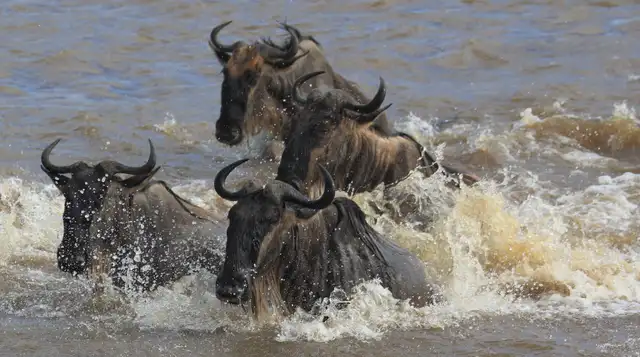
The Masai Mara is famous for its big cat populations, holding one of Africa's highest densities of lion. Beyond the Big Five, it is home to Masai giraffe, baboon, warthog, black-backed jackal, spotted hyena, topi, impala, and hartebeest. Cheetah and leopard are present in good numbers, though harder to spot. If you visit between July and October, the wildebeest crossing of the Mara River is an unmissable spectacle—tens of thousands of wildebeest leaping into the water while Nile crocodiles lie in wait.
Optional activities include a Maasai village visit (at extra cost, usually around USD 20–30), offering a cultural experience and a chance to learn about Maasai culture, traditional dance, and daily life. A hot air balloon safari is also available at a significant extra cost, usually around USD 450–500, and is rarely part of a budget itinerary.
Kenya Safari: Day 3 — Masai Mara to Nairobi
On a Kenya Safari, Day 3 begins with a final morning game drive, followed by breakfast and check-out. You then drive back to Nairobi, arriving in the afternoon around 14:00–15:00. The safari ends at your Nairobi hotel or the airport.
Best Time to Travel on a Budget
On a Kenya Safari, this 3-day budget route operates year-round, but the best value is during the low season from November to December and March to May, when lodge prices drop and crowds thin out. The high season from July to October coincides with the Great Migration and offers the best wildlife viewing, but accommodation costs rise significantly. January to March is a good compromise, with dry weather, good game viewing, and moderate prices.
What Is Included and Excluded on a Budget Safari
On a Kenya Safari, the cost of this 3-day budget road safari typically includes: park fees (non-resident), all game drive activities, accommodation in a budget tented camp or basic lodge, a professional driver/guide, all transport in a safari minivan with a pop-up roof, taxes, airport transfers, meals as per the itinerary, and drinking water.
The cost typically excludes: international flights, extra accommodation before or after the safari, tips (recommended at around USD 10 per person per day), personal items (souvenirs, travel insurance, visa fees), Maasai village visits, hot air balloon safari, and any government increases in taxes or park fees. Budget safaris often use shared vehicles and group departures, which keeps costs down but reduces flexibility
How to Keep Costs Down
On a Kenya Safari, a few simple choices keep a 3-day Masai Mara trip affordable. Travel in the low season when rates are lower. Choose a budget tented camp or basic lodge outside the reserve rather than a luxury lodge inside it. Join a group departure instead of a private safari. Skip optional extras like the hot air balloon safari and limit Maasai village visits to one. Carry your own snacks and water bottle to reduce incidental spending. Book through a reputable operator like Lamz Tours and Travel that offers transparent pricing and no hidden fees.
Why Book with Lamz Tours and Travel for Kenya Safari
Booking your Kenya Safari with Lamz Tours and Travel ensures this 3-day Masai Mara budget safari is seamless and unforgettable. Lamz Tours and Travel operates across multiple African countries, including Kenya, Tanzania, Uganda, Rwanda, Morocco, South Africa, Botswana, and Namibia. Our local guides know every viewpoint in the Great Rift Valley, the predator ranges of the Masai Mara, and the best spots for the Mara River crossing. We handle everything, including airport transfers, budget lodge selection, park fees, and private or shared transport. You focus on the wildlife and the scenery. We handle everything else.
Ready to plan your safari?
Talk to a Lamz Tours specialist and get a tailor-made quote.
Make an enquiry