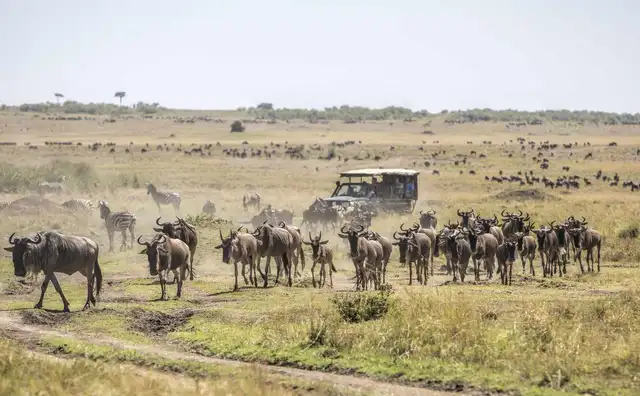
Masai Mara National Park safari guide, best time to visit, how to get there, top wildlife attractions, and must-do activities including the Great Migration.
Planning a Masai Mara National Park safari is one of the most rewarding decisions for wildlife lovers, photographers, and cultural travelers. This legendary reserve in southwestern Kenya is home to the Big Five, over 470 bird species, and the world-famous Great Migration. From July to October, millions of wildebeest and zebra cross the Mara River, often facing crocodiles and predators in dramatic scenes. But the Mara offers more than just seasonal spectacles year-round, you’ll find prides of lions, leopards in trees, elephants roaming the plains, and vibrant birdlife. Whether you’re after predator action, peaceful landscapes, or rare sightings, a Masai Mara National Park safari delivers consistent wildlife density and expert-guided experiences.
Beyond game drives, the park and its surrounding conservancies offer balloon safaris, walking tours, night drives, and cultural visits to Maasai villages. You can fly in from Nairobi or drive in via one of several gates, with accommodations ranging from luxury tented camps to eco-lodges. Choosing the right time to visit whether peak migration season or quieter shoulder months affects pricing, crowd levels, and wildlife behavior. This guide covers everything you need to know: when to go, how to get there, what to see, where to stay, and how to plan responsibly. A well-prepared Masai Mara National Park safari ensures value, safety, and unforgettable wildlife moments
Best Kenya safari packages
Best Time for Masai Mara National Park Safari
The Great Migration the Top Choice from July – October
If your goal is to see dramatic river crossings, July to October is the best time for a Masai Mara National Park safari. During these months, millions of wildebeest and zebra arrive from the Serengeti, often crossing the Mara River where crocodiles wait. The wildlife action is intense, and predator sightings are frequent. Masai Mara National Park safari tours during this period are in high demand, so prices rise and popular areas get crowded. Booking early is important, and choosing camps near crossing points can improve your chances of seeing the action without long drives.
Shoulder Seasons from January – February and June
January to February and June offer a quieter Masai Mara National Park safari experience with fewer visitors and lower costs. In January and February, the short rains leave behind fresh grazing, and it’s calving season in the Serengeti, which means predators are active. While the migration herds are not in the Mara during this time, general wildlife viewing remains strong. June is dry and pleasant, making it a good time to explore without the peak-season rush. Masai Mara National Park safari operators often offer better deals during these months, and guides have more flexibility to avoid crowded areas.
Low Season from April – May and Long Rains, November Short Rains
April, May, and November are considered low season for a Masai Mara National Park safari. These months bring rain, which can make roads muddy and limit access to some areas. However, prices are at their lowest, and the park is quiet with very few tourists. Wildlife is still present, but animals are more spread out due to abundant water and vegetation. For travelers who don’t mind unpredictable weather, a Masai Mara National Park safari during the low season offers privacy and a chance to see the park in its greenest state. Some lodges may close, so check availability before booking.
Choosing the Right Time Based on Your Priorities
The best time for a Masai Mara National Park safari depends on what you want to see and how you prefer to travel. If witnessing the Great Migration is your top priority, aim for July to October and prepare for higher costs. For fewer crowds and good wildlife viewing, January to February or June are smart choices. Budget travelers or photographers looking for vibrant landscapes may prefer the low season, despite the rain. No matter when you go, a Masai Mara National Park safari can be rewarding if planned with the right expectations and a reliable operator
How to get there to Masai mara national park safari
Getting to Masai Mara National Park safari typically starts with arriving in Nairobi, Kenya’s capital. Most international travelers fly into Jomo Kenyatta International Airport (NBO), which is well-connected to major cities worldwide. From Nairobi, you can reach the park by road or air. Driving takes about 5 to 6 hours, depending on the gate you enter and road conditions. It’s a scenic but bumpy ride, so 4x4 vehicles are recommended. Many Tanzania safari tours that include Masai Mara start in Arusha or Kilimanjaro and connect through Nairobi, especially for travelers combining Kenya and Tanzania itineraries.
For faster access, domestic flights from Nairobi’s Wilson Airport to various airstrips inside Masai Mara are available daily. These flights take around 45 minutes and land close to lodges and camps, minimizing transfer time. Masai Mara National Park safari packages often include these flights, especially for luxury or fly-in safaris. Airstrips like Keekorok, Ol Kiombo, and Musiara serve different regions of the park, so choosing the right one depends on your lodge location. Booking through a safari operator ensures smooth coordination between flights, transfers, and accommodations.
Once inside the park, most Masai Mara National Park safari activities are conducted in open-sided 4x4 vehicles with professional guides. Game drives are the main way to explore, but some lodges offer walking safaris or hot air balloon rides. Park entry fees are paid per day, and guides handle all logistics. It’s important to follow park rules, stay inside vehicles unless instructed, and respect wildlife distances. Whether you arrive by road or air, planning with a reliable operator helps avoid delays and ensures your Masai Mara National Park safari runs smoothly from start to finish
Best attractions to see on Masai mara national park safari
Wildlife is the heart of every Masai Mara National Park safari, and the Big Five lion, leopard, elephant, buffalo, and the elusive black rhino are top priorities for most visitors. Lions are commonly seen in prides, often resting or hunting in the open plains. Leopards are harder to spot but are frequently found lounging in trees, while elephants and buffalo roam in large herds. Black rhinos are rare and usually seen in protected zones. A Masai Mara National Park safari with a skilled guide increases your chances of seeing all five, especially during early morning and late afternoon drives when animals are most active.
From July to October, the Great Migration transforms the landscape as thousands of wildebeest and zebra cross the Mara River, often facing crocodiles and predators. This is also the best time to see big cats in action cheetahs chasing prey, hyenas scavenging, and lions staking out territory. Beyond the headline species, a Masai Mara National Park safari offers sightings of hippos in rivers, giraffes browsing treetops, and over 470 bird species including raptors, storks, and rollers. Whether you're focused on predators, herbivores, or birdlife, the diversity and density of wildlife make every drive rewarding
Best things to do on Masai mara national park safari
Witness the Great Wildebeest Migration and River Crossings
The Great Migration is the top highlight of any Masai Mara National Park safari, especially from July to October. During this time, thousands of wildebeest and zebra cross the Mara River, often facing crocodiles and predators. It’s a raw and intense wildlife moment that draws visitors from around the world. A Masai Mara National Park safari during this season offers high chances of seeing dramatic crossings, predator-prey interactions, and large herds moving across the plains. Staying near the river and planning multiple game drives increases your chances of witnessing this natural event up close.
Track the Big Cats (Lions, Leopards, Cheetahs)
Masai Mara National Park safari tours are famous for big cat sightings, making it one of the best places in Africa to see lions, leopards, and cheetahs. Lions are often seen in prides, while leopards rest in trees and cheetahs hunt in open areas. Expert guides play a key role in tracking these predators, using fresh tracks and radio calls to locate them. A Masai Mara National Park safari focused on big cats should include early morning drives and time in conservancies where off-road tracking is allowed. Patience and timing are essential for close and safe viewing.
Take a Hot Air Balloon Safari at Dawn
A hot air balloon ride is a peaceful way to start your Masai Mara National Park safari day. At sunrise, you’ll float silently over the plains, watching wildlife wake up and move through the grasslands. The aerial view offers a unique perspective, especially for spotting elephants, giraffes, and antelope. Most balloon safaris end with a bush breakfast, adding a relaxed finish to the experience. A Masai Mara National Park safari that includes ballooning must be booked in advance due to limited availability. It’s a great option for couples, photographers, or anyone wanting a quiet moment above the action.
Go on a Guided Nature Walk in a Conservancy
Walking safaris are only available in private conservancies bordering the reserve, but they add depth to your Masai Mara National Park safari. Led by an armed ranger and Maasai guide, you’ll explore on foot and learn about animal tracks, insects, plants, and bush sounds. It’s a slower, more detailed way to understand the ecosystem. A Masai Mara National Park safari that includes walking should be planned with safety in mind, and guests must follow guide instructions closely. This activity suits travelers who want to connect with nature beyond the vehicle and appreciate the smaller elements of the wild.
Experience a Night Game Drive
Night drives reveal a different side of the bush and are exclusive to conservancies. A Masai Mara National Park safari that includes this activity lets you see nocturnal animals like aardvarks, bushbabies, genets, and predators on the move. Using spotlights, guides search for eye reflections and movement in the dark. It’s a quiet and exciting way to explore after sunset. A Masai Mara National Park safari with night drives offers a chance to see rare species and behaviors not visible during the day. Dress warmly and stay alert night drives require focus and respect for the animals’ space.
Visit an Authentic Maasai Village
Cultural visits add meaning to your Masai Mara National Park safari. A guided visit to a Maasai village (Manyatta) offers insight into traditional life, including dress, dance, and pastoral practices. You’ll learn about cattle herding, home building, and social customs. A Masai Mara National Park safari that includes this experience should be respectful and arranged through operators who work closely with local communities. Ask questions, listen actively, and consider buying handmade crafts to support families. It’s a chance to understand the human side of the landscape and how the Maasai live alongside wildlife.
Enjoy a Classic Sundowner
A sundowner is a simple but memorable part of any Masai Mara National Park safari. As the sun sets, your guide sets up drinks often gin and tonic at a scenic spot overlooking the plains or river. It’s a quiet moment to reflect, watch the light change, and enjoy the sounds of the bush. A Masai Mara National Park safari that includes sundowners often times them after afternoon game drives, allowing guests to relax and take in the view. Some lodges offer full setups with snacks, while others keep it informal. It’s a tradition that marks the rhythm of safari life.
Birdwatching for Raptors and Savanna Specials
With over 470 bird species, Masai Mara National Park safari tours are excellent for birdwatching. Raptors like the Secretary Bird, Bateleur Eagle, and vultures are common, along with colorful species like the Lilac-breasted Roller and Superb Starling. A Masai Mara National Park safari focused on birding should include binoculars, a checklist, and a guide who knows bird calls and nesting areas. Early morning drives and visits to riverbanks or wooded areas increase sightings. Birdwatching adds variety to your safari and helps you appreciate the park’s ecological balance beyond large mammals.
Stay at a Tented Camp for an Authentic Experience
Sleeping in a tented camp is part of the adventure on a Masai Mara National Park safari. These camps offer comfort beds, bathrooms, and meals while keeping you close to nature. At night, you might hear lions roar or hyenas call, adding to the experience. A Masai Mara National Park safari with tented accommodation blends luxury with the raw sounds and smells of the bush. Choose camps with good reviews, safety standards, and proximity to wildlife areas. It’s a way to stay immersed in the environment without sacrificing comfort or security.
Focus on the Little Five and the Ecosystem
While most travelers chase the Big Five, the Little Five offer a fun twist on your Masai Mara National Park safari. These include the Ant Lion, Elephant Shrew, Rhinoceros Beetle, Buffalo Weaver, and Leopard Tortoise. Spotting them requires sharp eyes and a guide who knows where to look. A Masai Mara National Park safari that includes this focus helps you appreciate the park’s biodiversity and the role small creatures play in the ecosystem. It’s a great way to engage kids, photographers, or anyone interested in learning beyond the obvious
How long to spend on A Masai Mara National Park safari
Most travelers spend 3 to 5 days on a Masai Mara National Park safari to enjoy meaningful wildlife viewing without feeling rushed. This allows time for multiple game drives, chances to see the Big Five, and possibly witness the Great Migration if timed right. A 3-day safari covers the essentials, while 4 to 5 days offer flexibility to explore conservancies, add activities like balloon rides or night drives, and avoid peak-hour crowds. If combining with other parks or a beach extension, Masai Mara fits well into a 7 to 10-day Kenya itinerary. The key is to balance drive time, rest, and wildlife density staying longer improves sightings and reduces pressure to chase everything in one day
Budget cost for A Masai Mara National Park safari
Spending on a Masai Mara National Park safari depends on your travel style, with costs ranging from $250 to $1,500 per person per day. Budget safaris with shared vehicles and basic lodges start around $250–$400, while mid-range options with private guides and comfortable camps average $500–$800. Luxury safaris, including fly-in access, exclusive tented camps, and personalized service, can reach $1,000–$1,500 daily. Prices also vary by season July to October (Great Migration) is the most expensive, while April to May (rainy season) offers lower rates. To manage costs, book early, travel in shoulder seasons, and choose packages that include park fees, transfers, and meals. A reliable operator ensures value and avoids hidden expenses
Pro tips for Masai Mara National Park safari
To get the most out of your Masai Mara National Park safari, book early especially for the Great Migration season, as top lodges and guides fill up months in advance. Always choose a reputable safari operator who understands the terrain, handles logistics, and works with skilled guides for a safe and well-organized experience. Tipping is part of the culture; your guide and camp staff play a major role in your trip, so show appreciation for good service. Lastly, be patient wildlife doesn’t follow a schedule, and some of the best sightings happen when you wait quietly and let nature unfold
Best health, safety and cultural tips for Masai mara National Park safari
Health and safety are key when planning a Masai Mara National Park safari. Before traveling, consult your doctor about recommended vaccinations like yellow fever, hepatitis A and B, and typhoid, and consider malaria prevention. Carry insect repellent, sunscreen, and a basic medical kit with painkillers, antihistamines, and rehydration salts. Drink bottled or filtered water and avoid raw foods in remote areas. Always follow your guide’s instructions during game drives and walking safaris wildlife is unpredictable, and staying inside the vehicle or on marked paths is essential. Travel insurance that includes medical evacuation is strongly advised, especially if visiting conservancies or combining with other parks
How to involve responsibly on Masai mara National Park safari
To involve responsibly on a Masai Mara National Park safari, choose operators who support conservation and work closely with local communities. Stay in lodges or camps that employ Maasai staff, use eco-friendly practices, and contribute to wildlife protection. Follow park rules don’t litter, stay in vehicles unless guided otherwise, and avoid disturbing animals. Respect cultural boundaries during village visits by asking permission before taking photos and avoiding intrusive behavior. Limit noise during game drives and avoid chasing wildlife for better views. Responsible involvement ensures your Masai Mara National Park safari benefits both the environment and the people who call it home
What to bring for a Masai mara National Park safari
For a Masai Mara National Park safari, pack light but smart. Bring neutral-colored clothing (avoid bright colors and camouflage), a wide-brim hat, sunglasses, and sunscreen for sun protection. Include a warm layer for chilly mornings and evenings, plus a waterproof jacket in case of rain. Comfortable closed shoes are essential for game drives and optional walks. Don’t forget binoculars, a camera with extra batteries, insect repellent, and a small medical kit with personal medications. A reusable water bottle, power bank, and travel documents (passport, insurance, permits) are also key. If visiting a Maasai village, modest attire shows respect. Stick to essentials that support comfort, safety, and wildlife viewing
Top places to stay in on Masai mara National Park safari
Top places to stay on a Masai Mara National Park safari include Angama Mara, perched above the Great Rift Valley with sweeping views and direct access to the Mara Triangle, and Mara Plains Camp, known for its exclusivity and access to the Olare Motorogi Conservancy. Kichwa Tembo Tented Camp offers a classic safari feel with excellent game viewing nearby, while Elewana Sand River Mara provides elegant tented suites near key migration routes. Naboisho Camp and Basecamp Explorer are ideal for travelers seeking strong community ties and access to walking safaris and night drives. Each of these lodges offers prime wildlife access, professional guiding, and thoughtful service that enhances the overall safari experience
Booking a Masai mara National Park safari with Lamz Tours and Travel
Booking a Masai Mara National Park safari with Lamz Tours and Travel means working with a team that understands both the wildlife and the logistics behind a successful trip. We offer tailored packages that include game drives, cultural visits, balloon safaris, and stays in top-rated lodges or tented camps. Lamz Tours and Travel handles everything from airport transfers and park fees to guide coordination and daily planning, ensuring your experience is smooth and well-organized. Whether you're traveling solo, as a couple, or in a group, our expertise in East African safaris helps you choose the right season, activities, and accommodations for your needs. Early booking is recommended, especially for the Great Migration season
Ready to plan your safari?
Talk to a Lamz Tours specialist and get a tailor-made quote.
Make an enquiry