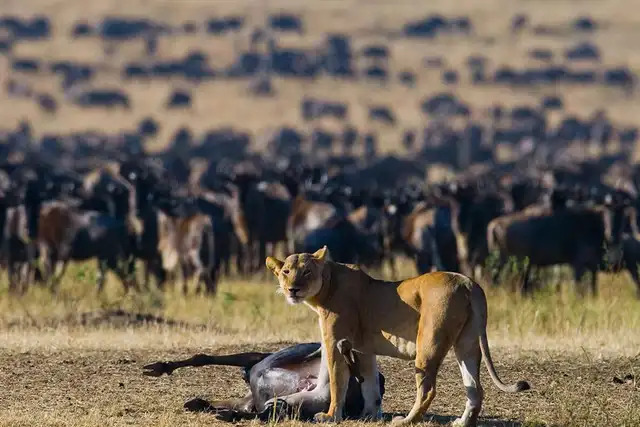
Witness Tanzania safari’s top events, wildebeest calving, Mara River crossings, and dry season wildlife action with clear, concentrated sightings.
Tanzania safari offers travelers a chance to experience some of the most dramatic wildlife events on the African continent. From the vast plains of the Serengeti to the enclosed ecosystem of Ngorongoro Crater, every destination provides unique highlights tied to seasonal cycles. The Great Migration is the centerpiece, with calving in Ndutu between January and March and river crossings in the northern Serengeti from July to October. These events showcase both the abundance of life and the harsh realities of survival, making them essential for anyone planning a Tanzania safari. Beyond migration, the dry season months from June to October concentrate animals around rivers and waterholes, ensuring reliable sightings of elephants, lions, giraffes, and plains game.
A Tanzania safari is not only about witnessing wildlife spectacles but also about practical planning and maximizing value. Timing is key, as aligning visits with calving, crossings, or dry season conditions ensures travelers see concentrated action without covering vast distances. Parks such as Tarangire and Manyara add diversity, with massive elephant herds and tree-climbing lions complementing Serengeti’s migration drama. Ngorongoro Crater provides dense predator-prey interactions in a compact area, ideal for shorter stays. By combining seasonal highlights with efficient logistics and varied activities, a Tanzania safari delivers both depth and balance, making it one of the most rewarding travel experiences in Africa.
Top Tanzania Safari packages
7-days-incredible-big-five-safaris-to-tanzania
7-days-incredible-big-five-safaris-to-tanzania
7-days-best-african-big-cats-safaris-on-a-tanzania-tour
7-days-best-serengeti-tour-and-zanzibar-beach-holiday-vacations
6-days-safari-to-tanzania-serengeti-migration-mara-river-crossing
5-days-circuit-wildlife-safari-in-tanzania
5-days-serengeti-safari-ngorongoro-and-lake-manyara-tanzania-tour-trip
4-days-tanzania-safari-tour-itinerary-and-magical-wildebeest-migrations
4-days-classic-tanzania-safari-to-tarangire-ngorongoro-and-manyara-with-hadzabe-tour
3-days-tanzania-safari-in-serengeti-national-park.
3-days-tarangire-ngorongoro-and-manyara-tanzania-safari-holiday
The Best Big 3 Timing Events of Tanzania Safari
The Great Wildebeest Migrtion Calving Season Late January – Mid to March
During late January to mid-March, the Ndutu Plains of the southern Serengeti and parts of the Ngorongoro Conservation Area transform into the birthing grounds for over half a million wildebeest calves. This period is one of the most dramatic stages of the Tanzania safari calendar, as predators such as lions, cheetahs, and hyenas take advantage of the vulnerable newborns. Travelers benefit from short grass plains that allow clear visibility, making photography and game viewing straightforward. For those planning a Tanzania safari, February is the peak month to witness calves taking their first steps while herds gather strength before moving north.
By mid-March, the herds begin to regroup and prepare for their long trek toward central Serengeti. This timing is crucial for visitors who want to see both the birthing spectacle and the early stages of movement. A Tanzania safari during this season offers nonstop action, with predators closely shadowing the herds and dramatic survival scenes unfolding daily. The sheer density of wildlife ensures travelers maximize their time in the field without needing to cover vast distances. For anyone seeking value in planning a Tanzania safari, this calving season provides unmatched opportunities for observing life, death, and resilience in one concentrated area.
The Great Wildebeest Migration River Crossings July – October
From July to October, the northern Serengeti and the Mara River become the stage for the most dramatic wildlife event in East Africa. Herds numbering in the thousands gather at the riverbanks, hesitating before plunging into crocodile-filled waters and battling strong currents. For travelers planning a Tanzania safari, this is the most intense part of the migration cycle, offering unmatched opportunities to witness survival struggles in real time. July and August mark the first crossings as herds arrive from central Serengeti, while September often delivers the most consistent activity. A Tanzania safari during this period ensures daily action with predators waiting on both sides of the river.
By October, the herds begin their southward movement, but crossings still occur, giving visitors a final chance to witness this spectacle. The unpredictability of when and where the wildebeest will cross adds to the raw drama, making patience and timing essential for travelers. A Tanzania safari in this season is not about covering wide distances but about positioning near the Mara River to maximize chances of seeing the chaos unfold. For those seeking value, this timing guarantees exposure to the most powerful scenes of predator-prey interaction, herd dynamics, and the resilience of wildlife under extreme pressure.
The Dry Season Safari Prime Time July – October and June
From June through October, Tanzania’s major parks such as Serengeti, Tarangire, Ngorongoro Crater, and Manyara offer the most reliable wildlife viewing conditions. Sparse vegetation and limited water sources concentrate animals around rivers and waterholes, making sightings predictable and rewarding. For travelers planning a Tanzania safari, this season is ideal for maximizing game drives without needing to cover long distances. Tarangire stands out with its large elephant herds, while Ngorongoro delivers dense predator and prey interactions in a compact area. A Tanzania safari during June is also valuable, offering similar conditions with fewer crowds compared to peak months.
July through October marks the core dry season, when wildlife densities are at their highest and visibility is unmatched. This timing ensures travelers can focus on quality sightings rather than searching across vast landscapes. A Tanzania safari in this window provides consistent opportunities to observe elephants, lions, giraffes, and plains game in open terrain. For those seeking practical value, the dry season balances excellent viewing with manageable logistics, making it one of the most dependable periods to plan. Whether in Serengeti for migration drama or Tarangire for elephants, a Tanzania safari during this season guarantees concentrated wildlife action
How to get to Tanzania safari for best timing events
Reaching Tanzania safari destinations for the best timing events is straightforward with multiple international flight options. Most travelers fly into Kilimanjaro International Airport near Arusha, which serves as the main gateway to Serengeti, Ngorongoro, Tarangire, and Manyara. From there, domestic flights connect directly to key airstrips inside the parks, saving time and maximizing wildlife viewing opportunities. Road transfers are also available, though they take longer and are best suited for those who want to see landscapes along the way. Planning ahead ensures smooth connections, especially during peak seasons like the wildebeest river crossings or calving months.
For travelers targeting specific Tanzania safari events, aligning flights with seasonal highlights is essential. July to October is best for river crossings and dry season game viewing, while late January to March is prime for the calving spectacle in Ndutu. Booking domestic flights early helps secure seats during busy migration months, while June offers a quieter window with excellent dry season conditions. Whether choosing air or road transfers, timing is the key factor in maximizing value. By coordinating arrival dates with wildlife cycles, a Tanzania safari becomes more rewarding, ensuring travelers witness the most dramatic natural events at the right place and time
Top best places to visit on Tanzania safari on best timing events
Serengeti National Park
The Serengeti is the centerpiece of a Tanzania safari, offering unmatched wildlife spectacles tied to the Great Migration. From late January to March, the southern Serengeti (Ndutu Plains) hosts the calving season, where thousands of wildebeest give birth and predators stay close. Between July and October, the northern Serengeti becomes the stage for dramatic Mara River crossings, with herds battling crocodiles and currents. A Tanzania safari here during these months guarantees nonstop action, whether it’s newborn calves taking first steps or herds plunging into dangerous waters. The park’s vast plains also support lions, cheetahs, elephants, and giraffes year-round, making it a reliable destination. Timing your visit around these events ensures maximum value, with concentrated wildlife activity and clear visibility for photography and game drives.
Ngorongoro Crater
Ngorongoro Crater is one of the most unique places to include in a Tanzania safari, especially during the dry season from June to October. Its enclosed ecosystem concentrates wildlife in a compact area, making sightings predictable and rewarding. Lions, elephants, rhinos, and large herds of zebra and wildebeest thrive here, while minimal vegetation during dry months ensures clear visibility. A Tanzania safari in Ngorongoro allows travelers to see diverse species in a single day without covering vast distances. The crater floor’s water sources attract animals consistently, offering reliable game viewing. For travelers with limited time, Ngorongoro provides practical value by combining density, accessibility, and variety. Timing your visit during dry months maximizes sightings and ensures a balanced safari experience with predator-prey interactions in one location.
Tarangire National Park
Tarangire is best visited during the dry season months of July through October, when its famous elephant herds gather in large numbers. The Tarangire River becomes a lifeline, attracting buffalo, giraffes, zebras, and predators, creating concentrated wildlife activity. A Tanzania safari here during this period provides reliable sightings without the need to cover vast distances. Unlike Serengeti or Ngorongoro, Tarangire is less crowded, offering a quieter safari experience with excellent game viewing. The park’s baobab-dotted landscapes add character, while large elephant herds make it a standout destination. For travelers planning a Tanzania safari, Tarangire offers practical value by combining density, accessibility, and fewer vehicles. Timing your visit during dry months ensures consistent wildlife action and a rewarding safari experience in a distinctive setting.
Lake Manyara National Park
Lake Manyara is a smaller but diverse park that complements a Tanzania safari itinerary, especially during the dry season from June to October. Animals gather near the lake and groundwater forests, making sightings easier and more predictable. Tree-climbing lions and large flocks of flamingos are unique highlights, adding variety to the safari experience. A Tanzania safari here during dry months ensures efficient game drives, as the park’s compact size allows travelers to see multiple species in a short time. Elephants, hippos, and primates thrive in the varied habitats, while birdlife adds richness. Manyara is ideal for travelers seeking diversity without long transfers, making it a practical addition to Serengeti or Tarangire. Timing your visit during dry months maximizes sightings and balances the overall safari experience.
Top things to do on Tanzania safari at top parks
A Tanzania safari offers a wide range of activities that go beyond simple wildlife viewing, creating a complete experience for travelers who want value and variety. Game drives remain the foundation, but the timing of these drives is what makes them special. In the Serengeti, witnessing the Great Migration during calving or river crossings is unmatched, while in Tarangire, dry season drives reveal massive elephant herds clustered around the river. Ngorongoro Crater provides dense predator-prey interactions in a compact area, and Lake Manyara adds diversity with tree-climbing lions and flamingos. Each park delivers concentrated wildlife action, and combining them ensures travelers maximize sightings without unnecessary transfers, making the safari efficient and rewarding.
Beyond traditional drives, Tanzania safari activities include balloon rides over the Serengeti, offering panoramic views of herds moving across open plains. This perspective allows travelers to appreciate the scale of the migration and capture unique photography. Walking safaris in Tarangire and Selous provide a closer look at smaller species, tracks, and vegetation, adding depth to the experience. Canoeing in Arusha’s Momella Lakes or boat safaris in Selous along the Rufiji River diversify the adventure, giving travelers a chance to see hippos, crocodiles, and waterbirds from a different angle. These activities balance excitement with practical value, ensuring variety in every itinerary.
Cultural experiences are another important part of a Tanzania safari, adding human connection to the wildlife focus. Visiting Maasai villages near Ngorongoro or Serengeti allows travelers to learn about traditional lifestyles, cattle herding, and community practices. These visits provide context to the landscapes and wildlife, showing how people coexist with nature. For travelers, this adds depth and meaning to the safari, making it more than just animal sightings. Timing cultural visits during dry months ensures accessibility and smoother logistics. By combining wildlife action with cultural immersion, a Tanzania safari becomes richer, offering both natural and human perspectives in one trip.
Photography opportunities are abundant across Tanzania’s parks, and timing plays a key role in maximizing results. Short grass plains during calving season in Ndutu provide unobstructed views of newborn wildebeest and predators. River crossings in the northern Serengeti deliver dramatic action shots, while dry season conditions in Tarangire and Ngorongoro ensure clear visibility. Birdwatching in Lake Manyara adds color and variety, with flamingos and aquatic species complementing large mammals. For travelers, a Tanzania safari is not just about seeing wildlife but capturing moments that reflect survival, resilience, and beauty. Planning around seasonal highlights ensures photographers return with valuable images that tell powerful stories.
Finally, relaxation and variety complete the Tanzania safari experience. After intense game drives, travelers can enjoy lodges and camps offering private dinners, spa treatments, and lakeside retreats. Combining wildlife action with moments of rest ensures balance, especially during longer itineraries. Parks like Manyara and Tarangire provide quieter settings compared to Serengeti, allowing travelers to recharge while still enjoying concentrated wildlife. Timing visits during dry months or migration peaks ensures the best of both worlds action in the field and comfort at camp. This blend of adventure and relaxation makes a Tanzania safari practical, rewarding, and memorable, meeting traveler needs for both excitement and rest
Top tips for experiencing the best events on Tanzania safari
To experience the best events on a Tanzania safari, timing, preparation, and location choices are the most important factors.Planning around the migration cycle is the first step to maximizing value. The calving season in Ndutu (January–March) and river crossings in the northern Serengeti (July–October) are the most dramatic events, while the dry season (June–October) ensures concentrated wildlife viewing across Tarangire, Ngorongoro, and Manyara. Booking flights and lodges early is essential, as prime months attract high demand. Travelers should also consider quieter windows like June, which offer excellent conditions with fewer crowds. Aligning itineraries with these seasonal highlights ensures travelers witness the most powerful wildlife spectacles without missing key moments.
Preparation is equally important for a smooth safari. Choosing domestic flights over long road transfers saves time and maximizes field hours, especially during migration months. Packing light but practical gear neutral clothing, binoculars, and layered outfits for variable weather helps travelers stay comfortable. Patience is key, particularly at river crossings where herds may wait hours before plunging in. Working with experienced guides ensures positioning at the right spots, increasing chances of seeing dramatic predator-prey interactions. A Tanzania safari is most rewarding when travelers balance logistics with flexibility.
Finally, travelers should diversify their safari activities to enrich the experience. Balloon rides over Serengeti during migration, walking safaris in Tarangire, and cultural visits to Maasai communities near Ngorongoro add depth beyond game drives. Combining wildlife action with cultural immersion and relaxation at lodges ensures balance between adventure and rest. Timing visits during dry months or migration peaks guarantees concentrated wildlife, while cultural experiences provide context to landscapes and traditions. By blending seasonal highlights, practical planning, and varied activities, a Tanzania safari becomes both efficient and deeply rewarding
What to carry for Tanzania safari and special events
When preparing for a Tanzania safari and its special events, pack light but practical essentials that maximize comfort and readiness in the field. Neutral-colored clothing helps blend into the environment, while layered outfits manage cool mornings and warm afternoons. A sturdy pair of walking shoes, a wide-brim hat, and sunglasses protect against sun exposure. Binoculars and a good camera are vital for capturing migration scenes or predator action. Insect repellent, sunscreen, and a reusable water bottle keep you safe and hydrated. For longer stays, a small medical kit and travel documents should be kept accessible. By focusing on versatile gear, travelers ensure they are well-prepared to enjoy calving seasons, river crossings, and dry season wildlife concentrations
Best places to stay in on Tanzania safari
When planning a Tanzania safari, the best places to stay combine proximity to wildlife action with comfort and practical value. In the Serengeti, lodges and tented camps near Ndutu or the Mara River provide direct access to calving or river crossings depending on the season. Ngorongoro Crater lodges offer sweeping views and quick access to the crater floor, ensuring travelers maximize game drives without long transfers. Tarangire’s camps along the river deliver close encounters with elephants during the dry season, while Lake Manyara accommodations balance convenience with diverse habitats. Luxury lodges, eco-camps, and mid-range options are available across these parks, allowing travelers to match their safari style with the right location while staying close to the best seasonal events
Why book Tanzania safari with Lamz Tours and Travel
Trusting Lamz Tours and Travel means choosing a partner with deep expertise in designing Tanzania safari experiences that align perfectly with seasonal wildlife events and traveler needs. With a strong focus on authenticity, Lamz Tours and Travel ensures visitors witness highlights such as the Serengeti calving season, Mara River crossings, and dry season concentrations in Tarangire and Ngorongoro at the right time and place. Our itineraries are crafted to maximize value, combining efficient logistics, well-selected accommodations, and knowledgeable guides who position travelers for the best sightings. By prioritizing practical planning, conservation, and traveler comfort, Lamz Tours and Travel delivers a safari that is both rewarding and responsible, making them a trusted choice for anyone seeking the most impactful Tanzania safari adventure
Ready to plan your safari?
Talk to a Lamz Tours specialist and get a tailor-made quote.
Make an enquiry