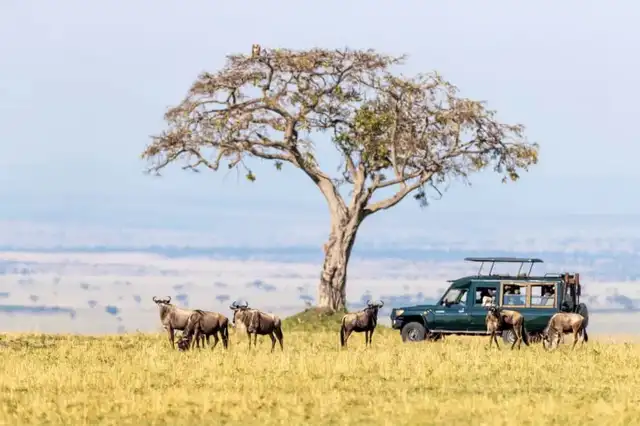
Top attractions on Kenya safari tours Masai Mara from big cats and river crossings to balloon rides, nature walks, and cultural visits with the Maasai community.
Kenya safari tours Masai Mara offer the best combination of wildlife density, predator action, and cultural depth in East Africa. From July to October, the reserve becomes the stage for the Great Wildebeest Migration, where thousands of animals risk their lives crossing the Mara River. Lions, leopards, cheetahs, and hyenas are active year-round, especially in open grasslands and along riverbanks like Talek and Mara. Balloon safaris at sunrise, guided nature walks with Maasai warriors, and visits to authentic villages add variety and meaning to your trip. Whether you’re after big game sightings, dramatic landscapes, or quiet moments in the bush, Kenya safari tours Masai Mara deliver high-value experiences tailored to your interests.
Beyond the wildlife, Masai Mara offers well-managed conservancies like Naboisho and Olare Motorogi, where fewer vehicles and flexible rules allow for off-road drives, night safaris, and walking tours. Sundowners, stargazing, and cultural exchanges with the Maasai community deepen your connection to the land. Camps and lodges range from budget-friendly to ultra-luxury, many with strong ties to conservation and local families. Kenya safari tours Masai Mara are not just about seeing animals they’re about understanding ecosystems, supporting ethical tourism, and creating a trip that’s both memorable and responsible. Plan well, travel smart, and let the Mara show you its best
Top best Kenya safari tours
Top Unmissable Headliners on Kenya safari tours Masai Mara
Witness The Great Wildebeest Migration The World Cup of Wildlife
The Great Migration is the most dramatic event on Kenya safari tours Masai Mara, especially from July to October. Millions of wildebeest and zebra move across the plains in search of fresh grazing, but the highlight is the Mara River crossing. Here, thousands of animals plunge into crocodile-filled waters, driven by instinct and survival. The scene is intense dust, splashing, panic, and predators waiting. To witness this, timing and location are critical. Kenya safari tours Masai Mara that focus on migration should include stays in mobile camps near the river and guides who track herd movements daily. Crossings are unpredictable and brief, so patience is key. This is not just about numbers it’s about witnessing nature’s raw urgency and the risks animals face to complete their ancient cycle.
See the Big Five
Kenya safari tours Masai Mara offer one of the best chances to see the Big Five lion, leopard, elephant, buffalo, and rhino in a single reserve. Lions are common and often seen in large prides, especially in open plains. Leopards are more elusive but frequently spotted lounging in trees near rivers. Elephants roam in family groups, particularly in the conservancies where they’re well protected. Buffalo are widespread and often seen in large herds. The black rhino is rare but can be found in areas like Musiara. Kenya safari tours Masai Mara with experienced guides increase your chances of seeing all five, especially with early morning and late afternoon drives when animals are most active.
Take a Hot Air Balloon Safari at Dawn
A hot air balloon ride is a peaceful and unique way to start the day on Kenya safari tours Masai Mara. As the balloon lifts off at sunrise, you’ll float above the plains, watching herds of animals move below elephants, giraffes, zebras, and more. The view from above gives a better sense of the land’s scale and how wildlife interacts across the open terrain. Most Kenya safari tours Masai Mara that include balloon safaris end with a champagne breakfast served in the bush, adding a special touch to the experience. It’s a premium activity, often requiring advance booking, but it’s ideal for those wanting a quiet, panoramic view of the Masai Mara’s vast beauty
Best Wildlife and Predator Action on Kenya safari tours Masai Mara
Watch a Lion Hunt
Kenya safari tours Masai Mara offer a rare chance to see lions hunting in real time. The open grasslands make it easier to follow the action as prides work together to bring down prey like wildebeest, zebra, or topi. Early mornings and late afternoons are the best times this is when lions are most active and the light is ideal for photography. Guides on Kenya safari tours Masai Mara know where hunting activity is likely, often tracking fresh kills or lion movements from the previous day. Seeing a coordinated hunt unfold is intense and fast, so being alert and ready with binoculars or a camera is essential.
Track a Cheetah on the Hunt
Cheetahs thrive in the open terrain of the Masai Mara, making Kenya safari tours Masai Mara one of the best ways to watch them hunt. These cats rely on speed and sight, not stealth, so you’ll often see them scanning the horizon before launching into a chase. The sprint is short but explosive reaching speeds up to 100 km/h. Guides on Kenya safari tours Masai Mara often know individual cheetahs and their hunting habits, increasing your chances of seeing a full stalk-and-chase sequence. It’s a fast-paced moment that rewards patience and sharp observation, especially in areas with good visibility and low grass.
Spot a Leopard in a Riverine Tree
Leopards are elusive, but kenya safari tours Masai Mara offer strong chances of spotting them in riverine forests, especially near the Talek and Mara Rivers. These cats are solitary and prefer resting in trees, often draped over branches with legs hanging down. Guides on kenya safari tours Masai Mara scan sausage trees and fig trees where leopards are known to hide. Sightings are often brief, so a good guide and sharp eyes help. Leopards may also be seen descending trees to hunt or dragging prey into the canopy. It’s a quiet, calculated presence very different from lions or cheetahs.
Observe the Playful Spotted Hyena
Hyenas are often misjudged, but Kenya safari tours Masai Mara reveal their complex social behavior. Visiting a den site gives you a close look at cubs playing, fighting, and learning clan dynamics. Cubs are curious and active, making them great subjects for photography. Adult hyenas are skilled hunters and scavengers, often seen in groups patrolling the plains. Kenya safari tours Masai Mara with experienced guides can explain their matriarchal structure and vocal communication. Watching hyenas interact especially at sunrise or sunset adds depth to your safari, showing that not all predators fit the stereotypes
Stunning Landscapes and Key Locations for Kenya safari tours Masai Mara
The Mara Triangle
Kenya safari tours Masai Mara that include the Mara Triangle offer a quieter, well-managed section of the reserve with excellent wildlife viewing. Located west of the Mara River, this area is known for its clean camps, fewer vehicles, and strong conservation practices. It’s one of the best places to witness the Great Migration’s river crossings, especially between July and October. The Oloololo Escarpment adds a dramatic backdrop, and the open plains make it easier to spot predators and large herds. Kenya safari tours Masai Mara that focus on the Triangle often include private conservancies nearby, offering added flexibility like night drives and walking safaris.
The Mara River
The Mara River is the heart of the action on Kenya safari tours Masai Mara, especially during the migration season. It’s where thousands of wildebeest and zebra risk their lives crossing crocodile-filled waters. But even outside the migration, the river is full of life hippos wallow in pods, crocodiles sunbathe on the banks, and elephants come to drink. Kenya safari tours Masai Mara that include time near the river offer high chances of predator sightings, as lions and leopards often patrol the area. Staying in camps close to the river increases your chances of seeing dramatic wildlife moments unfold naturally.
The Talek River
The Talek River is a key area for big cat sightings on Kenya safari tours Masai Mara. Its winding banks and nearby woodlands are prime territory for lions and leopards, many of which are well-known to local guides. The river also attracts herbivores like impala and zebra, which in turn draw predators. Kenya safari tours Masai Mara that include the Talek region often base travelers near Talek Gate, offering quick access to both central and eastern parts of the reserve. It’s a great area for photography, especially in the early morning when cats are active and the light is soft.
Best Cultural Unique Safari Experiences on Kenya safari tours Masai Mara
Visit an Authentic Maasai Village
Kenya safari tours Masai Mara often include a visit to a Maasai village, but it’s important to choose one that’s ethical and community-run. You’ll be welcomed with a traditional dance, see how homes are built using local materials, and learn about the Maasai’s deep connection to land and wildlife. Their pastoralist lifestyle, social structure, and conservation values are shared openly. Kenya safari tours Masai Mara that support local villages help preserve culture and provide income directly to families. Ask your guide how the visit benefits the community and whether it’s part of a long-term partnership. Avoid staged performances look for real conversations and respectful engagement.
Enjoy a Sundowner
A sundowner is a simple but memorable part of kenya safari tours Masai Mara. As the day ends, your guide will stop at a quiet spot, set up drinks and snacks, and let you relax while the sun dips below the horizon. The sky turns gold and orange, animals settle down, and the air cools. It’s a peaceful moment to reflect, take photos, and enjoy the silence of the bush. Kenya safari tours Masai Mara that include sundowners often do them daily, especially in conservancies where off-road stops are allowed. It’s not about luxury it’s about slowing down and appreciating the rhythm of the land.
Go on a Nature Walk with Maasai Warriors
Nature walks with Maasai guides are a valuable part of Kenya safari tours Masai Mara. You’ll leave the vehicle behind and learn to read tracks, identify plants, and understand how wildlife moves through the landscape. These walks are usually done in conservancies or community lands where walking is permitted. Kenya safari tours Masai Mara that include this experience offer a closer look at the ecosystem, guided by people who’ve lived with wildlife for generations. It’s a quiet, respectful way to learn and connect with the land. You’ll notice things missed on game drives small insects, bird calls, and the stories behind each footprint.
Stay in or Visit a Private Conservancy
Private conservancies like Naboisho, Olare Motorogi, and Mara North offer a quieter, more flexible safari experience. Kenya safari tours Masai Mara that include conservancies benefit from fewer vehicles, off-road driving, and night game drives. These areas are managed with community involvement, meaning your visit supports local families and conservation efforts. Wildlife is abundant, and guides have more freedom to track animals closely. Kenya safari tours Masai Mara in conservancies also allow walking safaris and cultural visits, giving you more variety. Lodges here tend to be smaller and more personal, making them ideal for travelers who value space, privacy, and meaningful impact.
Stargaze on a Uniquely Dark Sky
With little light pollution, the night sky over the Masai Mara is stunning. Kenya safari tours Masai Mara often include stargazing as part of your lodge experience. You’ll lie in bed or sit by the fire, listening to distant animal calls while looking up at the Milky Way. Some lodges provide telescopes or guides who explain constellations and local stories tied to the stars. It’s a quiet, personal moment that adds depth to your safari. Kenya safari tours Masai Mara that focus on nature and relaxation often highlight this experience, especially in remote conservancies where the sky is clearest and the silence is complete
Best and prime time for Kenya safari tours Masai Mara
The best time for Kenya safari tours Masai Mara is during the dry season from June to October, when wildlife viewing is at its peak. Vegetation is thinner, animals gather around water sources, and the weather is generally clear and comfortable. This period also includes the Great Wildebeest Migration, with dramatic river crossings typically occurring from July to September. Game drives are smoother, and sightings of predators like lions, leopards, and cheetahs are more frequent. For travelers planning Kenya safari tours Masai Mara focused on big game and photography, this is the prime season to visit.
Outside the migration months, January to March is also excellent for Kenya safari tours Masai Mara, especially for predator sightings. This is calving season for many plains animals, which attracts lions and other carnivores. The weather is warm and dry, and the landscape remains green from earlier rains, offering beautiful backdrops. These months are less crowded than peak migration season, making them ideal for travelers seeking quieter experiences. While April and November bring rains and muddy tracks, they can still offer good birdwatching and lower lodge rates. Overall, Kenya safari tours Masai Mara are rewarding year-round, but timing your visit around wildlife activity makes all the difference
How to get to Kenya safari tours Masai Mara
To reach Kenya safari tours Masai Mara, most travelers start by flying into Jomo Kenyatta International Airport (NBO) in Nairobi. From there, you can either take a domestic flight to one of the airstrips in the Masai Mara (like Keekorok, Ol Kiombo, or Mara North) or drive overland. Flights take about 45 minutes and are ideal for saving time and avoiding rough roads. Driving takes 5–6 hours depending on the entry gate and road conditions, and while it’s more budget-friendly, it can be bumpy. Kenya safari tours Masai Mara arranged by reputable operators usually include airport transfers, flights, or private 4x4 vehicles with guides.
Once inside the reserve or conservancy, movement is typically by customized safari vehicles with pop-up roofs for wildlife viewing. Kenya safari tours Masai Mara often include multiple game drives per day, and your lodge or camp will coordinate these with experienced guides. If staying in a private conservancy, you may also have access to night drives and walking safaris. Booking with a trusted safari company ensures smooth logistics, from park fees and permits to accommodation and meals. Whether flying or driving, plan your arrival early in the day to maximize your time in the bush
Top things to do on Kenya safari tours Masai Mara
Kenya safari tours Masai Mara offer a wide range of wildlife and cultural experiences that go beyond game drives. Top activities include witnessing the Great Wildebeest Migration, especially the dramatic Mara River crossings from July to September. Game drives provide close-up views of lions, leopards, elephants, and cheetahs in action, while hot air balloon safaris at sunrise offer a peaceful aerial view of the plains. Nature walks with Maasai guides add depth, teaching you how to read tracks and understand the land. Visiting an authentic Maasai village gives insight into local traditions and their relationship with wildlife, making your safari more meaningful.
Beyond daytime activities, Kenya safari tours Masai Mara also include night drives in private conservancies, where you can spot nocturnal animals like hyenas, genets, and bushbabies. Sundowners drinks served at sunset in the bush are a relaxing way to end the day. Stargazing under the dark Mara sky reveals the Milky Way in stunning clarity. Birdwatching is excellent year-round, especially near rivers and wetlands. Staying in conservancies like Naboisho or Olare Motorogi allows for off-road driving and fewer crowds. Whether you're focused on photography, wildlife behavior, or cultural learning, Kenya safari tours Masai Mara offer a well-rounded and rewarding experience
What is the cost for Kenya safari tours Masai
The cost for Kenya safari tours Masai Mara varies widely depending on season, accommodation, transport, and group size. Budget group safaris start around $350–$500 per person for a 3-day tour with basic camps and shared vehicles. Mid-range options with better lodges and private guides range from $800–$1,200 per person, while luxury safaris with fly-in access, premium lodges, and personalized service can exceed $1,500–$3,000 per person for the same duration. Park entry fees for non-residents are $200 for 12 hours or $400 for 24 hours, and vehicle rentals range from $80 to $350 per day depending on type. Prices also rise during peak migration months (July–October), so early booking helps secure better rates and availability
What is special about Maasai Mara
Maasai Mara stands out for its high wildlife density, open landscapes, and year-round predator sightings. Kenya safari tours Masai Mara offer access to one of Africa’s richest ecosystems, where lions, leopards, elephants, and cheetahs are commonly seen. The reserve is also the stage for the Great Wildebeest Migration, especially the dramatic Mara River crossings. Its mix of public reserve and private conservancies allows for varied experiences, including walking safaris and night drives. Kenya safari tours Masai Mara are also known for strong community involvement, with many lodges supporting local Maasai villages and conservation efforts. The combination of wildlife, culture, and accessibility makes it a top choice for first-time and repeat safari travelers
How much does a Masai Mara trip cost
The cost of Kenya safari tours Masai Mara depends on season, accommodation, and transport. Budget safaris start around $350–$500 per person for 3 days, including basic camps and shared vehicles. Mid-range trips with private guides and better lodges range from $800–$1,200, while luxury fly-in safaris with premium camps can exceed $1,500–$3,000. Park entry fees are $200 for 12 hours or $400 for 24 hours per adult non-resident. Kenya safari tours Masai Mara during peak migration months (July–October) are more expensive, so early booking helps secure better rates. Costs also vary based on group size, conservancy access, and included extras like balloon rides or cultural visits
What is better, Masai Mara or Serengeti?
Kenya safari tours Masai Mara and Serengeti both offer excellent wildlife, but they differ in size, accessibility, and experience. Masai Mara is smaller and easier to reach from Nairobi, with dense wildlife and more concentrated sightings. Serengeti is vast, offering longer drives and more remote areas. Kenya safari tours Masai Mara are ideal for shorter trips and those wanting high predator visibility and cultural interaction with the Maasai. Serengeti suits travelers seeking longer itineraries and varied landscapes. Both host the Great Migration, but Mara’s river crossings are more dramatic. Choosing between them depends on travel style, time, and budget many travelers combine both for a fuller experience.
What is the 12 hour rule for Masai Mara?
The 12-hour rule in Masai Mara refers to the park entry fee structure for non-residents. Kenya safari tours Masai Mara must pay $200 per adult for a 12-hour visit or $400 for a 24-hour stay. This rule affects how operators plan game drives and overnight stays inside the reserve. If your lodge is outside the park, you’ll need to re-enter daily and pay again unless staying within the 12-hour window. Kenya safari tours Masai Mara that include conservancies may offer more flexibility, as conservancy fees are separate and often allow full-day access. Understanding this rule helps travelers budget accurately and choose accommodations that minimize extra costs
How to act responsible on Kenya safari tours Masai Mara
To act responsibly on Kenya safari tours Masai Mara, follow park rules and respect wildlife at all times. Stay inside the vehicle unless your guide says it’s safe, keep noise levels low, and never feed or touch animals. Stick to designated tracks to avoid damaging vegetation and disturbing habitats. Choose operators and lodges that support conservation and local communities. Limit plastic use, carry reusable water bottles, and dispose of waste properly. Respect Maasai culture during village visits ask before taking photos and engage with genuine interest. Kenya safari tours Masai Mara are more meaningful when travelers prioritize safety, sustainability, and ethical behavior, helping protect the ecosystem for future generations
What to bring for Kenya safari tours Masai Mara
For Kenya safari tours Masai Mara, pack light but smart with a focus on comfort, function, and weather adaptability. Bring neutral-colored clothing (khaki, olive, beige) to avoid attracting insects or startling wildlife long-sleeved shirts and trousers are ideal for sun and bug protection. Include a lightweight fleece or jacket for chilly mornings and a rain jacket if traveling during the wet seasons (March–May, October–December). Sturdy walking shoes, a wide-brimmed hat, sunglasses, and high-SPF sunscreen are essential. Don’t forget binoculars, a camera with extra memory cards, a power bank, and a universal adapter. Carry personal medications, a basic first-aid kit, yellow fever certificate, and malaria prophylaxis. Use soft-sided luggage under 15 kg due to local flight restrictions.
Avoid bright-colored clothing, camouflage prints (illegal for civilians in Kenya), hard-shell suitcases, and excessive toiletries. Leave behind drones (restricted in national parks), plastic bags (banned in Kenya), and loud gadgets that may disturb wildlife. Kenya safari tours Masai Mara are best enjoyed with minimal, practical gear that respects both the environment and local regulations
Best places to stay during Kenya safari tours Masai Mara
During Kenya safari tours Masai Mara, top places to stay include Angama Mara, perched above the Great Rift Valley with sweeping views and direct access to the Mara Triangle, and Mara Serena Safari Lodge, known for its central location and reliable game viewing. For luxury and privacy, Cottar’s 1920s Camp offers vintage elegance near the reserve’s southeastern edge. In private conservancies, Naboisho Camp and Olare Mara Kempinski provide exclusive experiences with fewer vehicles, off-road drives, and night safaris. Budget-conscious travelers can opt for Mara Explorer Camp or Basecamp Masai Mara, which blend comfort with strong community ties. Kenya safari tours Masai Mara are best matched with lodges that suit your travel style, whether you prioritize migration access, cultural immersion, or remote tranquility
Why book Kenya safari tours Masai Mara with Lamz Tours and Travel
Booking Kenya safari tours Masai Mara with Lamz Tours and Travel means choosing a team that prioritizes authenticity, logistics, and traveler empowerment. We specialize in crafting well-timed itineraries that match your travel style whether you want to witness the Great Migration, explore private conservancies, or combine bush and beach. Lamz Tours and Travel handles everything from park permits and transport to lodge selection and cultural visits, ensuring smooth transitions and high wildlife density. Our guides are experienced, respectful, and deeply familiar with predator behavior, migration patterns, and Maasai culture. Kenya safari tours Masai Mara with Lamz Tours and Travel also support ethical tourism and community partnerships, giving your trip real impact. You get strategic planning, clear communication, and a safari that’s both meaningful and memorable
Ready to plan your safari?
Talk to a Lamz Tours specialist and get a tailor-made quote.
Make an enquiry