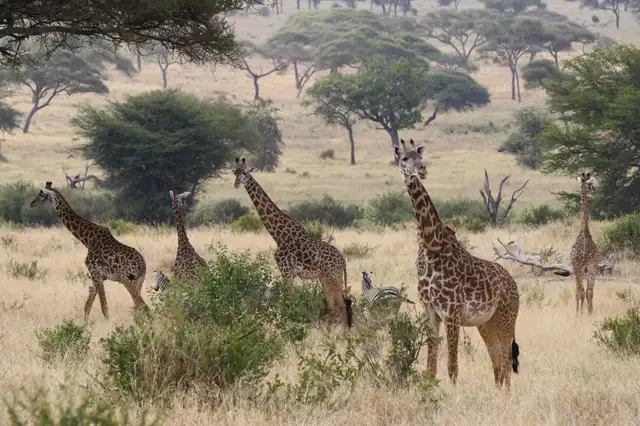
Top attractions on a Tanzania safari in Tarangire include elephants, baobabs, rare wildlife, birdlife, swamps, rivers, and panoramic views across the park
Tarangire National Park is one of the most rewarding destinations for a Tanzania safari, offering travelers a mix of wildlife density, unique landscapes, and rare species that set it apart from other northern parks. Known as the “home of elephants,” Tarangire hosts some of the largest herds in Africa, often seen in groups of hundreds during the dry season. The park’s lifeline, the Tarangire River, draws animals from surrounding areas, creating nonstop action for visitors. Alongside elephants, travelers can expect to see lions, leopards, buffalo, and antelopes, while the ancient baobab trees add character to the scenery and provide excellent photographic opportunities. A Tanzania safari here is practical for those who want reliable wildlife viewing combined with striking natural backdrops.
Beyond its famous herds, Tarangire is celebrated for its diversity and rare wildlife. Species such as fringe-eared oryx, gerenuk, and greater kudu thrive in its dry habitats, while birdwatchers enjoy spotting over 550 species, including endemic lovebirds and ashy starlings. The park also offers unusual highlights like tree-climbing lions and giant rock pythons, adding variety to the safari experience. A Tanzania safari in Tarangire balances big game viewing with birding, cultural insights, and moments of relaxation, making it a destination that delivers both depth and variety for travelers seeking authentic safari experiences
Best Tanzania safari packages
2-days-tarangire-national-park-and-ngorongoro-crater-safari
3-days-tanzania-safari-in-serengeti-national-park
3-days-tanzania-wildlife-safari
4-days-epic-tanzania-wildlife-and-culture-safari
5-day-kenya-and-tanzania-safari
5-days-circuit-wildlife-safari-in-tanzania
6-days-ndutu-migration-safari-calving-season
8-day-serengeti-ngorongoro-crater-and-zanzibar
8-days-wildlife-and-beach-holiday-tanzania
8-days-wildlife-safari-tanzania
9-days-zanzibar-and-wildlife-safari
10-days-uganda-and-tanzania-safari-gorillas-chimpanzees-and-wildlife
5-days-mount-kilimanjaro-marangu-route
6-days-mount-kilimanjaro-machame-route
The Best Attractions to See During Tanzania Safari in Tarangire National Park
1. The Great Herds of Tarangire
During the dry season from June to October, Tarangire becomes one of the most important elephant strongholds in Africa, with herds of 300 or more gathering along the river and swamps. A Tanzania safari here gives travelers the chance to watch elephants in their most social state babies playing, bulls sparring, and families cooling off in mud baths. The Tarangire River, Silale Swamp, and Gursi Swamp are the best areas to see this spectacle, as water sources draw animals together in large numbers. A Tanzania safari in this season ensures reliable sightings of elephants and other wildlife concentrated around shrinking water points, making it a practical choice for travelers who want guaranteed close views of Africa’s largest land mammals.
2. The Ancient Baobab Forests
Tarangire’s landscape is defined by massive baobab trees, some centuries old, which act as natural ecosystems supporting wildlife. Elephants strip their bark for moisture, while fruits provide food for animals and birds. A Tanzania safari in Tarangire offers travelers the chance to see these unique “upside-down trees” across the plains, often with elephants or giraffes nearby. The best photographic opportunities come at sunrise or sunset, when baobabs create striking silhouettes against the sky. A Tanzania safari here is not only about wildlife but also about appreciating the role of these trees in sustaining life in dry conditions. Their presence adds character to the park and gives visitors a deeper understanding of how vegetation shapes survival in arid environments.
3. The Tarangire River
The Tarangire River is the park’s lifeline, especially in the dry season when it becomes the main source of water for wildlife. A Tanzania safari along its banks guarantees constant activity, with elephants digging for water in the sand, herds of zebra and buffalo gathering, and predators waiting nearby. Lions and leopards often patrol the thickets, making this area one of the most reliable spots for predator sightings. A Tanzania safari here is ideal for travelers who want continuous wildlife action without long drives between sightings. The river’s role as a magnet for animals ensures that game drives remain productive, offering travelers a practical way to maximize their time and see diverse species in one concentrated area.
4. The Silale Swamp
Silale Swamp is a vast wetland that retains water even when the surrounding plains are dry, making it a key attraction during a Tanzania safari in Tarangire. Large herds of elephants, buffalo, and antelopes gather here, while predators such as lions and cheetahs patrol the edges. Birdwatchers benefit from the swamp’s rich avian life, with flocks of storks and pelicans often seen. A Tanzania safari in this area provides travelers with a mix of wildlife density and varied species, ensuring that both big game and birdlife are well represented. The swamp’s ability to sustain animals year-round makes it a dependable destination, especially for those who want to balance mammal viewing with birding opportunities in one location.
5. Tarangire’s Unique and Rare Wildlife
Tarangire stands out during a Tanzania safari because it hosts species rarely seen in other northern parks. Fringe-eared oryx and gerenuk thrive in its dry habitats, while greater kudu with their spiral horns are more common here than elsewhere. Birdlife adds another layer, with endemic species such as the ashy starling and yellow-collared lovebird often spotted in acacia trees. A Tanzania safari in Tarangire is therefore valuable for travelers seeking diversity beyond the usual herds and predators. These rare animals and birds highlight the park’s ecological uniqueness, giving visitors a chance to expand their wildlife checklist. For those who want to see species adapted to arid conditions, Tarangire provides one of the best opportunities in Tanzania.
6. Tree Climbing Lions and Pythons
Tarangire is known for unusual wildlife behavior, including lions that climb trees, especially in the Lemiyon area. A Tanzania safari here allows travelers to see lions resting on sausage trees or acacias, a rare sight outside Lake Manyara. The park is also home to giant African rock pythons, often found near termite mounds or riverbanks. Spotting these reptiles adds variety to the safari experience. A Tanzania safari in Tarangire is ideal for those who want to see wildlife beyond the standard Big Five, as these behaviors and species make the park distinctive. Observing lions in trees or pythons in their natural habitat provides travelers with practical highlights that enrich their safari itinerary.
7. Birdwatcher’s Paradise
With over 550 bird species recorded, Tarangire is one of the best birding destinations in East Africa. A Tanzania safari here offers travelers the chance to see massive flocks of storks, ibis, and pelicans around swamps, as well as kori bustards, bateleur eagles, and the colorful lilac-breasted roller. The green season from November to May is particularly rewarding, as migratory species join resident birds. A Tanzania safari in Tarangire ensures birdwatchers can enjoy both large flocks and rare species in one park. This diversity makes Tarangire a practical choice for travelers who want to combine big game viewing with birding, ensuring that every drive or walk offers something new to observe and photograph.
8. The Poachers’ Hide
The Poachers’ Hide is a hilltop in central Tarangire that provides panoramic views of the park. A Tanzania safari here allows travelers to enjoy sundowners while looking over baobab-dotted plains, the winding Tarangire River, and Silale Swamp. Herds of elephants can often be seen moving across the landscape from this vantage point, appearing like small dots in the distance. A Tanzania safari that includes this spot adds variety to the experience, giving visitors a chance to appreciate the scale of the park beyond close wildlife sightings. It is a practical stop for those who want to balance game drives with moments of relaxation, combining wildlife observation with sweeping views of Tarangire’s unique terrain.
9. The Lemiyon Area
The Lemiyon region of Tarangire is well known for its concentration of tree-climbing lions and large sausage trees. A Tanzania safari here gives travelers the chance to see lions resting high above the ground, a behavior rarely observed outside this park. The area also supports elephants, giraffes, and antelopes, making it a productive game drive location. A Tanzania safari in Lemiyon is ideal for those who want to combine predator sightings with unusual wildlife behavior, while enjoying landscapes dotted with distinctive trees that provide shade and food for animals.
10. Gursi Swamp
Gursi Swamp is another important wetland in Tarangire, attracting wildlife even during the driest months. A Tanzania safari here ensures sightings of elephants cooling off, buffalo grazing, and antelopes feeding along the edges. Predators such as lions and leopards often patrol nearby, taking advantage of the concentrated prey. A Tanzania safari in this area is also rewarding for birdwatchers, with waterbirds and raptors frequently seen. The swamp’s ability to sustain wildlife year-round makes it a dependable stop for travelers who want consistent game viewing in varied habitats.
11. Termite Mounds and Reptiles
Tarangire’s landscape is dotted with ancient termite mounds that serve as shelters for reptiles, including the famous African rock python. A Tanzania safari often reveals these snakes basking or digesting meals near mounds and riverbanks. Monitor lizards and smaller reptiles also thrive here, adding diversity to the safari experience. A Tanzania safari in Tarangire highlights how even small features of the landscape play a role in supporting wildlife, giving travelers a chance to appreciate the park’s ecological balance beyond large mammals.
12. Migratory Herds
During the dry season, Tarangire becomes a refuge for migratory herds of wildebeest, zebra, and buffalo that move in from surrounding areas. A Tanzania safari at this time offers nonstop wildlife viewing as these herds gather around the river and swamps. Predators follow closely, ensuring dramatic sightings of lions and leopards. A Tanzania safari here is practical for travelers who want to see large-scale animal movements without the crowds of the Serengeti, making Tarangire a quieter but equally rewarding destination.
13. Sunset Over Baobab Plains
Tarangire’s baobab-studded plains create some of the most striking sunset views in northern Tanzania. A Tanzania safari that ends with a sundowner in these areas allows travelers to watch herds of elephants or giraffes moving across the horizon as the sky changes color. The combination of wildlife silhouettes and ancient trees makes this a memorable photographic opportunity. A Tanzania safari here is perfect for those who value both wildlife and landscape photography, offering a practical way to end the day with lasting impressions of the park’s unique character
Best time to experience the attractions in Tarangire on Tanzania safari
The best time to experience the attractions in Tarangire on a Tanzania safari is during the dry season, from June to October. This period transforms the park into a hub of wildlife activity as animals gather around the Tarangire River and swamps, creating one of the largest concentrations of elephants in Africa. Herds of wildebeest, zebra, and buffalo also migrate into the park, followed closely by predators such as lions and leopards. A Tanzania safari in these months ensures reliable sightings of big game, rare antelopes, and birdlife, while the clear skies provide excellent photography conditions. Travelers benefit from the density of wildlife and the ease of spotting animals in open landscapes, making this season the most practical choice for game viewing.
The green season, from November to May, offers a different but equally rewarding experience during a Tanzania safari in Tarangire. While rains make the park more vibrant, they also attract migratory birds, turning Tarangire into a paradise for birdwatchers. The Silale Swamp and Gursi Swamp remain active with elephants, buffalo, and antelopes, while predators patrol the edges. A Tanzania safari in this season is less crowded and often more affordable, giving travelers solitude and unique photographic opportunities of baobabs against lush backdrops. This period is ideal for those who value birding, diverse landscapes, and a quieter safari atmosphere while still enjoying consistent wildlife sightings.
How to get there to the attractions in Tarangire on Tanzania safari
Travelers can reach the attractions in Tarangire on a Tanzania safari by first flying into Kilimanjaro International Airport or Arusha Airport, which serve as the main gateways to northern Tanzania. From Arusha, Tarangire National Park is about a two-hour drive on paved roads, making it one of the most accessible safari destinations in the region. A Tanzania safari here is often included in itineraries that also cover Ngorongoro and Serengeti, with reliable road transfers and safari vehicles taking visitors directly to lodges or camps inside the park. Domestic flights are also available to nearby airstrips, offering a faster option for those who want to save time and maximize their wildlife viewing.
Once inside Tarangire, attractions such as the Tarangire River, Silale Swamp, and baobab plains are easily reached through guided game drives. A Tanzania safari in this park is well-structured, with clear routes that allow travelers to explore diverse habitats without long travel times between sightings. Lodges and camps are strategically located near key areas, ensuring quick access to wildlife hotspots. Whether choosing road transfers or charter flights, a Tanzania safari in Tarangire remains practical and convenient, allowing visitors to focus on experiencing elephants, rare antelopes, birdlife, and panoramic views across the park.
Best safari activities to do during Tanzania safari in Tarangire
Tanzania safari in Tarangire offers travelers a mix of experiences that go beyond traditional game drives, making the park one of the most versatile destinations in northern Tanzania. The vast plains, swamps, and riverbanks provide opportunities to see wildlife in different settings, whether elephants gathering in large herds, predators patrolling thickets, or antelopes grazing near baobabs. A Tanzania safari here is not only about spotting animals but also about understanding how landscapes and water sources shape their behavior, giving visitors a deeper appreciation of the ecosystem.
Wildlife viewing in Tarangire is enhanced by the seasonal movements of animals, with dry months concentrating herds around the river and swamps. This creates constant action, where travelers can watch elephants digging for water, buffalo herds moving in formation, and predators waiting nearby. A Tanzania safari during this time ensures travelers maximize sightings without long drives between animals. The park’s density of wildlife makes it practical for those who want reliable game viewing, while its quieter atmosphere compared to Serengeti allows for a more relaxed pace.
Photography is another highlight of a Tanzania safari in Tarangire, with baobab trees, swamps, and open plains offering dramatic backdrops. Capturing elephants against Kilimanjaro-like horizons, lions resting in trees, or birds in flight provides travelers with memorable images that reflect both scale and intimacy. The variety of habitats ensures photographers can experiment with different angles and lighting, especially during sunrise and sunset. A Tanzania safari here is therefore valuable not only for wildlife but also for creating lasting visual records of East Africa’s landscapes and species.
Cultural and conservation aspects add depth to the Tanzania safari experience in Tarangire. Visitors can learn about Maasai traditions in nearby communities or understand how conservation projects protect elephants and rare antelopes. Combining wildlife viewing with cultural engagement ensures travelers leave with more than just sightings they gain context about how people and animals coexist. A Tanzania safari in Tarangire balances adventure, education, and relaxation, making it an ideal destination for those who want variety, authenticity, and meaningful experiences in one park
What is the cost of a Tanzania safari to Tarangire
A Tanzania safari to Tarangire typically costs between $250 and $400 per person per day for mid-range options, while luxury packages can exceed $700 per person per day depending on lodge choice and exclusivity. Park entry fees set by TANAPA (Tanzania National Parks Authority) are $50 per adult per day for non-East African citizens, with reduced rates for children, and these charges go directly toward conservation and community projects. Travelers should also budget for accommodation, meals, guided game drives, and optional activities such as walking safaris or cultural visits. Overall, a 3–4 day Tanzania safari in Tarangire can range from $1,000 to $2,500 per person, with costs varying by season, level of comfort, and whether road transfers or domestic flights are included
What is Tarangire National Park famous for?
Tarangire National Park is famous for its massive elephant herds, ancient baobab trees, and diverse wildlife that thrives around the Tarangire River, especially during the dry season. A Tanzania safari in this park offers travelers the chance to see elephants in groups of hundreds, rare antelopes like fringe-eared oryx and gerenuk, and predators such as lions and leopards waiting near water sources. Birdlife is another highlight, with over 550 species recorded, making it one of the best birding destinations in East Africa. A Tanzania safari here is also unique because of tree-climbing lions and the presence of giant rock pythons, adding variety to the experience. These features make Tarangire a practical and rewarding destination for wildlife and photography
Top tips for visiting Tarangire park on Tanzania safari
When planning a Tanzania safari to Tarangire National Park, timing is one of the most important considerations. The dry season from June to October is the best period to see large elephant herds and concentrated wildlife around the Tarangire River and swamps. Travelers should also prepare with lightweight, neutral-colored clothing, sturdy shoes, insect repellent, and binoculars to maximize comfort and viewing. A Tanzania safari here benefits from early morning and late afternoon drives, as animals are most active during cooler hours, while midday can be reserved for rest at lodges or camps.
Another key tip for a Tanzania safari in Tarangire is to balance wildlife viewing with practical choices that enhance the experience. Staying inside or near the park ensures quick access to attractions like Silale Swamp and baobab plains, reducing travel time. Hiring experienced guides adds value, as they know where rare species such as fringe-eared oryx or tree-climbing lions are likely to be found. Travelers should also respect park rules by keeping safe distances from animals and supporting eco-friendly lodges that contribute to conservation. By combining good preparation with responsible practices, a Tanzania safari in Tarangire becomes both rewarding and sustainable
What to carry for Tanzania safari to Tarangire park
Packing smartly for a Tanzania safari to Tarangire National Park ensures comfort, safety, and readiness for varied conditions. Lightweight, neutral-colored clothing helps blend into the environment and keeps travelers cool, while a warm layer is useful for early mornings and evenings. Sturdy walking shoes, a wide-brim hat, sunglasses, and sunscreen protect against sun and dust. Essentials like insect repellent, reusable water bottles, and personal medications should always be included. Binoculars and a good camera are vital for capturing wildlife and landscapes, while travel documents, cash in small denominations, and a daypack keep items organized. Carrying these practical items makes a Tanzania safari in Tarangire smoother, allowing travelers to focus on enjoying elephants, baobabs, and diverse wildlife without unnecessary discomfort
Best places to stay in on Tanzania safari in Tarangire National park
The best places to stay during a Tanzania safari in Tarangire National Park include a mix of lodges and tented camps that provide comfort while keeping travelers close to wildlife action. Options such as Tarangire Safari Lodge, with its sweeping views over the Tarangire River, and Swala Camp, offering luxury in a remote setting, give guests direct access to game-rich areas. Other choices like Oliver’s Camp emphasize an authentic bush experience with walking safaris and night drives, while eco-friendly properties such as Tarangire Treetops combine conservation with unique treehouse-style accommodation. Staying inside or near the park ensures quick access to elephants, baobabs, and swamps, making a Tanzania safari in Tarangire both practical and rewarding in terms of wildlife and convenience
Booking Tanzania safari with Lamz Tours and Travel
Booking a Tanzania safari with Lamz Tours and Travel guarantees travelers a well-structured experience that blends wildlife, culture, and comfort across Tarangire, Serengeti, Ngorongoro, and other prime destinations. With expert knowledge of seasonal highlights, Lamz Tours and Travel designs itineraries that maximize sightings of elephants, big cats, and rare antelopes while ensuring smooth logistics such as park entry, transfers, and accommodation. A Tanzania safari booked through Lamz Tours and Travel also emphasizes responsible tourism, supporting conservation and local communities while offering options from luxury lodges to eco-friendly camps. Travelers benefit from personalized guidance, reliable planning, and diverse activities including game drives, walking safaris, and balloon rides, making Lamz Tours and Travel a trusted choice for those seeking authentic and practical safari experiences in Tanzania.
Ready to plan your safari?
Talk to a Lamz Tours specialist and get a tailor-made quote.
Make an enquiry