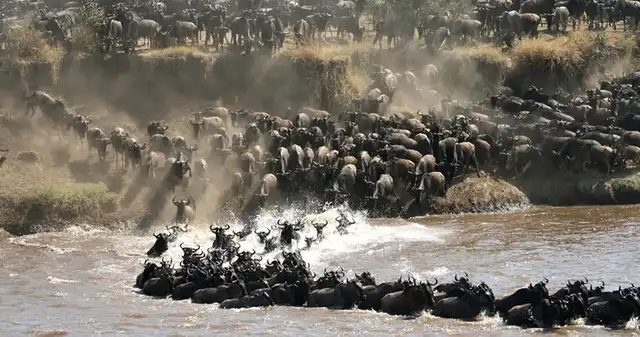
Prime months for river crossings on a Tanzania safari are July to October in the Northern Serengeti, with hotspots at Kogatende and Lamai Wedge
Why great migration and river crossing on Tanzania safari are unmissable
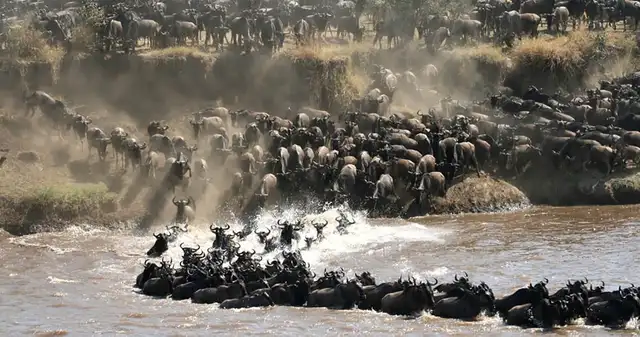
The Great Migration and river crossing on a Tanzania safari are unmissable because they represent one of nature’s most dramatic wildlife spectacles, unfolding in real time before your eyes. Millions of wildebeest, zebras, and gazelles gather along the Mara River, hesitating for hours before surging across waters filled with crocodiles and predators waiting nearby. This event is not staged it is raw survival, showcasing the power of instinct and the challenges of life in the wild. A Tanzania safari during this season gives travelers front-row access to the scale of the migration, the intensity of predator-prey interactions, and the unpredictability that makes each crossing unique. It’s a rare chance to witness nature’s rhythm, making it a once-in-a-lifetime highlight for any safari experience
Best Tanzania safari packages
2-days-fly-in-serengeti-safari-in-tanzania
2-days-tarangire-national-park-and-ngorongoro-crater-safari
3-days-tanzania-safari-in-serengeti-national-park
3-days-tanzania-wildlife-safari
4-days-epic-tanzania-wildlife-and-culture-safari
5-day-kenya-and-tanzania-safari
5-days-circuit-wildlife-safari-in-tanzania
6-days-ndutu-migration-safari-calving-season
8-day-serengeti-ngorongoro-crater-and-zanzibar
8-days-wildlife-and-beach-holiday-tanzania
8-days-wildlife-safari-tanzania
9-days-zanzibar-and-wildlife-safari
10-days-uganda-and-tanzania-safari-gorillas-chimpanzees-and-wildlife
The Best and Prime Time for Great Migration and River Crossing on Tanzania Safari
Late June and July The Build-up
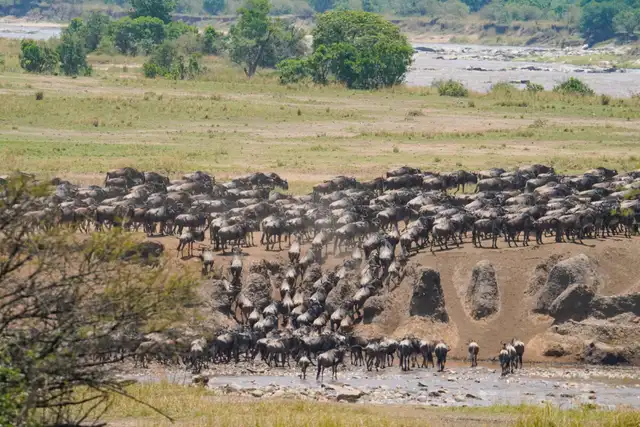
During late June and July, the herds move from the western corridor toward the Mara River, gathering in large numbers along the southern banks. This period is marked by the “staging” phase, where wildebeest and zebras consolidate in areas such as the Lamai Wedge and Kogatende. For travelers planning a Tanzania safari, this is a valuable time to witness the anticipation before the crossings begin. The herds are easier to track as they cluster in specific regions, giving photographers and wildlife lovers a chance to capture the scale of the migration. A Tanzania safari in these months offers fewer crowds compared to peak season, making it suitable for those who prefer a calmer atmosphere while still experiencing the buildup to the main event.
August the Peak Action
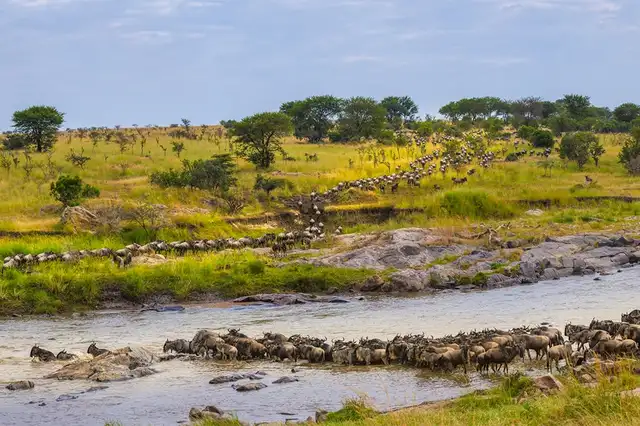
August is widely regarded as the prime month for river crossings in the Northern Serengeti. The dry season intensifies, forcing wildebeest to cross the Mara River in search of water and fresh grazing grounds. Multiple crossings often occur daily, and predator activity, including crocodiles and lions, is highly visible. For a Tanzania safari, this is the ultimate time to maximize chances of seeing dramatic wildlife behavior. Visitor numbers are at their highest, but the reward is unmatched access to the most intense migration scenes. A Tanzania safari in August ensures travelers witness the spectacle that defines the migration, making it the best choice for first-time visitors who want the classic experience captured in documentaries.
September for Dramatic Scenes
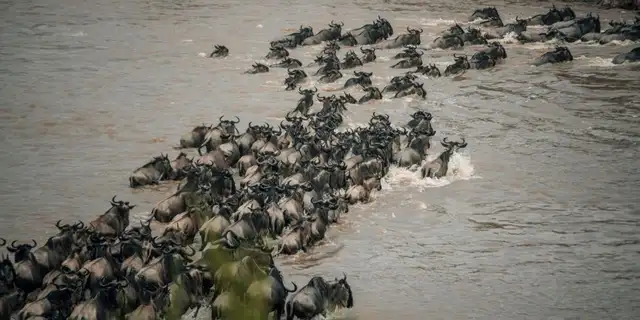
September continues to deliver frequent river crossings, with herds concentrated in the northern Serengeti. This makes sightings more reliable, as animals remain in accessible areas near the Mara River. While still busy, visitor numbers often dip slightly compared to August, offering a balance between action and comfort. A Tanzania safari during September is ideal for photographers, as the light conditions improve and the atmosphere is less crowded. The crossings remain dramatic, with predators still active and herds moving back and forth across the river. Choosing a Tanzania safari in September provides excellent opportunities for those who want strong visuals and consistent wildlife viewing without the peak-season congestion.
October the Final Push
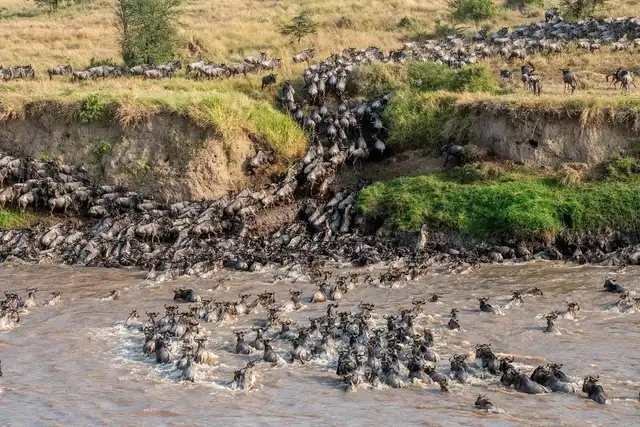
October marks the gradual southward movement of the herds as they begin leaving the northern Serengeti. Crossings still occur, especially in the early weeks, but they become less predictable as the migration disperses. For a Tanzania safari, October offers flexibility and a quieter experience compared to the earlier months. Travelers may still witness river crossings, but patience is required, as the timing is less certain. A Tanzania safari in October is best suited for those who cannot travel during August or September but still want a chance to see the migration before it shifts south. The reduced crowds and softer atmosphere make it appealing for visitors seeking a more relaxed safari experience.
Where to go for River crossing on Tanzania safari
To witness the river crossings, positioning yourself in the Northern Serengeti is essential. The Mara River is the main stage, and the most reliable areas are Kogatende and the Lamai Wedge. These regions provide the highest density of crossing points, giving travelers the best chance to see the herds in action. Compared to the Kenyan side, the Tanzania safari experience here is often less crowded, allowing for more comfortable viewing and photography. Staying close to these hotspots ensures you maximize your chances of seeing multiple crossings, as the wildebeest and zebras gather in large numbers along the riverbanks. A Tanzania safari focused on this area is the most practical choice for travelers who want direct access to the migration’s most dramatic phase.
For those visiting earlier in the season, June and early July offer a bonus opportunity in the Western Corridor. During this time, herds cross the Grumeti River, creating smaller but still dramatic events. While these crossings are not as large-scale as those on the Mara River, they provide added value for travelers who arrive before the peak season. A Tanzania safari during this period allows you to see predator activity and the challenges the herds face as they navigate the Grumeti waters. Combining the Grumeti crossings with later visits to the Mara River ensures a richer safari experience, giving travelers a broader perspective of the migration’s different phases. This makes a Tanzania safari in both regions rewarding for those seeking variety and depth
Best time of day for witnessing river crossing on Tanzania safari
Late Morning to Mid-Afternoon (10:00 AM – 3:00 PM)
The most common time for river crossings is late morning through mid-afternoon. Wildebeest often gather along the banks during these hours, building the courage to cross when the heat is strongest. For travelers on a Tanzania safari, this window offers the highest chance of seeing multiple crossings in one day. Guides position vehicles strategically to maximize visibility, and patience pays off as herds sometimes hesitate before finally plunging into the river. A Tanzania safari during this period ensures travelers are in place when the action unfolds, making it the most reliable time to witness the migration’s defining drama.
Early Morning
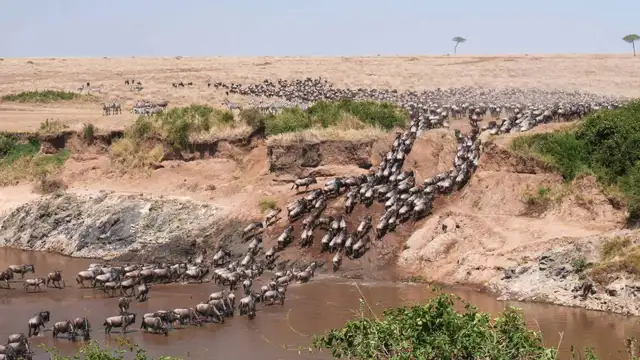
Guides usually start tracking herds at sunrise, as early morning can bring surprise crossings. While less frequent than midday, this time allows travelers to be ready before the crowds arrive. On a Tanzania safari, early positioning along the riverbanks increases the chance of catching the herds as they move toward the water. The cooler temperatures also make it more comfortable for waiting, and the soft morning light provides excellent conditions for photography. A Tanzania safari in the early hours is ideal for those who value preparation and want to maximize opportunities by being ahead of the day’s activity.
Late Afternoon
Although less predictable, late afternoon crossings can reward travelers who remain patient until dusk. Herds sometimes move late in the day, creating dramatic scenes against the fading light. For a Tanzania safari, this period is valuable for those willing to wait longer, as surprise crossings often feel more intimate with fewer vehicles present. Staying until evening ensures travelers do not miss unexpected activity, and the golden light enhances the atmosphere for photography. A Tanzania safari during late afternoon offers a quieter yet rewarding experience, especially for those who want to capture unique visuals beyond the midday rush
Best safari activities to do during witnessing river crossing on Tanzania safari
Witnessing the river crossing is the highlight of a Tanzania safari, but the experience becomes richer when combined with other activities. Game drives around the Mara River region allow travelers to follow herds before and after crossings, giving a fuller picture of the migration. Photographers benefit from the chance to capture predator-prey interactions, while travelers gain insight into the daily rhythm of the herds. A Tanzania safari during this time is not just about the crossing itself but about observing the buildup, hesitation, and aftermath that make the event so powerful.
Beyond the crossings, guided drives in the Northern Serengeti provide opportunities to see predators such as lions, leopards, and crocodiles in action. These drives complement the migration by showing how wildlife adapts to the influx of prey. A Tanzania safari here ensures travelers witness the balance of survival, with predators taking advantage of the chaos at the river. This activity adds depth to the crossing experience, as it highlights the interconnectedness of species and the challenges faced by the herds.
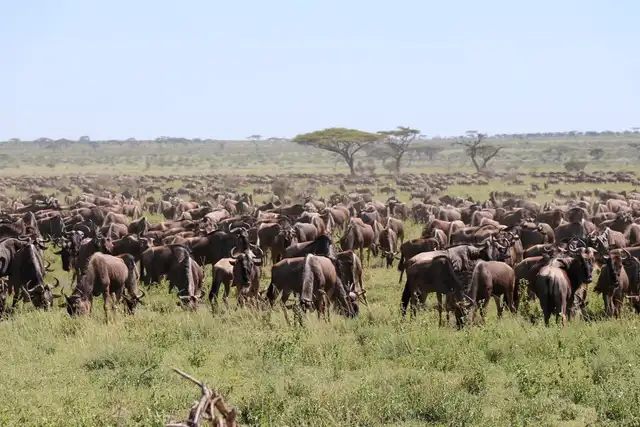
Cultural visits to nearby communities can also be integrated into the safari, offering travelers a broader understanding of the region. Meeting local people and learning about their traditions provides context to the landscapes and wildlife. A Tanzania safari that includes cultural elements ensures travelers leave with more than just wildlife memories. It connects the migration to the human stories of conservation and coexistence, making the trip meaningful beyond the spectacle of the river crossings.
Finally, combining river crossing days with evening relaxation at lodges or camps enhances the overall experience. Sundowners overlooking the plains, storytelling around campfires, and guided nature walks add variety to the safari. A Tanzania safari during the migration is intense, and balancing action with downtime ensures travelers enjoy both excitement and comfort. This mix of activities makes the crossing season not only about witnessing drama but also about creating a well-rounded safari that satisfies different interests and needs
Best safari tips for migration and river crossing on Tanzania safari
One of the most important tips for witnessing a river crossing is patience. Wildebeest do not move on a fixed schedule, and herds may spend hours grazing along the riverbank before deciding to cross. This is why the “3-4 Day Rule” is essential plan to stay in the Northern Serengeti for at least three to four days to maximize your chances. A Tanzania safari during this period rewards those who wait, as crossings can happen suddenly after long delays. By giving yourself enough time, you reduce the risk of missing the event and increase the likelihood of seeing multiple crossings. A Tanzania safari is about timing and persistence, and patience is the key to success.
Another crucial tip is to rely on expert guides. Experienced guides use radio networks to track herd movements and know the best vantage points along the Mara River. They position vehicles carefully to avoid disturbing the animals while ensuring travelers have clear views. On a Tanzania safari, guides are invaluable for interpreting behavior and predicting when herds may cross. Their knowledge of terrain and wildlife patterns makes the difference between waiting in the wrong spot and being present when the action unfolds. A Tanzania safari with skilled guides ensures travelers gain the most from their time in the Serengeti.
Flexibility is also vital, as migration patterns are becoming less predictable due to climate change. Crossings have been observed as late as mid-November, and herds sometimes use different sections of the river than expected. On a Tanzania safari, this means travelers must trust their guides’ real-time decisions and be prepared for changes in plans. Staying adaptable allows you to follow the herds wherever they move, rather than sticking rigidly to one location. A Tanzania safari during migration is dynamic, and embracing unpredictability ensures you remain in the best position to witness the crossings despite shifting conditions.
Finally, bringing the right gear enhances the experience. A telephoto lens of 400mm or more is essential for capturing action across the river, while high-quality binoculars help spot details from a distance. On a Tanzania safari, comfort is equally important carry water, sunscreen, a hat, and snacks, as waiting can take hours. Being prepared ensures you remain focused on the wildlife rather than discomfort. A Tanzania safari during river crossings is demanding, but with the right equipment and supplies, you can enjoy the spectacle fully. Proper preparation allows travelers to stay patient and ready when the herds finally make their move
Best lodges and camps to stay in for river crossing on Tanzania safari
The best lodges to stay in for river crossings on a Tanzania safari are those located close to the Mara River in the Northern Serengeti, particularly around Kogatende and the Lamai Wedge. Top choices include Sayari Camp, known for its luxury tents and prime access to crossing points, and Lamai Serengeti, which offers stunning views and proximity to the action. Mara River Tented Camp and Kurya Hills Lodge also provide excellent positioning for daily game drives to the riverbanks. Staying in these lodges ensures travelers are near the hotspots, reducing travel time and maximizing chances of witnessing multiple crossings. A Tanzania safari based in these accommodations combines comfort with direct access to the migration’s most dramatic scenes
Booking Tanzania safari with Lamz Tours and Travel
Booking a Tanzania safari with Lamz Tours and Travel ensures a well-organized and value-driven experience tailored to the Great Migration and river crossings. As a trusted local operator, Lamz Tours and Travel handles all logistics including park fees, transport, accommodation, and professional guiding, allowing travelers to focus entirely on the spectacle of wildlife. Our itineraries are designed around prime locations such as Kogatende and the Lamai Wedge, maximizing chances of witnessing crossings while supporting conservation and local communities. Choosing Lamz Tours and Travel for your Tanzania safari means gaining expert knowledge, reliable planning, and authentic experiences that balance comfort with direct access to the migration. This makes the booking process straightforward and guarantees travelers a rewarding safari aligned with their expectations
Ready to plan your safari?
Talk to a Lamz Tours specialist and get a tailor-made quote.
Make an enquiry