Planning a Lake Natron safari in Tanzania
Planning a Tanzania Lake Natron safari? This guide covers flamingo watching, photography, Maasai visits and hiking Ol Doinyo Lengai. It also explains where to stay and how seasons affect your plans. Use it to consider Lake Natron for your Tanzania wildlife safari.
A Tanzania Lake Natron safari offers a different focus from a trip built mainly around game drives. Its alkaline waters, salt deposits and volcanic landforms shape the experience. Ol Doinyo Lengai rises above nearby grasslands, which support zebras, wildebeest and antelopes. Wildlife sightings vary and are never guaranteed.
Choose activities that match your interests and pace. Birdwatchers may want more time beside the lake, while photographers may focus on changing light. Experienced hikers may consider the volcano trek. Cultural visits offer time to learn from Maasai communities living in the area.
10 activities to consider at Lake Natron, Tanzania
A Tanzania Lake Natron trip can combine several short outings or focus on one main interest. Discuss walking distances, current access and the demands of each activity before making plans. Treat the volcano climb as a separate activity, not a casual sightseeing stop.
1. Watch lesser flamingos from a distance
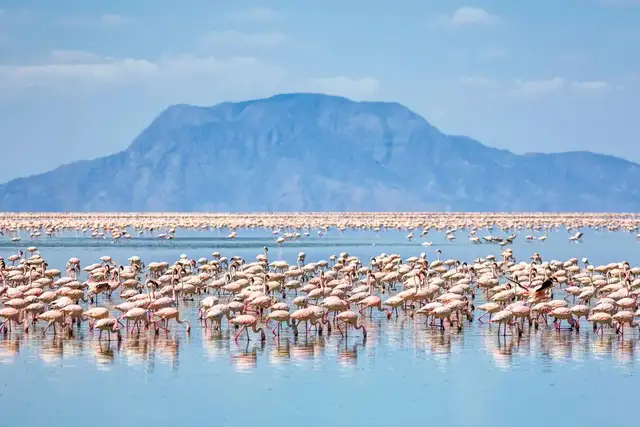
Lesser flamingos are a major reason to visit Lake Natron. The lake is an important breeding habitat for these birds. Its salty, alkaline waters support the algae they eat. Watching them feed helps explain their close link with this unusual setting.
Bring binoculars so you can watch without getting close. A guide can explain feeding habits, identify other birds and choose a suitable viewing spot. Keep away from nesting areas. Do not move closer just to improve a photograph.
Plan around conditions, not a guaranteed display. Flamingo numbers, breeding and viewing depend on water levels and other local conditions. Some trip descriptions mention November to April, but this is not a fixed yearly breeding calendar. Ask about recent local observations when planning your visit.
2. Prepare for a demanding hike on Ol Doinyo Lengai
Ol Doinyo Lengai is an active volcano, about 2,962 metres high. The Maasai know it as the Mountain of God. It is linked with unusual natrocarbonatite lava. This makes it interesting for travellers who enjoy geology as well as hiking.
The climb is physically demanding and needs careful preparation. Hiking time depends on the route, conditions and your pace. Check whether any time estimate covers only the ascent or the full return trip. Discuss the whole schedule and fitness needs before committing.
Ask your operator about current volcanic conditions, access, guides and equipment. Confirm footwear, water, clothing and lighting needs for your specific plan. Views towards Lake Natron and the wider Rift Valley depend on weather and visibility.
3. Photograph Lake Natron's salt patterns and volcanic scenery
Lake Natron offers small details as well as wide views. Salt crusts, shallow water, reflections and distant volcanic slopes provide different subjects. Tiny organisms and salt can add red and pink tones. However, the lake's appearance changes with conditions.
Do not expect the whole lake to show one colour. Look for smaller subjects, such as reflected sky, lines of birds or salt patterns. Sunrise and sunset offer changing light. Cloud cover and your position will affect the results.
A longer lens helps you photograph birds from a distance. A wider lens suits the surrounding landscape. Protect your equipment from dust and splashes. Ask permission before photographing people, homes or community activities, including during arranged visits.
4. Look for zebras, wildebeest and antelopes around Lake Natron
The grasslands around Lake Natron support zebras, wildebeest and antelopes. Watching them adds another part to your Tanzania Lake Natron visit. It shows how animals use the nearby land, rather than the highly alkaline water itself.
Keep your expectations different from those for a national park game drive. Sightings depend on location, plants, water and seasonal animal movements. Do not plan your visit around promised migration herds or predator sightings.
Ask whether your trip includes a wildlife drive or guided walk. Check what each option involves. A guide can explain animal behaviour, tracks and habitats, even when few large animals are visible.
5. Arrange a Maasai community visit
A community visit introduces you to people living around Lake Natron. The subjects discussed depend on plans agreed with your hosts. Conversations may cover livestock, daily routines and beadwork. They may also explore links between land, livelihoods and wildlife.
Music, dance or craft displays may be part of an arranged visit. Do not assume they will be included. Ask what is planned, and allow time for conversation rather than only taking photographs.
Follow your hosts' guidance about entering homes and taking photographs. If you want to buy crafts, ask how purchases are arranged. Before booking, ask who hosts the visit and how payments reach the community members involved.
6. Learn about geothermal springs with local guidance
Geothermal springs help explain the volcanic setting around Lake Natron. A visit does not need to involve bathing. It can show how underground heat and mineral-rich water shape the area.
Do not assume a hot spring is suitable for swimming. Water temperatures vary, and the source description reports temperatures reaching 60°C. This does not support advice to bathe there. Confirm the exact site, current conditions and local guidance before considering any water activity.
Do not use claims about healing or skin benefits to decide whether to enter spring water. If swimming matters to you, ask your operator to identify the exact proposed site. Ask them to explain those plans separately from a lake or geothermal visit.
7. Explore salt formations along Lake Natron's shore
The salt flats show how evaporation changes Lake Natron's shore. As water recedes, mineral deposits can form pale crusts, uneven edges and patterned surfaces. These details help explain why the lake looks different between visits and nearby viewpoints.
A guided outing can explain how these formations relate to the lake's plants, animals and water. Look for contrasts between salt deposits, shallow water and nearby ground. Do not expect a flat area that is white throughout.
Ask which areas you can approach under current conditions. Ground that looks firm from a distance is not always a suitable walking route. Avoid disturbing formations or approaching birds feeding or breeding nearby.
8. Plan an evening of stargazing and night photography
Stargazing offers a quiet way to end a Tanzania Lake Natron safari day. Away from strong artificial light, you may find it easier to see star patterns and their changing positions. The outline of Ol Doinyo Lengai can also provide a subject for night photographs.
Visibility depends on cloud cover, moonlight and your viewing position. Discuss your dates if seeing or photographing the Milky Way is a priority. Do not assume it will be equally visible every evening.
Binoculars can show more detail without a telescope. Check whether you can reach a suitable viewing area from your accommodation. Ask whether guided astronomy is included, rather than assuming specialist equipment or knowledge will be available.
9. Watch birds in wetlands and grasslands beyond the flamingos
Birdwatching gives you reasons to explore several habitats. Lake edges, wetlands and grasslands offer different viewing opportunities. Birds mentioned for the area include pelicans, storks, waders, birds of prey and songbirds.
Treat these groups as a starting point, not a guaranteed checklist. Which species you see depends on habitats and seasonal conditions. A bird guide can identify those present and explain their feeding habits.
Bring binoculars and a regional field guide or bird identification app. Pack a notebook if you keep a species list. Allow time to stop and watch, rather than rushing between several places.
10. Plan a lakeside picnic without disturbing wildlife
A picnic offers a pause between walks, photography and cultural visits. It gives you time to watch the landscape. You can enjoy a slower moment without moving straight to another activity.
Ask your guide to choose a suitable stopping place. Consider shade, wind, access and distance from birds. A viewpoint above the lake may work better than a spot beside the water.
Confirm whether food and drinking water are included or need separate plans. Keep food packed when not in use, and do not feed wildlife. Take all rubbish away. A carefully planned stop can fit into your day without disturbing nearby animals.
How to choose accommodation for your Lake Natron activities
Choose where to stay based on your planned Tanzania Lake Natron activities. An early hike, photography outing or slower cultural visit can affect your location and daily schedule. Ask for actual travel times between your proposed accommodation and each activity.
Compare campsite and lodge facilities and inclusions
Options discussed include campsites and lodges, but check each property's details before booking. Request its exact location, sleeping arrangements, bathrooms and meal plan. Ask about any other features that matter to you.
Do not assume a campsite provides tents. A lodge stay may not include transfers, guides or activities. Ask for a written list of what is included and what needs separate planning.
Verify accommodation locations and travel times to Lake Natron
Ngare Sero Mountain Lodge was named in the source article. Do not assume it is a suitable base for Lake Natron. Ask Lamz Tours and Travel to check the intended property, its location and travel times before adding it to your trip.
Confirm availability and facilities for your travel dates. Check accommodation standards before booking. Choose based on verified details, not general claims about views or convenience.
When to visit Lake Natron for your preferred activities
The best time to visit Lake Natron depends on your main interests. Walking, birdwatching, photography and volcano trekking need different conditions. No single date range guarantees every activity.
Plan outdoor activities from June to October with current local advice
June to October is generally described as the dry-season planning window. Consider it for trips with several outdoor activities. However, dry-season dates do not guarantee clear skies, comfortable temperatures or easy access.
Confirm road conditions close to departure. Check activity plans at the same time. For hiking especially, current local advice matters more than a broad seasonal guide.
Check recent water levels and flamingo observations before travelling
Keep flamingo viewing plans flexible. Water levels affect where birds gather and where visitors can watch them. A fixed November-to-April label does not reliably describe breeding activity.
Tell your operator whether you most want general birdwatching, photography or insight into the breeding habitat. Ask for recent local information. Remember that conditions and bird movements can change before your visit.
Tanzania itineraries to discuss alongside a Lake Natron visit
These Lamz Tours and Travel itineraries can help you compare wider Tanzania travel plans. They are not confirmed Lake Natron itineraries. Ask whether a Lake Natron extension is possible and how it would affect travel time. Check which activities would need separate plans.
Short Tanzania wildlife safaris and Kenya combinations
Use these trips to compare destinations and the time available. If a Tanzania Lake Natron visit is a priority, discuss it before choosing a short trip. Check that travel leaves enough time for your preferred activities.
- 2-day fly-in Serengeti safari in Tanzania
- 2-day Tarangire National Park and Ngorongoro Crater safari
- 3-day Tanzania safari in Serengeti National Park
- 3-day Tanzania wildlife safari
- 4-day Tanzania wildlife and culture safari
- 5-day Kenya and Tanzania safari
- 5-day circuit wildlife safari in Tanzania
- 6-day Ndutu migration safari for the calving season
Longer wildlife safaris, Zanzibar stays and Uganda combinations
Compare these options for trips covering several destinations or combining wildlife and beach stays. Ask for a day-by-day route showing where Lake Natron could fit. Do not assume you can add it without changing the schedule.
- 8-day Serengeti, Ngorongoro Crater and Zanzibar trip
- 8-day wildlife and beach holiday in Tanzania
- 8-day wildlife safari in Tanzania
- 9-day Zanzibar and wildlife safari
- 10-day Uganda and Tanzania safari with gorillas, chimpanzees and wildlife
Kilimanjaro routes and combined trekking and safari trips
These trips focus on Kilimanjaro, not Ol Doinyo Lengai. Discuss the overall physical demands before combining mountain trekking with Lake Natron. Allow for recovery time when planning both.
- 5-day Mount Kilimanjaro trek on the Marangu route
- 6-day Mount Kilimanjaro trek on the Machame route
- 7-day Kilimanjaro climb via the Machame route
- 8-day Kilimanjaro climb on the Lemosho route
- 9-day Kilimanjaro climb on the Lemosho route
- 12-day Mount Kilimanjaro climb and Tanzania safari
Tanzania birdwatching tours to compare by habitat and pace
If birds are your main interest, compare these trips' habitats and pace with your Tanzania Lake Natron goals. Ask whether the planned guiding focuses on birds. Check whether the route allows time for careful watching.
Discuss your Lake Natron activities and travel plans with Lamz Tours and Travel
Start your Tanzania Lake Natron plans with the two or three experiences that matter most to you. Flamingo watching and photography need a different schedule from a volcano climb. Cultural visits also need plans agreed with your hosts.
When choosing Lamz Tours and Travel to plan your trip, share your travel dates and group size. Explain your walking preferences and wider Tanzania route. Ask for a proposal confirming accommodation locations, transfers, guides, activity plans and what is included.
A well-paced Tanzania Lake Natron safari leaves time to watch rather than rush between stops. Base your plans on verified details and current local conditions. Leave room for changes in weather, access and wildlife movements.
Ready to plan your safari?
Talk to a Lamz Tours specialist and get a tailor-made quote.
Make an enquiry