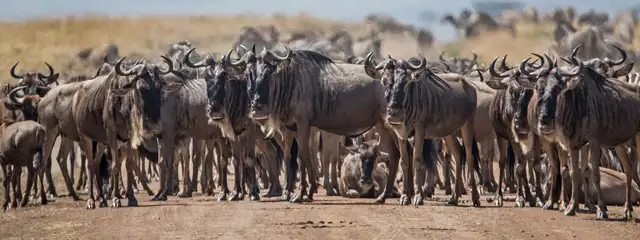
On a safari in Tanzania, river crossing during the Great Wildebeest Migration in the Serengeti, with crocodiles waiting and dust rising from thousands of hooves.
There are wildlife spectacles, and then there is the Great Wildebeest Migration. A safari in Tanzania puts you right in the middle of the greatest show on earth. Over two million wildebeest, zebras, and gazelles move in an endless, ancient circuit across the Serengeti. They chase rain and fresh grass. They give birth in waves. They cross crocodile infested rivers. They die by the thousands. And somehow, year after year, they keep going. A safari in Tanzania is not complete without witnessing at least one chapter of this moving story. Most people have heard of the Migration. But until you stand on the banks of the Mara River, dust in your throat, hooves pounding the earth, you do not truly understand it. These are the 7 wonders that will leave you speechless.
Popular Tanzania Safari Packages
Best 7 Great Wildebeest Migration Wonders On Tanzania Tour Safari
1. The River Crossing Is Pure Chaos and Courage
A safari in Tanzania shows you nature at its most honest. Nowhere is that more true than at the Mara River between July and October. Thousands of wildebeest gather on the dusty banks. They are nervous. They pace back and forth. A safari in Tanzania puts you in a vehicle just meters away as one brave animal, usually an old female, steps into the water. Then the flood begins. They pour down the steep banks, crashing into the brown water. Crocodiles explode from below. The current sweeps some away. On the other side, lions wait for the exhausted survivors. It is loud. It is dusty. It is terrifying and magnificent. You will not cheer. You will just stare with your mouth open. That is the power of a river crossing.
2. The Calving Season Brings Half a Million Babies in Weeks
A safari in Tanzania during January and February takes you to the southern Serengeti plains. The short grass plains near Ndutu and Kusini. And here, a different kind of wonder unfolds. In just two to three weeks, over 400,000 wildebeest calves drop onto the earth. A safari in Tanzania during calving season means watching newborns take their first wobbly steps within minutes of being born. They have to. The predators are watching. Lions, cheetahs, leopards, and hyenas all know what this season means. Easy food. The chaos is constant. A calf that gets separated from its mother is gone in seconds. But the ones that survive? They run with the herd within a day. New life and sudden death happen side by side. It is exhausting just to watch.
3. The Columns of Dust Can Be Seen from Space
A safari in Tanzania reveals that the Migration is not just about individual animals. It is about the sheer, overwhelming mass of them. When the herds are moving across open plains, they stretch for miles. Thousands upon thousands of wildebeest in long, dark columns. A safari in Tanzania lets you sit on a rocky kopje and watch this river of hooves flow past for hours without ending. The dust they kick up rises in brown clouds so thick that satellites orbiting the earth can photograph it. From the ground, the dust catches the afternoon light and turns everything gold. The sound is a low, constant rumble of grunting wildebeest, clicking zebras, and the soft thunder of feet on dry soil. You have never felt so small.
4. Zebras Lead the Way, Not Wildebeest
A safari in Tanzania teaches you to watch carefully. Most people assume wildebeest are in charge of the Migration because there are so many of them. But watch closely. A safari in Tanzania will show you that zebras are almost always at the front of the moving columns. Why? Zebras have better memories. They remember safe river crossings from previous years. They also have excellent eyesight and hearing. The wildebeest follow the zebras like nervous teenagers following a confident older sibling. Zebras also eat the long, tough grass tops, leaving the shorter, more nutritious bottom parts for the wildebeest. It is a partnership that has evolved over a million years. Every time you see a zebra, remember. That striped animal might be saving the life of every wildebeest behind it.
5. The Grumeti River Has Monster Crocodiles
A safari in Tanzania between May and July brings you to the western corridor of the Serengeti and the Grumeti River. This is the first major obstacle of the Migration. The river is narrower than the Mara, but do not let that fool you. A safari in Tanzania here reveals crocodiles that grow up to five meters long. These are not the lazy reptiles you see sleeping on riverbanks. These are seasoned killers who have waited months for the herds to arrive. When the wildebeest try to cross, the crocodiles explode with shocking speed. They grab a wildebeest by the head or leg and twist, dragging the screaming animal underwater. The crossing is usually smaller scale than the Mara, but in some ways, it feels more brutal. The crocodiles here are massive, and the river is narrow enough that you see every detail. You will not forget the sound of a crocodile's jaws slamming shut.
6. The Migration Never Stops, Even When You Cannot See It
A safari in Tanzania might leave you wondering where the herds go during the wet season. They disappear into the vast woodlands and hidden valleys of the Serengeti. But they never stop moving. A safari in Tanzania any time of year will still find wildebeest and zebras somewhere. They are just spread out. During November and December, the short rains lure the herds down from Kenya's Maasai Mara back into Tanzania. They move south slowly, eating as they go. By April, they are scattered across the central and southern Serengeti again, preparing for the next calving season. The Migration is not a straight line. It is a messy, ancient circle. And being on safari when the herds are "hidden" feels like a treasure hunt. You drive for an hour seeing nothing. Then you crest a hill, and the whole world is wildebeest again.
7. You Can Follow the Same Herd for Your Entire Trip
A safari in Tanzania gives you a gift that no documentary ever can. Mobility. You are not stuck in one place watching the same river crossing day after day. A safari in Tanzania with a good tour operator means you can move with the herds. If the wildebeest are gathering at the Mara River, your guide drives you there. If they have already crossed and are spreading out into the northern woodlands, you follow them. Some safaris even use small planes to jump ahead of the Migration, landing on dusty airstrips in the middle of nowhere. You step out of the plane, and there they are. A million animals grazing quietly, unaware that you have just traveled two hours to witness their ancient rhythm. That feeling of tracking something so wild and so vast is the real wonder. The Migration does not perform for you. You have to earn it. And when you do, it changes you.
Weather and Climate During the Great Migration on a Safari in Tanzania
The weather on a safari in Tanzania varies depending on where the Migration is. The Serengeti has two rainy seasons and two dry seasons. The long rains fall from March to May. The ground turns green and muddy. Many lodges close, and the roads become difficult. The short rains fall from November to December. This is a beautiful time. The air is fresh. The landscapes are lush. The dry season from June to October has almost no rain. Days are warm, nights are cool, and the animals gather around water sources. If you want river crossings, visit from July to September. If you want the calving season and green plains, visit from January to February. A safari in Tanzania can work any time of year, as long as you know what to expect. Just bring a jacket for early mornings on the crater rim. It gets colder than you think.
Best Time for the Great Migration on a Safari in Tanzania
The best time for a safari in Tanzania focused on the Great Migration depends entirely on which wonder you want to see. For the famous river crossings at the Mara River, visit from July to October. For the Grumeti River crossings, visit May to July. For the calving season in the southern Serengeti, visit January to February. For lush green landscapes and fewer tourists, visit November to December or March. For the general experience of seeing massive herds spread across open plains, June to October is ideal. A safari in Tanzania during April and May is not recommended. Many camps close, and the mud makes driving miserable. Speak honestly with your tour operator. Tell them what you dream of seeing. They will tell you when to come. And trust them. They have been watching this river of hooves for decades.
How to Get to the Great Migration on a Safari in Tanzania
Getting to a safari in Tanzania that focuses on the Migration is easier than you think. Most travelers fly into Kilimanjaro International Airport, which is the main gateway for the northern safari circuit. From there, you drive to Arusha for a night. The next morning, you can either drive to the Serengeti or take a small domestic flight. A safari in Tanzania that uses flights saves you long driving days. Small planes leave from Arusha Airport and land at various airstrips inside the Serengeti, including Seronera, Kogatende, and Grumeti. Your guide meets you at the airstrip, and you start your game drive immediately. If you prefer driving, the road from Arusha to the Serengeti takes about six to eight hours, including a stop at the Ngorongoro Crater rim. The roads are rough in places, but the landscape is stunning. Either way, a safari in Tanzania gets you to the Migration without too much trouble.
Things to Do on a Safari in Tanzania Besides the Migration
A safari in Tanzania offers so much more than just following wildebeest. You can go hot air ballooning over the Serengeti at sunrise and watch the herds from above. You can visit a Maasai village and learn about their traditional jumping dances and their deep knowledge of the land. A safari in Tanzania can also take you to the Ngorongoro Crater, where you can see the Big Five in a single morning. You can hike to the rim of the crater and look down at the wildlife below. You can visit Olduvai Gorge, where the Leakey family uncovered some of the oldest human fossils on earth. A safari in Tanzania is also a bird lover's paradise. Over 500 species live in the Serengeti alone. And if you have time, you can add Zanzibar to your trip for white sand beaches and turquoise water. The Migration is the main event. But the supporting acts are world class.
What to Carry for the Great Migration on a Safari in Tanzania
Packing properly for a safari in Tanzania will make your Migration experience much better. Neutral colored clothing is essential. Avoid bright colors that can scare the animals. Lightweight, breathable fabrics for the hot afternoons, and warm layers for early mornings and evenings. A good pair of binoculars is non negotiable. You will miss half the action without them. A camera with a zoom lens and plenty of memory cards is a must. A safari in Tanzania will fill your camera faster than you expect. Sunscreen, sunglasses, and a wide hat are necessary, even on cloudy days. The sun is strong. Insect repellent is essential, especially near rivers where mosquitoes gather. Comfortable walking shoes for short hikes and lodge visits. A reusable water bottle. And do not forget your passport, visa documents, and any medications. Most lodges provide mosquito nets and basic toiletries, but it never hurts to bring your own.
Where to Stay on a Safari in Tanzania
Accommodation on a safari in Tanzania ranges from simple tented camps to luxury lodges with swimming pools. The key for the Migration is location. You want to stay as close to the action as possible. In the northern Serengeti near the Mara River, the best camps are mobile tented camps that move with the seasons. They are surprisingly comfortable, with real beds, en suite bathrooms, and hot bucket showers. In the southern Serengeti during calving season, lodges like Ndutu Safari Lodge put you right in the middle of the herds. A safari in Tanzania that stays inside the park means you wake up to wildebeest outside your tent. In the central Serengeti, there are permanent lodges and camps that offer more amenities, but you drive further to reach the Migration. Book your accommodation at least six months in advance for the dry season. The best camps fill up a year ahead. Do not wait.
Why Book with Lamz Tours and Travel for the Great Migration on a Safari in Tanzania
Booking your safari in Tanzania with Lamz Tours and Travel means you have guides who eat, sleep, and breathe the Great Migration. They have spent years watching the herds. They know which river crossing points are active. They know how to position the vehicle for the best light and the safest view. On a safari in Tanzania with Lamz Tours and Travel, you are not following a rigid itinerary. You are following the wildebeest. If the herds move, you move. They handle everything. Airport transfers, park fees, meals, accommodation, and the endless logistics of a safari in Tanzania. You just wake up each morning, drink your coffee, and ask your guide one question. Where are they today? Lamz Tours and Travel also keeps their groups small. No overcrowded vehicles. No rushing from one sighting to the next.
Ready to plan your safari?
Talk to a Lamz Tours specialist and get a tailor-made quote.
Make an enquiry