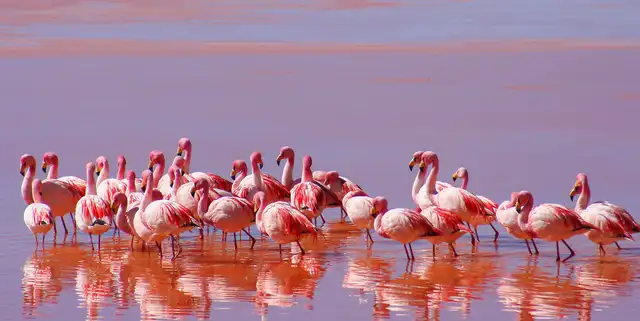
A Safari in Tanzania, Flamingos wading in the shallow, caustic waters of Lake Natron, with Ol Doinyo Lengai watching in the background.
Think you know flamingos? Pretty pink birds, long legs, maybe a lawn ornament or two? Lake Natron will completely rewrite what you think you know. Tucked away in northern Tanzania, near the Kenyan border, this harsh, otherworldly lake is the most important breeding ground for lesser flamingos on the entire planet. On a safari in Tanzania, most people head straight for the Serengeti or Ngorongoro. But the ones who make the rugged, beautiful detour to Lake Natron come home with stories that sound made up. Because here, nothing is ordinary. The water can burn your skin. The volcano spits black lava. And over a million flamingos turn this deadly lake into a nursery. If you want a safari in Tanzania that surprises you at every turn, put Lake Natron on your list. These are the 10 things nobody tells you.
Popular Tanzania Safari Packages
Best 6 Surprises About Lake Natron Flamingos on a Safari in Tanzania
1.The Water Is So Caustic It Can Burn Your Skin
Let’s get the scary surprise out of the way. Lake Natron looks like something from another planet. Its surface is often glassy and still, reflecting the sky in shades of orange, red, and pink. But don’t touch it. The water has a pH as high as 12, which is nearly the same as ammonia. It comes from minerals washing down from the surrounding hills, plus hot springs that feed the lake directly. The water feels slippery and soapy to the touch. And if you have any tiny cuts on your hands? You will know about it. On a safari in Tanzania, you get used to friendly wildlife. Lake Natron is not friendly. It is ancient, powerful, and completely indifferent to you. That is exactly why the flamingos love it.
2.Flamingos Come Here Because Almost Nothing Else Can
Here is the beautiful, brutal truth. The same caustic water that burns your skin also keeps away almost every predator. Crocodiles? No. Snakes? Rarely. Hyenas or jackals? They would never risk it. On a safari in Tanzania, you learn that animals are constantly running or hiding or fighting. But at Lake Natron, lesser flamingos have found a true refuge. They build their muddy nesting mounds right in the middle of the lake bed, sometimes miles from shore. The water acts like a living moat. Hyenas can’t swim through it. Humans can’t wade through it. Only flamingos, with their tough, scaly legs, can stand where death waits for everyone else. It is one of nature’s strangest parenting strategies. And it works beautifully.
3.The Flamingos Aren't Pink When They Hatch
You drive all the way to this remote lake, excited to see a million pink birds. And then you look through your binoculars and see… grey fluff balls? Yes. On a safari in Tanzania, one of the sweetest surprises is watching flamingo chicks. They hatch completely grey, with straight beaks and soft downy feathers. They look like sad little ducks. Over the next two years, their diet of blue-green algae and tiny brine shrimp slowly turns them pink. The algae contains beta-carotene, the same stuff that makes carrots orange. So really, flamingos are what they eat. A parent flamingo even loses its own pink color while feeding a chick, draining its own nutrients to keep the baby alive. That is love. Ugly grey, exhausting, beautiful love.
4.You Can Walk Right Past Thousands of Nesting Mounds
In most national parks, you stay in the vehicle. You watch from a distance. But at Lake Natron, especially with a local Maasai guide, you can walk along the dry lake edges during certain times of year. And what you see will stop your heart. Thousands upon thousands of conical mud mounds, each one about a foot tall, spaced almost perfectly apart. On a safari in Tanzania, you have probably seen animal nests before. But this is different. This is a city. A temporary, chaotic, screaming city of parent flamingos feeding chicks, defending their spot, and waddling back and forth to the water. You have to stay far enough away not to disturb them. But even from a respectful distance, the sight is overwhelming. The sound alone, a constant, low, grumbling chatter, stays with you for days.
5. The "Murder Lake" Myth Is Mostly Wrong
You may have heard the rumor. There is a story online that Lake Natron turns animals to stone. That any bird that touches the water becomes a calcified statue. That is based on a famous photo series by Nick Brandt, who placed dead animals in lifelike positions along the shore. He did not find them that way. On a safari in Tanzania, you will see dead flamingos and other birds along the shoreline. The lake is harsh. Birds die here, just like they die everywhere. And yes, the high mineral content can preserve their bodies in a chalky, crusty way. But they do not instantly turn to stone. The lake is not a murderer. It is just a very, very difficult place to live. The flamingos have figured it out. Most other birds have not.
6. The Volcano Behind the Lake Spits Black Foam
Look up from the flamingos. Way up. That massive, strange volcano on the southern shore is Ol Doinyo Lengai, which means "Mountain of God" in the Maasai language. And it is the only volcano on earth that erupts black lava. Not red. Not orange. Black. And the lava is so cold, relatively speaking, that it looks like thick motor oil or black foam bubbling out of the ground. On a safari in Tanzania, you have probably seen photos of classic red lava flows. This is nothing like that. Ol Doinyo Lengai erupts natrocarbonatite lava, which turns white when it reacts with moisture. So the mountain is constantly shifting between black and white, like some god’s mood ring. You can hike it if you are very fit and have a great guide. But even from the lake shore, it steals the show.
Weather and Climate on a Safari in Tanzania at Lake Natron
On a Safari in TanzaniaLake Natron is hot. Really hot. Daytime temperatures often reach 35°C to 40°C (95°F to 104°F), even during the cooler months. The air is dry and the sun is intense. Nights cool down to around 18°C to 22°C (64°F to 72°F). The best months to visit are June to September (cooler and dry) and November to January (short rains, fewer tourists, best for flamingo chicks). Avoid the long rainy season from March to May. The roads become nearly impassable, and many camps close. Even in dry months, bring a hat, sunscreen, and at least three liters of water per person per day. The lake does not forgive dehydration.
Best Time for Flamingos on a Safari in Tanzania at Lake Natron
The best time for flamingos at Lake Natron depends on what you want to see. For the largest flocks of adult birds, visit from August to October. For fluffy grey chicks and busy parents, visit from November to January. For the famous courtship dancing, visit in July or August. If you want to combine Lake Natron with a classic safari in Tanzania in the Serengeti, the best overlap is from June to October. Your tour operator can help you build an itinerary that catches the migration and the flamingos in the same trip. Just be honest about how much rough driving you can handle. Lake Natron is worth it, but it is not for everyone.
How to Get to Lake Natron on a Safari in Tanzania
Most travelers fly into Kilimanjaro International Airport, then drive to Arusha for a night. From Arusha, Lake Natron is about 5 to 6 hours by 4WD vehicle. The last section of road is rough, rocky, and dusty. Do not attempt it in a regular car. You will break something. On a safari in Tanzania that includes Lake Natron, most tour operators combine it with the Serengeti or Ngorongoro, or both. Another option is to drive from Lake Manyara to Lake Natron, which takes about 4 hours but crosses a remote, stunningly beautiful escarpment. Domestic flights do not land at Lake Natron. You drive. And the drive itself, past Maasai bomas, through acacia woodlands, with Ol Doinyo Lengai growing larger on the horizon, is half the adventure.
Things to Do on a Safari in Tanzania at Lake Natron Besides Flamingos
A visit to Lake Natron offers far more than flamingo watching. You can hike to the base of Ol Doinyo Lengai with a Maasai guide and stand on cooled black lava. You can visit the Engaresero waterfalls, where fresh spring water pours into pools you can actually swim in. On a safari in Tanzania, you can take a walking safari along the lake edge, learning to identify tracks and understanding why this harsh place matters. You can visit a Maasai boma for a traditional meal and hear stories around the fire. You can simply sit on a rocky outcrop at sunset, watching the volcano turn purple and orange while flamingos fly in long lines against the fading light. That last activity costs nothing. And it might be the best one.
What to Carry for Lake Natron on a Safari in Tanzania
Packing for Lake Natron is different from a regular safari in Tanzania. Neutral colored clothing still matters, but lightweight and breathable is even more important because of the heat. A wide hat, strong sunscreen, and wraparound sunglasses are essential. The reflection off the salt flats and water is blinding. Bring a reusable water bottle and a way to purify water, or carry at least 2 to 3 liters per person. Binoculars are critical for watching flamingos without disturbing them. A camera with a zoom lens (300mm or more) will change your life here. Closed-toe walking shoes for the rough lake edges. And a headlamp for nighttime. Most camps have no outdoor lighting, and the paths are rocky.
Where to Stay at Lake Natron on a Safari in Tanzania
Accommodation at Lake Natron is intentionally basic. There are no luxury lodges with swimming pools. And that is a good thing. The most popular option is the Lake Natron Tented Camp, which has comfortable tents with real beds, en suite bucket showers (warmed by solar or request), and a dining area with surprisingly good food. More budget-friendly are the Maasai-run campsites near the lake entrance, where you bring your own tent or rent a basic banda. On a safari in Tanzania that includes Lake Natron, most operators book the tented camp by default. Book well in advance during the dry season. There are only a handful of places to stay, and they fill up with photographers and birders who plan their trips a year ahead.
Why Book with Lamz Tours and Travel for Lake Natron on a Safari in Tanzania
Booking your Lake Natron experience with Lamz Tours and Travel means you get guides who have driven that terrible road a hundred times. They know when to leave Arusha to beat the heat. They know which track is passable after a rain. And most importantly, they know the flamingos. On a safari in Tanzania with Lamz Tours and Travel, your guide will position you for morning light on the lake, help you identify individual bird behaviors, and share stories about the Maasai families who live along the shore. We handle the park fees, the transfers, the packed meals, and the unexpected flat tire. You just show up curious and open-minded. Lamz Tours and Travel also prioritizes responsible viewing. No drones. No walking into nesting areas. No loud noises. Because Lake Natron is fragile. And if we lose it, we lose one of the strangest, most wonderful places on earth.
Ready to plan your safari?
Talk to a Lamz Tours specialist and get a tailor-made quote.
Make an enquiry