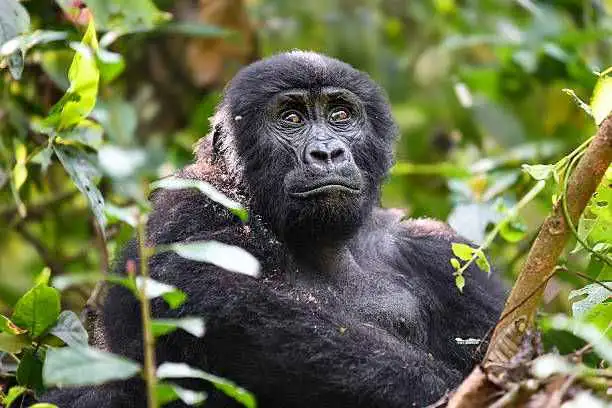
Experience the best 5 wonders to experience on gorilla trekking in Uganda, from the misty forests of Bwindi to the golden monkeys of Mgahinga and the Batwa cultural trail.
Gorilla trekking in Uganda is completely different from a classic savannah safari. It is not about lions and elephants. It is about stepping into the misty rainforests of the Virunga Mountains and coming face to face with mountain gorillas, one of the rarest creatures on earth. On gorilla trekking in Uganda, you push through thick vines, climb steep slopes, and listen for the grunts and rustles that signal a gorilla family is near. Uganda is home to over half of the world's remaining mountain gorillas, with two parks offering this life changing experience. This article covers the best 5 wonders you should not miss on gorilla trekking in Uganda.
Popular Uganda Safari Packages
Best 5 Wonders to Experience on Gorilla Trekking in Uganda
1. The Mountain Gorillas of Bwindi Impenetrable Forest
The greatest wonder on gorilla trekking in Uganda is the mountain gorillas of Bwindi Impenetrable National Park. This ancient forest is home to over 400 mountain gorillas, nearly half of the world's remaining population. On gorilla trekking in Uganda, you hike through dense vegetation, following trackers who have located a gorilla family. The trek can take one hour or five. The terrain is steep and slippery. Then you hear them. The silverback grunts. Leaves rustle. And suddenly, a massive black figure emerges from the green. On gorilla trekking in Uganda, you spend one precious hour with the gorillas. You watch mothers groom their babies. You see juveniles wrestle and tumble. The silverback watches you with calm intelligence. The experience is humbling and emotional.
2. The Virunga Volcanoes of Mgahinga
Mgahinga Gorilla National Park is the second place for gorilla trekking in Uganda. It is smaller than Bwindi, but it has a wonder that Bwindi does not. The park sits in the Virunga Mountains, a chain of dormant volcanoes that straddle the borders of Uganda, Rwanda, and Congo. On gorilla trekking in Uganda here, you see the dramatic cones of Mount Muhabura, Mount Gahinga, and Mount Sabyinyo. The scenery is stunning. The park has only one habituated gorilla family, the Nyakagezi group, but it is known for being mobile. They sometimes cross the border. On gorilla trekking in Uganda, if you track them, you may also see golden monkeys. Mgahinga is also the starting point for the hike to the summit of Mount Sabyinyo, where you can stand in three countries at once
3. The Golden Monkeys of Mgahinga
While gorilla trekking in Uganda is the main draw, Mgahinga National Park offers another wonder: golden monkey trekking. These small, vibrant primates have bright orange gold fur that glows in the forest light. On gorilla trekking in Uganda, you can add a golden monkey trek to your itinerary. The trek is shorter and less strenuous than gorilla trekking. The monkeys live in the bamboo forests on the slopes of the volcanoes. You watch them leap from stalk to stalk, feed on bamboo shoots, and groom each other. On gorilla trekking in Uganda, golden monkeys are often seen in larger groups than gorillas, so you see more action. The experience is joyful and lively. You do not need a separate permit for golden monkeys, and the cost is much lower than gorilla permits. For travelers who want to extend their primate adventure, adding golden monkeys to gorilla trekking in Uganda is a perfect choice.
4. The Batwa Cultural Experience
Long before gorilla trekking in Uganda became a tourist attraction, the Batwa people lived in the forests of Bwindi and Mgahinga. They were hunter gatherers, known as the "keepers of the forest." When the national parks were established to protect gorillas, the Batwa were displaced. On gorilla trekking in Uganda, you can visit Batwa communities to learn about their traditional life. You walk with Batwa guides into the forest. They show you how to build a hut from leaves, how to set a trap for small game, and which plants are used for medicine. You hear them sing traditional songs and see their ancient dances. On gorilla trekking in Uganda, the Batwa cultural experience is both educational and emotional. It gives context to the forest and the people who once lived there. The experience supports Batwa communities through tourism revenue. It adds a human layer to your gorilla trekking in Uganda journey.
5. The Batwa Pygmy Trail and Garama Cave
Deep in the forests near Bwindi, the Batwa Pygmy Trail leads to Garama Cave, a wonder of geology and history. On gorilla trekking in Uganda, this is a side trip that most tourists miss. The cave was once used by the Batwa as a shelter and a meeting place. It was also the site of rituals and ceremonies. On gorilla trekking in Uganda, you descend into the cave with a Batwa guide. The cave is dark and cool. Your guide lights a small fire and tells stories of how the Batwa used the cave to hide from enemies. The acoustics are incredible. When the Batwa sing, their voices echo off the limestone walls. The hike to the cave passes through beautiful forest where you may see monkeys and birds. Adding the Batwa Pygmy Trail to your gorilla trekking in Uganda itinerary gives you a deeper appreciation for the region's cultural and natural history.
Weather and Climate on Gorilla Trekking in Uganda
On gorilla trekking in Uganda, the weather in Bwindi and Mgahinga is cool and wet year round. Daytime temperatures range from 15°C to 20°C. Nights are colder, often dropping to 10°C. Rain is common, even during the dry seasons. The dry seasons from June to August and December to February are the best times for gorilla trekking in Uganda. Trails are less muddy, and skies are clearer. The rainy seasons from March to May and September to November have fewer tourists and lush green landscapes, but trekking is more slippery.
Best Time for Gorilla Trekking in Uganda
The best time for gorilla trekking in Uganda is during the dry seasons from June to August and December to February. The trails are easier to navigate, and the chance of rain is lower. The dry season is also the peak tourist season, so gorilla permits sell out months in advance. If you want fewer crowds and don't mind mud, the rainy seasons are a good option. Permits are easier to secure. On gorilla trekking in Uganda, January and February offer a sweet spot of good weather and fewer tourists than June to August.
How to Get to Gorilla Trekking Sites in Uganda
For gorilla trekking in Uganda, the nearest international airport is Entebbe International Airport near Kampala. From Entebbe, you drive to Bwindi or Mgahinga. The drive takes 8 to 9 hours. You can also take a domestic flight from Entebbe to Kihihi or Kisoro airstrips, which are close to the parks. The flight is about 1.5 hours. On gorilla trekking in Uganda, most travelers choose a combination of road and air. Your tour operator arranges all transport. A 4x4 vehicle is recommended for the rough roads near the parks.
Things to Do on Gorilla Trekking in Uganda
On gorilla trekking in Uganda, the main activity is tracking mountain gorillas. You also can go golden monkey trekking in Mgahinga. You can hike the volcanoes. You can visit the Batwa communities and explore Garama Cave. You can go birdwatching. Bwindi has over 350 bird species, including several Albertine endemics. On gorilla trekking in Uganda, you can also take a nature walk in the forest or visit nearby waterfalls. Each activity gives you a different perspective on the region.
Health and Safety Tips on Gorilla Trekking in Uganda
Before gorilla trekking in Uganda, check recommended vaccinations including yellow fever, typhoid, and hepatitis. Malaria is present at lower altitudes, so bring insect repellent and consider malaria prophylaxis. Do not trek if you have a cold or flu. Great apes are susceptible to human diseases. Stay at least 7 meters from the gorillas. Do not eat or drink near them. On gorilla trekking in Uganda, listen to your guide's instructions at all times. Wear long sleeves and pants to protect against stinging nettles. Bring trekking poles for the steep slopes.
What to Carry on Gorilla Trekking in Uganda
Pack sturdy, waterproof hiking boots that you have broken in. The trails are steep, muddy, and slippery. Waterproof jacket and pants are essential. Rain is common. Wear long pants and long sleeves to protect from stinging nettles. Bring gardening gloves for grip on vines and branches. Pack a daypack with water, snacks, and a packed lunch. Sunscreen, a hat, and sunglasses. Insect repellent with DEET. A good camera with extra batteries. Do not use flash on the gorillas. A waterproof cover for your camera. Do not forget your gorilla permit and passport.
Where to Stay on Gorilla Trekking in Uganda
On gorilla trekking in Uganda, accommodation ranges from luxury lodges to budget campsites. In Bwindi, luxury options include Sanctuary Gorilla Forest Camp and Clouds Mountain Gorilla Lodge. Mid range options include Gorilla Mist Camp and Bakiga Lodge. Budget travelers can stay at simple guesthouses near the park entrances. In Mgahinga, stay at Mount Gahinga Lodge or Amajambere Iwacu Camp. On gorilla trekking in Uganda, book well in advance, especially for the dry seasons. Gorilla permits are limited and sell out months ahead.
Why Book with Lamz Tours and Travel for Gorilla Trekking in Uganda
Booking gorilla trekking in Uganda with Lamz Tours and Travel ensures you experience the very best of the primate parks. Our local guides know the gorilla families, the best trekking routes, and the Batwa communities. We handle everything including permits, transport, accommodation, and guides. You just show up with your hiking boots and camera. Want to focus on the Nyakagezi group in Mgahinga? We can do that. Want to combine gorilla trekking with chimpanzee tracking in Kibale? We can arrange it. Lamz Tours and Travel supports local communities by hiring Ugandan guides and using family-run lodges. For a safe, meaningful, unforgettable gorilla trekking in Uganda experience, Lamz Tours and Travel is the best choice. You focus on the gorillas and the forest.
Ready to plan your safari?
Talk to a Lamz Tours specialist and get a tailor-made quote.
Make an enquiry