Experience the top ten must see bird species in Tanzania on Tanzania safaris, from the iconic lilac breasted roller to the rare shoebill stork.
A Tanzania safari is famous for lions, elephants, and the Great Migration. But for bird lovers, Tanzania is paradise. Over 1,100 bird species live here. That is more than most countries in Africa. On a Tanzania safari, you can see colorful rollers, giant ostriches, and rare birds found nowhere else. The best part? You do not need to be a hardcore birder to enjoy them. The birds are everywhere. On a Tanzania safari, they add color, sound, and life to every game drive. Here are the top ten must see bird species in Tanzania on Tanzania safaris.
Popular Tanzania Safari Packages
Best 10 Must See Bird Species on Tanzania Safaris
1. Lilac Breasted Roller
On a Tanzania safari, this is the bird everyone wants to photograph. The lilac breasted roller is stunning. Its chest is soft purple. Its wings are turquoise. Its back is brown. When it flies, it flashes bright blue. On a Tanzania safari, you will see them perched on acacia trees, fence posts, and power lines. They sit still, then dive to catch insects on the ground. They are common in the Serengeti, Tarangire, Lake Manyara, and Ngorongoro. This is the bird that makes non-birders fall in love with birding.
2. Ostrich
On a Tanzania safari, the ostrich is hard to miss. It is the largest bird in the world. A male can reach nine feet tall. They cannot fly, but they can run at 40 miles per hour. On a Tanzania safari, you will see them on open grasslands. The males have black and white feathers. The females are grayish brown. They nest on the ground, and the male does most of the incubation. Watch them from a distance. They can kick with serious force. The Serengeti and Ngorongoro are the best places to see them.
3. Grey Crowned Crane
On a Tanzania safari, the grey crowned crane is one of the most elegant birds. It has a golden crown of stiff feathers on its head. Its body is grey. Its wings are white and brown. It has a bright red throat pouch. On a Tanzania safari, you will see them in wetlands and grasslands. They dance during courtship, bowing and leaping. They are the national bird of Uganda, but they are common in northern Tanzania too. Lake Manyara and Ngorongoro are good places to look.
4. Secretary Bird
On a Tanzania safari, the secretary bird looks like an eagle on stilts. It has long legs, a hooked beak, and a crest of feathers on its head. It hunts on foot, stomping snakes and rodents to death. On a Tanzania safari, you will see them walking across the grasslands. They are silent and serious. They look like they are wearing old fashioned quill pens behind their ears, which is how they got their name. The Serengeti and Tarangire are the best places to see them.
5. Kori Bustard
On a Tanzania safari, the kori bustard is the heaviest flying bird in Africa. A large male can weigh 40 pounds. They spend most of their time on the ground, walking slowly through the grass. On a Tanzania safari, they are good at hiding. Look for them in open woodlands and grasslands. They eat insects, small mammals, and even snakes. When threatened, they fly heavily and reluctantly. The Serengeti, Ngorongoro, and Tarangire are good places to see them.
6. Fish Eagle
On a Tanzania safari, the fish eagle is the sound of Africa. Its call is loud and haunting. It echoes across lakes and rivers. The bird has a white head, brown body, and yellow beak. On a Tanzania safari, you will see them perched in tall trees near water. They dive to catch fish with their talons. Lake Manyara, the Serengeti rivers, and Lake Victoria are good places to see them. Bring binoculars. The fishing action is fast.
7. Flamingo
On a Tanzania safari, flamingos turn lakes pink. Thousands gather in shallow soda lakes. The lesser flamingo is smaller and brighter pink. The greater flamingo is larger and paler. On a Tanzania safari, you will see them in Lake Manyara, Lake Natron, and Ngorongoro's Lake Magadi. They filter algae and tiny crustaceans from the water. The best time is the dry season, when the lakes shrink and the birds concentrate. Seeing a sea of pink against blue water is unforgettable.
8. Shoebill Stork
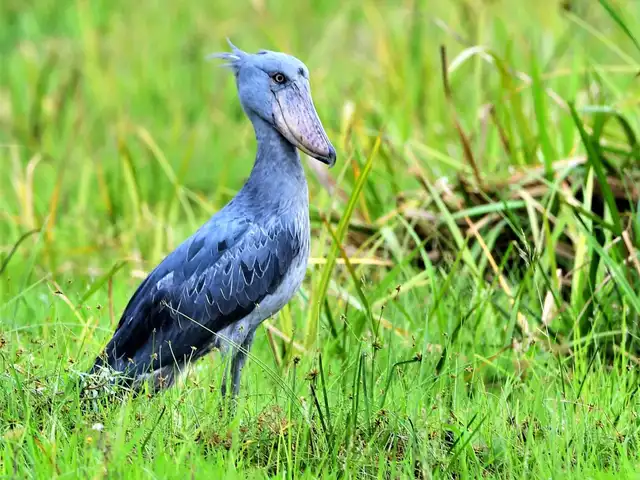
On a Tanzania safari, the shoebill is the holy grail for birders. This prehistoric looking bird has a massive, shoe shaped bill. It stands still for hours, waiting to ambush lungfish and frogs. On a Tanzania safari, it is rare and shy. The best place to see it is Rubondo Island National Park in Lake Victoria. You need a good guide and a bit of luck. The shoebill is endangered, and seeing one in the wild is a lifetime highlight. On a Tanzania safari, this bird is worth the extra effort.
9. Superb Starling
On a Tanzania safari, the superb starling is everywhere. You might overlook it because it is so common. But look closer. Its chest is bright orange. Its back is metallic green and blue. It has a white belly band. On a Tanzania safari, you will see them near lodges, picnic sites, and roadsides. They are bold and noisy. They eat insects and fruit. They are beautiful in the morning light. Do not ignore them just because they are common.
10. Rufous Tailed Weaver
On a Tanzania safari, the rufous tailed weaver is a special treat. It is found only in Tanzania. This small bird has a bright red tail and yellow underparts. On a Tanzania safari, you will see it in the Usambara and Uluguru Mountains. It lives in forests and gardens. It is not rare, but it is local. Birders travel from around the world to see it. On a Tanzania safari, adding a day in the Eastern Arc Mountains gives you a chance to see this endemic beauty.
Best Time for Birding on Tanzania Safari
The best time for birding on a Tanzania safari is the wet season from November to April. Migratory birds from Europe and Asia arrive. The landscape is green and lush. Birds are in breeding plumage. However, resident birds are present year round. The dry season from June to October is still good, especially for waterbirds around lakes and rivers
Best Places for Birding on Tanzania Safari
On a Tanzania safari, Lake Manyara has over 400 species including flamingos and pelicans. Ngorongoro Crater has 500 species including ostriches and crowned cranes. The Serengeti has rollers, bustards, and eagles. Tarangire has hornbills and starlings. Rubondo Island has the shoebill. The Usambara Mountains have endemic species found nowhere else.
What to Carry for Birding on Tanzania Safari
Pack binoculars. A good pair is essential. Bring a camera with a telephoto lens. Wear neutral colored clothing. Bring a field guide or birding app. Sunscreen, a hat, and insect repellent are important. A reusable water bottle keeps you hydrated. On a Tanzania safari, a good guide makes all the difference for birding.
Why Book with Lamz Tours and Travel for Birding on Tanzania Safari
Booking your birding Tanzania safari with Lamz Tours and Travel ensures you see the most birds. Our guides know bird calls, habitats, and the best spots for each species. We handle everything including transport, park fees, guides, and accommodation. You just show up with your binoculars. Want to focus on the shoebill? We can do that. Want to see the rufous tailed weaver in the Usambaras? We can arrange it. You focus on the birds. We handle everything else on your Tanzania safari.
Ready to plan your safari?
Talk to a Lamz Tours specialist and get a tailor-made quote.
Make an enquiry