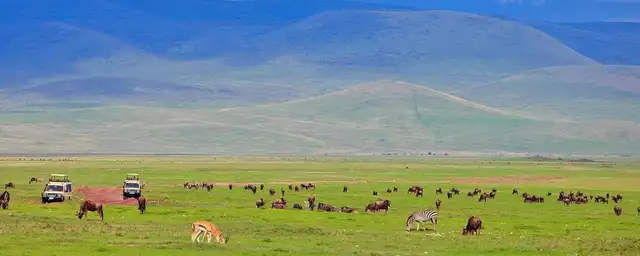
Top 10 attractions to see on safari to Ngorongoro Crater Tanzania, from Big Five sightings to flamingos, forests, hippo pools, birdlife, and crater rim views.
A safari to Ngorongoro Crater is one of the most rewarding wildlife experiences in Tanzania. This vast, bowl-shaped caldera is home to over 25,000 animals, including lions, elephants, buffalo, rhinos, and leopards all within a compact area that makes sightings frequent and accessible. The crater’s unique geography, with steep walls enclosing a flat, fertile floor, creates a natural sanctuary where wildlife thrives year-round. On safari to Ngorongoro Crater, travelers can expect close-up views of predators and grazers, dramatic landscapes, and rich birdlife, all within a single game drive. The area is also a UNESCO World Heritage Site, recognized for its ecological importance and geological history.
Beyond the wildlife, a safari to Ngorongoro Crater offers cultural and scenic highlights. Visitors can meet Maasai communities living around the rim, hike nearby craters like Empakaai, and enjoy sunrise views from lodges perched above the caldera. The crater floor features freshwater springs, alkaline lakes, and woodlands that support diverse species and offer varied terrain for exploration. Whether you’re focused on photography, birdwatching, or simply seeing the Big Five, Ngorongoro delivers high value in a short time. It’s ideal for travelers with limited days who want maximum sightings without long drives between parks
Top best Tanzania safari packages
2-days-fly-in-serengeti-safari-in-tanzania
2-days-tarangire-national-park-and-ngorongoro-crater-safari
3-days-tanzania-safari-in-serengeti-national-park
3-days-tanzania-wildlife-safari
4-days-epic-tanzania-wildlife-and-culture-safari
5-day-kenya-and-tanzania-safari
5-days-circuit-wildlife-safari-in-tanzania
6-days-ndutu-migration-safari-calving-season
8-day-serengeti-ngorongoro-crater-and-zanzibar
8-days-wildlife-and-beach-holiday-tanzania
8-days-wildlife-safari-tanzania
9-days-zanzibar-and-wildlife-safari
10-days-uganda-and-tanzania-safari-gorillas-chimpanzees-and-wildlife
Best 10 Attractions to See on Safari to Ngorongoro Crater Tanzania
The Crater Floor Itself, The Eighth Wonder
On safari to Ngorongoro Crater, the descent into the 260 km² caldera is a dramatic shift into a wildlife-packed basin. The flat floor, surrounded by steep walls, holds one of Africa’s densest concentrations of animals. It’s the largest intact volcanic caldera on Earth and a UNESCO site. The crater floor offers unmatched chances to spot predators and grazers in one sweep. For anyone planning a safari to Ngorongoro Crater, this is the core experience where lions, elephants, and rhinos roam freely in open view. The terrain is easy to navigate, making it ideal for day drives. Visitors should bring binoculars and cameras with zoom lenses to capture distant animals and sweeping views. Early morning drives offer the best light and animal activity.
The Ngorongoro Hippo Pool
A safari to Ngorongoro Crater isn’t complete without stopping at the hippo pool near Lake Magadi. Unlike river sightings where only heads pop up, here you’ll see full-bodied hippos swimming, rolling, and interacting in shallow water. It’s a reliable spot for close-up views and photography. The pool is also surrounded by birdlife, making it a good place to spot herons, storks, and ibises. On safari to Ngorongoro Crater, this area offers a break from the open plains and a chance to observe animal behavior in water. Visitors should stay in vehicles, as hippos are unpredictable. The pool is accessible year-round, and mornings tend to be quieter. It’s a great stop for families and birdwatchers looking for variety beyond the big mammals.
Lake Magadi and the Flamingos
Lake Magadi is a shallow, alkaline lake that adds color to any safari to Ngorongoro Crater. Its soda-rich waters attract thousands of lesser flamingos, forming a pink ribbon along the shoreline. The contrast between the pink birds, blue water, and green plains is striking. For photographers on safari to Ngorongoro Crater, this is a must-stop location. The flamingos feed on algae and often move in synchronized patterns, creating dynamic scenes. Visitors should bring polarized sunglasses to reduce glare and enhance visibility. The lake is best viewed from a distance, as the terrain around it can be soft and muddy. It’s also a good spot to see other waterbirds and occasional predators nearby. Early morning light enhances the colors and reflections.
The Big Five in One Place
Seeing all of the Big Five lion, elephant, buffalo, rhino, and leopard is a major reason to plan a safari to Ngorongoro Crater. Lions are often seen lounging or hunting, with males sporting dark manes. Elephants here are mostly bulls with large tusks. Buffalo graze in herds, often covered in mud. Black rhinos, critically endangered, are best spotted with binoculars from a distance. Leopards are rare but live in the Lerai Forest. On safari to Ngorongoro Crater, guides know the best spots and times to increase your chances. Visitors should be patient and avoid loud noises. The crater’s compact size makes it possible to see all five in one day, especially during cooler hours when animals are active.
The Lerai Forest
The Lerai Forest is a yellow-barked acacia woodland that adds variety to a safari to Ngorongoro Crater. Located in the southern part of the caldera, it’s a cooler, shaded area where elephants, baboons, vervet monkeys, and serval cats are often seen. Leopards also use this forest for cover, making it one of the few places in the crater to spot them. On safari to Ngorongoro Crater, this forest offers a change from the open plains and a chance to observe animals in a more intimate setting. Visitors should drive slowly and scan the trees carefully. The forest is also good for birdwatching, with species like turacos and hornbills. It’s best visited mid-morning when animals move between feeding and resting zones.
Gorigor Swamp
Gorigor Swamp is a freshwater zone that draws wildlife during dry months, making it a key stop on safari to Ngorongoro Crater. Elephants splash and cool off here, buffalo wallow in mud, and antelope come to drink. The area is surrounded by grasslands where wildebeest and zebra graze. On safari to Ngorongoro Crater, this swamp offers reliable sightings and a chance to observe animal interactions. The springs feeding the swamp keep it active year-round. Visitors should bring insect repellent and stay inside vehicles, as the area can attract biting flies. The swamp is also a good place to see waterbirds and predators waiting nearby. Late morning is ideal, when animals gather to drink and rest before the heat peaks.
The Ngoitokitok Spring Picnic Site
Ngoitokitok Spring is the main picnic site inside the crater and a practical stop during a safari to Ngorongoro Crater. It’s one of the few places where visitors can safely exit vehicles and enjoy a meal while watching wildlife. Hippos often lounge nearby, and birds like kites and storks patrol the area. On safari to Ngorongoro Crater, this site offers a break from driving and a chance to stretch legs. Visitors should keep food secure, as birds and monkeys may try to snatch it. The spring itself attracts animals throughout the day, making it a good spot for passive viewing. Shade is limited, so hats and sunscreen are useful. It’s a social spot where multiple safari vehicles often gather.
Massive Herds of Wildebeest and Zebra
The crater supports over 7,000 wildebeest and 4,000 zebra, forming the main prey base for predators. On safari to Ngorongoro Crater, these herds are easy to spot grazing across the plains. While not part of the Great Migration, their numbers and movements are impressive. Visitors often see lions stalking nearby or hyenas trailing behind. On safari to Ngorongoro Crater, watching these herds gives insight into predator-prey dynamics. The animals are active throughout the day, but early morning and late afternoon offer the best light for photography. Visitors should stay alert for sudden movements, as predators may strike. The herds also attract birds like oxpeckers and vultures. Guides often park near them to observe behavior and spot nearby carnivores.
Unique Birdlife
With over 500 bird species, a safari to Ngorongoro Crater is rewarding for birdwatchers. The Kori Bustard, the world’s heaviest flying bird, struts across the plains. Grey Crowned Cranes add elegance with their golden crests. Secretary Birds and Tawny Eagles patrol the skies, hunting small prey. On safari to Ngorongoro Crater, bird sightings add depth to the experience beyond mammals. Visitors should bring a bird guidebook and binoculars for best results. Early mornings are ideal, when birds are most active. The crater’s varied habitats swamps, forests, and grasslands support a wide range of species. Guides can help identify calls and behaviors. Birdlife is present year-round, but migratory species increase diversity during certain months. It’s a good way to engage younger travelers too.
The View from the Crater Rim
Before or after descending, the rim offers panoramic views that frame any safari to Ngorongoro Crater. Sunrise and sunset are especially dramatic, with light spilling across the caldera. Lodges like Ngorongoro Serena and Sopa sit right on the edge, offering views from rooms and lounges. On safari to Ngorongoro Crater, this is where you grasp the scale of the landscape. Visitors should dress warmly, as temperatures can drop at altitude. The rim is also good for spotting birds and occasional animals like bushbuck. It’s a peaceful place to reflect and plan the day’s drive. Photographers should use wide-angle lenses to capture the full sweep. Staying overnight on the rim allows early access to the crater floor the next morning
Best time to Safari to Ngorongoro Crater Tanzania
The best time to safari to Ngorongoro Crater Tanzania is during the dry season from June to October. These months offer clear skies, minimal rainfall, and shorter grass, which makes it easier to spot wildlife. Animals tend to gather around permanent water sources, increasing your chances of seeing the Big Five in one game drive. Safari to Ngorongoro Crater during this period also means smoother road conditions and better visibility for photography. However, mornings and nights can be cold, so warm clothing is essential. July and August are especially busy, so booking accommodations early is important to avoid missing out on crater-rim lodges with prime views.
If you prefer fewer crowds and greener landscapes, consider a safari to Ngorongoro Crater between November and March. This wet season transforms the crater into a lush, vibrant setting, ideal for dramatic photography and birdwatching. Migratory birds arrive, and February is notable for the calving season, when wildebeest give birth and predators are more active. While wildlife viewing is still excellent, taller grass can make spotting animals slightly harder. Safari to Ngorongoro Crater during these months also comes with lower accommodation rates and more availability, making it a good option for budget-conscious travelers
How to there for a Safari to Ngorongoro Crater Tanzania
To get to Ngorongoro Crater for a safari, most travelers fly into Kilimanjaro International Airport (JRO) near Arusha, Tanzania. From Arusha, it’s about a 3–4 hour drive to the crater via well-maintained roads, often included in safari packages. On safari to Ngorongoro Crater, many operators offer private or group transfers in 4x4 vehicles with pop-up roofs for game viewing. You can also fly into Lake Manyara Airstrip, which is closer, and arrange a short road transfer. Safari to Ngorongoro Crater usually begins early in the morning to maximize wildlife sightings, so staying overnight near the crater rim is recommended.
Booking through a trusted safari company simplifies logistics. They handle permits, guides, vehicles, and accommodation. On safari to Ngorongoro Crater, you’ll need a valid Tanzanian visa and park entry fees, which are typically included in your package. Lodges on the crater rim like Ngorongoro Serena or Sopa Lodge offer quick access to the floor and stunning views. Safari to Ngorongoro Crater is best done with a guide who knows animal behavior and safe viewing distances. Always confirm your itinerary includes crater entry, as some Northern Circuit tours only pass by without descending
Best things to do during Safari to Ngorongoro Crater Tanzania
During a safari to Ngorongoro Crater Tanzania, game drives are the top activity. The crater’s enclosed ecosystem supports over 25,000 animals, making wildlife viewing incredibly productive. You can realistically see the Big Five lion, elephant, buffalo, rhino, and leopard in a single day. Morning and afternoon drives offer different light and animal behavior, so many travelers opt for both. Safari to Ngorongoro Crater also includes stops at key sites like the hippo pool, Lerai Forest, and Lake Magadi, each offering unique sightings. Guides are essential for spotting elusive species and explaining animal behavior, so choose experienced operators who know the terrain well.
Cultural visits add depth to your safari to Ngorongoro Crater. The Maasai people live around the crater and offer village tours where you can learn about their traditions, dress, and daily life. These visits support local communities and give travelers a better understanding of how people coexist with wildlife. Safari to Ngorongoro Crater can also include a stop at Olduvai Gorge, one of the most important archaeological sites in Africa. Here, you’ll find fossils and tools that trace human evolution. The museum and guided tours provide context that complements the natural beauty of the crater.
For active travelers, hiking the nearby Empakaai and Olmoti craters is a rewarding addition to a safari to Ngorongoro Crater. These hikes offer views of volcanic landscapes, forests, and birdlife, including flamingos and crowned cranes. Safari to Ngorongoro Crater can also include crater rim walks, which give panoramic views and a chance to spot birds and small mammals. Birdwatching is excellent throughout the area, with over 500 species recorded. Whether you’re focused on wildlife, culture, or photography, the crater offers a wide range of activities that can be tailored to your interests
How to act responsible during safari to Ngorongoro Crater Tanzania
To act responsibly during a safari to Ngorongoro Crater Tanzania, follow park rules and respect wildlife at all times. Stay inside your vehicle unless at designated picnic spots, keep noise levels low, and never feed or approach animals. On safari to Ngorongoro Crater, use binoculars and cameras instead of getting too close, and avoid littering or leaving any waste behind. Support conservation by choosing ethical operators who pay park fees and treat guides fairly. Stick to marked tracks to protect fragile habitats, and avoid using plastic bottles opt for reusable ones. Dress modestly and avoid loud colors that may disturb animals. Responsible behavior helps preserve the crater’s ecosystem and ensures a safer, more respectful experience for everyone
Best tips for best safari to Ngorongoro Crater Tanzania
To get the most out of your safari to Ngorongoro Crater Tanzania, start by choosing the right time and operator. The dry season from June to October offers better wildlife visibility and road conditions, while the green season from November to March is ideal for birdwatching and photography. Book with a reputable safari company that includes crater entry in the itinerary some tours skip the descent. On safari to Ngorongoro Crater, opt for early morning game drives to catch animals at their most active and enjoy softer light for photos. Staying at a lodge on the crater rim allows quicker access and stunning views at sunrise.
Pack smart and prepare for changing conditions. On safari to Ngorongoro Crater, bring layers for cold mornings and sun protection for midday heat. A good pair of binoculars is essential, especially for spotting black rhinos and leopards. Stick to neutral-colored clothing to avoid disturbing wildlife, and carry a reusable water bottle to reduce plastic waste. Always follow your guide’s instructions and stay inside the vehicle except at designated picnic spots. Respect wildlife by keeping noise low and never feeding animals. These simple steps help protect the crater’s ecosystem and ensure a safer, more rewarding experience
Top places to stay in during safari to Ngorongoro Crater
During a safari to Ngorongoro Crater, top places to stay include lodges and camps perched on the crater rim or nearby in Karatu. For luxury and direct access, &Beyond Ngorongoro Crater Lodge offers dramatic views and unique design, while Ngorongoro Serena Safari Lodge provides comfort and proximity to the descent road. Lemala Ngorongoro and Sanctuary Ngorongoro Crater Camp are excellent tented options inside Lemala Gate, ideal for early game drives. On safari to Ngorongoro Crater, travelers seeking value can stay in Karatu at charming spots like Plantation Lodge or Lions Paw Camp, which balance affordability with quality. Entamanu Camp, on the remote northwestern rim, offers sunrise views into the crater and sunset views over the Serengeti
Booking safari to Ngorongoro Crater with Lamz Tours and Travel
Booking a safari to Ngorongoro Crater with Lamz Tours and Travel ensures a well-planned, value-driven experience tailored to your travel style. Their team specializes in East African itineraries and offers expert guidance on timing, wildlife viewing, and accommodation whether you prefer crater-rim lodges or nearby eco-camps. A safari to Ngorongoro Crater with Lamz Tours and Travel typically includes private 4x4 vehicles, knowledgeable guides, park entry fees, and optional cultural visits to Maasai villages or Olduvai Gorge. They prioritize responsible tourism and traveler safety, making sure each detail from crater descent timing to picnic stops is handled with care. Early booking is recommended to secure top lodges and maximize wildlife sightings.
Ready to plan your safari?
Talk to a Lamz Tours specialist and get a tailor-made quote.
Make an enquiry