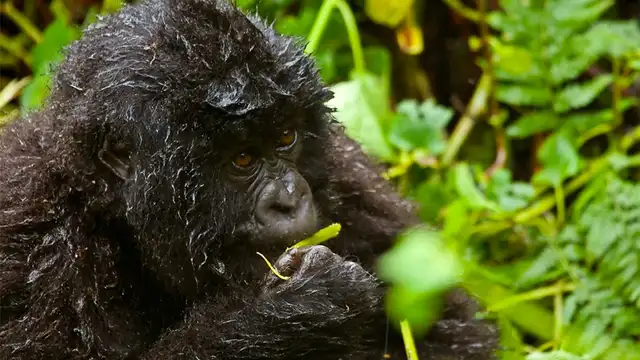
Habituated mountain gorillas, the ones you meet on a gorilla trekking safari, are remarkably calm and tolerant of human presence, but "friendly" is not quite the right word for a wild animal. They are gentle, mostly peaceful, and generally uninterested in confrontation, and no serious safety incidents have been reported in over 30 years of organised gorilla trekking. But they are still wild animals with unpredictable moments, which is exactly why strict rules exist around every encounter.
The short answer: gorillas are not dangerous to trekkers who follow the rules, and their calm temperament is the product of a careful, years-long habituation process, not a natural friendliness toward people in general. Here is what that actually means in practice.
Popular Gorilla Trekking Packages
Are Gorillas Friendly to Humans?
1. Their Calm Temperament Comes From Habituation, Not Instinct
The gorilla families you trek are habituated to human presence through a careful, scientific process spanning several years, during which trackers and researchers spend daily time near a family until the gorillas no longer see humans as a threat. Wild, non-habituated gorillas elsewhere in the forest are far more wary and would typically avoid or flee from people rather than tolerate their presence.
2. Generally Gentle, But Still Genuinely Wild
Mountain gorillas are mostly peaceful, family-oriented animals who spend their days eating, resting, and caring for infants. However, their behaviour is ultimately unpredictable, and if a trekker encounters a gorilla that appears aggressive or defensive, the correct response is to remain calm and slowly back away, never run, while trusting the trained guides and trackers to manage the situation.
3. The 7-Metre Distance Rule Exists for Both Species
Every trekker must maintain a minimum distance of 7 metres, about 21 feet, from the gorillas at all times. This rule protects trekkers from any sudden defensive behaviour, and just as importantly protects the gorillas, who share roughly 98 percent of human DNA and are highly vulnerable to catching human illnesses like the common cold or flu, which can be fatal to them.
4. What You Must Never Do Around Gorillas
Guides brief every group before the trek on strict rules: never touch, feed, or approach the gorillas, never use flash photography, avoid eating or drinking near the family, and never mimic gorilla sounds or gestures, which can be misinterpreted as a challenge and provoke defensive behaviour. If you feel a cough or sneeze coming on, you are required to turn away and cover your mouth, and anyone visibly unwell may be barred from trekking that day entirely.
5. Armed Rangers and Trained Guides Are Always Present
Every trek is accompanied by an armed ranger in constant communication with park headquarters, alongside experienced trackers who understand gorilla behaviour and body language in detail. Their role is not primarily to protect trekkers from the gorillas, incidents are exceptionally rare, but to manage the encounter respectfully for both species and respond to any wildlife encounter in the surrounding forest, including buffalo or elephants.
6. A Strong Safety Track Record
Gorilla trekking has an excellent safety record: a 2022 survey of 1,500 international trekkers reported a 99.7 percent safety satisfaction rating with zero significant safety incidents recorded, and industry-wide, no serious incidents have occurred in three decades of organised trekking. The rules exist precisely because they work, not because gorillas are commonly aggressive toward respectful, well-guided visitors.
Weather and Climate for Gorilla Trekking
Both Bwindi Impenetrable National Park and Volcanoes National Park sit at high altitude and stay cool and often misty, with daytime temperatures typically between 11°C and 23°C. Weather does not affect gorilla temperament, but the dry seasons of June to September and December to February make for firmer, safer trails underfoot.
Best Time to Go
June to September and December to February are the driest, most popular months for trekking in both countries. The wetter months, March to May and October to November, are quieter and cheaper, with gorilla behaviour and encounter rules unchanged regardless of season.
How to Get There
Uganda's gateway is Entebbe International Airport, with Bwindi reached by a 7 to 9-hour road transfer or a short domestic flight. Rwanda's gateway is Kigali International Airport, with Volcanoes National Park just 2 to 3 hours away by road.
Health and Safety Tips for Gorilla Encounters
Beyond the 7-metre rule, sanitise your hands before and after the trek, wear a mask if provided or required, and never trek if you are feeling unwell, since gorillas can contract human respiratory illnesses. A yellow fever vaccination is mandatory if arriving from an endemic country, and comprehensive travel insurance is recommended for any forest-based activity.
Why Book Your Gorilla Trekking Safari with Lamz Tours and Travel
Lamz Tours and Travel is a fully licensed, Uganda-based tour operator that briefs every guest thoroughly on gorilla etiquette and safety rules before the trek, working alongside trained park rangers and trackers to ensure a respectful, low-risk encounter for both you and the gorillas. Contact us at info@Lamz Tours and Travel.com or +000 000 000 000 to start planning your gorilla trekking safari.
Ready to plan your safari?
Talk to a Lamz Tours specialist and get a tailor-made quote.
Make an enquiry