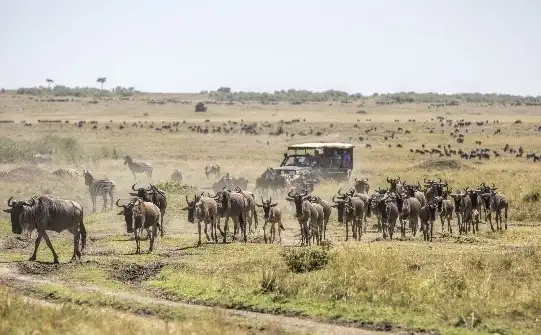
Planning your first safari in Kenya Africa starts with a few clear choices. For a Masai Mara trip, choose your dates, trip length and main interests. Then work through transport, places to stay and the full cost.
This guide covers ten steps in plain language. You do not need to know safari terms before you start. If travelling from the United States, include your international journey in your plans. Your holiday starts before the safari departure date.
Start planning your safari in Kenya Africa
1. Understand what your Masai Mara itinerary covers
When researching the Masai Mara National Reserve in Kenya, ask for more than a place name. Request a trip plan showing where you will stay and where each wildlife outing takes place. Check which access is included.
You will see both “Masai Mara” and “Maasai Mara” in travel searches. Do not rely on the wording of a package title. Ask your planner to show the exact places on a map.
Two plans may look similar but offer different experiences. Clear details make them easier to compare. Ask these questions before choosing:
What is the accommodation’s exact name and location?
Which areas will we visit each day?
Are the relevant entry charges included?
How much time covers transfers rather than wildlife viewing?
2. Choose dates around your interests, not a promised sighting
Before asking for the best travel month, explain what matters to you. Photography, birdwatching and school holidays can shape your choices. So can a slower pace or an interest in particular wildlife.
If migration-related wildlife viewing matters most, ask what is reasonable for your dates. Ask your planner to explain what remains uncertain. Do not rely on promises that a particular event will happen during your stay.
Lamz Tours and Travel’ guide to when to visit Masai Mara can help you start that discussion. Check seasonal advice against your exact trip plan before booking. Before paying deposits, check flights, accommodation and your requested activities for your preferred dates.
3. Count useful safari time, not just package days
A package’s length does not show how much time you will spend looking for wildlife. Ask for departure times, estimated transfer times and the number and length of game drives. A game drive is a vehicle outing focused on wildlife viewing.
For a shorter trip, use the three-day Masai Mara itinerary to start a discussion. Confirm its current schedule and plans for the first and final days. For a first visit, compare it with a plan that adds another night. Look at the extra usable time, not just the price difference.
If travelling from the United States, think about your arrival day. Decide whether you want a break between your international arrival and safari departure. Include that choice in your quote rather than adding it later.
Make the practical choices before booking
4. Compare transport from door to door
Ask your planner to explain the transport options for your dates. Compare pickup points, departure times, transfers and arrival plans. Also check which vehicle you will use for wildlife outings.
If your plan includes a flight, request its current baggage allowance before packing. Check any rules about bag size or type. Do not assume these match your international ticket.
For road travel, ask for a realistic journey time and planned stops. Mention motion sickness, back problems or mobility needs before choosing transport. Compare more than road versus air. Choose confirmed arrangements that fit your comfort, schedule and budget, including connections at both ends.
5. Request a full cost breakdown
Ask for a written quote stating the currency, travel dates, group size and room setup. It should clearly separate included services, optional extras and costs paid separately. Check each of these items:
Accommodation and the stated meal plan
Transport, transfers and guiding
Reserve entry and other relevant charges
Activities and any separate booking terms
Drinks, tips and personal spending
Cancellation terms and payment deadlines
Ask whether any quoted charges could change before travel and how changes would be handled. Lamz Tours and Travel’ guide to planning a Masai Mara budget safari can help you prepare questions. Compare plans with the same included services. The lowest headline price may not cover the same trip.
6. Choose accommodation through clear questions
Do not choose only from photographs or labels such as “luxury” or “budget”. Ask for the exact property and room type. Then request current details that matter to your needs.
Confirm bathroom facilities, bed setup, meals, electricity and charging options. Explain any access needs. If travelling with children, check current age rules and room arrangements. Ask how the property fits your daily route and travel time before each activity.
Confirm what happens if the named property cannot be booked. Any replacement should be clearly named. Agree to it before payment, under the booking terms that apply.
Prepare for your time in Maasai Mara in Kenya
7. Agree on the vehicle and daily pace
Before booking, confirm whether your vehicle will be private or shared. Ask about the maximum passenger count and seating layout. If photography matters, describe your equipment and ask how the setup will work.
Discuss departure times, meal breaks, rest time and how flexible the plan is. Do not assume everyone in your group wants outings of the same length. Tell your planner about mobility needs, dietary needs and other practical concerns early.
Ask which needs can be met and get clear confirmation. Do not rely on a broad promise. Your plan should explain the experience without fixing every hour to a strict schedule.
8. Pack from confirmed requirements
Start with the baggage rules for each part of your journey. Then ask for a packing list suited to your trip. Focus on items you will use rather than packing for every possible situation.
Consider comfortable layers, sun protection, prescribed medicine, a camera or phone, spare power and binoculars. Confirm charging options before choosing adapters or power accessories. Keep essential documents and medicine within reach during transfers. Ask about laundry before deciding how many clothes to pack.
Check current passport, entry-document and health requirements through the relevant official sources. Seek personal medical advice well before travel. Read your insurance policy for the activities and places in your actual plan. Do not rely on an old packing blog for these decisions.
9. Make room for interests beyond a wildlife checklist
List two or three interests you would enjoy without a particular animal sighting. These could include birdwatching, photography, landscapes or a carefully planned cultural visit. Treat wildlife goals as interests, not conditions for a good holiday. No booking should depend on a guaranteed sighting.
If you enjoy birdwatching, discuss the five-day Kenya birding itinerary with your planner. Confirm its current activities. Check whether its pace suits someone new to birdwatching.
For a cultural visit, ask who hosts it and how consent and payment are handled. Ask what rules apply to taking photographs. Follow your guide’s instructions around wildlife, and ask before photographing people.
10. Check every extra before extending the trip
Your wider planning may include searches for “giraffe hotel Kenya” or “Giraffe Manor in Nairobi Kenya hotels”. If a property interests you, treat it as a separate booking question. Do not assume it is part of a Masai Mara package.
Confirm the exact property, availability, rate, room type, access arrangements and cancellation terms. Do not plan a connection around an unconfirmed booking. Check extra activities with the same care. Ask about their length, who can take part, transport and what happens if they cannot run.
Before paying, read the full trip plan in order. Check names, dates, pickups, accommodation, included services and emergency contact arrangements. Ask Lamz Tours and Travel to clear up any questions in writing. This helps your safari in Kenya Africa start with shared expectations.
Where to go on safari in Kenya beyond the Masai Mara
The Masai Mara is one option, not the starting point for every safari in Kenya Africa. Compare its open grasslands with Amboseli’s wetlands, Tsavo’s drier landscapes and Lake Nakuru’s lake-and-woodland setting. Choose places that add something you want to experience, rather than simply adding more park names.
How does the Masai Mara compare with the other parks?
The Masai Mara combines rolling grassland, rivers and scattered woodland. It suits visitors interested in open-country wildlife viewing, including looking for lions, cheetahs, elephants and grazing herds. A stay focused here allows repeated outings in the same landscape. Choose another park alongside it if you want a different habitat or a particular wildlife interest, rather than expecting every destination to offer the same experience.
Who should consider Amboseli?
Amboseli combines open plains, swamps and dusty lake beds, with views towards Mount Kilimanjaro when conditions are clear. Elephants are a major wildlife interest; visitors may also look for buffalo, zebras, giraffes and wetland birds. It suits travellers interested in elephant behaviour and landscape photography. Compare its position on your route before combining it with the Mara: the two are not neighbouring stops.
What is the difference between Tsavo East and Tsavo West?
Tsavo East has broad, dry plains, scrub and river habitats. Visitors may look for elephants, often coloured by the red soil, as well as giraffes, zebras and lions. Its expansive landscapes suit travellers who want time exploring a drier environment.
Tsavo West has a more varied mix of hills, rocky ground, lava landscapes and bush. Elephants, buffalo, giraffes and birds are among the wildlife interests, though vegetation can make animals harder to spot than on open plains. Either park can fit a journey linking inland Kenya with the coast. Visiting both makes more sense when you have time to explore their differences without rushing between them.
Why add Lake Nakuru to a safari?
Lake Nakuru combines a Rift Valley lake with woodland, grassland and escarpment views. Visitors may look for black and white rhinos, Rothschild’s giraffes, buffalo and waterbirds. Flamingo numbers vary with lake conditions, so do not choose it around an expectation of large pink flocks. It can provide a contrasting stop on a longer route between Nairobi and the Masai Mara, with the exact journey planned around your overnight stops.
How does Nairobi National Park differ from a multi-day safari?
Nairobi National Park offers grassland and riverine habitats close to the city, sometimes with urban buildings in the background. Rhinos, lions, giraffes and zebras are among the animals visitors may look for. It can suit a shorter wildlife outing during a Nairobi stay, but it is not the same as spending several days farther from the city, with repeated drives and time to settle into a landscape. Leave enough room around flight connections rather than treating it as an automatic arrival-day activity.
Should a first-time visitor choose one reserve or several parks?
Choose one reserve or park if your time is limited, you prefer fewer transfers or you want to explore one area at a slower pace. Choose a multi-park trip when contrasting habitats matter to you and your schedule leaves meaningful viewing time at each stop. Ask for a route map before deciding: two complementary destinations can be more useful than several brief visits dominated by travel.
Kenya safari routes from Nairobi and the coast
These illustrative routes show how parks can fit together on a safari in Kenya Africa. They are starting points for planning, not confirmed departure schedules. Each assumes you are ready for pickup at the stated starting point; allow separately for your journey there.
What could a six-day route from Nairobi include?
Day 1: Nairobi to Lake Nakuru. Travel to the Lake Nakuru area, with a wildlife outing if arrival time and entry arrangements allow.
Day 2: Lake Nakuru. Keep the day for exploring the park rather than moving straight on.
Day 3: Lake Nakuru to the Masai Mara. Treat this as a transfer-heavy day. Any wildlife viewing after arrival depends on the journey and your overnight location.
Days 4 and 5: Masai Mara. Spend two days on wildlife outings without changing your overnight base.
Day 6: Masai Mara to Nairobi. Allow for the return journey rather than assuming a full morning outing and an easy flight connection.
This route pairs two contrasting areas without adding a new stop every night. Confirm the road journeys against the exact accommodation locations, particularly for the move from Lake Nakuru to the Mara.
How could a Nairobi safari finish at the coast?
Day 1: Nairobi to Amboseli. Transfer to your safari base; plan any afternoon outing around the actual arrival time.
Day 2: Amboseli. Keep a full day for wildlife viewing.
Day 3: Amboseli to Tsavo West. Combine the transfer with any viewing time that the confirmed route permits. Do not count it as a full safari day.
Day 4: Tsavo West. Explore without another long transfer.
Day 5: Tsavo West to Mombasa or Diani. Make this primarily a travel day, with the final drive planned to your coastal accommodation.
Days 6–8: Coastal stay. Leave these days for time by the sea rather than further park transfers.
This gives the holiday a clear inland-to-coast direction. Adding Tsavo East would need more time or a revised route; it should not simply be squeezed into the coastal transfer day.
What could a safari starting in Mombasa or Diani look like?
Day 1: Mombasa or Diani to Tsavo East. Depart from your coastal accommodation. The pickup location affects the journey, so confirm it before agreeing to the day's activities.
Day 2: Tsavo East. Allow a day for wildlife outings without moving to another park.
Day 3: Tsavo East to Tsavo West. Expect a transfer-led day, with viewing fitted around the journey and entry arrangements.
Day 4: Tsavo West. Spend the day exploring the park.
Day 5: Return to Mombasa or Diani. Keep the evening flexible rather than booking a tightly timed onward departure.
For a shorter break from the coast, use one Tsavo park instead of both. A Nairobi-based Mara route is not interchangeable with a coastal pickup: it needs a separate transport plan.
Can you combine the Masai Mara with a coastal stay?
Yes, but treat the move to the coast as a separate travel stage. One outline is an arrival night in Nairobi, three nights in the Mara, a transfer day and then several coastal nights. A road return to Nairobi before flying onward may require another Nairobi night.
If considering flights from the Mara towards the coast, ask Lamz Tours and Travel to confirm whether a suitable service operates on your dates, its stops and its arrival airport or airstrip. Do not assume a direct flight or that arrival puts you close to your beach accommodation.
Which transfers and connections need confirmation?
Check the Lake Nakuru–Mara, Amboseli–Tsavo and park-to-coast travel days particularly carefully. Estimated driving times should use your actual pickup, park gates and overnight stops, not just the destination names.
For flights, confirm operating dates, departure and arrival points, baggage rules and any intermediate stops.
For connections through Nairobi, check whether an airport change is needed and allow for the ground transfer.
If using rail for part of a coastal transfer, confirm the current timetable, station transfers and how the safari vehicle arrangements connect.
Before an international departure, agree on a suitable connection buffer or an overnight stop rather than relying on an uninterrupted road journey.
Masai Mara or Serengeti: choosing a safari destination
How does the trip structure differ?
The Masai Mara in Kenya and the Serengeti in Tanzania belong to the same wider ecosystem, but they need different route planning. A Mara-focused trip can suit travellers who want repeated outings from one base. The Serengeti covers a much larger area, so choosing between its regions matters more than simply putting “Serengeti” on the itinerary.
Neither is universally better. For a shorter holiday, compare a focused stay in either destination before considering both. A longer Serengeti itinerary may use several bases, but moving accommodation should serve your interests rather than become a daily routine.
Which destination fits your wildlife-viewing interests?
Both offer opportunities to look for predators and grazing wildlife in open landscapes. If you want to spend time observing animal behaviour, prioritise unhurried outings and a well-positioned base over collecting destination names.
For migration interests, distinguish between following herds, looking for young wildebeest and hoping to witness a river crossing. These are different goals. The southern Serengeti is associated with the calving phase, while northern Serengeti and Mara planning may focus on later herd movements. Your dates determine which areas are worth considering.
How do travel dates change the comparison?
Compare the specific regions that make sense during your travel window, not the two destinations as fixed alternatives. Rainfall, grazing and water influence herd movements, and timing varies between years. Seasonal patterns help guide planning but do not provide an appointment with wildlife.
Migration-related sightings cannot be guaranteed. Herds may be elsewhere, and animals gathered near a river may not cross while you are watching. Build a trip you would value even without that event.
What transfers would a Kenya and Tanzania combination need?
Ask for a cross-border itinerary showing the actual road route or flight connections. Neighbouring wildlife areas do not automatically mean a straightforward visitor transfer across their shared boundary.
Confirm the border crossing, immigration stops, any vehicle or guide changes, and who handles each handover. For flights, check whether connections require travel through a gateway city. Compare the total transfer time with the extra wildlife-viewing time gained by visiting both countries.
Which entry requirements should you check before combining them?
Check current requirements with the official immigration authorities for both Kenya and Tanzania, using your nationality, passport and exact route. Confirm applicable entry permissions, passport conditions and any transit or re-entry requirements if the itinerary returns to the first country.
Also check official health-entry guidance for your travel history and border route. Do this before committing to non-refundable arrangements, and recheck before departure rather than assuming one country's permission covers both.
More questions travellers ask
Are there good safaris in Kenya?
Yes. Kenya is a good choice for a first safari or a return visit, with scope to focus on wildlife photography, birds or contrasting landscapes. The quality of a trip depends on its organisation as well as its destination. Ask how your guide will support your particular interests, rather than judging a safari only by its park names.
Why can't I wear white on safari?
You can wear white; it is generally a practical consideration, not a blanket ban. White clothing shows dust quickly and can stand out in natural surroundings. Muted colours such as khaki, olive and beige are useful alternatives. For guided walks or other activities, follow the operator's specific clothing advice.
Is Serengeti better than Masai Mara?
Not automatically. If you already have a proposed Mara trip, ask what a Serengeti alternative would add for your particular interests—and what you would give up to accommodate it. Changing countries is worthwhile only if the revised holiday suits you better, not because one destination has a stronger reputation.
What is the safest African country for a safari?
There is no single answer that applies to every traveller and route. A country-wide label is too broad to assess a particular safari. Check current official travel advice for the areas you intend to visit, then ask your operator about guide procedures, emergency communication and access to medical assistance. Discuss any relevant concerns with your insurer before booking.
Frequently asked questions
How many days should I allow for Maasai Mara, Kenya?
Compare plans by usable wildlife-viewing time, not just their advertised length. Ask what happens on arrival and departure days. Then consider whether another night would give you the pace you want.
When should I visit the Masai Mara National Reserve in Kenya?
Choose dates after discussing your interests and checking current seasonal advice. If a particular wildlife event matters most, ask what remains uncertain. Avoid any trip sold around a guaranteed sighting.
What does an Africa safari in Masai Mara include?
There is no single list of included services you can assume. Your written quote should list accommodation, meals, transport, guiding, entry charges and activities. It should also explain exclusions and costs you must pay during the trip.
Can I add Giraffe Manor to a Kenya safari?
Ask your planner to check this separately. Combining the stays depends on confirmed accommodation, dates, transfers and booking terms. A mention of Nairobi does not mean this property or a visit is included.
What should travellers from the United States check first?
Confirm your full flight schedule and safari meeting point. Decide whether you want a break after arrival. Then check current entry, health and passport requirements through the relevant official sources. Also verify your insurance cover.
What should I send Lamz Tours and Travel when requesting a proposal?
Share your dates, departure location, group size, budget range, preferred pace and main interests. Include any room, dietary or mobility needs. Say whether your budget covers only the safari or the wider holiday.
Ready to plan your safari?
Talk to a Lamz Tours specialist and get a tailor-made quote.
Make an enquiry